Houseplant · Piperaceae
Ripple Peperomia
Peperomia caperata
This little plant is a total softie about care: it just wants bright light and a pot that isn't kept soggy.
Bright indirect
USDA 11–12
6–10 in · 15–25 cm
Overview
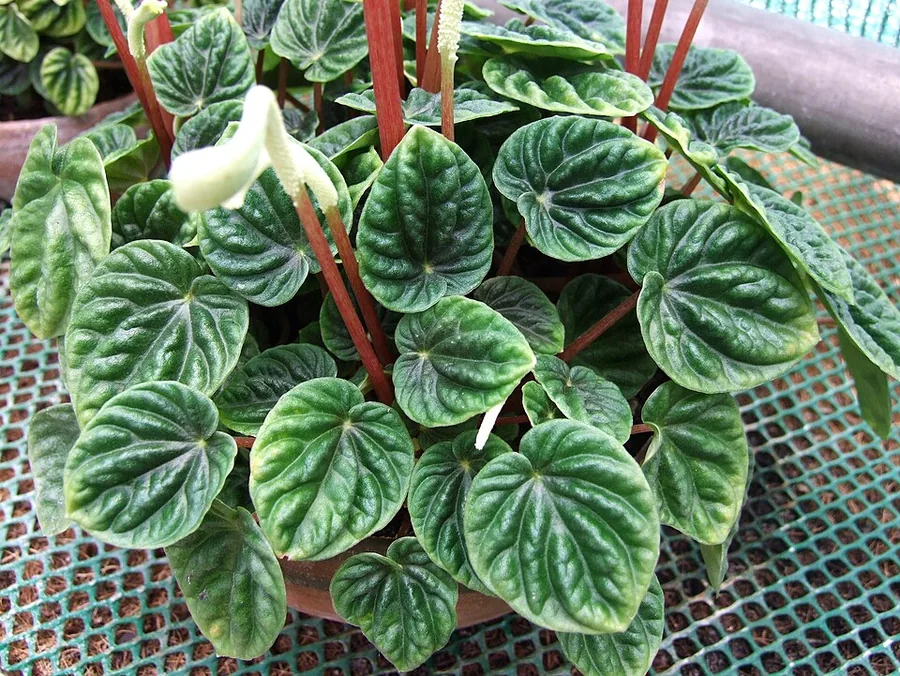
So where does the name come from? Those deeply furrowed, quilted heart-shaped leaves that give the plant its rippled look. It's part of the pepper family and grows wild on the forest floor in southeast Brazil, down where the light is soft and filtered. Indoors it stays tiny, only about 6 to 10 inches (15 to 25 cm) tall and roughly as wide.
The leaves are really the whole show, and they come in all sorts of colors depending on the cultivar, from deep emerald green to burgundy red to silver-marked types. It grows slowly and won't ever take over a shelf, so it's happy on a desk or windowsill that gets bright indirect light. And here's a bonus: the ASPCA says it's safe around cats and dogs.
What does it want back? Mostly for you to ease up on the watering. Those thick, semi-succulent leaves already hold plenty of water, so a constantly wet pot is the quickest way to lose it. Give it good light, let the soil dry out a bit between drinks, and it'll stay compact and healthy for years.
Care
The short version: bright indirect light, a loose mix that drains well, and water only once the top half of the soil has dried. Keep the watering light, bump up the humidity a bit, and it pretty much runs itself.
Light
Give it bright indirect light near an east or south window and it'll be happy. It can handle medium light, and even low light for a while, but a dark corner leaves the stems stretched and the colorful ones looking kind of washed out. Just keep it out of harsh direct sun, which can burn the leaves.
Water
Let the top half of the soil dry out before you water again, since those chunky leaves are basically a built-in water tank. Overwatering is by far the biggest way people lose this plant. So tip out the saucer after watering, don't let water pool in the crown, and back off through fall and winter.
Soil
Pot it up in a loose, well-draining peaty houseplant or cactus mix so water runs right through. Heavy-handed with the watering can? Toss in some extra perlite and the roots won't sit wet.
Temperature
Keep it warm, and don't let it drop below about 61°F (16°C). It's a tropical plant, so cold drafts and cold windowsills in winter are the things to watch out for.
Humidity
It likes high humidity, which makes sense given it's a rainforest plant. If your place gets dry, especially in winter, group it with other plants or set it by a humidifier and it'll be much happier.
Feeding
Feed it monthly in spring and summer with a watered-down liquid houseplant fertilizer, or just use slow-release granules once a year if that's easier. Once fall and winter roll around and growth slows, you can stop feeding altogether.
Pruning
Pull off any old or beat-up leaves whenever you see them. Want it fuller and bushier? Snip a stem back to just above a leaf node and it'll branch out from there.
Repotting
This one's a homebody and is fine in the same pot for several years. Only bump it up a size when you see roots poking out the drainage holes or the soil dries out way faster than it used to.
Size & spacing
Even fully grown, it stays small, just 6 to 10 inches (15 to 25 cm) tall and about the same across. That's exactly why it slots so easily onto a shelf or the corner of a desk.
Troubleshooting
Almost everything that goes wrong here comes down to water. Too much in the pot and you get rot and dropped leaves; too little light and the plant stretches out and goes pale. Find what's happening below, and odds are the fix is just a small tweak to your routine.
Soft, dark base and a plant that's caving in
If the base has gone soft and dark and the whole plant's caving in, that's root and crown rot, and it shows up when the soil stays soggy or water sits in the crown. The roots go dark and slimy instead of firm and pale. Stop watering, cut off all the mushy bits with clean tools, and repot into fresh mix that drains fast. If the crown's too far gone, grab a few healthy leaf or stem cuttings so you don't lose the plant entirely.
Fix:
- Stop watering and remove the plant from wet soil
- Cut away rotted roots and mushy crown tissue with clean tools
- Repot into fresh, fast-draining mix in a clean pot with drainage holes
- Take healthy leaf or stem cuttings as insurance if the crown is badly affected
Yellow, floppy leaves on a soggy plant
Yellow, droopy leaves on a waterlogged plant usually mean rot's setting in down at the roots or stem base. Slip it out of the pot, take a look at the roots, and trim off anything dark and soft before repotting into fresh fast-draining mix. The real fix, though, is your watering habits, since both a soaked pot and a long dry spell can cause this.
Fix:
- Check roots and soil moisture
- Trim affected roots and repot into fresh fast-draining mix if rot is present
- Correct the watering routine to avoid moisture extremes
Leaves falling while the soil's still wet
Leaves dropping while the soil's still damp? That's almost always overwatering. Let the soil dry all the way out, then sort out the drainage by mixing in perlite or repotting into something more porous. Once it's back on its feet, water lightly and go easy.
Fix:
- Allow the soil to dry out
- Improve drainage by adding perlite or repotting into a porous mix
- Resume light, careful watering once the plant recovers
Webbing or little cottony white blobs on the leaves
Fine webbing and speckled leaves? That's spider mites. Little white cottony blobs wedged in the leaf joints? Those are mealybugs. Keep the plant away from your others so it doesn't spread, wipe off whatever you can see, and hit it with insecticidal soap or horticultural oil. You'll want to repeat that over a few weeks to catch the whole life cycle.
Fix:
- Isolate the affected plant
- Wipe off mealybugs and treat with insecticidal soap or horticultural oil
- Repeat treatments as needed to break the pest life cycle
Stretched-out stems and faded color
Stems reaching for the window and color fading on the flashier types both mean not enough light. Move it somewhere brighter with bright indirect light from an east or south window, or add a fluorescent lamp if daylight's in short supply. Cut those leggy stems back above a node and it'll fill right back in.
Fix:
- Move to a brighter spot with bright indirect light from an east or south-facing window
- Supplement with fluorescent lighting if natural light is limited
- Prune leggy stems above a node to restore a compact, bushy shape
Spots showing up on the leaves
Spots that pop up after the leaves have been wet are fungal leaf spots. Pick off the marked leaves, water down at the soil so the leaves stay dry, and give the plant a bit more breathing room. Wet leaves are what let the fungus get going, so keeping them dry is basically all the prevention you need.
Fix:
- Remove affected leaves
- Keep foliage dry when watering by watering at the soil level
- Improve air circulation
Toxicity
Good news if you've got pets: ripple peperomia is safe all around. The ASPCA and NC State Extension both list it as fine for cats, dogs, and horses, and there's no toxic compound to worry about for anything else, people included. So a curious nibble? No big deal.
Safe for
People · Cats · Dogs · Horses · Rabbits · Livestock · Birds
Cats None
Both the ASPCA and NC State Extension call this one non-toxic to cats, and there's no toxic compound in it anyway. So if a cat sneaks a nibble, no harm done.
Dogs None
It's non-toxic to dogs too, with nothing harmful on record. A dog that chews a leaf isn't going to get poisoned.
Horses None
The same sources say it's safe for horses, so a stray mouthful really isn't anything to stress about.
Rabbits Safe
There's no toxin in the leaves or stems, so it's no risk to rabbits that decide to take a bite.
Livestock Safe
Grazing animals won't find anything harmful here. It's an indoor plant they'd rarely get near anyway, and it's got no toxic compound either way.
Birds Safe
No known toxic principle in it, so a pet bird can perch on it or peck at the leaves and stay totally fine.
People Safe
It's not poisonous to people, kids included. Nobody grows it to eat, so there's no reason to, but a stray taste won't hurt anyone.
Varieties
Most of the named types are really just about leaf color rather than shape. Here are the ones you'll probably run into.
'Emerald Ripple'
This is the original, the one the species is named after, with those deeply furrowed, quilted green leaves shaped like hearts.
'Rosso'
NC State Extension flags this one for its red leaf undersides sitting against a green top.
'Red Ripple'
A burgundy-red type that wears its deep color all the way across the leaf.
'Red Luna'
Another one NC State Extension lists, this time for its standout red-toned leaves.
'Variegata'
A variegated pick whose green leaves come dusted with silver markings.
How to propagate
Want more of these? You're in luck, because they root about as easily as any houseplant out there. A leaf, a stem tip, or a split-up clump will all take, so one plant turns into a few in no time.
Leaf cuttingsEasy
Spring to summer · Several weeks to root
This is the go-to peperomia trick. Snip a healthy leaf with its little stalk in spring or summer, pop it into moist mix, and give it several weeks to root into a brand-new plant.
Stem cuttingsEasy
Spring to summer · Several weeks to root
Tip and stem cuttings root just as easily, either in water or moist mix. Take them in spring or summer and let them sit a few weeks to grow roots before you pot them up.
DivisionEasy
Spring at repotting · Several weeks
Got a big, mature clump? Split it into smaller plants. Do it in spring while you're already repotting, and each piece will settle in over a few weeks.
Myths
Ripple peperomia is toxic to cats and dogs, like so many houseplants.
Nope. The ASPCA and NC State Extension both put it in the non-toxic camp for cats, dogs, and horses. It's genuinely pet-safe, so it's a great pick for homes where other leafy plants would make you nervous.
Peperomias need watering often to keep their soil moist.
Those thick, semi-succulent leaves store their own water, so the plant would rather dry out between drinks. Overwatering is what causes most leaf drop and root rot, so if you're going to slip up, slipping up on the dry side is way safer.