Houseplant · Piperaceae
String of Turtles
Peperomia prostrata
A trailing peperomia covered in tiny leaves that look just like little turtle shells, ready to trail off a shelf for years.
Bright indirect
Every 7–14 days
68–75°F · 20–24°C
USDA 10–12
Overview
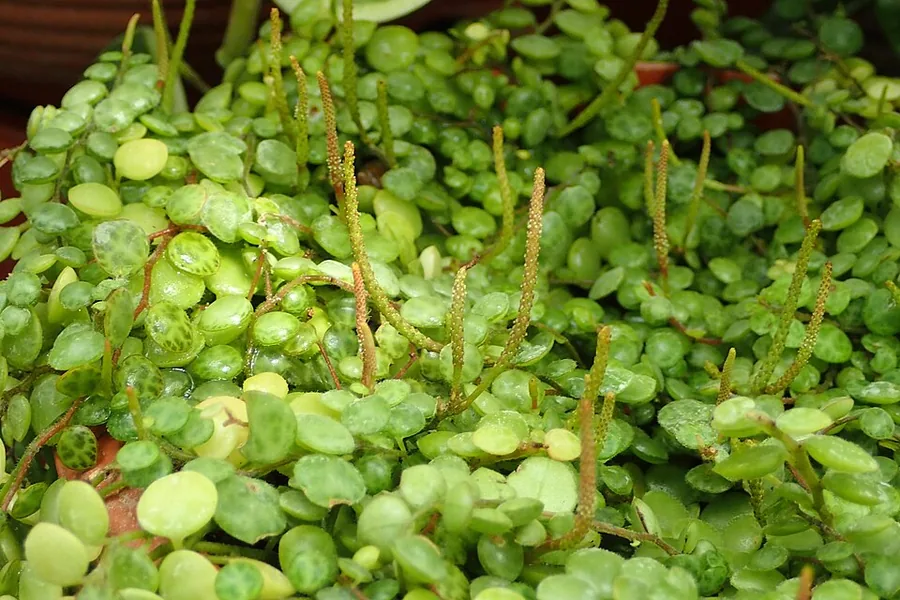
So what is string of turtles? It's a little trailing peperomia from the rainforests of Ecuador, where it creeps across the ground and mossy logs. The leaves are the whole reason people love it. Each one's round, about the size of a fingernail, and covered in pale veins that honestly do look like a tiny turtle shell. It grows slowly and stays small, trailing only 9 to 12 inches (23 to 30 cm), so it's perfect for a shelf edge or a little hanging pot.
Here's why it's got that easy reputation: it barely asks for anything. Set it somewhere with bright, indirect light, use a container with good drainage, and you're basically there. Forget to water it once? It'll shrug that off far better than it handles soggy soil. Those semi-succulent leaves keep a bit of water in reserve, so the plant rides out the gaps between waterings.
The single thing it really can't stand? Wet feet. Treat it like a moisture-hungry fern and keep the soil damp all the time, and the roots will rot fast. But let it dry out partway and give it a bright spot, and one little plant turns into a long, patterned trail that sticks around for years.
Care
The short version: it wants bright, indirect light, a fast-draining pot, and a drink only after the top half of the soil dries out. Keep it warm, feed it a little during the growing season, and whatever you do, don't overwater.
Light
It likes bright, indirect light, the sort that lands a little way inside a window facing east or south. It'll cope with medium or even low light, but here's the catch: the turtle-shell markings fade when things get too dim. Just keep it clear of hot, direct sun, since that scorches the tiny leaves.
Water
Wait for the top half of the mix to go dry before the next drink, which usually lands around every 7 to 14 days. Since the leaves are semi-succulent and hold their own little stash, running a bit dry bothers it way less than sitting wet. Overwater it and you'll lose it, so lean dry.
Soil
Pop it in a well-draining houseplant or cactus mix, something that lets water flow through instead of hanging around. A loamy or sandy blend is great, and it's happy with a pH somewhere from 5.5 to 7.5. Really, drainage is the thing that matters most here.
Temperature
Normal room temp is exactly what it wants, so aim for 68°F to 75°F (20°C to 24°C). It can't handle frost or cold drafts at all, so when winter shows up, move it off any cold windowsill and away from drafty doors.
Humidity
Don't stress about humidity, since regular room air does the job. It wouldn't say no to a bit more moisture, but it gets on fine without a mister or a humidifier.
Feeding
Feed it a little through spring and summer, while it's actually growing. A weak liquid fertilizer about once a month is plenty, or you could go with slow-release granules once a year. It's a slow grower, so there's no need to pile on the food.
Pruning
Pinch the trailing stems back here and there and you'll get fuller, bushier growth. And if a stem goes leggy or gets banged up, just snip it off to keep things looking neat.
Repotting
This one actually likes being snug in its pot, and it'll happily stay put for years. Only size it up when you see roots poking out the bottom, water running straight through, or growth stalling, and even then just go one pot bigger.
Size & spacing
It stays nice and compact, trailing 9 to 12 inches (23 to 30 cm) with a spread of just 3 to 4 inches (8 to 10 cm). That small size is exactly why it fits so well on a desk, a shelf, or in a little hanging pot.
Troubleshooting
Just about every hiccup with this plant comes back to one of two things: water or light. The nice part is that it shows you early, right there on the leaves and roots, so you've usually got time to fix it. Just find what matches below and go from there.
Leaves falling or turning yellow, with soft, mushy stems
If leaves are dropping or going yellow and the stems feel soft and mushy, it's almost certainly root rot from overwatering, which is the quickest way to lose this plant. The soil's staying wet, the roots go brown and soft, and the leaves just give up. Back off the watering, repot it into fresh, well-draining mix, and cut away any rotten roots before they take over.
Fix:
- Reduce watering frequency
- Let soil dry partway before watering again
- Repot into fresh well-draining mix and trim rotted roots if rot is present
Sticky stuff, webbing, or little bugs showing up on the plant
Sticky residue, fine webbing, or tiny bugs usually mean sap-sucking pests have moved in, think mealybugs, spider mites, scale, or whiteflies hanging out under the leaves and at the stem joints. Wipe them off, treat it with insecticidal soap, and keep it away from your other plants so nothing spreads. The good news is this one usually fends off pests, so an outbreak often just came home on a new plant.
Fix:
- Wipe off pests
- Treat with insecticidal soap
- Isolate the plant to prevent spread
Leaves looking pale with the markings washed out
When that turtle-shell pattern goes dull and flat, the plant's just not getting enough light. It's probably sitting too far from a window. Move it somewhere with bright, indirect light near an east or south-facing window, and those markings will perk right back up.
Fix:
- Move to a spot with bright, indirect light from an east or south-facing window
Toxicity
Got pets or little kids around? No problem here. The ASPCA has this trailing peperomia down as non-toxic, so a nibbled leaf won't hurt a cat, a dog, or a curious toddler. Feel free to set it somewhere low and not think twice.
Safe for
People · Cats · Dogs · Horses · Rabbits · Livestock · Birds
Cats None
Cats are totally fine here. The ASPCA calls this peperomia non-toxic to them, so a little taste won't do any harm.
Dogs None
Same goes for dogs. It's non-toxic on the ASPCA's list, so even if your pup chews a trailing stem, it isn't going to get poisoned.
Horses Safe
Horses are fine too, though honestly, a tiny trailing houseplant like this hardly ever ends up near one. Either way, nothing in it will hurt them.
Rabbits Safe
If a rabbit sneaks a mouthful of leaves, no big deal, since there's nothing in the plant that's toxic to them.
Livestock Safe
Bigger grazers like cattle, goats, and sheep are in no danger from it either, because there's nothing toxic in this peperomia for them.
Birds Safe
A pet bird can perch on it and peck away, no worries, because there's nothing in it that would poison them.
People Safe
It's safe around kids too, so if a stray leaf ends up in a little hand, there's really nothing to worry about.
How to propagate
Want more of these? Easy, and one plant gives you plenty to work with. You can root a single leaf or a whole piece of stem, and both work best in the warm growing months.
Leaf cuttingsEasy
Spring or summer during active growth · Several weeks to a few months to root and establish
Grab a healthy leaf, keep that little stalk attached, and tuck it into damp, well-draining mix. Do it in spring or summer while the plant's growing, then just be patient, because roots and a new little plant can take a good few weeks, sometimes a month or two, to show up.
Stem cuttingsEasy
Spring or summer during active growth · Several weeks to root
For a stem cutting, snip off a piece a few inches long during spring or summer and lay it on some damp mix. A little rooting hormone helps speed things up, and it'll usually root in just a few weeks.
Myths
You'll hear that string of turtles is a true succulent, so you should water it like a cactus and let it go bone dry.
Not really. It's only a semi-succulent, so sure, the leaves keep a little water, but the plant likes to dry only halfway down between waterings, not bake all the way out. Let it get too dry and it'll sulk, but honestly, overwatering is the bigger worry and what usually rots a plant.