Ornamental · Portulacaceae
Moss Rose
Portulaca grandiflora
Give moss rose a hot, dry, sandy spot and it'll cover the ground in color all summer long.
Full sun
Every 7–14 days
59–95°F · 15–35°C
USDA 2–11
Overview
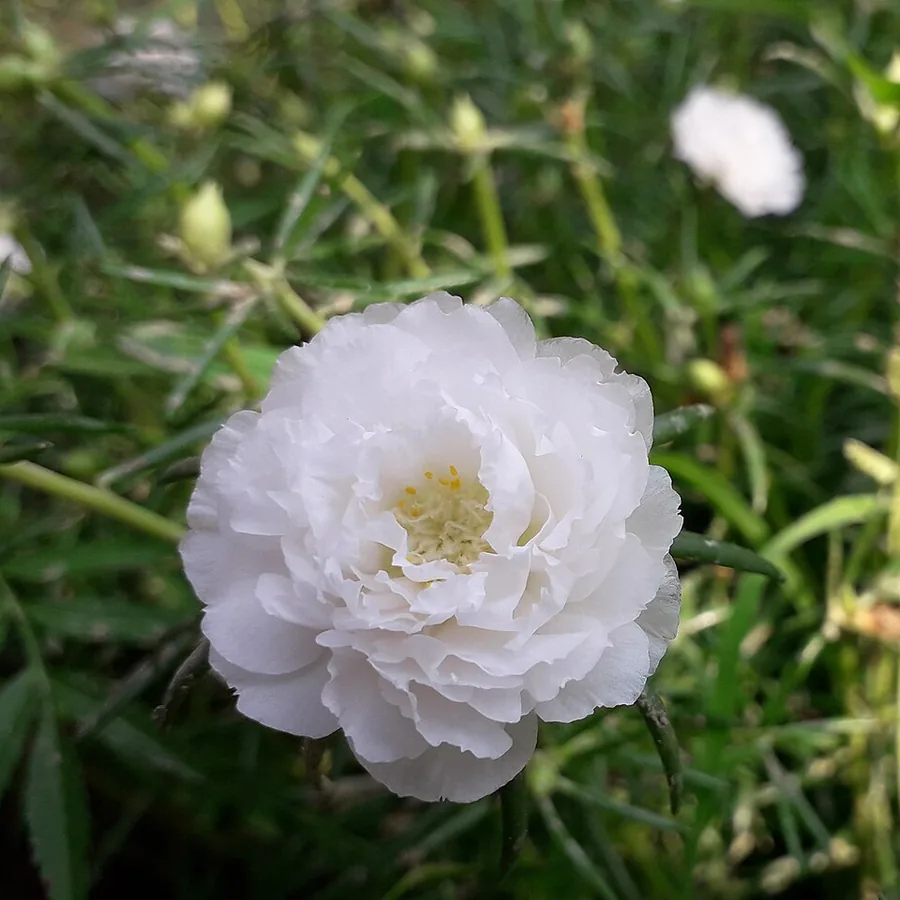
Got a baking, no-good corner where nothing seems to grow? That's exactly where moss rose is happiest. It's a low, spreading succulent with skinny, needle-like leaves and bright ruffled flowers, and it actually likes the heat, dry spells, and thin soil that make other annuals sulk. It comes from South America, and it's right at home in rock gardens, along path edges, and in pots that cook in the afternoon sun.
Honestly, the flowers are the whole point. You'll get hot pinks, oranges, reds, yellows, and whites, and a lot of them are doubled up like little roses (which is where the name comes from). There's one quirk to know, though: the blooms only open in bright sun, and they close up on cloudy days and later in the afternoon. That's how it picked up its other nickname, the eleven o'clock plant.
Here's the nice part: this plant barely asks for anything. Stick it in poor, fast-draining ground, give it every bit of sun you've got, and only water once the soil's gone dry. The catch? Being too generous backfires. Rich soil, lots of feeding, or watering too often just leave you with mushy, rot-prone stems and way fewer flowers.
Care
The short version: all the direct sun you can find, plus dry, sandy soil that drains fast. Water only when the ground's dried out, go easy on the feeding, and let the heat handle the rest.
Light
This one's easy: give moss rose 6 or more hours of direct sun a day. The flowers only bother opening in bright light, so the more sun it gets, the more color you'll see. Simple as that.
Water
Treat it like a succulent, because that's exactly what it is, and let the soil go bone dry before watering again, usually about every 7 to 14 days. Overwatering is the quickest way to lose it, honestly, while heat and dry spells barely faze it. When in doubt, just wait.
Soil
Moss rose isn't picky about soil, as long as it drains fast. Go with sandy, quick-draining ground, even the poor stuff other plants hate, and don't stress about pH since anywhere from 5.5 to 7.5 works fine. Drainage matters way more than how rich the soil is.
Temperature
It loves warmth and does great anywhere from 59°F to 95°F (15°C to 35°C). Frost, though? That's a dealbreaker, it'll kill the plant outright, so don't rush it outside until the cold's totally gone.
Humidity
Here's a plant that couldn't care less about humidity, so there's no number to worry about. It actually likes dry air and a bit of a breeze, which keeps away the rot that damp, stuffy spots tend to cause.
Feeding
Good news for the forgetful: moss rose barely needs feeding and actually blooms better when it's a little hungry. In lean soil, you can skip fertilizer completely, since too much nitrogen just grows leaves instead of flowers. Even in poorer ground, one light feed over the summer is plenty.
Pruning
If some stems start stretching out and looking leggy, just give them a pinch and the plant fills back out, nice and bushy. And deadheading? Don't bother with it. Moss rose tidies up after itself and drops its own seed for next year, so that's one less chore.
Repotting
Since it's grown as an annual, you'll almost never repot moss rose. Mostly you're just potting up nursery plants when you set them out. If you do keep one in a pot, watch for roots wrapping around the edge or soil that goes dry the second you water it, both of which mean it wants more room.
Size & spacing
Don't expect a big plant here. It stays low, only 4 to 8 inches (10 to 20 cm) tall, and spreads into a mat 6 to 12 inches (15 to 30 cm) across. Give the plants enough space to knit together without crowding, and you'll keep the air moving and the rot away.
When to plant
Moss rose is a warm-season plant through and through, so it won't put up with frost and it likes to wait for real heat. Start seeds inside in late winter, then move the plants out once the soil's warmed up and frost is behind you. After that? You'll get flowers from summer through the early part of fall.
Northern hemisphere
Southern hemisphere
Typical months for a temperate climate: start earlier in warm zones, later where spring frosts linger.
- Sow: 6 to 8 weeks before the last spring frost
- Plant: After all danger of frost has passed and soil has warmed
- Harvest: Summer through early fall
Hardiness
USDA hardiness zones: 2–11
Temperature: down to -46°C
Troubleshooting
Good news: almost anything that goes wrong with moss rose traces back to a couple of usual suspects, either it's getting overwatered or it's short on sun. The plant tips you off early too, in how the stems and flowers look, so there's time to set things right. Find your issue below and tweak the conditions before it gets any worse.
Stems going soft, black, and flopping over
When the base of the stems turns soft, goes black, and just flops over, that's root and stem rot, and it almost always comes from overwatering or ground that won't drain. You'll notice the bottom of the stem gets mushy and off-colored while the soil stays soggy for days. So ease right back on the water, mix a little sand or grit through the soil to loosen it up, and toss any plant that's already rotted through, since it won't bounce back.
Fix:
- Reduce watering and allow soil to dry
- Improve drainage with sandy or gritty soil
- Remove and discard severely rotted plants
Loads of leaves but where are the flowers?
Lots of green and hardly any blooms? Usually the plant's either short on direct sun or getting too much nitrogen. Moss rose needs a good 6 hours of hard sun before it'll bother blooming, and a heavy feed just pushes leaves instead of color. Move it somewhere sunnier and back off the fertilizer, and the flowers should turn up.
Fix:
- Move to a full-sun location
- Stop or reduce fertilizing
Toxicity
Quick heads-up on safety: moss rose is a little bit toxic, so it's smart to keep pets and grazing animals from snacking on it. The leaves and stems have soluble calcium oxalates in them, which mostly just means drooling and a queasy stomach, but a big mouthful can leave an animal weak and put a strain on its kidneys. Keep it away from cats, dogs, horses, and the rest, and go easy with its edible cousin purslane too, since it's a moderation kind of green.
Toxic to
Cats · Dogs · Horses · Rabbits · Livestock · Birds · People
Cats Mild
If a cat just nibbles, you're probably looking at some drooling and an unsettled tummy, nothing major. Get a whole mouthful in, though, and it might drool a lot and act weak, and a big serving can put a real strain on its kidneys.
Dogs Mild
A dog that chews on a stem or two usually gets off with a bit of drooling and a grouchy stomach. Just keep an eye out for weakness or on-again, off-again vomiting if yours has been munching a lot of it.
Horses Mild
For a horse, a mouthful here and there usually just means some slobbering and a dull, off-feed stomach. Heavy grazing's the thing to watch, though, since the oxalates pile up, grab hold of its calcium, and can leave the horse weak.
Rabbits Caution
Rabbits and moss rose really don't mix, and it comes down to those same soluble oxalates. It's just not worth the risk to a sensitive little gut, so keep the plant well clear of where a bunny lives and plays.
Livestock Caution
Sheep, goats, and cattle usually walk right past moss rose. But a hungry animal stuck on bare ground might eat enough to start drooling and feel weak, so it's worth fencing it off wherever your stock graze.
Birds Caution
Birds can be sensitive to these oxalates too, whether they're pets or backyard visitors. So the safe move is to keep moss rose away from their cages and pens.
People Caution
As for people, garden moss rose is best just admired, not eaten. Its cousin purslane does turn up on plates as a leafy green, sure, but it's got those same oxalates, so even that's a go-easy thing rather than a salad staple.
Common purslane (Portulaca oleracea) is eaten by people but also contains oxalates and should be consumed in moderation.
Helpline numbers

United States
ASPCA Animal Poison Control: (888) 426-4435 (fee applies)
Poison Control: (800) 222-1222



Canada
Poison Centres: 1-844-764-7669
Varieties
Most of the moss rose you'll find at the garden center comes from a handful of breeding series, and each one's got its own thing going: fuller flowers, brighter color, or blooms that'll stay open even when the light isn't great. Here are the three worth knowing.
Sundial Series
This one's a compact double that opens up nice and early each day and keeps its flowers going even when the light's a little weak.
Margarita Series
A tough, heat-loving double that just keeps flowering in beds and pots, even through the roughest part of summer.
Happy Hour Series
A mounding kind that puts out big double blooms in a huge spread of colors.
How to propagate
Want more moss rose? It's honestly one of the easiest plants to multiply. You can grow it from its tiny, dust-like seed or just root a few cuttings off one you've already got, and neither way takes much effort.
SeedEasy
Start indoors 6 to 8 weeks before last frost or direct sow after frost; self-sows readily · 2 to 4 weeks to germinate and establish
Growing moss rose from seed is about as foolproof as it gets, but here's the trick: the seed needs light to sprout, so scatter it on top of the soil and leave it uncovered. Get a tray going indoors 6 to 8 weeks ahead of your last frost, or just sprinkle it onto warm ground once the cold's passed. Let it take 2 to 4 weeks to pop up and get established, and from then on it'll happily reseed itself every year.
Stem cuttingsEasy
During the active summer growing season · 1 to 2 weeks to root
Cuttings are just as easy, and summer, when it's growing hard, is the time to take them. Snip a healthy stem off the plant, give the cut end a few hours to dry out and firm up so rot doesn't set in, then poke it into some gritty soil. Give it around 1 to 2 weeks and it'll have rooted.
Myths
Portulaca's got to be pet-safe, right, since purslane is a vegetable people eat?
They're related, yeah, but that doesn't make the garden one a safe snack. The ASPCA lists Portulaca species as toxic to cats, dogs, and horses because of soluble calcium oxalates, and even the purslane you'd eat has those same oxalates in it. So keep it out of your pets' reach.
Moss rose keeps its blooms open the whole day.
Nope. The flowers only open when the sun's bright and direct, and they shut again in the shade, when clouds roll in, and as the afternoon wears on. That's literally why folks call it the eleven o'clock plant.