Houseplant · Cactaceae
Prickly Pear
Opuntia ficus-indica
Give it sun, sharp drainage, and hardly any water, and prickly pear pretty much runs itself.
Full sun
USDA 8–11
3–16 ft · 1–5 m
Overview
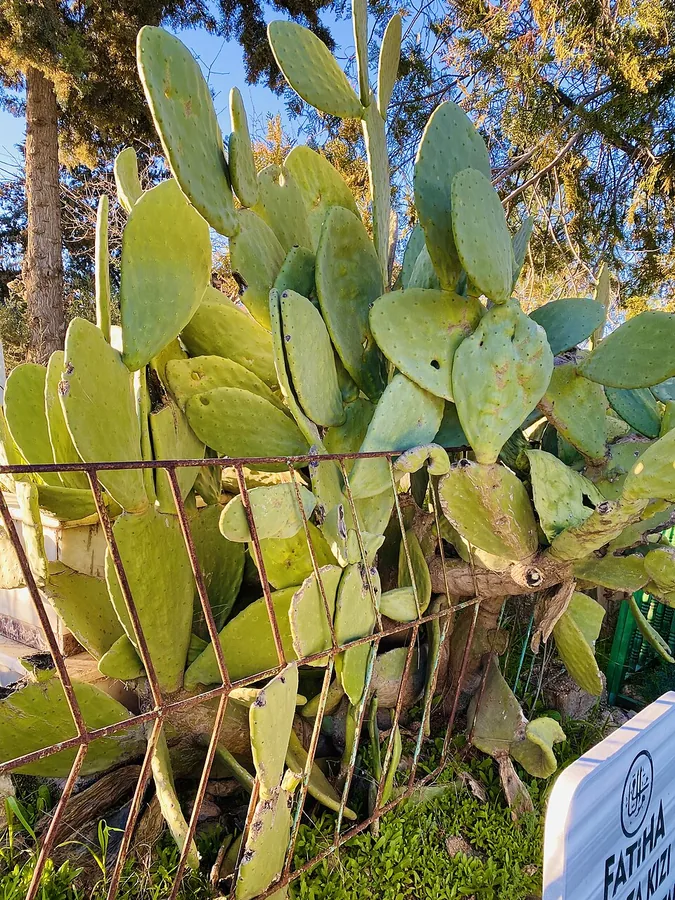
Want a plant that's almost impossible to kill? Prickly pear is about as tough as they come. It's a paddle-shaped cactus from the Americas, and these days it's growing in warm gardens just about everywhere. Those flat green pads aren't leaves, by the way, they're stems, and they hold enough stored water to get the plant through a long dry spell. Pop it in a bright window or a hot, sunny corner outside, and it'll pretty much look after itself.
Here's a fun part: you can eat it. The young pads get cooked up as nopales, and the ripe red fruit is eaten as tunas, both regulars in Mexican and southwestern kitchens. And before the fruit shows up in late summer, the plant puts on a nice show of cup-shaped flowers in yellow, orange, or pink.
There's one thing you really do have to watch, though. On top of the obvious large spines, every pad is covered in glochids, those tiny barbed bristles that come loose the second you brush them and dig into your skin, where they're a pain to get out. So keep it away from walkways and pets, and never grab it without thick gloves and tongs.
Care
The short version: full sun, a gritty mix that drains fast, and water only when the soil's completely dry. It'll handle a dry spell no problem, but too much water is what really does it in, so when in doubt, hold off.
Light
Prickly pear wants full sun, so give it the brightest spot you've got. It'll cope with a bit less, but skimp on light and the pads turn thin and pale while the whole thing stretches out and flops over.
Water
This is where people trip up. Water it deeply, but only once the mix is totally dry, and cut way back in the cool months when it stops growing. It's quick to rot, so if you're not sure, just wait a bit longer.
Soil
Go with a gritty, fast-draining sandy or cactus mix that won't stay soggy. Anywhere from 6.0 to 7.5 on the pH scale is fine, but honestly the drainage matters way more than the number.
Temperature
It's tougher than most cacti about cold, handling anything from 23°F to 104°F (-5°C to 40°C). That said, a hard frost will still nip the pads, so don't push your luck when a big freeze rolls in.
Humidity
Dry air? No problem at all, which is why heated indoor rooms suit it fine. What you actually want to avoid is damp, stagnant air, since that's what brings on the rot and pests it usually shrugs off.
Feeding
Only feed it during the spring and summer growth, and go light. A dilute, low-nitrogen cactus fertilizer every once in a while is plenty, because too much nitrogen just makes soft, floppy pads.
Pruning
Snip off any beat-up or crowded pads with a clean knife to keep things open and healthy. And always put on thick leather gloves and grab the tongs, because the spines and loose glochids make bare hands a bad idea.
Repotting
No need to rush this one. Bump it up a pot size only every 2 to 4 years, or whenever it gets really rootbound and tippy. Repot into dry mix and hold off watering for a few days so any roughed-up roots can heal.
Size & spacing
Given time, it can get anywhere from 3 to 16 feet (1 to 5 m) tall and 3 to 10 feet (1 to 3 m) wide. So give it some elbow room, both to grow and to keep those spines away from where people walk.
Troubleshooting
Good news: almost everything that goes wrong here comes down to watering, and the rest is usually a pest. The pads make it pretty obvious too, going soft, wrinkly, or fuzzy depending on what's up. Find the one that looks like yours below and jump on it before rot gets going.
Soft, mushy pads going dark at the base
If the base is going soft and the pads are turning mushy, yellow, or black, that's root and stem rot, and it almost always means too much water or a pot that won't drain. First thing, stop watering, tip the plant out, and cut off every soft, discolored bit with a clean blade. Let the cuts dry and callus over, then pop the firm pads back into dry, gritty mix and they'll bounce back.
Fix:
- Stop watering immediately
- Unpot and cut away all soft, rotted tissue with a clean blade
- Let cuts callus, then repot healthy pads in dry gritty mix
Wrinkly, thin pads that have gone soft
Pads looking wrinkly, thin, and shriveled? That's usually underwatering, or roots that got hammered by a long dry stretch. One good deep soak and they'll plump right back up in a day or two. After that, let the mix dry out all the way before you water again, and just double-check the roots underneath are still firm and not rotting.
Fix:
- Water deeply once
- Let the mix dry completely before watering again
- Check that roots are intact and not rotted
White fluffy tufts that smear red
Those fluffy white spots are cochineal scale, a little bug that hides under a waxy coat and leaves a crimson smear when you squish it. Knock the colonies off with a strong blast of water, then hit the pads with insecticidal soap or horticultural oil. Do it again every week or so until the plant finally stays clean.
Fix:
- Blast off colonies with a strong jet of water
- Treat with insecticidal soap or horticultural oil
- Repeat treatments until clear
Toxicity
No need to stress about poison, because prickly pear doesn't have any. People eat the pads and fruit all the time, so a nibble won't hurt a pet or a kid. The catch is physical, not chemical: those spines and barbed glochids can really hurt a mouth, paw, or eye, so keep pets and little ones back and handle it carefully.
Safe for
People · Cats · Dogs · Horses · Rabbits · Livestock · Birds
Cats Non-toxic
Nothing in prickly pear is going to poison a cat, so the flesh itself is safe if they get into it. The real issue is physical: a curious cat batting at a pad can end up with spines or fine glochids stuck in a paw, lip, or tongue.
Dogs Non-toxic
A dog can chew on a piece or even swallow it without any chemical harm. What actually hurts is the spines and barbed glochids, which snag in the mouth and gums and are no fun to pull out.
Horses Non-toxic
Horses eat prickly pear without any sign of poisoning, and singed pads even get fed to stock out in dry country. The catch is the raw spines and glochids, which stick in the lips and mouth.
Rabbits Non-toxic
The pads are safe for a rabbit to nibble, no toxin involved. Just trim off every spine and glochid first, because a rabbit's soft mouth has no defense against the barbs.
Livestock Non-toxic
Cattle, goats, and sheep tuck into prickly pear happily, and ranchers burn the spines off to make it safe winter feed. Leave the spines on, though, and the glochids will tear up the mouth and gut.
Birds Non-toxic
Birds go for the ripe fruit and spread the seeds around, no poisoning at all. The only thing to watch is the spines and glochids, so they stick to the soft, ripe pulp.
People Non-toxic
Both the pads, sold as nopales, and the fruit, the tunas, are common foods that are totally safe to eat. The only catch is handling: scrub or singe off the spines and glochids before they get anywhere near skin or mouth.
The real danger is physical, not chemical: besides large spines, prickly pear bears glochids, tiny barbed bristles that detach easily and lodge painfully in skin, eyes, and mouth, where they are very hard to remove. Always handle with thick gloves and tongs.
Varieties
Opuntia is a huge group, but only a few show up often enough to bother learning. These are the ones you'll probably run into.
Opuntia ficus-indica (spineless forms)
These are the nearly spineless types people grow commercially for nopal pads and tuna fruit, though even the smooth ones still have glochids you'll want to scrub off.
Opuntia microdasys (bunny ears)
It's a small, popular houseplant, but don't let those soft-looking pads fool you, they're packed with dense white or yellow glochids and way pricklier than they look.
Opuntia stricta
This one grows upright and is mostly known as a nasty invasive weed across parts of Australia and Africa.
How to propagate
Making more prickly pear is about as easy as it gets, and honestly one healthy pad is usually all you need.
Stem cuttingsEasy
Spring to summer · 4 to 8 weeks to root
Rooting a pad is the easy route, and spring through summer is when to do it. Twist off a healthy pad, let the cut end dry and callus for a few days, then stand it up in dry, gritty mix and it'll root in 4 to 8 weeks. Keep those gloves on the whole time, because the glochids are still there waiting.
SeedModerate
Spring · Several months to a year
Growing from seed in spring is the slow way to go. The seeds come up all uneven, and a plant can take several months to a year to really get going, which is why most people just root a pad instead.
Myths
Something this spiky has got to be poisonous.
Nope, prickly pear isn't toxic at all, and people eat it all over the world. The pads sell as nopales and the fruit as tunas, both totally normal kitchen ingredients. The only thing that will actually get you is the spines and glochids, not anything inside the plant.
A pad without big spines is fine to grab bare-handed.
Sure, the big spines are easy to see, but they're not really the problem. Even a smooth-looking pad is loaded with glochids, tiny barbed bristles that let go at a touch and bury themselves in your skin. Always handle prickly pear with thick gloves and tongs, spines or not.