Houseplant · Commelinaceae
Purple Heart
Tradescantia pallida
Hand it plenty of light and soil that drains, go easy on the water, and purple heart keeps its deep violet going strong.
Full sun
USDA 10–11
8–12 in · 20–30 cm
Overview
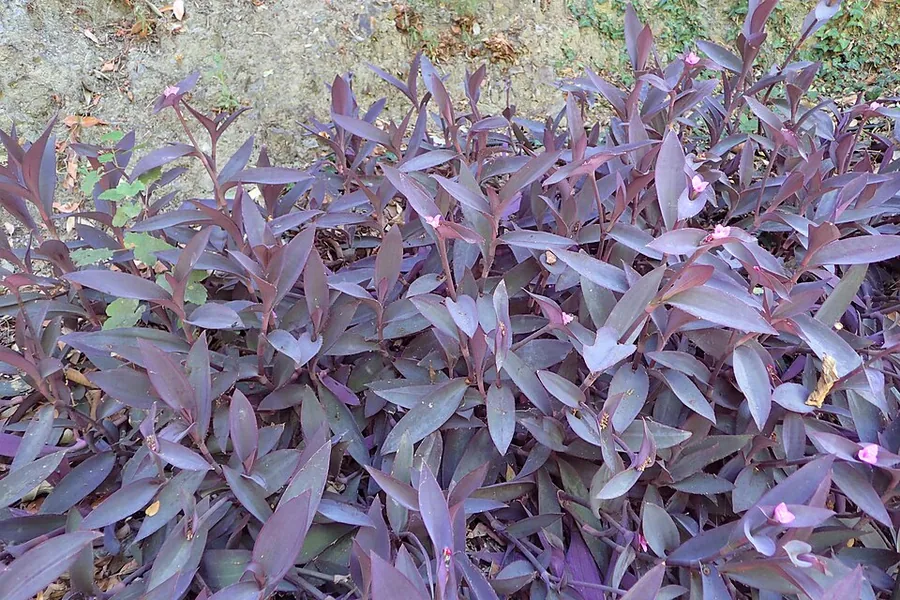
So why grow purple heart? Color, mostly. Those trailing stems and narrow leaves take on a deep violet-purple you won't find on many houseplants, and little pink flowers pop up once the weather warms. It's a Mexican native and part of the spiderwort crowd, which makes it a cousin of the inch plants.
The best part? It barely asks for anything. It grows fast, shrugs off a dry spell, and roots from just about any stem that snaps off. The catch is light. Give it a bright spot and the violet stays deep, but tuck it into a dim corner and the leaves slide to green while the stems get long and floppy.
Inside, it's happiest parked in your brightest window, where it'll tumble over the pot rim and fill out fast. Just know the sap is a mild skin irritant, so it's worth grabbing gloves before you prune, and keeping the plant where the pets and kids can't sneak a nibble.
Care
The short version: hand it as much light as you can for the best color, pop it in soil that drains and let it dry out between waterings, keep it warmer than 50°F (10°C), and give it a pinch now and then so it stays nice and full.
Light
Light's the big one here. Hand it full sun or your brightest window and that deep violet sticks around, but leave it in the shade and it greens up and gets lanky. Got a south-facing window? That's the sweet spot indoors.
Water
Good news for forgetful waterers: once it's settled in, purple heart is super drought-tolerant. Wait for the soil surface to dry before the next drink, because honestly it'd sooner sit dry than soggy. What it can't stand is sitting in wet soil, since that rots the roots and stems.
Soil
Soil isn't a big deal as long as it drains. A rich, organic mix is ideal, but clay, loam, or sand all work fine, and it's not fussy about pH either. The one thing it hates? A pot that stays wet and boggy.
Temperature
Keep it cozy, above 50°F (10°C). It's got zero tolerance for cold, and a frost will turn the top black, so regular room temps are perfect all year. If winter dips below that where you are, just keep it as a houseplant, or move it indoors when things get chilly.
Humidity
Don't sweat the humidity. Regular room air is totally fine, and dry indoor air doesn't faze it one bit.
Feeding
While it's in active growth across spring and summer, feed it about once a month with a balanced general-purpose fertilizer. Once things cool off and the growth slows down, you can just stop.
Pruning
Feel like tidying it up? Nip the stems back any time and it'll stay bushy and full and keep pushing out new shoots, then snip the flower stems off after they fade. Bonus: those pinched-off tips root like a charm, so you can start whole new plants.
Repotting
Plan on repotting it every 1 to 2 years, or sooner if it's bursting out of its pot. Roots sneaking out the bottom, new growth that's looking thin, or the soil going bone-dry almost the moment you finish watering are all little hints it wants more room.
Size & spacing
It stays pretty small, around 8 to 12 inches (20 to 30 cm) tall and spreading out to 12 to 18 inches (30 to 45 cm) wide. All that trailing makes it perfect for a hanging pot or draped over the side of a container.
Troubleshooting
Here's the reassuring bit: purple heart doesn't get into much trouble, and when it does, it's almost always about light or water. Take a look at the symptoms below, find the one that fits, and sort it out before it gets worse. Easy enough, right?
Soft, black, mushy stems folding over at the base
When the base goes soft, dark, and mushy, that's root and stem rot, and it comes from soil left soaking wet, the one problem that can really do this plant in. The stems get slimy and the roots go brown and soft instead of pale and firm. Ease off the water, cut away everything that's rotted, and root a few healthy cuttings in fresh, well-draining mix.
Fix:
- Stop watering and allow soil to dry out
- Cut away rotted tissue and re-root healthy firm stem cuttings in fresh well-drained mix
- Discard severely rotted plants and soil
Blackened, dying growth after it got cold
Purple heart really can't handle cold below 50°F (10°C) or a frost, so a chilly night leaves the top all limp and blackened. Trim off whatever got hit and keep it warm. If frost is a thing where you live, bring the pot inside or root some cuttings to carry it through winter, rather than crossing your fingers on the roots.
Fix:
- Remove damaged top growth
- Bring containers indoors or take cuttings to overwinter where frost occurs
- Where roots survive in mild climates, allow the plant to resprout from the base
Speckled or sticky leaves, maybe some webbing
A few sap-suckers like to move in on indoor plants, and spider mites, mealybugs, aphids, and scale each leave their own clues. Keep an eye out for fine webbing, little cottony blobs, clusters of tiny bugs, or hard bumps along the stems and under the leaves. Give it a rinse and a wipe, hit it with insecticidal soap or horticultural oil, and keep it away from your other plants till it's clean.
Fix:
- Rinse plant and wipe off pests
- Treat with insecticidal soap or horticultural oil, repeating as needed
- Isolate affected plants to prevent spread
Leaves going green and stems getting leggy
If the violet's fading to plain green and the plant's sprawling out, it just wants more light, plain and simple. Short on sun, the stems shoot up and the leaves drift far apart. Shift it to your sunniest window, or set it outside in full sun, give the leggy bits a pinch, and the color and shape bounce right back.
Fix:
- Move to a spot with full sun or as much bright direct light as possible
- Pinch back leggy stems to encourage compact, well-colored regrowth
Long, bare stems with leaves only at the ends
This plant naturally wants to trail and flop around, so leave it be and the stems run long and leafless except right at the tips. Dim light just makes it flop more. A quick pinch gets it branching again, and you can root the bits you snip off to fill things back in.
Fix:
- Pinch or cut stems back to encourage branching and bushier growth
- Root the removed tips as cuttings to fill in the plant or start new ones
Red, itchy hands after handling the plant
The sap that oozes from a snapped leaf or stem is a skin irritant, so it can leave your hands sore and itchy, basically a mild rash. If it happens, soap and water sorts it out. Easiest fix of all? Wear gloves any time you're pinching, pruning, or taking cuttings.
Fix:
- Wash the affected skin with soap and water
- Avoid further bare-handed contact with cut stems
Toxicity
No need to panic, but this one's not totally hands-off either. The sap's a mild irritant, so it can leave your skin feeling red and prickly, and a pet that takes a bite might drool a little and feel off. Pop on gloves for cut stems, and keep it somewhere the animals and kids can't help themselves.
Toxic to
Cats · Dogs · Horses · Rabbits · Livestock · Birds · People
Cats Mild
If a cat chews on it, expect a bit of drooling and a slightly upset tummy, and any sap on its skin can bring on a red, itchy patch. It's all pretty mild, but a cat that won't quit chewing is better off kept away.
Dogs Mild
Dogs go through pretty much the same as cats. A nibble might mean a little drool and a short bout of tummy trouble, plus some skin irritation anywhere the sap lands on them.
Horses Caution
That irritating sap can bug a horse around the mouth and on the skin too, so it's better to keep them from grazing on it than to let them have at it.
Rabbits Caution
There's no real record of rabbits eating it, and honestly its irritating sap is plenty of reason to leave it off their plate. Don't hand it over as a snack.
Livestock Caution
Grazing animals can get the same sore mouth and upset stomach from the sap, so fencing it off is the way to go anywhere they might reach it.
Birds Caution
Pet birds are little and pretty delicate, so that irritating sap means it's best kept well out of reach. Give it a home away from their cage and perches.
People Caution
Fiddling with cut stems can bring on contact dermatitis, where your skin goes red and itchy right where the sap gets on it. Throw on gloves before pruning or grabbing cuttings, and don't let curious kids stick the leaves in their mouths.
Cell sap is a skin irritant (contact dermatitis); wear gloves when pruning, pinching, or taking cuttings
Helpline numbers

United States
ASPCA Animal Poison Control: (888) 426-4435 (fee applies)
Poison Control: (800) 222-1222



Canada
Poison Centres: 1-844-764-7669
Varieties
You'll pretty much only find purple heart in one named form, and it's the one behind that deep color everyone's after.
'Purpurea'
It's the one you'll spot on basically every purple heart for sale, its stems and leaves a deeper, steadier violet-purple than the wild species.
How to propagate
Want more of it? Good news, because purple heart is about as easy to clone as plants get, rooting from just about any stem you cut off.
Stem cuttingsEasy
Any time during active growth · Roots in 1-2 weeks
Honestly, it's hard to think of an easier plant to multiply, and all you need is a cutting. The stems snap easily and root from every node, so poke a tip or a chunk of stem into soil or drop it in water, and you'll have roots in a week or two. Do it whenever it's actively growing.
Myths
Purple heart needs watering all the time or it'll die when things dry out.
Actually, it's the total opposite. Once it's established, dry soil doesn't bother it, and it's too much water that'll get you, since waterlogged roots rot and the stems keel over. Let it dry out between waterings and you're golden.
The purple stays purple no matter where you stick it.
Nope, the light calls the shots on color. Full sun is what pulls out that deepest violet, while a shady spot lets the color slip back to green and sends the stems reaching for light.