Houseplant · Commelinaceae
Tradescantia 'Nanouk'
Tradescantia albiflora 'Nanouk'
Keep it bright and pinch it now and then, and Nanouk stays rosy, full, and hard to mess up.
Bright indirect
50–81°F · 10–27°C
USDA 9–12
4 in · 10 cm
Overview
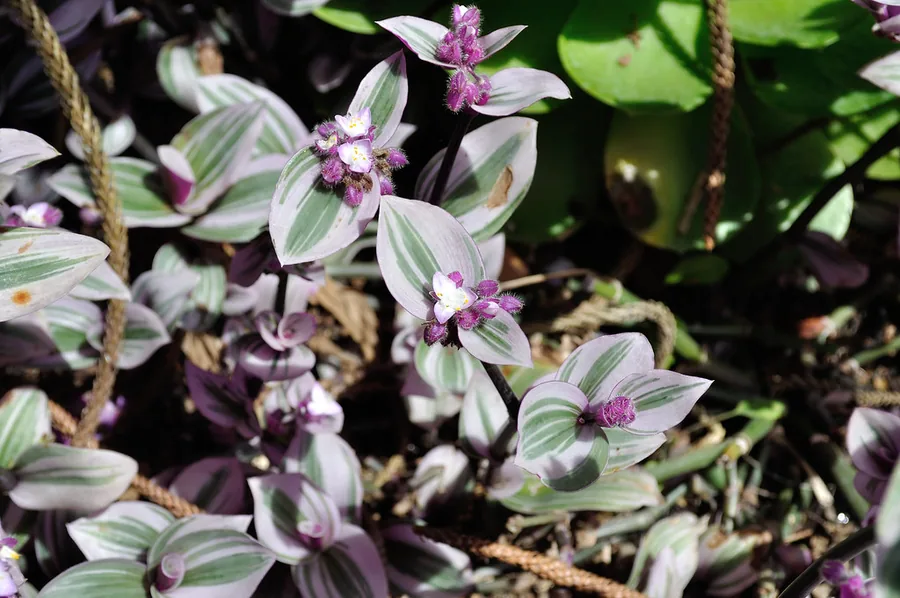
Let's be honest, most people grow Nanouk for the color, and who could blame them? Its chunky little leaves come striped in pink, green, and cream, the undersides are washed with purple, and instead of trailing off into long vines it stays low and full. It's a Dutch-bred houseplant that's now sold just about everywhere, mostly because it fills out a pot so easily.
Under all that color it's a pretty tough customer, part of the Commelinaceae family, the same crew as the everyday inch plant. That's why it's so easygoing. Break off just about any piece and it'll root, it branches on its own, and it shakes off a bad week without much drama. The one thing it's fussy about? Light, because the pink slides back to plain green if you leave it somewhere dim.
Think of it as an indoor plant for all year. Give it some warmth, bright filtered light, and soil that actually drains, and a quick pinch here and there gets you a thick, mounded little plant. About the only way to kill it is to keep the soil soggy until the stems rot, and honestly, that's not hard to sidestep.
Care
The short version: keep it in bright, filtered light so the pink sticks around, water once the top of the soil's dried out and go easy in winter, keep it warm in soil that drains well, and pinch the tips a lot so it stays nice and bushy.
Light
Pop Nanouk in bright, filtered light near a window, since that's really what keeps the pink going in the leaves. Leave it somewhere dim and the color just fades to green while the stems go stretchy. Only thing to dodge is harsh midday sun, which can scorch the leaves.
Water
When it's growing, water it properly, then hold off until the top inch (3 cm) of soil has dried before you go again. Ease way back in winter once it slows down. Soggy soil's the real thing to watch here, so let the pot drain and never leave it sitting in a puddle.
Soil
Go with a free-draining, loam-based mix or a peat-free houseplant compost. It's all about drainage, because those juicy stems will rot in anything that stays wet. Toss in a handful of perlite or grit and a heavy mix loosens right up.
Temperature
Keep it somewhere in the 50°F to 81°F (10°C to 27°C) range, which is just normal room warmth. It can't handle frost at all, so in winter shift it away from cold glass and drafty spots.
Humidity
Regular household humidity is totally fine, and there's no magic number to hit. If the air gets really dry, though, the tips can crisp up and spider mites move in, so a slightly humid corner keeps it happy.
Feeding
Feed it once a month with a liquid houseplant fertilizer through spring and summer while it's growing. Then quit over winter when it's resting, because feeding a plant that isn't growing just leaves salt sitting in the soil.
Pruning
Pinch those growing tips often and you'll keep it bushy instead of leggy. And if a fully green shoot pops up, pull it off, because those reverted stems grow faster and will crowd out the pretty variegated ones.
Repotting
No rush to repot, honestly, since this compact little cultivar takes its time filling a pot. Wait until it's genuinely rootbound, which shows up as roots poking out the drainage holes, water running straight through, or growth that just stops.
Size & spacing
Nanouk stays little, only about 4 inches (10 cm) tall and spreading 4 to 20 inches (10 to 50 cm) across. That low, mounded shape? Perfect for a shelf, a windowsill, or right up front in a group of plants.
Troubleshooting
Nanouk pretty much tells you what's up through its leaves and stems. Washed-out color, bare leggy stems, or soft black bases each point to their own fix. Just find whatever looks familiar below and jump on it early, while there's still plenty of plant to work with.
Soft black stems and a plant keeling over
Wet soil that never dries leads to root and stem rot, and that's the one thing that'll actually finish this plant. Quit watering right away and let it dry, then tip it out, cut off anything soft and brown, and repot into fresh soil that drains. If the rot's gone too far to fix, just grab a few healthy tips and start fresh.
Fix:
- Stop watering and let the soil dry out
- Remove rotted roots and stems and repot into fresh, free-draining mix
- Take healthy tip cuttings to start a fresh plant if rot is advanced
Webbing, speckly leaves, or white fluff
These are your classic spider mites, aphids, and mealybugs. Webbing and tiny speckles mean mites, little soft clusters mean aphids, and white cottony fluff at the leaf joints means mealybugs. Rinse and wipe them off, hit it with insecticidal soap or horticultural oil, and keep it away from your other plants till it's clean.
Fix:
- Rinse/wipe off pests and treat with insecticidal soap or horticultural oil
- Isolate the plant to prevent spread to other houseplants
- Repeat treatment as needed until clear
Pink turning plain green
Don't panic, this is just not enough light, not a sick plant. When it sits too far from a window, the pink and white bits of the leaf can't feed themselves, so the plant leans on its green parts and greens over. Scoot it into bright, filtered light and clip off any all-green shoots before they hog the whole pot.
Fix:
- Move to a spot with bright, filtered/indirect light
- Avoid harsh direct midday sun, which can scorch the leaves
- Remove any fully plain green reverted shoots so variegated growth is not overtaken
Long bare stems, leaves only up top
Legginess shows up when nobody's pinching it, and low light makes it worse since the stems go reaching for the window. Pinch the tips back hard and you'll push out fresh branches to fill it in again. And don't chuck those trimmings, because they root in a week and can go right back in to bulk it up.
Fix:
- Pinch or cut back the growing tips to force branching and bushier growth
- Propagate the trimmed tip cuttings to fill in the pot
- Increase light if the plant is stretching
Crispy brown tips and burnt patches
Harsh midday sun brings on leaf scorch, and the worst of it lands on the leaves closest to the glass. Dry air and sloppy watering can brown the tips too. Move it back out of that direct sun into bright, filtered light, snip off the damaged leaves, and try to keep your watering even.
Fix:
- Move out of harsh direct sun into bright filtered light
- Trim badly damaged foliage
- Keep watering consistent and maintain average humidity
Toxicity
So it's mildly toxic, not the harmless kind, but there's no need to worry. The sap can irritate skin and give people a rash, and a pet that chews a leaf might drool a bit or get a slightly upset stomach. Nothing here is dangerous, but it's smart to pop on gloves when you prune and keep leaf-chewers at arm's length.
Toxic to
Cats · Dogs · Horses · Rabbits · Livestock · Birds · People
Cats Mild
A cat that chews on the leaves might drool a little or get a mildly queasy tummy, and where the sap touches skin you could see a red, itchy patch. It stays pretty minor, but it's worth keeping a leaf-nibbling cat away from it.
Dogs Mild
Dogs are basically the same deal. The irritant sap can redden a muzzle or paws where it lands, and a chewed stem brings on a bit of drooling or a quick spell of mild stomach upset.
Horses Mild
The ASPCA lists this one as toxic to horses too, with skin contact being the main thing to watch. The sap can irritate any skin it touches, though let's face it, a houseplant rarely gets anywhere near a horse.
Rabbits Caution
There's no rabbit-specific info out there, so it's safest to treat it as a caution rather than a snack. That same irritant sap that bugs other animals makes it one to keep well away from the hutch.
Livestock Caution
Grazing animals haven't really been studied here, and the irritant sap alone is reason enough to be careful. As a potted houseplant, it hardly ever ends up near cattle, goats, or sheep anyway.
Birds Caution
There's no clear answer on birds, so play it safe and keep pet birds from pecking at the leaves. The sap that irritates skin could just as easily bug a curious beak.
People Caution
For people, the sap's a known skin irritant and can bring on contact dermatitis, basically an itchy rash, if you handle the cut stems. Throw on gloves when you're pruning or taking cuttings, and give your hands a wash after.
Sap can irritate skin; the RHS advises wearing gloves when handling. The toxic principle is irritant sap (contact dermatitis / mild GI irritation), NOT calcium oxalate
Helpline numbers

United States
ASPCA Animal Poison Control: (888) 426-4435 (fee applies)
Poison Control: (800) 222-1222



Canada
Poison Centres: 1-844-764-7669
Varieties
When someone says Nanouk, they usually mean this pink one, but there's a close relative that's handy to know about.
Tradescantia 'Green Nanouk'
There's also 'Green Nanouk', a form the RHS recognizes that keeps the same compact habit but swaps the famous pink variegation for plain green leaves.
How to propagate
Want more of these? It's about as easy as propagation gets. One tip cutting roots in just a few days, so a single Nanouk can turn into a whole shelf before you know it.
Stem cuttingsEasy
Spring to summer · Roots in about 1 week in summer (~21°C), 2 weeks in winter (~18°C) per the plant patent
This has got to be one of the easiest houseplants to make more of. Snip a tip cutting in spring or summer, stick it in water or some moist soil, and it'll root in about a week at 70°F (21°C), or closer to two weeks in the cooler light of winter around 64°F (18°C). Since the stems branch freely and root at every node, a few cuttings fill a pot in no time. Just one catch: Nanouk's a patented cultivar, so propagating it to sell isn't allowed.
Myths
Nanouk is totally safe for pets and people.
Not really. The ASPCA has the inch plant down as toxic to dogs, cats, and horses, and both NC State and the RHS say the sap irritates skin, causing contact dermatitis and a mild upset stomach. It's the irritant sap doing it, not the calcium oxalate you get in loads of other houseplants, so a pair of gloves sorts it out.
Nanouk keeps its pink no matter where it lives in the house.
Nope. Stick it in a dim corner and it greens out, losing the exact pink you wanted. The color runs on light, so bright, filtered light is what keeps the pink, green, and white going. Move it up close to a bright window, just out of the harsh direct sun.