Houseplant · Cactaceae
San Pedro Cactus
Echinopsis pachanoi
Give it loads of sun and a good dry-out between waterings, and this tall columnar cactus just keeps climbing.
Full sun
Every 10–21 days
50–95°F · 10–35°C
USDA 8–11
Overview
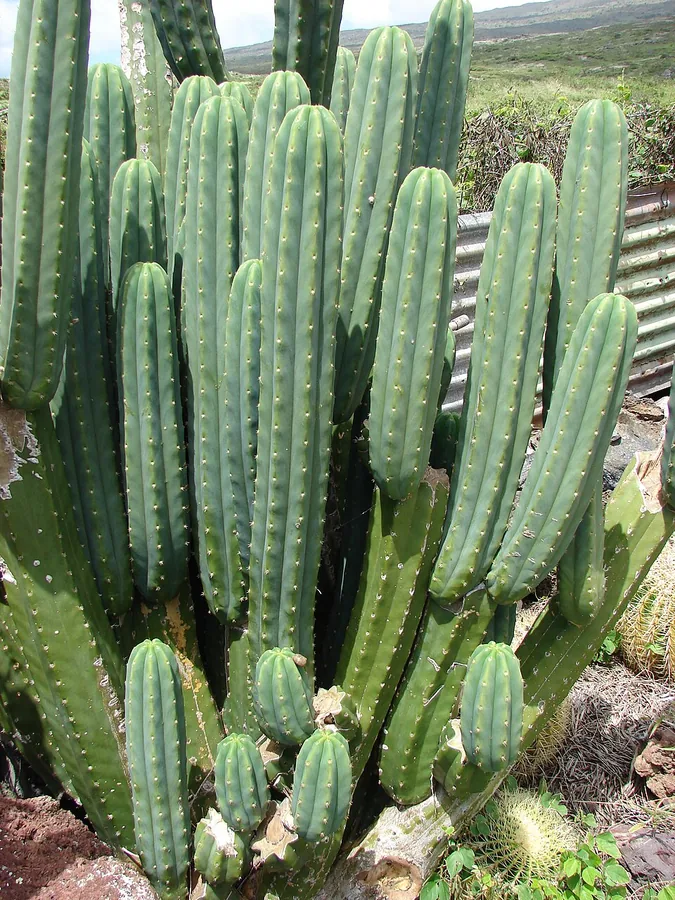
San Pedro hails from the rocky Andean slopes of Ecuador and Peru, and honestly it's a breeze to live with. Pop it somewhere sunny and it'll throw up tall, ribbed green columns that climb way past head height. Get the watering sorted and this easygoing cactus pretty much takes care of itself.
Want a cactus that actually does something? This one grows fast. Give it full sun and some warmth and the stems pile on height every season, and older plants even open big, fragrant white flowers at night in summer. The clone everyone swaps around, the one just called 'PC', is the speediest of the bunch.
Here's the thing to remember though: the flesh holds mescaline and related alkaloids, which is why it's been part of traditional Andean life for ages and why the law keeps an eye on it. Growing it just to look at is fine in most places, but eating any of it is off the table. Think of it as a plant to show off, not to snack on.
Care
The short version: hand it all the direct sun you've got, plant it in a gritty mix that drains in a flash, and only water once the soil's dried out all the way. Keep it warm, back right off the water in winter, and it'll basically grow itself.
Light
Give it full sun wherever you can, ideally the brightest window in the place. It'll manage in bright indirect light or partial sun, but go too dim and the new growth comes in thin and stretchy. No bright window? A grow light running 14 to 16 hours a day keeps it nice and sturdy.
Water
Soak it right through so water pours out the bottom, then just leave it until the mix is totally dry again, which usually works out to every 10 to 21 days while it's growing. Come winter, keep it nearly dry and only water once in a while. Overwater it and you'll lose it to rot faster than anything, so when in doubt, wait.
Soil
Stick it in a gritty, fast-draining cactus mix, something like one part potting soil to one part coarse sand. Anywhere from 6.0 to 7.5 on the pH scale is fine. The whole point is that water zips straight through and doesn't hang around the roots.
Temperature
It's happy across a big range, from 50°F to 95°F (10°C to 35°C). Warmth is what gets it growing fast in summer, and cold, damp air is what invites rot, so bring it in or keep it dry before things get chilly.
Humidity
Low humidity is right up its street, somewhere around 10% to 40%. Regular dry indoor air suits it just fine, so there's no misting or fussing needed here.
Feeding
Feed it a little from late spring through summer with a phosphorus-rich houseplant fertilizer at half strength. Once or twice all season is plenty, really. Pile on the nitrogen and you'll just get soft, floppy growth that stretches.
Pruning
Good news: this cactus doesn't really need pruning. Only step in to cut off damaged or rotting bits, and when you do, use a clean blade and let the cut callus over before it gets anywhere near water again.
Repotting
Bump it up to a fresh pot every 2 to 4 years, or sooner if roots start poking out the drainage holes, it goes top-heavy, or the mix dries out weirdly fast. Repot into dry gritty mix and hold off watering for a week so any roughed-up roots can heal.
Size & spacing
Given enough time, it'll shoot up 6.5 to 19.5 feet (2 to 6 m) tall and spread out 1 to 6 feet (30 to 180 cm) as it branches and pups. A big one gets heavy up top, so give it space and a solid, weighty pot to sit in.
Troubleshooting
Pretty much every hiccup here comes down to water or light. Rot from a soggy pot is the one that'll actually finish it off, while stretched or scorched growth is just the plant telling you the light's off. Find what matches below and sort it before the soft stuff spreads.
Soft, mushy bits turning brown or black on the stem
That's rot, and it nearly always kicks off with water hanging around the roots too long. Cold, soggy mix lets fungus and bacteria sneak in through any little wound, and from there the soft tissue just keeps spreading. Cut back to firm green flesh with a sterile blade, let the wound dry and callus, then re-root the healthy top in dry, gritty mix.
Fix:
- Cut away all soft and discolored tissue back to firm green flesh with a sterile blade
- Let the cut surface callus in a dry, airy, shaded spot for 1-2 weeks
- Re-root the healthy upper section in dry, gritty mix
- Withhold water until new roots form
Thin, pale new growth leaning at the window
That's etiolation, which is just the plant stretching after light it isn't getting enough of. The fresh growth shows up skinny and pale next to the older ribbed sections, and it bends toward the brightest spot around. Move it into full sun, but ease it over there across a couple of weeks so it doesn't scorch, and go easy on the feeding while it bounces back.
Fix:
- Move to the brightest available spot or full sun
- Acclimate gradually over 2-3 weeks to avoid sunburn
- Reduce or stop fertilizing
Bleached tan patches on the sunny side
That's sunburn, and it happens when a shade-grown plant gets slammed with harsh direct sun out of nowhere. The scorched patches sit only on the sunny side, and unlike rot they won't go soft or spread. Move it somewhere bright but a bit shaded, then bring the full sun back nice and slow over two to three weeks.
Fix:
- Move to a bright but lightly shaded position
- Reintroduce to full sun gradually over 2-3 weeks
Toxicity
This one's for looking at, not eating. The flesh carries mescaline and related alkaloids, so chewing any part can leave pets, livestock, and people with vomiting and neurological effects. And don't forget the stiff spines, which can jab a nosy mouth, paw, or hand, so keep the plant somewhere kids and animals can't get to it.
Toxic to
Cats · Dogs · Horses · Rabbits · Livestock · Birds · People
Cats Caution
The ASPCA doesn't call the genus poisonous to eat, but the flesh does carry mescaline and related alkaloids, so a cat that has a chew might drool, throw up, or act jittery and off. Really though, the sharp spines are the bigger worry, since they'll jab a curious mouth or paw in no time. Best to keep it out of reach.
Dogs Caution
A dog that gnaws on a stem takes in those same alkaloids and can wind up with an upset stomach, vomiting, or a woozy, disoriented mood. The stiff spines can tear at the mouth and gums too. Most dogs won't bother with it, but you know the type that will, so watch that one.
Horses Caution
Nobody's really recorded a horse getting poisoned by it, but the mescaline-loaded flesh would still upset the gut and could leave a horse dull or unsteady if it ate enough. And the spines alone make it a bad idea anywhere near a paddock.
Rabbits Caution
A rabbit's so small that even a little of that alkaloid-rich flesh could give it digestive trouble and leave it acting odd and sluggish, so it's not a safe nibble at all. Keep the pot well away from any bunny that's got the run of the place.
Livestock Caution
Grazers like goats, sheep, and cattle could swallow the alkaloids right along with the flesh and end up with a sour stomach or dull, off-balance behavior. Fence it off from anywhere the stock can reach.
Birds Caution
There isn't much written down about birds, but those same alkaloids that get mammals make a pecked stem a bad call, and the spines can hurt a poking beak. So treat it as off-limits for any pet birds.
People Caution
The flesh has mescaline in it, a psychoactive alkaloid, so eating any part can leave you vomiting with neurological effects, and it's just not safe. Kids can get hurt on the spines, too. Grow it as an ornamental and keep it up out of reach.
Wear thick gloves and lift larger plants with folded newspaper or foam padding; the rigid spines readily puncture skin. Keep within reach limited for children and pets to avoid spine injuries.
Helpline numbers

United States
ASPCA Animal Poison Control: (888) 426-4435 (fee applies)
Poison Control: (800) 222-1222



Canada
Poison Centres: 1-844-764-7669
Varieties
Most San Pedro you'll run into is just the regular species, but a couple of named forms pop up in collections too. Here are the two worth knowing about.
'Monstrose' (San Pedro Monstrose)
A funny little mutation leaves this one lumpy, knobby, and irregular with barely any spines, and it's grown just as an ornamental novelty.
'PC' (Predominant Cultivar)
This is the clone that gets passed around the most in the US, and people love it for its fast, vigorous growth and short spines.
How to propagate
Making more San Pedro couldn't be easier, and most people skip seed altogether and just take a cutting or a pup off a plant they've already got.
Stem cuttingsEasy
Spring to early summer · 4-8 weeks to root
Cuttings are the easy way to go, and you take them in spring or early summer while the cactus is growing. Slice off a segment, leave it in the shade for one to two weeks until the cut face calluses over, then pop it in dry, gritty mix and water it sparingly. It'll usually root in about four to eight weeks.
Offsets & pupsEasy
Spring to summer · 4-8 weeks to root
Older plants send out pups and basal branches you can just detach in spring or summer. Twist one off, let the wound callus like you would a cutting, and root it in dry substrate, where it settles in over roughly four to eight weeks.
SeedModerate
Spring · Several months to a year
Seed is the slow way round, sown in spring on a gritty surface and kept warm and humid until it comes up. The seedlings poke along at first and can take anywhere from several months to a full year to get going, which is exactly why most people just take cuttings instead.
Myths
San Pedro and peyote are the same cactus.
Nope, they're two totally different plants. Peyote is the little, button-shaped Lophophora williamsii, while San Pedro is the tall, columnar Echinopsis pachanoi. They both have mescaline, sure, but they're not the same species.
Just having a San Pedro cactus growing is illegal in the US.
Keeping the living plant as an ornamental is fine in most US states. Where you actually cross the line is extracting or preparing mescaline from it, which is a Schedule I controlled-substance offense, and a few places tack on their own rules.