Ornamental · Plumbaginaceae
Sea Thrift
Armeria maritima
Hand sea thrift full sun and gritty, fast-draining soil, and it'll pile up pink cushions across the rock garden year after year.
Full sun
Every 7–14 days
USDA 4–8
6–12 in · 15–30 cm
Overview
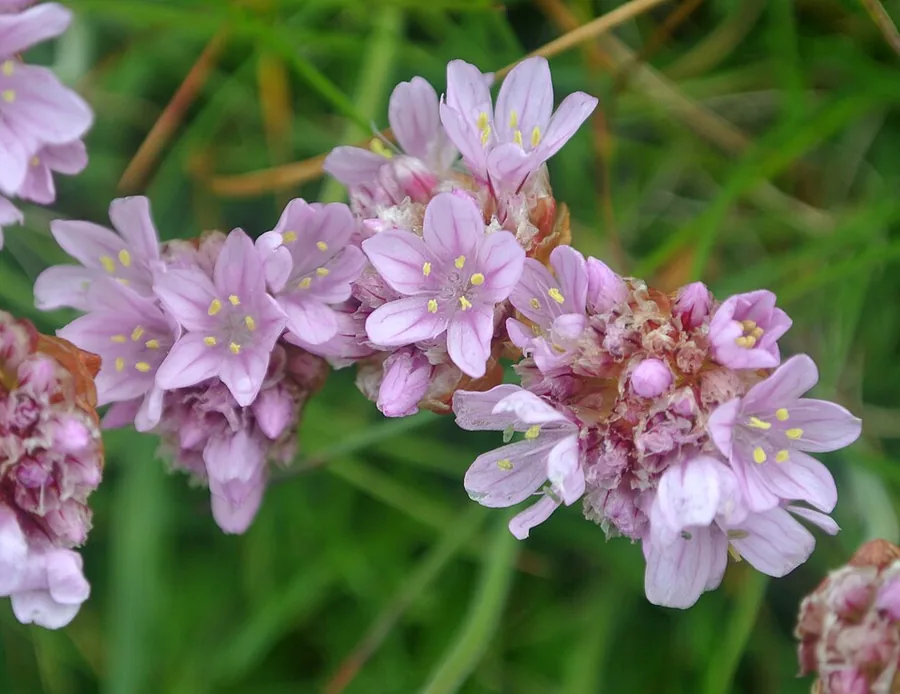
So what is sea thrift? It's a tough little evergreen perennial that grows wild on coastal cliffs and salt marshes, which pretty much tells you what it's after. It makes a neat grassy cushion of skinny leaves, then sends up bare stems tipped with round pink to white flowers come spring. It only reaches 6 to 12 inches, so it's right at home along the front of a border, in a rock garden, or wedged into a wall.
Here's the funny thing about it. The stuff that makes sea thrift easy is exactly what catches people out. It loves poor, gritty ground and does its best on neglect, but drop it into the rich, damp soil you'd give most plants and it just sulks and rots. So go easy on it. Give it sun and sharp drainage and it won't ask for much else.
And it pays you back for the little you do. That mounded foliage keeps its green right through winter in a lot of places, it doesn't blink at salt, wind, or dry spells, and once a clump is happy it'll sit there for years before it wants dividing.
Care
The short version: full sun, lean soil that drains in a hurry, and a really light hand with water and food. Keep it thirsty and a bit starved, and it'll keep going for years.
Light
Sea thrift really wants full sun, and that's where it flowers best. It'll cope with partial sun or a bit of shade, but skimp on light and the cushion gets loose and floppy while the flowers thin out, so give it the sunniest spot you've got.
Water
This is a drought-tough character that can't stand soggy roots. Once it's settled in, a drink every 7 to 14 days does it, and you want the soil bone dry in between. Wet feet are what rot the crown, so honestly, when in doubt, just skip the watering.
Soil
Give it lean, gritty ground that drains fast, and honestly the sandier or rockier, the happier it is. Anywhere from 6.0 to 7.5 on the pH scale works fine. What'll do it in is rich or heavy clay soil, since that holds onto water it just can't handle.
Temperature
Cold? Not a problem. Sea thrift shrugs off anything from -29°F to 86°F (-34°C to 30°C), so winter really isn't the worry. What it doesn't love is warm, damp air, so that's the thing to keep an eye on rather than the cold.
Humidity
Sea thrift likes things dry and breezy and gets grumpy in muggy, still air. There's no magic humidity number to chase, but stuffy damp air is what brings on mildew, so just leave each clump enough space to breathe.
Feeding
You can pretty much skip feeding this one. A quick feed in spring is all it wants, and piling on rich soil actually backfires, rotting the clump from the inside out. It genuinely does better on hungry ground.
Pruning
Once the flowers fade, clip the entire spent stem off and you might coax out a few more blooms later on. Just don't get carried away tidying it in fall, because cutting the foliage right down robs you of spring flowers.
Repotting
Sea thrift isn't really a repotting plant. You split it every 2 to 3 years instead. When the heart of it turns woody and bare and the flowers start tailing off, that's your cue to lift it and divide.
Size & spacing
You're looking at a tidy little mound, roughly 6 to 12 inches (15 to 30 cm) tall and pretty much as wide across. Space new plants about that far apart so the cushions grow together nicely without getting crammed and holding onto damp air.
When to plant
Sea thrift works on a cool-season schedule, and it's easy to keep up with. Get seed going in late winter, move the young plants outdoors in spring once frost is done, and you'll see those first pink globes open through April and May, with a stray bloom or two later in summer and fall.
Northern hemisphere
Southern hemisphere
Typical months for a temperate climate: start earlier in warm zones, later where spring frosts linger.
- Sow: late winter to early spring
- Plant: spring after last frost
- Harvest: mid to late spring (April-May) with sporadic summer/fall rebloom
Hardiness
USDA hardiness zones: 4–8
Temperature: down to -34°C
Troubleshooting
Just about everything that goes wrong with sea thrift traces back to one culprit: too much water. Nail the drainage and most of the problems below just won't show up. But if something does crop up, find the sign, match it to the cause, and jump on it before rot gets into the crown.
Dead patch right in the middle of the mound
This is crown rot, and it's the number one way sea thrift dies. It kicks off when the center stays wet too long, usually because of heavy clay, over-rich ground, or a long soggy fall. The good news? You can often save it. Dig the plant up, cut out the dead middle, and replant the good outer bits in gritty, lean soil that drains quick.
Fix:
- Lift and divide the clump, discarding the dead center
- Replant healthy outer divisions in lean, gritty, very well-drained soil
- Reduce watering
Droopy plant sitting in wet soil
If the soil never dries out, root rot moves in, and here's the odd part: the plant wilts even while the ground stays soaking. Check the roots and you'll find them soft and dark. Get it into gritty soil that drains fast, lay off the water, and give it time to bounce back.
Fix:
- Improve drainage
- Withhold water
- Move or replant in gritty, fast-draining soil
Sticky, curled shoots or leaves with holes chewed in them
A couple of pests are usually the cause. Aphids pile onto the stems and leave the new shoots sticky and twisted, while slugs and snails chew holes and leave slimy trails across the leaves. For the aphids, a hard blast of water or some insecticidal soap sorts them out, and for the slugs, just pick them off or set a trap after dark.
Fix:
- Rinse aphids with a strong stream of water or use insecticidal soap
- Hand-pick or trap slugs and snails
Powdery white dust all over the leaves
That white dusty stuff is powdery mildew, a fungus that shows up when the air's muggy and the plants are jammed too close. Loosen things up so air can get through, pull off the worst leaves, and try not to splash water on the foliage. Keep it in full sun with good drainage and it usually stays away.
Fix:
- Improve air circulation
- Remove affected foliage
- Avoid overhead watering
Toxicity
Got pets or little kids around? Good news: sea thrift is not toxic. Nothing lists it as poisonous to animals, livestock, or people, so if someone sneaks a nibble, there's really nothing to worry about. Just wash your hands after gardening, like you would anyway.
Safe for
People · Cats · Dogs · Horses · Rabbits · Livestock · Birds
Cats None
Sea thrift isn't rated toxic to cats at all, so if yours has a curious nibble, no big deal. Like with any plant, a really big mouthful could give a cat a brief, mild tummy upset, but that's it.
Dogs None
Dogs are totally fine around sea thrift, since none of it is poisonous. If a dog scoffs a big pile of leaves it might get a passing bellyache, but nothing worse than that.
Horses Safe
Horses have nothing to worry about here; sea thrift isn't on any toxic list. It's such a small rock-garden plant that there's barely anything to graze anyway.
Rabbits Safe
Rabbits can nibble away at sea thrift no problem, because it holds no toxins. That said, it's smart not to let them live off any single garden plant.
Livestock Safe
Cattle, goats, and sheep won't be poisoned by sea thrift, since it carries no toxic rating. And its low, grassy little cushion isn't exactly tempting to a grazer anyway.
Birds Safe
Birds are completely safe around sea thrift. There's nothing in the leaves, stems, or flowers that could hurt them.
People Safe
Sea thrift isn't rated poisonous to people either, so handling it and gardening near it is perfectly safe. Just give your hands a wash afterward, same as with any plant.
Generally safe to handle; wash hands after gardening as a routine precaution.
Varieties
Want something other than the plain wild pink? A few named types give you different flower colors and even colored leaves, and these are the names that turn up most in nurseries.
Alba
Alba's the white one, giving you clean white globes instead of the usual pink.
Splendens
Splendens goes richer, its deep rose-pink blooms standing over green foliage.
Rubrifolia
Rubrifolia's the one with reddish-purple leaves, which make the pink flowers pop.
Vindictive
Vindictive stays compact and flowers freely in rose-red, and it's been a garden favorite for ages.
How to propagate
Fancy making more sea thrift? There are three ways to do it, and which one you go for really comes down to whether you're after speed, a bunch of free plants, or an exact match of one you love.
DivisionEasy
Spring · One growing season
Splitting the clump in spring is your safest bet for keeping sea thrift going, and it's a handy fix for an old, tired plant too. Ditch that woody dead center older clumps build up, and replant the good outer pieces. They'll settle in over one growing season.
SeedEasy
Sow in spring or fall · Generally flowers in the second year
Seed's easy to grow, whether you sow it in spring or fall. Just don't expect quick flowers, since most seedlings hold off until their second year.
Stem cuttingsModerate
Summer · Several weeks to a few months
For a spot-on match of a plant you love, take some basal cuttings in summer. They're slower and more of a fiddle than dividing, rooting anywhere from several weeks to a few months.
Myths
Sea thrift doesn't last, and it always dies off after a couple of years.
Not really true. Give it lean, sharp-draining soil and plenty of sun and it'll hang around for years. What looks like a plant with a short life is nearly always crown rot sneaking in from soil that's too wet or too rich. Sort out the drainage and it'll settle in for years.