Shrub · Polygonaceae
Silver Lace Vine
Fallopia baldschuanica
Want a bare fence covered fast? This vine will do it, and it barely asks for anything beyond a good prune.
Full sun
Every 7–14 days
USDA 4–9
20–35 ft · 6.1–10.7 m
Overview
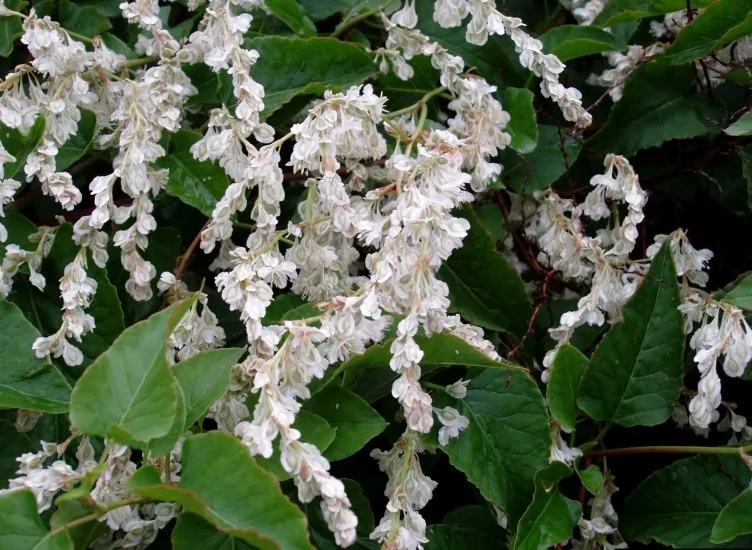
So you've got an ugly fence or a plain arbor to cover, and you want it gone fast. Silver lace vine is about as quick as it gets. Its stems twine right up a support and, come late summer, drown the whole thing in soft, lacy sprays of little creamy-white flowers. It's hardy from zone 4 to 9, and honestly it barely notices cold, heat, drought, or lousy soil.
Here's the catch, though. That speed doesn't switch off, so a single season can pile on 10 to 15 feet of growth, and the vine won't just stay put on its trellis. It suckers, runs underground, and scatters seed into the dirt nearby. No wonder people call it the mile-a-minute vine, and in parts of the midwestern and northeastern US it's flagged as weedy or even invasive.
None of that's a dealbreaker if you go in with your eyes open. Just give it a big, tough support set well away from trees, gutters, and your favorite beds, and promise to cut it back hard once a year. Do that and you get all the cover and flowers you wanted. Skip it, and well, the vine's going to make that call for you.
Care
The short version: pop it in full sun and any well-drained soil, water it only while it's young, forget the fertilizer, and give it one hard prune each late winter so its speedy growth doesn't get out of hand.
Light
Give it full sun if you want the most flowers, plain and simple. It'll still grow in partial sun or partial shade, no problem, but you'll just see fewer of those pretty lacy sprays as the light drops off.
Water
A young plant needs regular watering while it's finding its feet, but after that? Ease right off. Once it's established it's very drought tolerant, so you'll only really need to water during a long dry patch, and even then every 7 to 14 days is plenty.
Soil
It's not fussy about soil at all. Any well-drained ground will do, loam, silt, or sand, anywhere along a pH of 5.5 to 8.0. Funnily enough, poor, lean dirt is actually better here, since it keeps the vine's wandering habit in check.
Temperature
This one's genuinely tough. It handles anything from -29°F to 100°F (-34°C to 38°C), so a scorching summer or a brutal cold snap barely fazes it.
Humidity
Don't overthink humidity. Whatever the outdoor air's doing is fine, so there's no number to chase, and the vine just rolls with whatever the season hands it.
Feeding
Honestly, you can skip feeding it. The vine grows plenty hard on its own, so fertilizer's rarely worth it, and a single spring dose of a balanced or low-nitrogen feed only makes sense if it's actually looking weak. Pile on the nitrogen and you'll just fuel the runaway growth you're trying to slow down.
Pruning
Pruning's really the main thing you'll do here, and it's no big deal. Since it flowers on new wood, cut it back hard in late winter or early spring to keep the size down and freshen it up, right down to 1 to 3 feet if you're doing a full reset. Then expect to snip it here and there all season to keep it tidy.
Repotting
It's hardly ever grown in a pot, and even when it is, it barely needs repotting. Just keep an eye out for roots circling or poking out of the container, soil that dries out really fast, or top growth that stalls, since those all mean it's cramped.
Size & spacing
Give it room, and give it something sturdy to climb. It'll go 20 to 35 feet (6 to 10.5 m) up and spread out 2 to 25 feet (61 cm to 7.5 m), so plant it well clear of anything it could swallow whole.
When to plant
When should it go in? Spring works, once the frost's done, and so does early fall while the ground's still warm. It flowers on the current season's growth from midsummer into fall, so the big prune waits until late winter. That way you're cutting before the flowering shoots even start, and you don't lose a single bloom.
Northern hemisphere
Southern hemisphere
Typical months for a temperate climate: start earlier in warm zones, later where spring frosts linger.
- Sow: Late winter to early spring, 6-8 weeks before last frost (seed propagation is uncommon; cuttings and layering are easier).
- Plant: Spring after last frost, or early fall.
- Harvest: Mid/late summer into fall (roughly July to frost).
Hardiness
USDA hardiness zones: 4–9
Temperature: down to -34°C
Troubleshooting
Good news first: this vine hardly ever gets sick or buggy. Its one real flaw is just growing too well, so most of what you'll deal with is keeping it in check rather than nursing it back. Find whatever's happening below and jump on it early, before the vine gets a head start on you.
Vine taking over its support and wandering into the garden
This is just that wild vigor silver lace vine is famous for, and really it's the plant doing its thing. New shoots can shoot out 10 to 15 feet in one season, while the base pushes up suckers and seeds itself into the ground nearby. Give it a hard cutback each late winter, keep after it through summer, and pull those seedlings and suckers while they're small, and you'll stay on top of it.
Fix:
- Prune hard in late winter and again through the growing season to keep it in bounds
- Cut back to 1-3 ft for full renovation when overgrown
- Remove suckers and pull or mow seedlings as they appear
- Install a sturdy, oversized support and keep it clear of trees, shrubs, and gutters
Leaves full of ragged summer holes
Most of the time this is Japanese beetles at work, those metallic green-and-bronze bugs that chew the leaves down to lace. If you spot pale, squiggly lines running through a leaf instead, that's leaf miners. Just knock the beetles into some soapy water first thing in the morning, pull off any mined leaves, and don't sweat the rest, because a vine this fast grows right past a few nibbles.
Fix:
- Hand-pick Japanese beetles into soapy water in early morning
- Tolerate minor damage, as the vine outgrows it
- Remove and dispose of mined leaves
Toxicity
Got pets or little kids running around? You can breathe easy, because silver lace vine isn't on the toxic lists, and it's considered safe for cats, dogs, and people. Poisoning really isn't the concern here. The thing to watch is that heavy pruning, not anything in the leaves themselves.
Safe for
People · Cats · Dogs · Horses · Rabbits · Livestock · Birds
Cats Safe
A cat nibbling a leaf? No worries there, since silver lace vine doesn't show up on the ASPCA's toxic list at all.
Dogs Safe
Dogs can chew on the leaves without getting poisoned, though a really big mouthful of any plant might leave a sensitive stomach a little queasy.
Horses Safe
There's nothing here that bothers horses, so they can munch the leaves and shoots all they like.
Rabbits Safe
Rabbits are totally fine around it, and they can nibble the soft new growth without any trouble.
Livestock Safe
Cattle, goats, and sheep can hang around silver lace vine without any risk of getting poisoned.
Birds Safe
Birds don't get hurt by it either, and plenty of them love tucking into its thick, fast-growing tangle for cover.
People Safe
For people, there's just no poisoning risk to speak of. The only real thing to watch is all that pruning, so grab your gloves and the loppers before you dig in.
No special handling for toxicity; wear gloves and use loppers for the heavy seasonal pruning this vine requires.
Varieties
There aren't a whole lot of named types to pick from, just a couple you're likely to bump into, and they mostly come down to leaf color and how big they get.
Lemon Lace
A calmer, deer-resistant option that stops at around 20 to 30 feet, showing off the same white flowers over chartreuse-to-gold leaves on red stems.
Species (Fallopia baldschuanica)
This is the plain species and the most vigorous of the bunch, with bright green heart-shaped leaves and those frothy, lacy sprays of tiny fragrant flowers in creamy-white to greenish tones.
How to propagate
Want more of it? That's the easy part. This vine roots at the drop of a hat, which is exactly why it spreads so freely, and cuttings, layering, and division all work with next to no fuss. Leave it be and it'll even seed itself.
Stem cuttingsEasy
Late spring to summer (softwood/semi-hardwood) · A few weeks to root; established in one season
This is the easy one to try. Snip softwood or semi-hardwood cuttings off the new growth anytime from late spring through summer, and they'll root in a few weeks and fill right out that first season.
LayeringEasy
Spring to summer · One season
Even simpler, just pin a trailing stem down against the soil somewhere between spring and summer, and it'll root right where it touches. You'll have a whole new plant within a season.
DivisionEasy
Late winter to early spring · One season
In late winter or early spring, you can split the crown or dig up one of the rooted suckers it throws out so freely. Each chunk you separate settles in over the season.
SeedModerate
Start indoors late winter to early spring · A season or more
Seed's less common, but it works if you're patient. Start it indoors in late winter or early spring and give it a season or more to really take hold, though the vine will happily seed itself into nearby ground anyway.
Myths
Silver lace vine is basically just Japanese or giant knotweed with a different name.
They're related, sure, same family and all, but they're honestly not the same plant. Silver lace vine is the climbing, white-flowered ornamental, whereas Japanese and giant knotweed grow straight up like bamboo and count among the nastiest invasives out there. Silver lace vine can still get a bit weedy, but it's the far gentler cousin.