Shrub · Aquifoliaceae
Sky Pencil Holly
Ilex crenata
It is basically a green pillar for spots too tight for anything else, and all it really asks for is acidic soil and a bit of winter care.
Full sun
Every 5–10 days
USDA 5–8
4–10 ft · 1.2–3 m
Overview
So what is Sky Pencil Holly? It's a Japanese holly grown into a tall, skinny column, one that gets up to 4 to 10 feet (1.2 to 3 m) tall but keeps to just 1 to 3 feet (30 to 90 cm) wide. That means it tucks into narrow spots where a normal shrub would never fit, which is why folks love it beside a doorway or along a tight walkway.
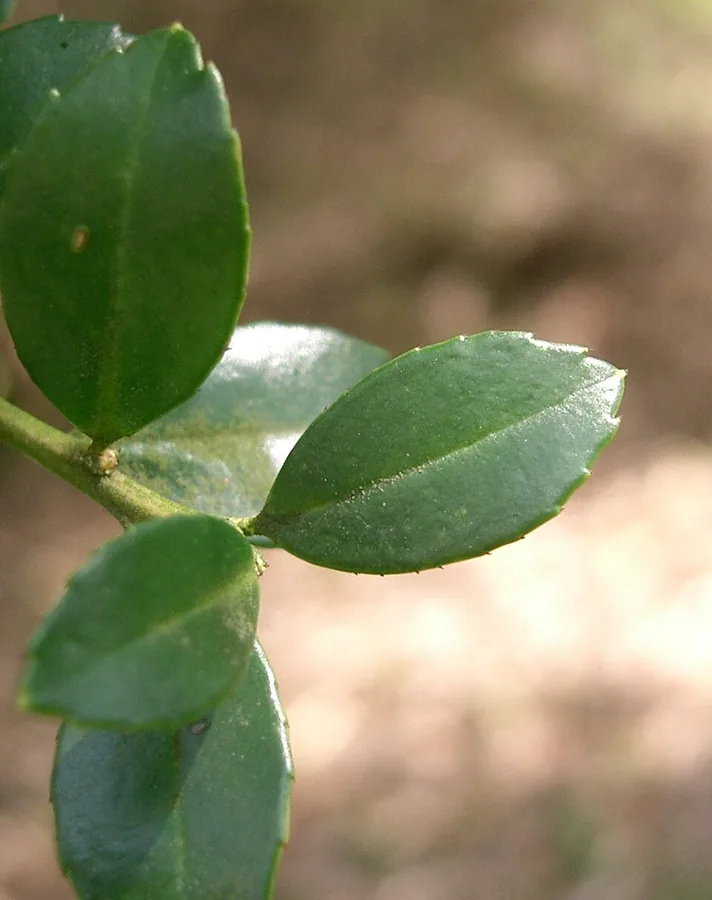
The leaves are small, shiny, and evergreen, so you get color all year, and because it grows nice and slow, it mostly keeps its own shape. Here's a fun quirk though: it's an all-female cultivar, so berries only turn up when a male holly is planted somewhere close by. No male nearby? Then you just get a clean green column, and honestly that looks great on its own.
It's a champ in cold gardens too, shrugging off cold snaps down to around -9°F (-23°C) in zones 5 to 8. The catch is that skinny shape, since a big dump of snow or a nasty dry wind can push the column out of line. Give it acidic, well-draining soil and a spot out of the wind, and it won't ask for much more.
Care
The short version: pop it in full sun to part shade, use acidic soil that drains well and keep it evenly moist, feed once in early spring, and loosely gather the stems together before the snow flies so the skinny column stays put.
Light
Sky Pencil Holly is happiest in full sun, which is what keeps the column packed tight and standing straight. It'll handle partial shade just fine, but skimp on light and it tends to go a little loose and floppy.
Water
Try to keep the soil evenly moist, which usually works out to a drink every 5 to 10 days depending on how hot and dry things get. It'll cope with a short dry stretch, but real drought stresses it out, and whatever you do, don't let it sit in waterlogged soil, because that's a fast track to root rot.
Soil
Give it light, acidic, well-drained soil sitting somewhere around a pH of 5.0 to 6.5, and it's a happy plant. Clay or sandy ground works too, but soil that leans alkaline yellows the leaves and saps the life right out of it.
Temperature
This one's tough when it comes to cold, holding steady from about -9°F to 95°F (-23°C to 35°C). That toughness gets it through zone 5 to 8 winters just fine, though a sharp, dry wind in winter can still burn the leaves, so a sheltered spot helps a lot.
Humidity
Regular outdoor air is plenty, so there's no humidity number you need to chase. What really matters is good airflow around the plant, especially when summer turns hot and sticky.
Feeding
Feed it just once, in early spring, using a balanced, acid-forming shrub fertilizer. Since it grows so slowly, that one meal is honestly all it needs to coast through the whole year.
Pruning
The nice thing is it holds that tidy column all by itself, so you rarely need to prune much. Trim it lightly in spring if you just want to neaten it up, then loosely bundle the stems together before the cold sets in so a load of snow and ice can't force it open.
Repotting
In a pot, plan to size it up every 2 to 3 years, or sooner if you notice roots looping around inside or sneaking out the drainage holes. When growth slows down or water zips straight through, move it to a slightly bigger pot with fresh, acidic potting soil.
Size & spacing
Full grown, you're looking at a slim column about 4 to 10 feet (1.2 to 3 m) tall and only 1 to 3 feet (30 to 90 cm) across. Because it barely spreads sideways, you can line a few up close together and end up with a neat little privacy screen or a slim hedge.
When to plant
Since it's evergreen, there's no harvest to time, just the best moment to get it planted. Go for spring or fall, when the weather's easy and the roots get time to dig in before summer heat or a hard freeze. It flowers quietly in May and June, and berries only follow if a male holly happens to be growing nearby, so don't sweat it if none appear.
Northern hemisphere
Southern hemisphere
Typical months for a temperate climate: start earlier in warm zones, later where spring frosts linger.
- Plant: spring or fall
- Harvest: May to June
Hardiness
USDA hardiness zones: 5–8
Temperature: down to -29°C
Troubleshooting
Put it in a good spot and this holly barely gives you any grief, but a soggy site or a rough winter can bring out its few weak spots. Most of the drama plays out on the foliage or those tall stems, so a quick glance now and then catches things early. Find what matches below and jump on it while it still helps.
Yellowing, thinning leaves and some dieback up top
When the yellowing and dieback are really coming from wet soil down at the roots, you're probably looking at Phytophthora or black root rot. Dig around a little and you'll likely find dark brown to black, mushy roots, and it all gets worse the soggier things stay. Sort out the drainage first, ease off the watering, and if the spot just won't dry out, get it up onto a raised bed. Anything that's rotted badly is better pulled before it takes the others down with it.
Fix:
- Improve drainage and stop overwatering
- Avoid planting too deeply or over-mulching
- Use raised beds in heavy or wet soils
- Remove severely affected plants
Speckly, bronze-tinged leaves with a bit of webbing
Those pale speckles, the bronzy look, and the wispy webbing? That's usually spider mites, often the southern red mite, and they go wild when it's hot and dry out. Want to be sure? Hold a piece of white paper under a branch, give it a tap, and watch for tiny things crawling. Hose them off hard first, then hit the undersides of the leaves with insecticidal soap or horticultural oil, and give it another round after about a week if any are still hanging around.
Fix:
- Apply strong water sprays to dislodge mites
- Treat with insecticidal soap or horticultural oil, covering lower leaf surfaces
- Repeat treatment in 7 to 10 days while mites are present
Brown leaves and a column that's popped open after winter
Cold, dry wind can burn the foliage, which shows up as winter burn, and a heavy load of snow and ice can shove that skinny column apart. After a storm, gently knock the snow off the stems so the weight doesn't bend them. For the real fix, bundle the stems up before winter and set it up with a windbreak plus a good layer of mulch.
Fix:
- Gently brush snow off stems after storms
- Tie stems loosely together for winter support
- Provide a windbreak and winter mulch
The whole plant going pale and yellow
If the entire shrub is fading to yellow, the soil's most likely gone too alkaline for it. That's chlorosis, and it happens because a high pH ties up the iron the plant needs to stay green. Check your soil, nudge it back toward acidic, and give it some chelated iron to bring the green back while the pH drops.
Fix:
- Test soil pH
- Amend soil to lower pH toward acidic range
- Apply chelated iron if needed
Toxicity
Good news first: this is a mildly toxic plant, not a scary one. Both the leaves and the berries hold some saponins, and since the shiny berries are what a pet's most likely to grab, that's really the thing to watch. A little nibble usually just means a sour stomach, not a trip to the emergency vet, but it's smart to sweep up dropped berries and keep them away from pets and little kids.
Toxic to
Cats · Dogs · Horses · Rabbits · Livestock · Birds · People
Cats Mild
If a cat chews on a leaf or grabs a berry, it'll usually just get a queasy belly, a little drool, and maybe throw up or have loose stools. It tends to sort itself out, but if your cat's swallowed a bunch of berries, go ahead and give the vet a quick call.
Dogs Mild
Dogs are the ones most likely to go after those bright berries, and the saponins can leave them drooling and skipping meals for a day. You'll probably see a bit of throwing up or a loose stool, but nothing too scary.
Horses Mild
A horse isn't usually into holly, but if it grabs a mouthful of leaves or berries, it can wind up with a colicky, upset stomach and just seem kind of down and dull.
Rabbits Mild
Rabbits have really touchy tummies, and the saponins don't sit well with them, so keep any trimmings and fallen berries well away from where your bunny hangs out.
Livestock Mild
Most grazing animals just leave the bitter leaves alone, but a goat or sheep that strips a whole branch might end up with a mild bit of tummy trouble.
Birds Caution
Out in the wild, birds munch holly berries all winter and they're totally fine, but that same fruit can upset pet birds, so it's best to keep caged ones well clear of it.
People Caution
You're not supposed to eat any part of this holly, plain and simple. Swallowing a berry or two will probably just give someone a stomachache, but eating several can bring on throwing up and diarrhea, so definitely keep the fruit out of reach of little kids.
Keep fallen berries away from pets and children; the spiny evergreen foliage is otherwise low risk.
Helpline numbers

United States
ASPCA Animal Poison Control: (888) 426-4435 (fee applies)
Poison Control: (800) 222-1222



Canada
Poison Centres: 1-844-764-7669
Varieties
Sky Pencil is part of a little crew of skinny, upright Japanese hollies. Here are the ones you're most likely to bump into.
Sky Pencil
A super narrow female cultivar that shoots up to 4 to 10 feet tall but stays around 1 to 3 feet wide, so it works as a clean upright accent.
Sky Pointer
Another one of those upright Ilex crenata types, shaped in just about the same slim column.
Glow Stick
An Ilex crenata cultivar people grow for its bright, golden-yellow leaves.
How to propagate
Sky Pencil gets started from cuttings instead of seed, because that's pretty much your only shot at keeping it this slim. It takes a while, sure, but it's honestly not hard at all.
Stem cuttingsModerate
Summer, using semi-hardwood cuttings · 6 to 10 weeks to root
Grab some semi-hardwood cuttings in summer, because that's the dependable way to keep that narrow, upright look. Stick them in a moist, well-draining mix and they'll root in about 6 to 10 weeks. Seed won't hold that slim shape, which is exactly why nurseries clone it instead of sowing it.
Myths
Holly's got to be pet-safe since it's just a regular yard shrub.
Being a common yard plant doesn't tell you a thing about whether it's okay to eat. Holly's got saponins in it, and the berries can leave cats and dogs drooling, throwing up, and dealing with diarrhea. Sure, the poison level is low, but it's still real, so those berries are off the snack list.
Sky Pencil Holly will always give you berries.
Nope, since it's an all-female cultivar, it can't fruit all on its own. You'll only get those little black berries if there's a male holly close by to do the pollinating.