Houseplant · Asteraceae
String of Bananas
Curio radicans
Hand it bright light, gritty soil, and a dry breather between waterings, and string of bananas will go trailing right over the edge before long.
Bright indirect
50–77°F · 10–25°C
USDA 10–11
12–35 in · 30–90 cm
Overview
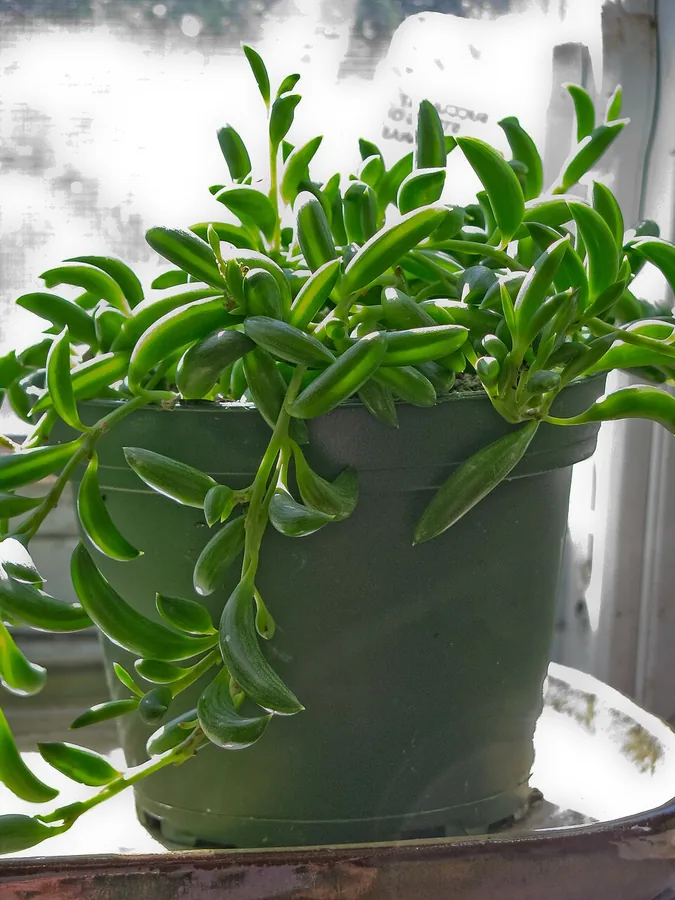
So what's string of bananas? It's a trailing succulent that got its name from those plump, banana-shaped leaves dangling off the pot in long strands. It's a southern African plant and part of the daisy family, believe it or not. Indoors it grows quick and shrugs off mistakes, which is exactly why so many people keep one.
Here's the clever bit: every curved leaf doubles as a mini water tank, and that faint stripe along the side is basically a little window letting light reach inside. Because it's carrying its own water, it doesn't mind if you forget a watering now and then, and the only thing it really can't stand is sitting in soggy soil. Treat it like the desert plant it is and it won't ask for much.
Pop it in a bright window or up on a tall shelf and the stems will trail down a few feet. That hanging habit looks great, but it also keeps the leaves up where they're hard to reach, and that's a good thing, because every part is toxic to pets and people if someone takes a bite.
Care
The short version: bright indirect light, a gritty cactus mix that drains in a hurry, and water only after the top half of the soil has gone dry. Ease way back in winter, and don't ever let the pot sit in standing water.
Light
It likes bright, indirect light, think a few feet back from a sunny window. A bit of direct morning sun is fine and it'll cope with some shade too, but keep it clear of harsh afternoon sun, which scorches the leaves brown.
Water
Only reach for the watering can once the top half of the soil has dried out, then give it a proper soak and let the rest drain off. It's a succulent, so it handles dry spells fine but rots if it stays wet, and in winter you'll barely water at all, just enough so the leaves don't shrivel.
Soil
Go with a gritty, fast-draining cactus or succulent mix so water zips right through. It's not fussy about acidity and does fine anywhere from pH 6.0 to 8.0, but it won't put up with a heavy mix that stays wet around the roots.
Temperature
Regular room temperature is all it wants, ideally 50°F to 77°F (10°C to 25°C). Just keep it away from frost and cold drafts, because it can't handle the cold.
Humidity
This is a low-humidity plant, so dry indoor air suits it just fine. No need to mist or chase a number, and if anything, damp stuffy air does it more harm than good.
Feeding
Give it a light feed from spring through summer while it's growing, roughly once a month. A diluted balanced or cactus fertilizer does the trick, and you can quit over winter when things slow down.
Pruning
Trim off any leggy or bare stems to get fuller growth, and pinch the tips if you want to shape it. Don't bin those cuttings though, since every piece will root into a new plant.
Repotting
You'll only need to repot every 2 to 3 years, or whenever it looks crammed in, because it actually blooms and grows better a little snug. Tell-tale signs it's time? Roots poking out the drainage holes and soil that dries out almost the second you water it.
Size & spacing
The trailing stems get to about 12 to 35 inches (30 to 90 cm) long and spill roughly that far over the side. Give it space to dangle freely from a shelf or basket so the strands don't clump up and tangle.
Troubleshooting
Nearly all the fuss with string of bananas comes back to watering, either it's parched or it's been given way too much, and honestly the leaves make it pretty obvious which. So learn to glance at them. Find what's happening below and sort it out before a little wrinkle turns into something worse.
Soft, blackening stems that flop at the base
Mushy, darkening stems mean root rot, and it's the thing most likely to finish the plant off, all from too much water hanging around the roots. Stop watering, let everything dry right out, then tip it out of the pot and cut off anything brown and soft. Grab a few healthy cuttings and start them over in fresh gritty mix before the rot gets to them too.
Fix:
- Stop watering and let the mix dry out
- Unpot and cut away rotted roots and stems
- Take healthy stem cuttings and restart in fresh gritty mix
- Repot into fast-draining cactus medium in a pot with drainage
Soft, crinkly beads that have lost their plumpness
If the beads have gone soft and wrinkly, the plant's just thirsty. Those leaves are basically water tanks, so when the soil dries out completely they shrink and pucker up. Give it a deep drink until water runs out the bottom, and they'll usually plump back up within a day or two.
Fix:
- Water thoroughly until it drains from the bottom
- Resume watering whenever the top half of the soil is dry
- Ensure the pot has drainage and the mix is not hydrophobic
Leaves going brown or red on the sunny side
Brown or reddish leaves on the side facing the light? That's sunburn from too much harsh sun. The beads nearest the window catch it first under strong or hot afternoon rays. Move it into bright indirect light, keep it out of the midday glare, and then ease it back into brighter spots bit by bit.
Fix:
- Move to bright indirect light
- Shade from intense afternoon summer sun
- Acclimate gradually before increasing light
Toxicity
Here's the part to actually watch: keep this one away from pets and up out of the kids' reach. Every bit of it holds pyrrolizidine alkaloids plus a milky sap that bugs your skin, so it's not safe for cats or dogs and it's a problem for other animals and people who swallow it. Hang it up high, and give your hands a wash once you've finished trimming.
Toxic to
Cats · Dogs · Horses · Rabbits · Livestock · Birds · People
Cats Toxic
A cat that chews on the stems will usually start drooling, throw up, and lose interest in dinner. Runny stools and a sleepy, flat mood often come next, and a really big mouthful can put a strain on its liver.
Dogs Toxic
Dogs go through pretty much the same thing. After a nibble on the trailing stems, keep an eye out for vomiting, loose stools, drooling, and a tired dog that just seems off.
Horses Toxic
Those same pyrrolizidine alkaloids run right through the whole group, so a horse that grazes on it can get an upset stomach, and if it keeps browsing, there's a real risk of liver damage down the line.
Rabbits Caution
There's no rabbit-specific info out there, but since the toxin affects mammals generally, it's safest to keep it well away. A rabbit that takes a bite could end up with a queasy gut and not much energy.
Livestock Toxic
Cattle and other grazers are on the at-risk list too. The alkaloids pile up the more they browse and can scar the liver, on top of the nausea and dullness even one feed can bring on.
Birds Caution
Nobody's really studied birds with this plant, so it's best to keep them away just in case. Between the irritant sap and the alkaloids, there's no reason to think a curious bird would handle a bite well.
People Caution
None of this plant is meant to be eaten. Swallow some and you could feel queasy with an upset stomach, and the milky sap might redden or irritate your skin, so wash your hands after you've been pruning.
Wear gloves or wash hands after handling, as the irritant sap can cause contact dermatitis.
Helpline numbers

United States
ASPCA Animal Poison Control: (888) 426-4435 (fee applies)
Poison Control: (800) 222-1222



Canada
Poison Centres: 1-844-764-7669
Varieties
There aren't many named types to keep track of, but one shows up often enough that it's worth being able to spot.
Curio radicans 'Fish Hooks'
It's a pick grown for its tightly curved, hook-shaped leaves, and yep, that's where the nickname string of fishhooks comes from.
How to propagate
Want more of these? Good news, because it's about the easiest plant to multiply, and the bits you snip off to tidy it up are exactly what you turn into new plants.
Stem cuttingsEasy
Spring through summer during active growth · About 2 to 4 weeks to root
This is the quick, no-stress way pretty much everyone goes. Snip some cuttings while it's growing in spring or summer, let the cut ends dry and callus over for a day, then set or tuck them onto gritty, fast-draining mix. Keep it just a little damp and they'll root in around 2 to 4 weeks.
SeedModerate
Spring · Several weeks to months
Seed works too, but it's slow and honestly not worth it next to cuttings. Sow in spring on a fast-draining mix, keep it warm, and you're looking at several weeks to months before you've got plants big enough to move on.
Myths
It's really supposed to be called Senecio radicans.
Not anymore, actually. Kew's Plants of the World Online now goes with Curio radicans as the accepted name and treats Senecio radicans as an old synonym. You'll still see the Senecio label just about everywhere it's sold, but Curio radicans is the current name.