Houseplant · Asteraceae
String of Dolphins
Curio × peregrinus
Want a plant that looks like a pod of dolphins mid-leap? Give it bright, indirect light and a light touch with water, and it's happy.
Bright indirect
50–77°F · 10–25°C
USDA 9–12
12–35 in · 30–90 cm
Overview
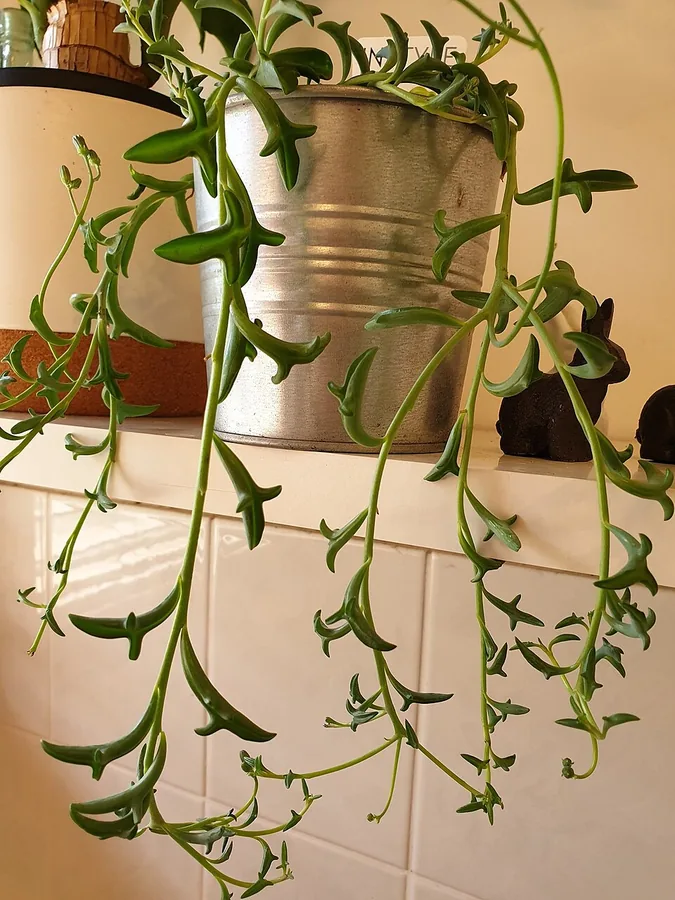
So what is this thing? It's a trailing succulent, and every leaf curls into the shape of a leaping dolphin, which is pretty much why anyone grows it. It's part of the daisy family and it's a cultivated hybrid, a cross between string of pearls and candle plant, so you won't stumble on it out in the wild. The strands hang over the pot and can stretch 12 to 35 inches (30 to 90 cm).
Here's the good news: it doesn't ask for much. Bright, indirect light and a gritty mix that dries out fast cover most of it, and it'll shrug off the odd forgotten watering that would finish off a pickier plant. What it won't put up with is a soggy pot, since sitting water rots the stems right from the base.
Where should it go? Somewhere up high, in a hanging basket or on a tall shelf where the strands can spill down. That does two things at once: it shows off those dolphin leaves and keeps the mildly toxic stems away from pets and kids who might want a taste.
Care
The short version: bright, indirect light, a gritty cactus mix in a pot that drains, and water only once the leaves start looking a little shriveled.
Light
It likes bright, indirect light for most of the day, near a window but out of that harsh midday sun that'll scorch the leaves. A bit of gentle morning sun? That's fine. Just don't leave it in a dim corner, because the stems stretch out thin and the dolphin shape starts to fade.
Water
Water lightly while it's growing, then let the gritty mix dry out completely before the next drink. It'll tell you when it's thirsty, since the leaves start to look a little shriveled. In winter, barely water it at all, because cold plus wet is exactly what rots the stems.
Soil
Plant it in a gritty, fast-draining cactus or succulent mix so water runs straight through instead of hanging around the roots. It's easygoing about pH, happy anywhere from 6.0 to 8.0, so honestly the drainage matters way more than the numbers.
Temperature
Normal room temps of 50°F to 77°F (10°C to 25°C) keep it comfortable, which most homes hit without trying. It can't handle frost, though, so bring it inside well before things get cold out.
Humidity
No need to fuss with humidity. Regular room air is fine, and it actually likes it on the dry side, so skip the misting, which would just invite rot anyway.
Feeding
Give it a feed about once a month through the growing season, spring into early autumn, using a half-strength general-purpose liquid fertilizer. Once winter rolls in and growth slows, just stop feeding until spring.
Pruning
Whenever it needs tidying or you'd like it fuller, snip the trailing stems with scissors, and don't worry, it bounces back fast. Slip on gloves first, though, because that cut sap can irritate your skin.
Repotting
Plan to repot about every 1 to 2 years, or sooner if roots start crowding the top or poking out the drainage holes. Only bump it up one pot size, and make sure it drains, since too big a pot just holds extra water the roots don't want.
Size & spacing
Those strands trail 12 to 35 inches (30 to 90 cm) and spread out about as wide. Give it its own hanging pot with room to fall, and the dolphins can cascade freely without getting tangled up in anything else.
Troubleshooting
Most of the time, trouble comes down to water, and it goes one of two ways. Too little and the dolphins shrivel; too much and the stems rot. Figure out which way yours is going, then check the matching fix below before you grab the watering can.
Soft, blackening stems that start to flop
This is rot, and it shows up when the mix stays too wet for a succulent that really wants to dry out. The stems go mushy at the soil line, the base turns black, and there's usually a sour smell too. Stop watering, cut away every soft stem and root, then take a few healthy cuttings and start fresh in gritty mix inside a clay pot that can breathe.
Fix:
- Stop watering and let the mix dry out
- Remove and discard rotted stems and roots
- Take healthy stem cuttings to propagate and start fresh in a gritty, fast-draining mix
- Repot into a clay pot with drainage to improve evaporation
Leaves that shrivel, stretch, or lose the dolphin look
Tricky one, because two different problems look almost the same. A bone-dry mix leaves the dolphins soft and puckered, while too little light stretches the stems thin and pale until the shape kind of blurs. Give it a proper drink as soon as the leaves shrivel, move it somewhere brighter, and trim off the leggy bits so it fills back in nice and compact.
Fix:
- Water thoroughly when leaves begin to shrivel, then let the mix dry completely again
- Move to a brighter spot with bright, indirect light
- Trim leggy, distorted stems to encourage compact new growth
Toxicity
Here's the part to take seriously. The whole plant holds pyrrolizidine alkaloids and a sap that irritates, so it's toxic to cats and dogs and not a great pick around other pets, livestock, or little kids. Nothing on it is meant to be eaten, and the sap can sting your skin, so pop on gloves when you trim and keep it up out of reach.
Toxic to
Cats · Dogs · Horses · Rabbits · Livestock · Birds · People
Cats Toxic
A cat that chews the strands usually throws up, gets the runs, drools, and goes sluggish. It's the pyrrolizidine alkaloids doing that, so hang it well out of jumping range.
Dogs Toxic
A dog that has a chew will probably vomit, get loose stools, and act tired and low. Same alkaloids at work, and the bitter sap can leave the mouth sore, so keep it out of reach.
Horses Toxic
The parent plant's listed as toxic to horses, so treat this one that way too. On top of the stomach upset, those pyrrolizidine alkaloids in these Curio succulents can wear on the liver with repeated grazing.
Rabbits Toxic
Not a safe snack for a bunny. The same alkaloids that bother cats and dogs hit a rabbit's gut the same way, so keep the strands out of the hutch and off the floor.
Livestock Toxic
Grazing animals can get pretty sick, since the pyrrolizidine alkaloids build up in the liver over repeated feeding. Fence it off and clear away any trimmings.
Birds Caution
Best treated as off limits for birds. The toxic stuff in the leaves makes it a poor pick around pet birds, so hang it where curious beaks can't reach.
People Caution
Nothing on this plant is food, and a curious bite can upset the stomach. The sap stings skin too, so wear gloves when you prune and keep little kids from tugging at the strands.
Wear gloves when pruning or handling cut stems, as the milky/irritant sap can irritate skin.
Helpline numbers

United States
ASPCA Animal Poison Control: (888) 426-4435 (fee applies)
Poison Control: (800) 222-1222



Canada
Poison Centres: 1-844-764-7669
Varieties
Not much to sort through here. String of dolphins comes as a single hybrid, not a whole lineup of named types, so there's really just the one.
Curio × peregrinus (typical String of dolphins)
This is the one everybody means by the name, with curved, branched leaves that arch like a pod of leaping dolphins, a lot like string of pearls except for that fun forked shape.
How to propagate
Want more of it? That's easy. There are two simple ways to go about it, and both need nothing fancier than scissors and some gritty mix.
Stem cuttingsEasy
Spring to summer during active growth · Roots in about a month
In spring or summer while it's growing, snip a few cuttings 3 to 4 inches (8 to 10 cm) long, strip the lower leaves, and lay or tuck them so the bare nodes sit against a moist, gritty mix. Roots pop out easily at those nodes, and the cutting usually settles in within about a month.
LayeringEasy
Spring to summer · About a month to root
Layering is even more hands-off. Just peg a trailing stem down onto the compost so its nodes touch the surface, leave it attached to the parent while it roots over roughly a month, then snip it free once it's anchored.
Myths
String of dolphins is a wild plant you can find growing out in nature.
Nope, it never grew anywhere on its own. It's a cultivated hybrid, Curio x peregrinus, made by crossing string of pearls (Curio rowleyanus) with candle plant (Curio articulatus), and that mix is exactly where those leaping-dolphin leaves come from.