Vegetable · Convolvulaceae
Sweet Potato
Ipomoea batatas
Hand it plenty of sun, warm soil, and a long season, and the sweet potato just keeps stuffing the ground with roots.
Full sun
Every 5–7 days
64–95°F · 18–35°C
90–120 days
Overview
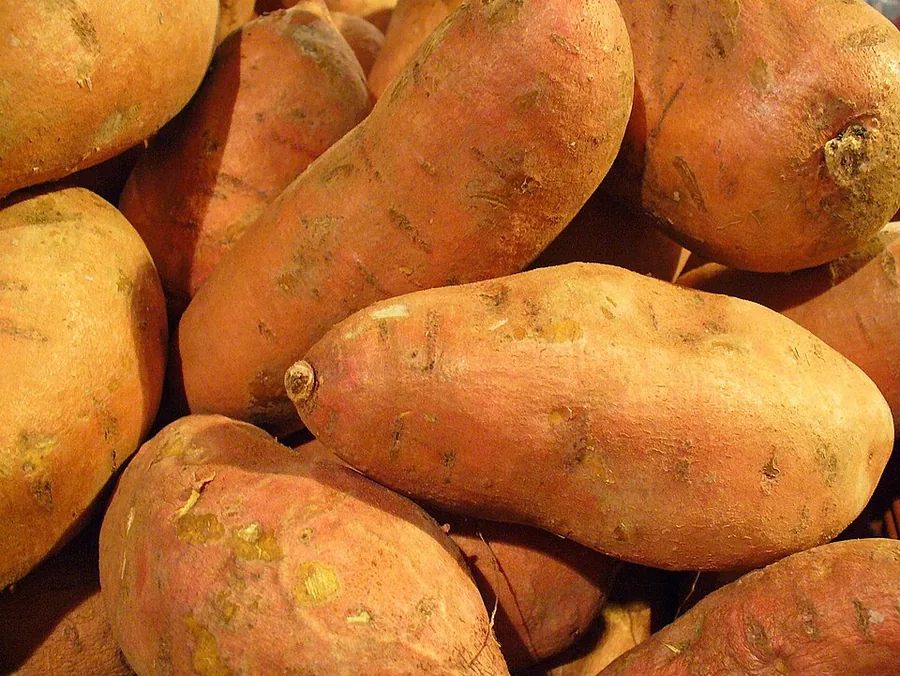
So what is a sweet potato, exactly? It's a heat-loving vine that sprawls all over the place and stashes fat storage roots underground. Here's the thing, though: it's not related to the Irish potato at all. It sits in the morning glory family, while the Irish potato lives over in the nightshades, and they just happen to share a name. Give it a long, warm summer and a couple of plants will take over a whole bed.
The good news is it doesn't ask for much once it's up and running. The vines go rambling 3 to 15 feet (90 cm to 4.5 m) across the ground, choking out weeds as they travel, while the roots you actually want fatten up out of sight below. And there's a bonus, because the young leaves and shoot tips are edible too, cooked up like spinach in loads of places.
If there's one thing it won't compromise on, it's heat. Cold soil makes it sulk, and a frost will finish it off completely, so the whole game is a warm bed and a long, warm summer while the roots quietly bulk up down below. Patience pays off here.
Care
The short version: pop it in full sun in loose, well-drained soil heaped into a ridge, give it around 1 inch of water a week and back off as harvest gets close, and go easy on feeding with something low in nitrogen so it makes roots instead of a mountain of leaves.
Light
Sweet potatoes really want full sun, ideally six to eight hours of it, because all that leafy growth up top is what feeds the roots below. They'll put up with a bit of afternoon shade, but if you can give them more sun, the harvest underground gets better.
Water
Aim for about 1 inch of water a week, given as good deep soakings, and let the top of the soil dry out a little in between. As harvest gets close, ease off the water, because a big drink after a dry patch makes the roots swell too fast and crack.
Soil
They like loose, well-drained loamy or sandy soil, and if you can heap it into ridges, even better, since that gives the roots room to run and keeps them out of soggy ground. A slightly acidic pH somewhere around 5.5 to 6.5 is what they're after.
Temperature
This one's a proper warm-weather plant, happiest anywhere from 64°F to 95°F (18°C to 35°C). Cold soil brings it to a halt and frost kills it flat out, so there's really no point rushing it into the ground before things warm up.
Humidity
You don't need to fuss over humidity outdoors, because normal summer air in the 40% to 70% range does the job fine. What this plant actually cares about is warmth and sun, not how damp the air is.
Feeding
Keep feeding on the light side. Work a low-nitrogen fertilizer like 5-10-10 into the bed before you plant, then give it one sidedress before the vines close over the row. Pile on the nitrogen and you'll just get loads of leaves and skimpy roots, which kind of defeats the purpose.
Pruning
Good news, there's no pruning to do for the roots. Trim the vines only if you want to tidy up a bed or stop them wandering off, and don't chuck the tender shoot tips, because they cook up nicely as greens.
Size & spacing
The plants themselves stay pretty short, just 6 to 12 inches (15 to 30 cm) tall, but those vines will sprawl a good 3 to 15 feet (90 cm to 4.5 m) across. Give each one plenty of elbow room, or nudge the vines back so they don't smother whatever's growing nearby.
When to plant
It all comes down to warmth, and frost is the deal-breaker. Start your slips indoors off a stored root in late winter, wait until spring has properly warmed the soil before they go out, and then dig the roots in fall before the first frost sneaks in. Get that timing right and the rest is pretty easy.
Northern hemisphere
Southern hemisphere
Typical months for a temperate climate: start earlier in warm zones, later where spring frosts linger.
- Sow: Sprout slips from a stored root indoors 6-8 weeks before transplanting
- Plant: After all danger of frost once soil is warm, roughly April through early July
- Harvest: Harvest storage roots in fall before the first frost
Hardiness
USDA hardiness zones: 9–11
Temperature: down to -7°C
Troubleshooting
Here's a nice thing about sweet potatoes: most of their problems stay hidden underground and only show up on the roots when you dig. There aren't many to worry about either, just a few pests and one fungus, so once you know them you can pull clean roots every year. Find your match below and sort it before next season.
Little stem-end holes and bitter, tunneled roots
Bad news, this is the sweetpotato weevil, and it's about the worst thing that can hit the crop. The adults chew little holes near the stem end, and the grubs tunnel right through the flesh, leaving frass behind and turning the root dark and bitter. Dig up everything that's affected, roots and vines alike, get rid of it, and whatever you do, don't keep it for next year's slips.
Fix:
- Remove and destroy infested roots and vines
- Do not save infested material for propagation
Rough holes chewed through the roots
These are wireworms, which are really just the skinny larvae of click beetles, and they dig shallow pits that turn into ragged holes as the roots get bigger. They love ground that used to be grass, so it's worth steering clear of old sod. Dig your roots as soon as they're ready and you'll cut short how long these things get to feed.
Fix:
- Harvest promptly once mature to limit feeding time
- Avoid planting in recently turned sod
Dark patches spreading over the skin
Don't panic on this one, because scurf is a fungus that only messes with the skin and stops there. The dark spots get bigger and run together, but the flesh underneath is still perfectly fine to eat. It hitches a ride on infected planting stock, so bin the worst roots and start your next batch from clean, healthy slips.
Fix:
- Discard heavily affected roots
- Start next crop only from clean, disease-free slips
Toxicity
Good news if you've got pets: sweet potato is completely safe for people and animals. The ASPCA lists the vine as non-toxic to cats, dogs, and horses, and honestly the cooked root and tender greens are food for everyone in the house. So there's nothing here you need to hide away.
Safe for
People · Cats · Dogs · Horses · Rabbits · Livestock · Birds
Cats None
Totally fine to have around a cat. A nibble of the vine won't poison it, though if it wolfs down a big mouthful of any greenery, you might see a bit of drool or a quick upset stomach.
Dogs None
Nothing toxic here, and cooked sweet potato actually turns up in loads of dog foods already. Just keep the portions sensible, since a belly full of fibrous root or vine can loosen things up a bit.
Horses None
A horse can graze the leaves without any poisoning worry. Like any rich new feed, though, bring it in slowly so its gut has a chance to get used to it.
Rabbits Safe
The leaves and vine tips are safe forage, and a little cooked root is fine too. Just don't overdo the root, because too much starchy stuff at once can upset a rabbit's touchy tummy.
Livestock Safe
Cows, goats, and sheep can tuck into the vines and roots no problem, and in plenty of places the leafy tops are actually grown as fodder. Keep clean water around and switch them over gradually, and everything stays settled.
Birds Safe
Chickens and other poultry will happily peck away at cooked root and chopped greens with zero danger. Just offer it as part of a mix rather than making it the whole meal.
People Safe
For people, cooked sweet potato is a genuinely nourishing staple, and the young leaves and shoots get eaten as a cooked green too. Eat as much as you like, really, though the raw root is a bit tough on the stomach in big amounts.
Although non-toxic, eating large amounts of any plant material can cause mild stomach upset in pets.
Varieties
There are hundreds of sweet potato cultivars out there, but don't let that scare you off, because just a few orange-fleshed ones show up in most gardens. Stick with the ones below and you'll be fine.
Beauregard
This is a really popular orange-fleshed one, and folks love it because it cranks out big harvests and matures earlier than most.
Covington
It came out of NC State, and with its rose skin and orange flesh it gives you even, dependably sweet roots every time.
Georgia Jet
If your season's on the short or cool side, this fast orange-fleshed type is a great pick, since it finishes when slower ones just can't.
How to propagate
You won't be planting sweet potato seeds out in the garden. Instead, you grow them from slips, which are just sprouts that pop off a single stored root, so one tuber from the store can turn into a whole bed's worth of plants. Pretty handy, right?
Stem cuttingsEasy
Spring, after the soil has warmed and frost danger has passed · 2 to 3 weeks
Sweet potatoes get going from slips, which are the little rooted sprouts you break off a stored root once it starts shooting. Just set them out as cuttings once the spring soil's warm and frost is done, and they'll grab hold and root within about 2 to 3 weeks. Easy enough, right?
Myths
The whole sweet potato plant is poisonous because it's related to those toxic morning glories.
Not true at all, because the roots and cooked leaves of the food sweet potato get eaten all over the world, and the ASPCA has it down as non-toxic. The whole mix-up comes from the seeds of certain ornamental morning glories, which are totally different Ipomoea species and a separate story.
Sweet potatoes and regular Irish potatoes are basically the same plant.
Nope, they're not even close relatives. The sweet potato is a climbing member of the morning glory family that swells its roots into storage organs, while the Irish potato hangs out in the nightshade family and grows its tubers on underground stems. Same name, totally different plants.