Ornamental · Convolvulaceae
Morning Glory
Ipomoea purpurea
Pop a few scarified seeds at the foot of a trellis and morning glory will drape it in trumpets by late summer.
Full sun
Every 5–10 days
50–95°F · 10–35°C
65–110 days
Overview
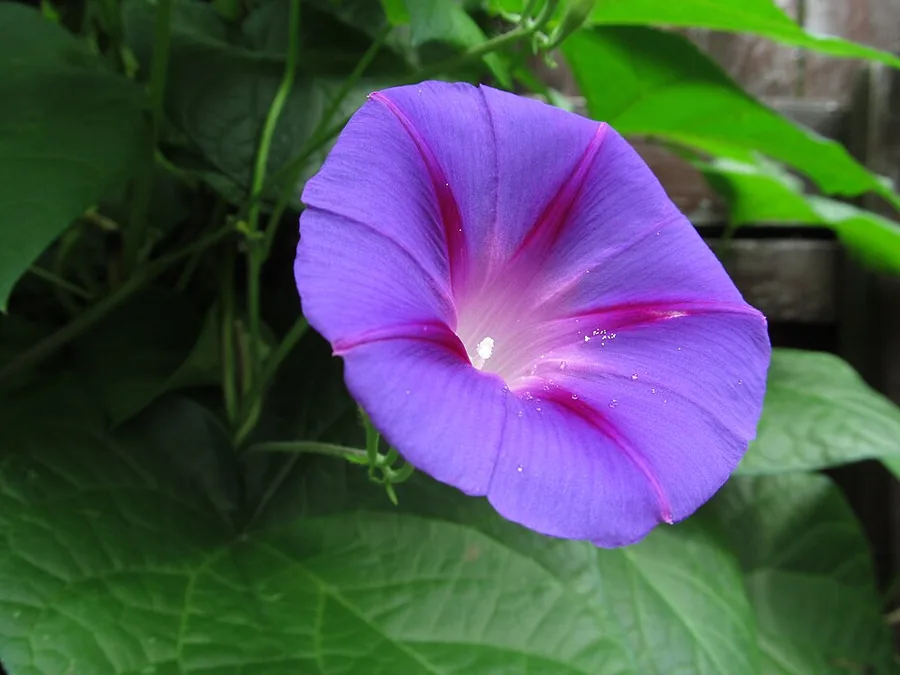
Morning glory is a fast twining annual vine that throws out fresh trumpet flowers every morning and lets them fade by afternoon. It comes from the warmer parts of the Americas, and it'll climb just about anything it can grab, whether that's a mailbox post or a chain-link fence, racking up 6 to 10 feet in a single season. Sky-blue is the classic, but you'll also find it in purple, wine-red, white, and striped.
The best part? It barely asks for anything. Full sun, lean soil, and something to climb pretty much covers it, and rich ground actually backfires by giving you leaves instead of flowers. The one catch is that it sows itself all over the place, so the same get-up-and-go that fills a trellis fast can have you pulling volunteers for years if you let the pods burst.
There are two things worth knowing before you plant. The seeds carry toxic alkaloids, which makes them dangerous to pets, livestock, and anyone who mistakes them for food. And while this ornamental annual is a lot better behaved than its perennial cousin field bindweed, some Ipomoea species do land on noxious-weed lists, so it pays to check before sowing somewhere new.
Care
The short version: give it full sun and lean, well-drained soil, water once the top half dries out, hand it a trellis to climb, and skip the fertilizer so you end up with flowers instead of a wall of leaves.
Light
Give morning glory full sun, which means 6 or more hours of direct light a day. It'll still climb in part shade, but you'll get way fewer flowers, since the blooms really lean on sun and heat.
Water
Let the top half of the soil dry out between waterings, then give it a good deep drink, which comes out to about every 5 to 10 days. Once it's settled in it shrugs off dry spells pretty well, and honestly soggy soil hurts it more than a little thirst.
Soil
Lean ground is exactly what it likes. Plant it in average to poor, well-drained sandy soil anywhere from a pH of 5.5 to 8.0, and don't bother enriching it, because rich soil trades your flowers for leaves.
Temperature
Morning glory is a warm-weather kind of plant, comfy from about 50°F to 95°F (10°C to 35°C). It can't handle frost at all, so hold off until the cold's fully gone before you set plants out.
Humidity
Regular outdoor humidity is all it wants, so there's no number to chase here. Hot, dry air is more likely to bring in spider mites than to bug the vine itself.
Feeding
This is one of those plants you can just leave alone. Skip the fertilizer, or use only a low-nitrogen feed if you use anything, because rich soil and extra nitrogen give you lush vines with hardly a bloom.
Pruning
Pinch the young tips to get the vine branching, and cut it back whenever it starts spilling out of its spot. Snip off the spent seed pods so it doesn't go sowing itself all over the garden.
Repotting
Morning glory gets grown fresh from seed every year as an annual, so there's no repotting to worry about. Just start it where you want it climbing and let it do its thing all season.
Size & spacing
Count on a vine of 6 to 10 feet (1.8 to 3 m) in one season, spreading out 3 to 6 feet (90 to 180 cm) wide. Give it a solid trellis, string, or fence and enough room for those twining stems to roam.
When to plant
Morning glory wants warmth and folds at the first hard frost, so there's really no rushing it. Start seeds indoors in early spring, or just sow them into warm ground once the cold has gone, and the vine will bloom from midsummer right through to fall frost.
Northern hemisphere
Southern hemisphere
Typical months for a temperate climate: start earlier in warm zones, later where spring frosts linger.
- Sow: 6-8 weeks before last spring frost; scarify and soak seed 12-24 hours
- Plant: 1-2 weeks after last spring frost when soil is warm; or direct sow after frost
- Harvest: midsummer to fall frost (about June to October)
Hardiness
USDA hardiness zones: 2–11
Temperature: down to -46°C
Troubleshooting
Nearly every morning glory hiccup boils down to too few flowers, too many seedlings, or a tangle with mites and aphids. Find what matches below and jump on it early, especially the self-seeding, since it's way easier to head off than to fix later.
Loads of leaves but where are the flowers
Here's the thing: this is usually too much of a good deal for the plant, with rich soil or a nitrogen feed steering it toward leaves instead of buds. Morning glory actually blooms best when it's a bit hungry and sitting in full sun, so quit feeding it and make sure it's soaking up 6 or more hours of direct light. And if it's still a young plant? Just wait, because flowering doesn't really get going until midsummer.
Fix:
- Stop fertilizing and avoid nitrogen-rich amendments
- Move or grow in full sun (6+ hours)
- Be patient; blooms typically start midsummer and continue to frost
Little seedlings turning up all over next spring
Morning glory is a serious self-seeder, so any pods you let split open will fling seed all around the bed. Come spring you'll notice the newcomers by their heart-shaped leaves crowding right where last year's vine sat. The trick is to yank them while they're small and come up easy, and snip off the old pods before they ripen so the vine stays where you want it.
Fix:
- Pull unwanted seedlings while young
- Remove and discard spent seed pods before they shatter
- Deadhead flowers before seed set in areas where weediness is a concern
Speckled, yellowing leaves with webbing or bugs
See fine webbing and a dusty, speckled look? That's usually spider mites, and they love hot, dry weather. Aphids like to pile onto the soft new growth, while leaf miners leave those pale little squiggles across the leaves. A good hard blast of water knocks most of them off, insecticidal soap deals with the stubborn ones, and keeping the vine watered gives the mites way less to work with.
Fix:
- Spray plants with a strong jet of water to dislodge mites and aphids
- Treat persistent infestations with insecticidal soap or horticultural oil
- Remove heavily mined or chewed leaves
Toxicity
This isn't a plant to grow where curious pets or little kids wander around unsupervised. The seeds are the real danger here, loaded with LSA alkaloids that cause stomach upset and hallucinations if swallowed, and the leaves are a gentler caution. Keep seed packets and fallen pods well out of reach.
Toxic to
Cats · Dogs · Horses · Rabbits · Livestock · Birds · People
Cats Moderate
A quick nibble of leaf and a cat will probably drool and throw up. The seeds are the real problem, though, since their LSA alkaloids can leave a cat jittery, wobbly, and pretty confused.
Dogs Moderate
Chew a few leaves and a dog usually just gets a queasy stomach and some vomiting. But once it swallows a mouthful of seeds, the alkaloids kick in, and you'll see tremors, restlessness, and a tipsy, stumbling walk.
Horses Moderate
Nibbling the vine can upset a horse's belly and leave it dull and low. Get into a bigger helping of seed, though, and it slides into neurologic stuff like twitching and a dazed, hallucinatory state.
Rabbits Moderate
Those same seed alkaloids that bother cats and dogs get to rabbits too, so keep this vine well out of their reach. Keep an eye out for a rabbit that quits eating, sits all hunched up, or wobbles around.
Livestock Moderate
Cattle, sheep, and goats don't usually go for it, but a mouthful of seed-heavy vine can bring on colic and jumpy, restless behavior. It's worth pulling stray morning glory off pasture fencing where they can reach it.
Birds Caution
Just treat morning glory as a no-go for pet birds. The seeds pack the strongest dose of alkaloids, so keep packets and fallen pods well away from cages and aviaries.
People Caution
No part of this plant is meant for eating. The seeds are genuinely dangerous, loaded with LSA alkaloids that bring on nausea and hallucinations, so keep them away from kids and never treat them like food.
Keep seed packets and dropped seeds away from pets and children; the seeds are sometimes abused for their hallucinogenic alkaloids.
Helpline numbers

United States
ASPCA Animal Poison Control: (888) 426-4435 (fee applies)
Poison Control: (800) 222-1222



Canada
Poison Centres: 1-844-764-7669
Varieties
Morning glory shows up in all sorts of colors, plus a few close relatives worth knowing about. Here are the ones you're most likely to run into.
Heavenly Blue (Ipomoea tricolor)
It's the one everybody pictures, with clear sky-blue trumpets opening up from a pale white and yellow throat.
Grandpa Ott's
A deep-purple heirloom you'll know by the reddish-magenta star running up the middle of every bloom.
Scarlett O'Hara
This one brings rich wine-red to scarlet flowers that really pop next to all the usual blues and purples.
Flying Saucers / Pearly Gates (Ipomoea tricolor)
Think of these as a set, where Flying Saucers swirls blue and white while Pearly Gates goes pure white.
Moonflower (Ipomoea alba)
A night-blooming cousin whose big white flowers open up in the evening and give off a sweet scent.
Cardinal climber / Cypress vine (Ipomoea × multifida / Ipomoea quamoclit)
Related vines folks grow for the fine, fern-cut leaves and those little red star-shaped flowers.
How to propagate
Morning glory grows from seed, and the only trick you really need to learn is how to get that stubborn seed coat to open.
SeedEasy
Start indoors 6-8 weeks before last frost or direct sow after frost when soil is warm · Germinates in about 1-2 weeks after scarifying/soaking; rapid growth once established
Morning glory only grows from seed, and honestly that's the whole story. The seed coat is tough, so nick it with a file or some sandpaper and let the seeds soak for 12 to 24 hours first. Start them indoors 6 to 8 weeks before your last frost, or just sow them into warm ground once frost has passed, and they'll pop up within 1 to 2 weeks and then really take off. Have a trellis, string, or fence ready for the twining vine the second it's up.
Myths
Morning glory and field bindweed are the same weedy plant.
They sure look alike, but they're really two different plants. The ornamental morning glory you plant is a warm-season annual in the genus Ipomoea, with showy 2-inch flowers and heart-shaped leaves that call it quits at frost. Field bindweed is Convolvulus arvensis, a deep-rooted perennial noxious weed with smaller 1 to 1.5-inch white-to-pink flowers and skinny arrowhead leaves, and that's the one that gives the whole family a bad name.