Ornamental · Convolvulaceae
Ornamental Sweet Potato Vine
Ipomoea batatas
Sunshine, a warm spot, and regular water, that's the whole deal, and it'll drape colorful leaves over any pot or bed right through summer.
Full sun
Every 2–5 days
50–95°F · 10–35°C
USDA 9–11
Overview
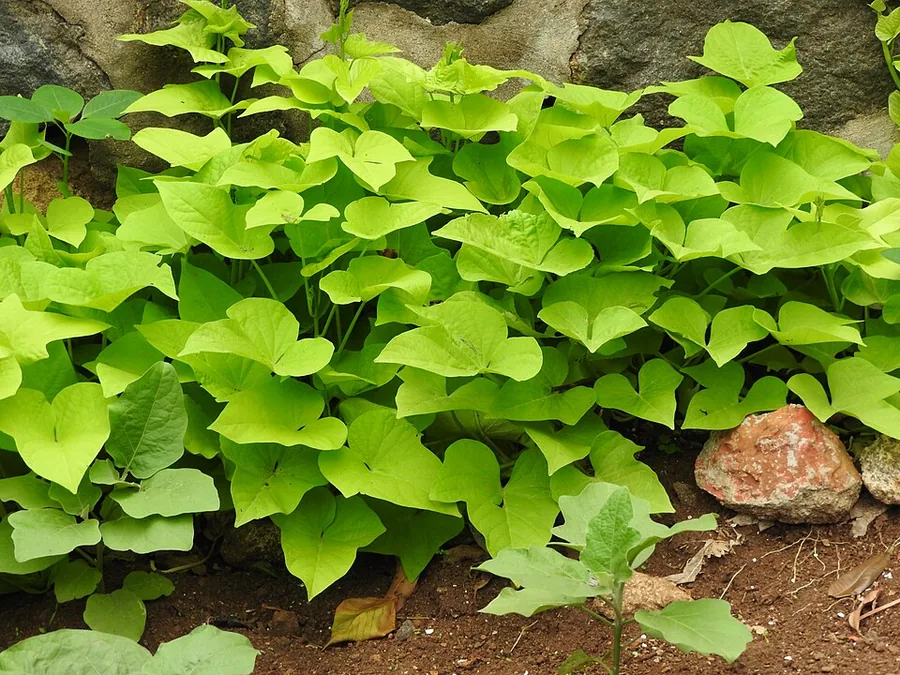
Here's the thing about ornamental sweet potato vine: you grow it for the leaves, not the roots. It's the same species as the food crop, Ipomoea batatas, just bred for bold foliage in colors from chartreuse all the way to a near-black purple. Drop it into a bed or a pot and it'll spill over the sides fast, weaving a low carpet of color as it goes.
It's a warm-weather plant that won't take frost, plain and simple. It's happy across hardiness zones 9 to 11 and gets grown as an annual anywhere colder, leafing out quick once the soil warms up and dying back the moment real cold hits. One plant can reach 8 to 10 feet (2.4 to 3 m) wide while staying only inches tall, which is why it's so good at tumbling over walls and pot rims.
And it barely asks for anything. Give it sun, warm soil, and water that doesn't run dry, and it grows so freely that keeping it trimmed becomes the main job. It flowers here and there with pale pink to violet funnels, but honestly, the foliage is the whole point.
Care
The short version: full sun to a little shade, evenly moist soil rich in organic matter, and warmth above frost. Feed it through the season, trim it whenever it runs past its space, and treat it as an annual where winters get cold.
Light
Plant it in full sun if you want the deepest leaf color, though it'll take partial shade just fine. The dark-leaved kinds hold their color best with lots of light, and in shade they lean a bit greener. Fair trade, right?
Water
Keep the soil evenly moist and it grows like a champ, but once it's established it'll shrug off a dry spell no problem. Pots dry out fastest and will wilt as a clear watering cue, so check containers in full sun every couple of days through summer.
Soil
Give it loamy, well-draining soil worked full of organic matter. A slightly acidic pH of 5.5 to 6.5 is what it likes, and that good drainage keeps the roots from sitting in water.
Temperature
It's happiest in the warmth between 50°F and 95°F (10°C to 35°C) and slows right down when it's cold. Frost kills it outright, so don't leave it out through a freeze and expect it back.
Humidity
Average outdoor humidity is plenty, and there's no number you need to chase. It handles muggy summer air just fine, though a little airflow helps keep leaf fungus from moving in.
Feeding
Feed it every two weeks through the growing season with a balanced water-soluble fertilizer to keep the foliage coming. A high-phosphorus starter at transplanting gives new plants a nice head start.
Pruning
Trim the vines anytime in the growing season to rein in the spread and keep beds or pots looking tidy. It takes a hard cutback in stride and bounces right back, so you don't have to be gentle with the shears.
Size & spacing
Figure on a low mound just 6 to 12 inches (15 to 30 cm) tall that sprawls 8 to 10 feet (2.4 to 3 m) wide. Give it room to run or plan on trimming, because one plant covers a lot of ground in a single season.
When to plant
This vine waits for warmth and calls it quits at the first frost, so timing's pretty easy once you know that. Start tubers or cuttings indoors a few weeks before the last frost, get the plants outside once the soil's warmed up in late spring, and let them run until the cold shuts things down.
Northern hemisphere
Southern hemisphere
Typical months for a temperate climate: start earlier in warm zones, later where spring frosts linger.
- Sow: Not typically started from seed; start tubers or root stem cuttings indoors 4 to 6 weeks before the last frost.
- Plant: Set out plants after all danger of frost has passed and soil has warmed in late spring.
- Harvest: Grown for foliage; rarely flowers (pale pink to violet funnel-shaped blooms). Tubers can be dug in fall before first frost.
Hardiness
USDA hardiness zones: 9–11
Temperature: down to -7°C
Troubleshooting
When something's off with this vine, the leaves usually tell you first, whether it's thirst, a fungus, or a bug having a snack. Most of it is just cosmetic and easy to catch early. Find what matches below and deal with it before it spreads.
Blotchy spots that keep showing up on the leaves
Those marks are fungal leaf diseases, and they show up more when the vine keeps going back into the same ground every year. Damp, crowded leaves are exactly what the spores want. So pull off the spotted leaves, thin things out so air can get through, and next season just move the plant somewhere fresh.
Fix:
- Remove and discard affected foliage
- Improve air circulation and avoid overhead watering
Leaves going limp on a hot afternoon
Don't panic, this is just drought stress and not a disease, and it turns up first in pots that bake in full sun. What's happening is simple: the plant's drinking faster than the soil can keep up. Give it a deep soak until water runs out the bottom, then water your containers a bit more often through the hottest part of summer and it'll recover.
Fix:
- Water thoroughly until it drains from the bottom
- Increase watering frequency for containers in full sun
Leaves getting chewed full of holes and tiny speckles
Who's been snacking? Usually flea beetles, thrips, and slugs, and all three leave the foliage looking chewed up. Keep an eye out for little jumping beetles, a dusty speckling from thrips, or the shiny trails slugs leave behind. Pick off or trap the slugs, stay on top of the beetles and thrips, and clear away the leaf litter they all like to hide in.
Fix:
- Hand-pick or trap slugs
- Monitor and treat flea beetle and thrips populations as needed
Toxicity
Good news if you've got pets: this vine is safe. The ASPCA lists Ipomoea batatas as non-toxic to cats, dogs, and horses, and it's no threat to rabbits, livestock, birds, or people either. The tubers are even edible, they're just blander than the kinds grown for eating.
Safe for
People · Cats · Dogs · Horses · Rabbits · Livestock · Birds
Cats None
Cats are totally fine around it. The ASPCA lists Ipomoea batatas as non-toxic, so a curious nibble won't make them sick.
Dogs None
There's nothing toxic in it, and the ASPCA gives it the all-clear for dogs. If a dog chews on a trailing vine, they'll be just fine.
Horses None
Horses can nose around it all they like, since the ASPCA rates the plant non-toxic to them.
Rabbits Safe
Rabbits have nothing to worry about here, so if one grabs a bite off the leaves or stems, no harm done.
Livestock Safe
Cattle, goats, and sheep can hang around the foliage safely, because it doesn't carry the toxins that usually worry farmers.
Birds Safe
Pet and backyard birds are in the clear too. There's nothing in the plant that would hurt them.
People Safe
It's fine to handle and grow around kids. The tubers are even edible, they're just not as tasty as the kinds bred for the kitchen.
Varieties
Really, the choice comes down to leaf color and shape. Here are the cultivars you'll bump into most often.
Blackie
It's got deeply lobed leaves in a purple that's so dark it looks nearly black across the bed.
Margarita
This one brightens up a planting with cheery chartreuse-green heart-shaped leaves.
Sweet Caroline Group
It comes in green, red, or dark purple with either divided or heart-shaped leaves, so it'll match just about any scheme.
Tricolor
Its variegated green leaves come splashed with pink and white.
How to propagate
Making more of this vine is almost no work, whether you take cuttings off a plant you already have or split its stored tubers come spring.
Stem cuttingsEasy
Take 8 to 10 inch cuttings from vigorously growing terminal or middle vine sections in the warm growing season. · Roots typically develop in about 4 to 5 weeks.
Want more of these? Cuttings are the easy route. When things are warm in the growing season, snip 8 to 10 inch pieces off the tips or middle of a healthy vine and pop them in water or moist soil, where roots turn up in about 4 to 5 weeks. Just hold off on planting the rooted cuttings outside until frost is done.
DivisionEasy
In spring after last frost, divide stored tubers into sections. · Several weeks to sprout and establish.
You can also split the stored tubers in spring once the last frost's out of the way. Cut each tuber so every section keeps at least one eye, then get the pieces in the ground outside. They'll need several weeks to sprout and settle in, so don't rush them.
Myths
Since it's related to morning glories, sweet potato vine has to be dangerous for pets.
Not true, and here's why. The ASPCA lists Ipomoea batatas as non-toxic to cats, dogs, and horses. That toxic-seed reputation actually belongs to the ornamental morning glories, Ipomoea tricolor and I. violacea, whose seeds carry LSA and other indole alkaloids. Sweet potato vine shares the family name, not the danger.
You can't eat the tubers that grow under an ornamental sweet potato vine.
You can actually eat the tubers on these ornamental cultivars. They simply taste blander than the ones bred for the dinner table, so people grow them for the leaves instead of the flavor.