Ornamental · Convolvulaceae
Moonflower
Ipomoea alba
Give it full sun and warm soil, and moonflower rolls open fragrant white trumpets every single evening.
Full sun
Every 3–7 days
50–90°F · 10–32°C
60–120 days
Overview
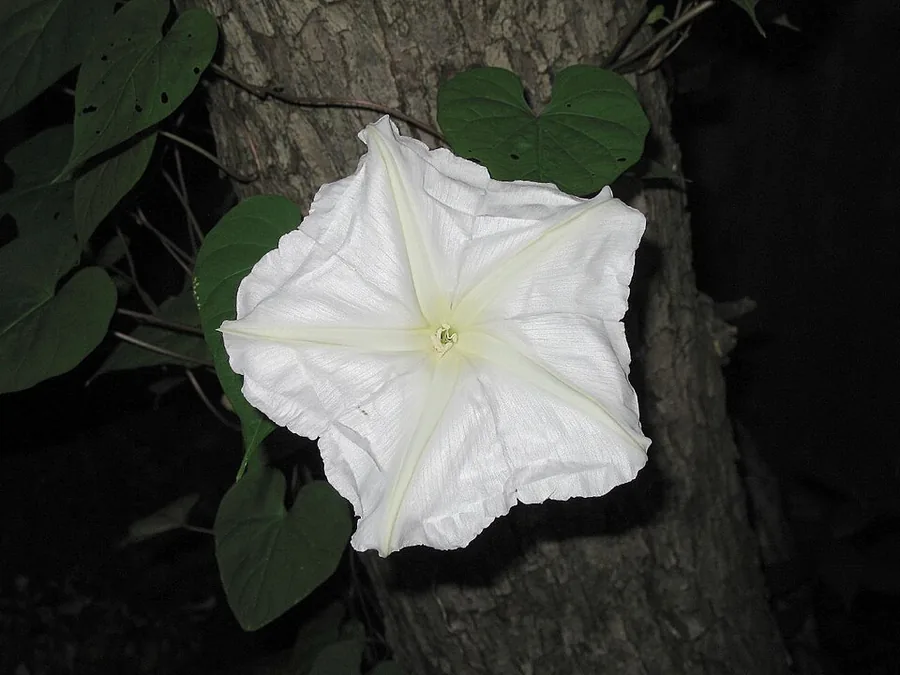
Moonflower is a fast, twining vine you grow for one thing: the show it puts on every night. Once the sun goes down, fat buds spin open into pure-white, fragrant trumpets about as wide as a saucer, and they call in the sphinx and hawk moths that pollinate them before closing back up by morning. It's part of the morning glory family, so it acts a lot like its day-blooming cousins, just on the night shift.
Give it heat and something sturdy to grab, and it climbs fast, clearing head height in a single summer. Where winters stay frost-free it's a tender perennial, but most people just grow it as an annual and sow fresh seed each spring. Those scented evening flowers make it a go-to for porches, arbors, and anywhere you like to hang out after dark.
Here's the nice part: once it's going, it barely asks for anything. The only two things it really can't stand are a cold, short season and soil that's too rich, and either one leaves you staring at a wall of leaves with hardly a flower in sight. Get the warmth and the lean soil right, and after that? Mostly you're just handing it something to climb.
Care
The short version: full sun, warm and average (not rich) well-drained soil, and steady moisture, with a strong trellis or fence for the vine to climb.
Light
Give moonflower full sun, ideally 6 or more hours a day. It'll put up with a little afternoon shade, but anything less than full sun slows the vine down and leaves you with fewer flowers.
Water
Keep the soil evenly moist but never soggy, and water about every 3 to 7 days depending on how hot and dry it's been. It likes steady, medium moisture, and well-drained ground keeps the roots happy.
Soil
Plain, well-drained soil is exactly what it wants, whether that's loam, clay, or sand. Any pH from 6.0 to 7.8 is fine. Skip the rich, heavily amended beds, though, since lush soil grows leaves and holds the flowers back.
Temperature
This one's a heat lover, happy anywhere from 50°F to 90°F (10°C to 32°C). It grows fastest in the thick of summer and can't handle frost, which just ends the plant.
Humidity
Regular outdoor humidity is plenty, so there's no number to chase here. The vine takes normal garden air in stride and doesn't ask for anything special.
Feeding
A light, balanced fertilizer about once a month through the growing season is all it needs. Go easy on nitrogen especially, because too much just grows leaves and pushes back the blooms you're waiting on.
Pruning
Pinch out the young tips early to get the vine to branch and fill out. After that, snip off any dead or stray growth and keep nudging the stems onto their support as they climb.
Repotting
In a pot, plan to move it up once a year. Keep an eye out for roots circling the pot, poking out the drainage holes, or growth that stalls, which all mean it's ready for more room.
Size & spacing
This is a big vine, climbing 10 to 30 feet (3 to 9 m) in a good year and spreading 3 to 6 feet (91 to 183 cm) across. Give it a tall, sturdy trellis, fence, or arbor and plenty of room to run.
When to plant
Moonflower wants a long run of warmth and packs it in at the first frost, so timing matters. Nick and soak those hard seeds, start them indoors 6 to 8 weeks before your last frost, and move the plants out once the cold's gone for good. After that, you'll get flowers from mid-summer into fall.
Northern hemisphere
Southern hemisphere
Typical months for a temperate climate: start earlier in warm zones, later where spring frosts linger.
- Sow: 6-8 weeks before last spring frost, after nicking and soaking the hard seed coat
- Plant: 1-2 weeks after last spring frost once soil is warm
- Harvest: Mid-summer into fall; flowers open at dusk and close by morning
Hardiness
USDA hardiness zones: 10–12
Temperature: down to -1°C
Troubleshooting
Moonflower doesn't give you much to worry about, and what does pop up usually comes back to the weather or the soil. The big one is leaves with no flowers, and now and then a pest wanders in. Just find what matches your plant below and jump on it early.
Plenty of leaves, but where are the flowers?
So the vine looks great and green but just won't bloom? That usually comes down to running short on warm weeks or growing in soil that's too rich. Too much nitrogen tells the plant to make leaves, not buds, and a shady spot drags everything down. Give it full sun, back off the feeding, and start seed early so there's time to flower before fall shows up.
Fix:
- Site in full sun with a sturdy support
- Avoid rich soil and high-nitrogen fertilizer
- Start seed indoors early in short-season areas to extend the warm growing window
Curly tips, speckled leaves, or a bit of webbing
Seeing twisted shoots or specks on the leaves? That's usually aphids and spider mites, plus the odd caterpillar or leaf miner. Flip a few leaves and check the tender new tips, since that's where aphids pile up and mites leave a faint web over the pale, stippled patches. A good blast of water knocks most of them off, insecticidal soap handles the soft-bodied ones, and caterpillars come off by hand. On a healthy vine it rarely turns into a big deal.
Fix:
- Dislodge aphids and mites with a strong spray of water
- Treat soft-bodied pests with insecticidal soap
- Handpick caterpillars and remove mined leaves
Toxicity
Give the seeds a healthy respect. Like all morning glories, moonflower packs LSA alkaloids into its seeds, and those can make pets, livestock, and people sick and cause a hallucinogenic reaction if eaten. The leaves are a lot milder, but keep the seeds and pods well away from animals and kids.
Toxic to
Cats · Dogs · Horses · Rabbits · Livestock · Birds · People
Cats Mild
With cats, the seeds are what you have to watch, because that's where the LSA alkaloids live. A nibble tends to bring drooling and vomiting, and a bigger helping can lead to tremors, a wobbly walk, and a dazed look. The leaves? Much less of a worry.
Dogs Mild
If a dog eats the seeds, you'll usually just see an upset stomach and vomiting. Eat a lot, though, and those same alkaloids can leave them agitated, shaky, and kind of spaced-out. The foliage on its own rarely causes worse than a mild tummy ache.
Horses Caution
A horse probably won't go hunting for this vine, but the seeds carry the same alkaloids that trouble everything else. Keep them clear of the seed pods, and keep an eye out for colic or dullness if any get eaten.
Rabbits Caution
Don't hand moonflower to a rabbit as a snack. The seeds especially can upset that sensitive gut, so keep the plant and its pods out of the hutch and run.
Livestock Caution
Cattle, goats, and sheep usually walk right past the bitter vine, but the seeds are still the thing to worry about. Just fence stock away from any plants that are setting pods.
Birds Caution
Here again, it's the seeds you want to guard against. Keep pet birds away from any that drop, since eating them can bring on vomiting and a jittery, disoriented spell.
People Caution
None of this vine is food, and the seeds are where the danger sits. Eat them and you'll get nausea, vomiting, and hallucinogenic effects from the LSA alkaloids, so keep seeds and pods well out of kids' reach.
Keep seeds out of reach of pets and children; ingestion of large amounts of seeds can cause neurologic signs.
Helpline numbers

United States
ASPCA Animal Poison Control: (888) 426-4435 (fee applies)
Poison Control: (800) 222-1222



Canada
Poison Centres: 1-844-764-7669
Varieties
There's really just one moonflower, the species itself, though people often plant it next to a day-blooming relative. So here are the two worth knowing about.
Ipomoea alba (species moonflower / moonvine)
This is the real moonflower, a vine that unrolls fragrant, pure-white trumpets up to 4 to 6 inches across at dusk so the sphinx and hawk moths can drop by and pollinate them.
Day-blooming morning glory (Ipomoea purpurea / Ipomoea tricolor)
This close cousin often gets planted right next to moonflower so something's always open, since its colorful flowers show up during the day instead of at night.
Companions
Moonflower pairs naturally with its day-blooming morning glory cousins, which fill the trellis with color while the moonflower sleeps and then hand the night shift back over at dusk.
Plant near
Day-blooming morning glory (Ipomoea purpurea/tricolor): Planted together they provide round-the-clock flowers, day and night.
How to propagate
Moonflower grows from seed, and the only trick is getting that tough seed coat to finally let some water in.
SeedEasy
Start indoors 6-8 weeks before last frost or sow outdoors after frost when soil is warm · 1-3 weeks to germinate; rapid growth once weather warms
Moonflower is easy to grow from seed, and the only catch is that tough seed coat that keeps water out. So nick it with a knife or rub it on some sandpaper, then let it soak overnight before planting. Start it indoors 6 to 8 weeks before your last frost, or just sow it outside once the soil's warm, and you'll see sprouts in 1 to 3 weeks before it really takes off in the heat.
Myths
The vining moonflower is the same deadly plant as the jimsonweed or thorn apple that shares its name.
These are really two separate plants that just happen to share the name moonflower. The vine here is Ipomoea alba, a twining morning glory whose seeds carry mildly toxic LSA alkaloids. The scary one is Datura, an upright nightshade loaded with tropane alkaloids, atropine, scopolamine, and hyoscyamine, that can actually be fatal. Datura is way more poisonous than the vine, so the shared name tells you nothing about the risk.