Ornamental · Caryophyllaceae
Sweet William
Dianthus barbatus
Hand it a sunny spot, free-draining soil, and room to reseed, and Sweet William turns out clove-scented color all over the bed.
Full sun
Every 3–7 days
USDA 3–9
12–24 in · 30–60 cm
Overview
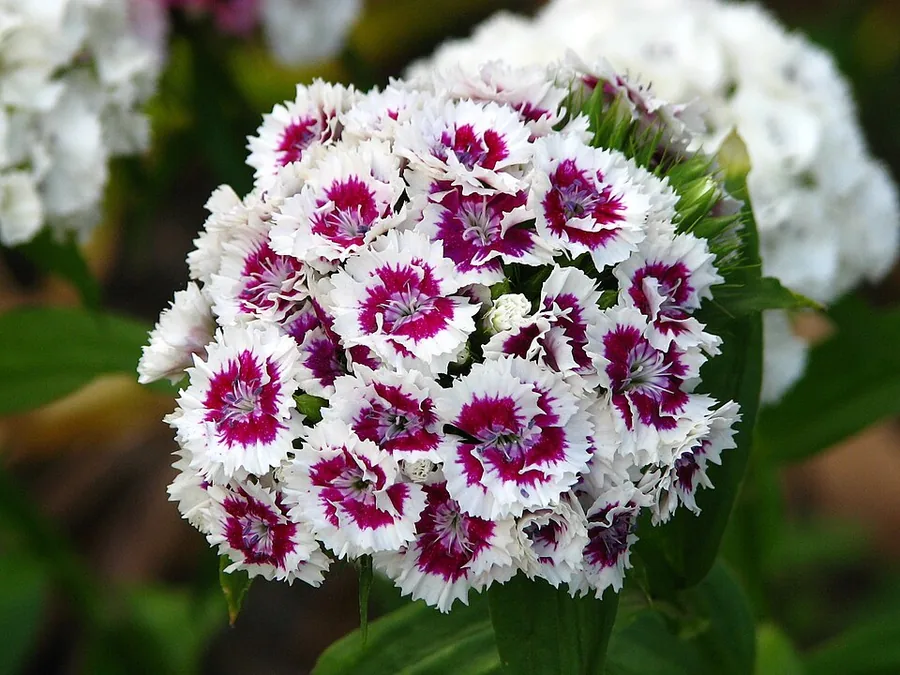
So what is Sweet William? It's a cottage-garden old-timer that's been charming gardeners forever, with dense, flat-topped clusters of little flowers in white, pink, red, and bicolors, and lots of them show a contrasting eye in the middle. It's part of the pink family, so it's cousins with carnations and garden pinks, and in the wild it grows up in the mountains of southern Europe. Get close and you'll often notice a gentle clove scent, which is exactly what pulls in the bees and butterflies.
Here's the thing about how it lives. Most Sweet William plants are a biennial or short-lived perennial, which just means the first year they make a leafy little rosette and the next spring and early summer they flower and set seed. Let those seeds drop and sprout on their own, and the patch keeps refreshing itself, so it can look like it's been there for years even though any single plant isn't sticking around long.
The best part? It really doesn't ask for much once it's in the right place. It wants full sun, soil that drains well, and a bit of air moving around the leaves, and that's pretty much the whole list. The one thing it won't forgive is soggy soil, because sitting in the wet is what brings on crown rot and the fungal stuff that cuts these plants short. Sort out the drainage and you're basically home free.
Care
The short version: Sweet William likes full sun, or a little afternoon shade if it's hot, plus rich soil that drains and steady moisture kept off the leaves. Snip the dead flowers for more blooms, but leave a few behind to self-sow if you want plants again next year.
Light
Sweet William blooms best in full sun, though it's totally fine with a bit of afternoon shade if your summers get hot. Give it too much shade, though, and you'll see fewer flowers and floppy, weak stems, so brighter is better here.
Water
Try to keep the soil evenly moist in a spot that drains, without letting it flip between bone-dry and soaked. Watering down at the base with a soaker or drip line is the way to go, since it keeps the leaves dry. And if you've got to water from the top? Do it in the morning so everything dries off before night, and fungal trouble won't get comfortable.
Soil
Give it deep, rich soil that drains well, either loam or sandy loam, and mix in some compost before you plant. It's not picky about pH at all, happy anywhere from 6.0 to 8.0, so neutral to slightly alkaline ground that annoys other plants suits it just fine.
Humidity
You don't need to think about humidity here, since regular garden air is plenty and there's no number to worry about. What does matter is airflow, because leaves that stay damp and packed together are exactly what rust and crown rot are waiting for.
Feeding
Feeding is about as easy as it gets. Just work a balanced general-purpose fertilizer into the top 4 to 6 inches of soil while you're prepping the bed, and that early bit of fertility carries the plants along all season.
Pruning
Deadhead the spent flowers and you'll keep the blooms coming while nudging the plant toward perennial habits. Here's the catch with biennial plantings, though: if you snip off every last flower, you also shut down the self-seeding that brings plants back next year, so leave a few to go to seed if you want a repeat.
Size & spacing
Plants get to about 12 to 24 inches (30 to 60 cm) tall and 6 to 12 inches (15 to 30 cm) across. Give each one that kind of space and air can move through the clump, which keeps the leaves nice and dry.
When to plant
Sweet William isn't in a hurry, so don't be surprised if it takes its time. Sow the seed in late winter to early spring, or wait until late summer to early fall, then pop the young plants outside around late spring. Most of them save their flowers for the following year, blooming from late spring into summer wherever things stay cool.
Northern hemisphere
Southern hemisphere
Typical months for a temperate climate: start earlier in warm zones, later where spring frosts linger.
- Sow: Late winter to early spring, or sow in late summer/early fall for bloom the following year
- Plant: Direct sow or transplant in late spring; fall-sown seedlings may be set out for next-year bloom
- Harvest: Late spring to early summer, often continuing into summer in cooler climates
Hardiness
USDA hardiness zones: 3–9
Temperature: down to -40°C
Troubleshooting
Almost every hiccup with Sweet William comes down to the same two things: soil that's too wet and air that just sits there. The good news? The warning signs turn up right on the leaves and at the base, so if you're paying attention you can jump in before you lose a plant. Just find whatever matches what you're seeing below and go from there.
The plant flops over and rots at the base
If your plant caves in and rots right at the soil line, that's crown rot, and it shows up when the base is stuck in soggy, poorly drained soil. There's no bringing it back, unfortunately, so just pull it out and toss it. After that, loosen up the drainage, give each plant room to breathe, and water at the base instead of over the top.
Fix:
- Remove and discard affected plants
- Improve soil drainage
- Avoid overwatering and overhead watering
One side turns yellow and wilts while stems rot
When the yellowing and wilting all shows up on one side, you're probably looking at fusarium wilt, a soil fungus that clogs the stem from the inside, and there's no fixing it once it's here. Best thing is to pull the plant, get rid of it, and skip replanting Dianthus in that same spot. Start over with clean, well-draining soil and seed or cuttings you know are healthy.
Fix:
- Remove and destroy infected plants
- Avoid replanting Dianthus in the same soil
- Use pathogen-free planting material
Little rusty spots showing up on the leaves
Those raised, rusty bumps are rust, a fungus that loves damp leaves and still air. Pinch off the marked leaves and burn or bin them, then spread the plants out so a breeze can get through. Keep water off the foliage, and only bother with a protective fungicide if the spots keep spreading.
Fix:
- Remove and destroy infected foliage
- Improve air circulation
- Apply a protective fungicide to healthy plants if needed
Chewed leaves with shiny slime trails
Ragged, chewed leaves plus a shiny trail? That's slugs and snails, and they usually turn up after it's been damp. Head out at dusk and just pick them off by hand. Clear away the leaf litter and boards they hide under, switch to watering in the morning so the surface dries, and put down baits or barriers wherever they keep showing up.
Fix:
- Hand-pick slugs and snails in the evening
- Remove garden debris that provides shelter
- Use slug baits or barriers as needed
Toxicity
No need to stress, but Sweet William isn't totally in the clear either. Like other dianthus and carnations, it's got saponins that can leave a pet feeling queasy, and the sap makes some folks' skin itch. The petals are fine to eat when the plant's grown clean, but the leaves aren't, so it's smart to keep nosy pets and little kids away from the foliage.
Toxic to
Cats · Dogs · Horses · Rabbits · Livestock · Birds · People
Cats Mild
If a cat nibbles a leaf, it'll probably drool, throw up, or get a bit of diarrhea, and brushing up against the plant can leave a patch of mild skin irritation.
Dogs Mild
A dog that chews the foliage is likely to get an upset stomach with some vomiting and loose stools, plus a little mild dermatitis wherever the sap touched its skin.
Horses Caution
Those same saponins that bug cats and dogs can give a grazing horse a mild tummy ache too, so it's worth keeping clumps out of reach.
Rabbits Caution
Just treat it as off-limits for rabbits, since the foliage can upset their touchy stomachs and it's really not worth chancing it.
Livestock Caution
Livestock don't usually go for it, but a mouthful of the leaves can still cause some mild digestive trouble thanks to the saponins.
Birds Caution
There's not much sign birds eat it, but those irritant compounds make it a good idea to keep curious pet birds away from the leaves.
People Caution
You can eat the petals when it's grown clean, but the leaves might give you a mild stomach upset, and the sap leaves some people with itchy, irritated skin, so pop on gloves when you're handling it.
Wear gloves when handling, as contact with the plant can cause mild skin irritation in sensitive individuals.
Helpline numbers

United States
ASPCA Animal Poison Control: (888) 426-4435 (fee applies)
Poison Control: (800) 222-1222



Canada
Poison Centres: 1-844-764-7669
Varieties
Want a favorite to look out for? Sweet William comes in loads of named types, everything from tidy little dwarfs for the front of a bed to dramatic dark-flowered ones. Here are a few that are worth knowing by name.
Pinocchio
A short, compact little one that's great for bedding and containers.
Sooty
The one with almost-black flowers, a deep maroon, sitting over dark, moody leaves.
Nigrescens
A dark-leaved type that mixes rich crimson blooms with bronze-purple foliage.
How to propagate
Making more Sweet William couldn't be much easier, whether you let it sow its own seed or just split up a clump that's already going strong.
SeedEasy
Direct sow in late spring for bloom the following year, or sow in late summer/early fall; some cultivars bloom the first year if started early. · Germination in about 1 to 2 weeks; plants typically bloom the season after sowing for biennial types
Seed is the go-to here, and honestly it's easy. Sow it straight into the ground in late spring for flowers the next year, or do it in late summer and early fall for the same deal, and a few cultivars will even bloom the first year if you get an early start. The seedlings pop up in about 1 to 2 weeks, and since most are biennial, they hold off on the real show until the year after sowing. Let it drop seed every year and the patch just keeps renewing itself, acting like a perennial that hangs around.
DivisionEasy
Divide established clumps in spring or early fall · Several weeks to re-establish roots
For the short-lived perennial types, lifting and splitting an established clump keeps it going strong. Divide it in spring or early fall, get the pieces back in the ground right away, and give them several weeks to root before they really get moving again.
Myths
Sweet William is a solid perennial that comes back on its own every single year.
Not quite, it's really a biennial or short-lived perennial, and the way it keeps coming back is by dropping seed. Cut off every single flower and you cut off the reseeding that brings it back, so leave a few blooms to make seed if you want plants next year.
Sweet William flowers are just pretty and don't do anything else.
Actually, the petals are edible when the plant's grown clean, and people sometimes candy them with sugar to decorate a cake. The leaves are a whole other story, though, and can give you a mild stomach upset if you eat them.