Ornamental · Melanthiaceae
Large-flowered Trillium
Trillium grandiflorum
Give it shade and rich, leafy soil, and this laid-back native will turn up with a fresh bloom every spring.
Partial shade
Every 3–7 days
USDA 4–8
8–18 in · 20–46 cm
Overview
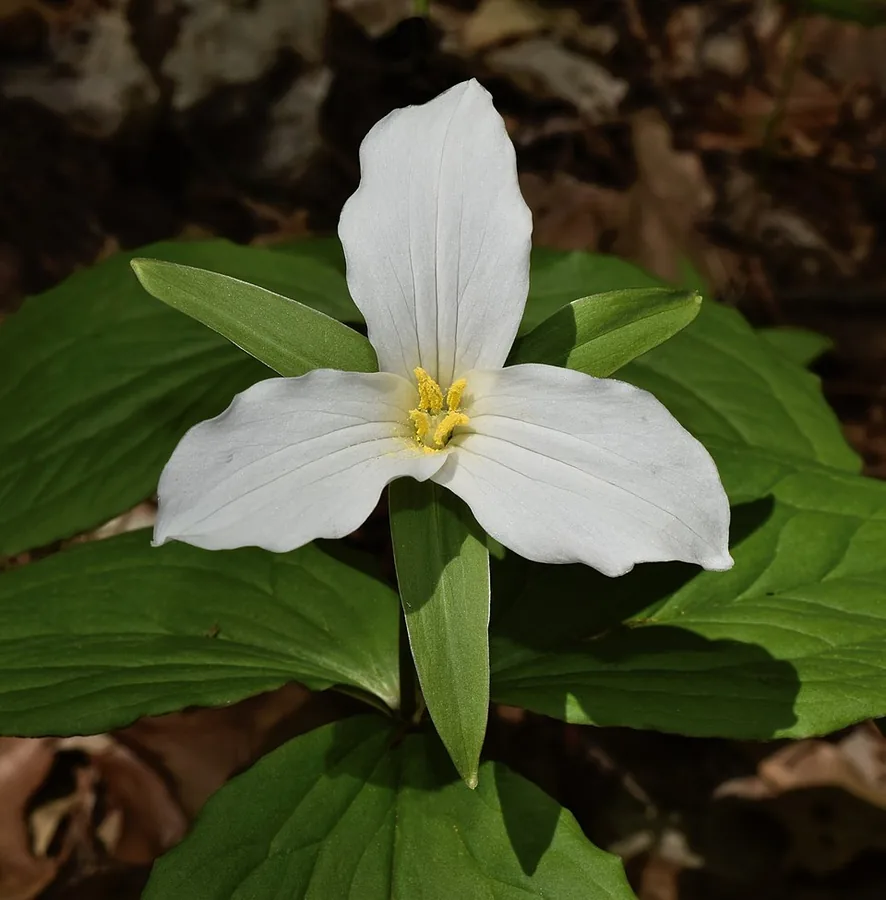
So here's the star of the spring woods: a single white flower sitting up above a ring of three broad leaves. It's a cousin of the lilies, and it grows wild in the rich, shady forests of eastern North America. Notice how the bloom starts out white and drifts to a soft pink as it gets older? That's just what it does.
This isn't a plant that likes to be hurried. It grows from a rhizome, creeps along slowly, and a seed can take almost ten years to grow into something that flowers. Give it a calm, settled spot, though, and it'll stick around for years and spread into a nice little colony.
What does it ask for? Really just shade, damp soil, and plenty of leafy richness, and once it's happy it would rather you just left it be. And the one rule you can't skip: don't ever dig one up from the wild.
Care
The short version: pop it into dappled or full shade with deep, rich, humusy soil, keep things damp all through spring, and after that just let the settled clump do its thing.
Light
Trillium is a woodland kid at heart, so it's happiest in partial to full shade. That dappled light under deciduous trees is perfect, since the flowers open before the leaves fill in up top, and once the shade deepens? It's totally fine with that too.
Water
Keep the soil damp but not soggy, and give it a drink during dry spells while it's putting on spring growth. The leaves fade off by themselves come late summer, and after that the resting rhizome barely needs a thing.
Soil
Go for deep, rich, humusy soil loaded with organic matter that drains nicely. As for pH, it's happy across 5.0 to 7.0, which pretty much covers the leafy woodland dirt it loves.
Temperature
This one's a real cold-weather native, comfy across the whole range of -29°F to 84°F (-34°C to 29°C). Here's the thing though: it needs a proper winter chill to wake up and bloom, so hot, frost-free spots just won't work for it.
Humidity
Don't sweat the humidity, since regular outdoor air is plenty and there's no number to hit. A cool, shady, moist spot with some leafy mulch does way more for it than any gauge ever could.
Feeding
Honestly, that rich woodland soil usually handles the feeding by itself. When fall comes around, spread a little leaf mulch or leaf mold over the top, keeping it no more than 2 inches thick, so it acts like the forest floor and enriches the ground bit by bit.
Pruning
No need to prune, really. Once it's finished flowering, just let the leaves fade away on their own, because they're busy feeding the rhizome for next year's flowers, and snipping them off early only sets the plant back.
Repotting
Trillium would really rather stay put, since it hates being disturbed. Only lift a clump if it's gotten crowded and started losing steam or blooming less, and even then, don't be surprised if it takes its sweet time to recover.
Size & spacing
Once it's all grown up, a plant hits about 8 to 18 inches (20 to 46 cm) tall and 9 to 12 inches (23 to 30 cm) wide. Just give each one a bit of elbow room so it can form its slow clump without bumping into the neighbors.
When to plant
Trillium just follows the woods' own timetable, so it's easy to keep up with. Get the dormant rhizomes in the ground come fall, then sit back and wait for the flowers, which show up somewhere between April and June, right before the trees leaf out and shade everything below.
Northern hemisphere
Southern hemisphere
Typical months for a temperate climate: start earlier in warm zones, later where spring frosts linger.
- Plant: Plant dormant rhizomes in fall; sow fresh seed outdoors in fall
- Harvest: Blooms April to June
Hardiness
USDA hardiness zones: 4–8
Temperature: down to -34°C
Troubleshooting
Good news: once trillium settles in, it hardly ever gives you grief, and when something does go sideways, it usually shows up right there on the leaves. Just check the list below, spot what matches, and step in early while it's still an easy fix. The only real headache? Moving the plant at all.
A plant that goes downhill after getting moved
Trillium really can't stand having its roots messed with, so transplant shock tends to follow any digging or splitting. The simplest fix? Don't move it in the first place. If you've really got to divide it, hold off until the leaves have died back, then get the rhizome back in the ground fast at the same depth and keep it damp while it settles in. Starting with plants from a nursery saves you the whole headache of shifting a wild clump that might not make it.
Fix:
- Leave established plants undisturbed where possible
- If dividing, do so after foliage dies back and replant rhizomes promptly at the same depth
- Keep newly set plants evenly moist while they re-establish
Chewed-up, ragged holes in the leaves and petals, with slime trails
That's slugs and snails for you. They come out after dark in the damp shade to munch away, and they leave those telltale silvery trails behind. Head out at night or first thing in the morning and pick them off by hand, clear away the damp litter and any boards they're hiding under, and go easy on the watering. Still coming back? A little iron-phosphate bait usually sorts them out.
Fix:
- Hand-pick slugs and snails in the evening
- Reduce excess moisture and remove debris that shelters them
- Apply iron-phosphate slug bait if pressure is heavy
Spots, blotches, or a powdery look on the leaves
Those marks are usually a fungal leaf spot, rust, or smut, and they show up when the leaves stay wet and the air's not moving. Just pluck off the affected leaves and toss them, open the clump up so air can get through, and water down at the soil instead of over the top. Then a good tidy-up of old debris in fall keeps the spores from hanging around till next year.
Fix:
- Remove and destroy affected leaves
- Improve air circulation and avoid wetting foliage
- Clean up fallen plant debris at season end
Toxicity
No need to panic here. Trillium is more of a mild worry than a real poison. The saponins in its berries and rhizome can leave a pet, a grazing animal, or a curious person with an unsettled stomach if they eat some, but it's not a systemic toxin, and the ASPCA doesn't even list it. So just keep the fruit and the roots out of reach, and whatever you do, don't dig this protected wildflower out of the wild.
Toxic to
Cats · Dogs · Horses · Rabbits · Livestock · Birds · People
Cats Mild
If a cat swallows a bit of the berry or rhizome, the saponins in there can turn its stomach, so you might see some drooling or throwing up. The good news is that most cats just leave it alone, and a tiny nibble hardly ever causes any real trouble.
Dogs Mild
Let a dog gnaw the berries or dig down to the rhizome and it might drool, throw up, or end up with a loose stool. It's usually mild and clears up on its own, but keeping a keen digger away from the roots is a smart move anyway.
Horses Mild
Out in the pasture a grazing horse could get a mildly upset stomach from the saponins in the rhizome and fruit. It's pretty unlikely though, because this plant sticks to shady woodland and rarely shows up where horses graze.
Rabbits Mild
A rabbit that eats a lot of the fruit or roots might end up with a queasy tummy thanks to the saponins. The leaves are the safer bet, so it's best to keep the berries and rhizome where a rabbit can't get at them.
Livestock Mild
If cattle, goats, or sheep nibble on the rhizome or berries, they might get a mild bout of tummy upset from the saponins. Nothing serious is likely though, since this plant isn't really a poisoning risk.
Birds Caution
Birds love the ripe berries, and they're the ones that spread the seed around, but the saponins still make that fruit a mild irritant. So treat it as a caution for a pet bird rather than a snack that's safe to hand over.
People Caution
You're not supposed to eat any part of this plant, and the saponin-loaded berries and rhizome can leave you with an upset stomach if you swallow some. Keep the kids from tasting the fruit, and never pick it thinking it's food.
Keep fruits and rhizomes away from pets and children. This is a slow-growing native protected or restricted in some areas; source only nursery-propagated plants rather than digging from the wild.
Helpline numbers

United States
ASPCA Animal Poison Control: (888) 426-4435 (fee applies)
Poison Control: (800) 222-1222



Canada
Poison Centres: 1-844-764-7669
Varieties
Most of the time Trillium grandiflorum is grown just as the plain wild species, but every so often a different color form pops up.
f. roseum
It's a wild pink form whose blooms come up soft pink rather than white.
How to propagate
Fancy making more of it? You've got two ways to go, splitting the rhizome or growing from seed, and honestly both of them test your patience.
DivisionModerate
After foliage dies back in late summer to fall · 1 to 2 years
Only split it while it's dormant. Wait for the leaves to die back in late summer or fall, then dig up the clump and pull the rhizomes apart. Get the pieces replanted right away, and then just be patient, because trillium hates being disturbed and needs a good 1 to 2 years to get going again.
SeedDemanding
Sow fresh seed in fall outdoors · Several years to flowering
Growing it from seed? That takes some serious patience. Sow fresh seed outside in fall and count on double dormancy, which means the seeds are slow to wake up over two or more years, and then the plant needs a few more years on top of that to reach flowering size. Fun detail: each seed comes with a little fatty bit that ants love, so they haul it off and basically plant it for you.
Myths
Grabbing a wild trillium, or lifting one to plant at home, doesn't really do it any harm.
Here's the problem: snap off that flower and you take the plant's only leaves right along with it, which can starve the rhizome and leave it struggling for years, if it survives at all. On top of that, it doesn't move well and it's legally protected in loads of places. Go with nursery-propagated plants instead of pulling them from the wild.