Houseplant · Araceae
Alocasia 'Polly'
Alocasia × amazonica 'Polly'
Hand it warmth, humidity, and bright indirect light, and the African mask plant pays you back with bold arrowhead leaves.
Bright indirect
USDA 10–12
1–4 ft · 0.3–1.2 m
Overview
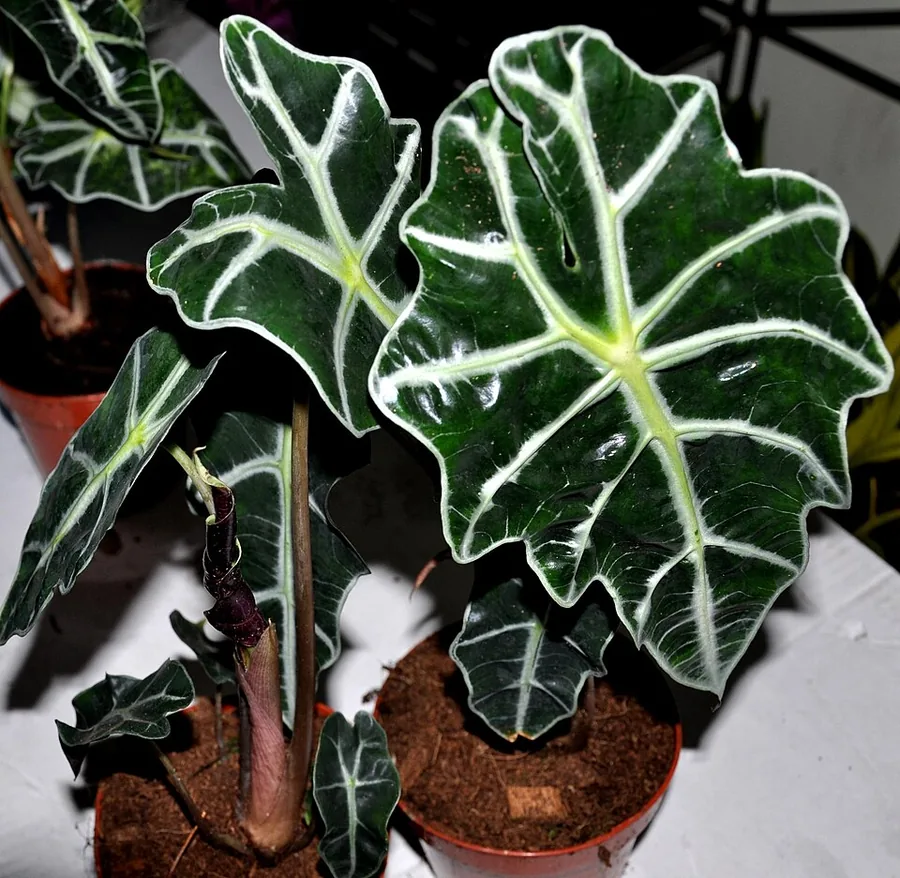
Most shops label Alocasia 'Polly' as the African mask plant, and the whole appeal is the foliage, not any sort of bloom. Picture a glossy arrowhead in deep bronze-green, its border gently rippled and laced with thick white veins that practically look brushed on by hand. Since it stays small and tops out near 2 feet tall, it earns its keep in a bright corner or perched on a shelf.
It belongs to the Araceae family and is a hybrid raised for life indoors, so it's happiest in the warm, humid, bright setup its tropical parents knew. That does make it a bit more demanding than your average houseplant. It wants steady moisture without ever sitting in water, air a touch damper than most rooms, and warmth the whole year round, so why not pick a spot that fits before you bring one home?
The thing that trips people up is its winter break. As the light drops off, the plant slips into a semi-dormant phase and can drop nearly all its leaves, looking for all the world like it's a goner. It isn't. Ease off the water, keep it warm, and it'll push out fresh leaves once spring rolls back around.
Care
The short version: park it in bright indirect light, keep the soil evenly moist yet never soggy, hold the temperature above 60°F (15.6°C) right through the year, and aim for air a notch damper than your typical room. Come winter, ease off the watering while it rests up.
Light
Set it up in bright, indirect light, the sort you get near an east window or a little back from a brighter one. It'll cope with some partial shade or gentle sun, but harsh direct sun will scorch the leaves and deep shade just leaves it weak and leggy.
Water
All through the growing season, keep the soil evenly moist but never soggy, letting the surface dry off a touch between drinks. Ease right back in winter while it rests, because the quickest way to lose it is to let it sit wet, which rots the roots and stem.
Soil
Get it into rich, loamy soil that holds moisture but still drains freely, with lots of organic matter mixed through. It's pretty relaxed about acidity and takes a pH anywhere from 5.5 to 7.5, but it won't put up with a mix that stays waterlogged.
Temperature
Warmth is a year-round thing here. Keep it above 60°F (15.6°C) and out of cold drafts and chilly windows. Drop below about 50°F (10°C) and you'll push it into early dormancy, with damage to follow.
Humidity
Being a high-humidity tropical, it pays you back for stale dry indoor air with brown, crispy leaf edges. Get more moisture into the surrounding air using a humidifier, a tray of wet pebbles, or a knot of plants grouped together, and steer it clear of any heating vents.
Feeding
Give it a balanced houseplant fertilizer right through spring and summer while it's actively growing. Stop completely in winter, when it's dormant and has no use for the food.
Pruning
As soon as a leaf yellows, gets damaged, or simply gives up, clip it off down at the base. When the colder months roll in and it's settling into dormancy indoors, feel free to bring it all the way back to just the top one or two leaves.
Repotting
Plan on a fresh pot every 1 to 2 years, and bump that up if you spot roots winding around, pups packing the top, or the soil drying out way quicker than it used to. Leave it in a pot the whole year through rather than digging it up to overwinter as a bare corm.
Overwintering
Get it under a roof ahead of that first autumn frost, and figure on a semi-dormant stretch where most of the leaves let go. Hold it a little dry, trim down to a leaf or two up top, then ease watering and feeding back into the routine as soon as it starts growing again in spring.
Size & spacing
Indoors it stays nice and compact, reaching 1 to 4 feet (30 to 120 cm) tall with a spread of 12 to 24 inches (30 to 60 cm). Give it a bit of room to hold its leaves out so it isn't bumping a shelf or its neighbors.
Troubleshooting
Nearly every problem this plant runs into comes down to water, dry air, or a pest stopping by. Take a look at the leaves and the base of the stem, since they'll clue you in early on whether you're watering too much, the air has gone too dry, or something's started feeding on it. Find the description below that matches yours and step in before it spreads.
Wilting leaves and a soft, mushy stem base
What you're looking at is root and stem rot, and you can usually save it if you jump in quickly. It comes down to a bit too much water, or soil that won't let go of it, so roots that used to be white and firm go brown and slimy and the stem base turns soft. Put the watering can down, slide the plant out of its pot, trim away anything that's rotted, and replant into fresh, free-draining mix in a pot that drains properly.
Fix:
- Stop watering and allow the soil to dry appropriately
- Remove the plant, cut away rotted roots/tissue, and repot into fresh, well-drained mix
- Ensure the pot has drainage and discard standing water
Speckled or webbed leaves and sticky or cottony patches
Some sap-feeding bugs have moved in, and once you can tell which is which they're manageable enough. Thin webbing paired with pale flecks tends to point at spider mites, the ones that thrive in dry air; fluffy white clumps tucked where the leaves meet the stem are mealybugs; and clusters of soft little insects leaving a sticky coating behind are aphids. Hose the foliage down, wipe the bugs away, then follow with insecticidal soap or horticultural oil, and park the plant apart from the rest until every last one has cleared off.
Fix:
- Rinse foliage and wipe off pests
- Treat with insecticidal soap or horticultural oil, repeating as needed
- Isolate affected plants to limit spread
Leaves dropping as the days get shorter
Don't panic, because what you're seeing is winter semi-dormancy and not a plant that's checked out. Once the room gets cooler and the light thins out, your Polly powers down and lets the leaves fall, but the rhizome tucked under the soil is still firm and full of life. So water sparingly, snip back to a leaf or two, keep it warm and bright, and new shoots will turn up the moment spring brings back the warmth and your usual watering.
Fix:
- Reduce watering and keep the plant on the drier side while semi-dormant
- Cut back all but the top one or two leaves
- Keep in a warm, bright location and avoid cold drafts
- Resume regular watering and fertilizing when growth resumes in spring
Brown, crispy edges while the leaf center stays green
This is dry air talking, since your Polly is a high-humidity tropical and a parched room really doesn't suit it. It tends to show up worst next to a heat vent, or through winter once the indoor air dries right out. The fix is simple: bump up the humidity with a humidifier, a pebble tray, or a few plants huddled together, keep the soil nicely moist, and shift it away from drafts and radiators.
Fix:
- Raise ambient humidity (group plants, use a humidifier or pebble tray)
- Keep soil evenly moist during active growth
- Move away from heating vents and cold drafts
Toxicity
Make no mistake, this plant is properly toxic, so treat it carefully. From root to leaf it's packed with insoluble calcium oxalate crystals, microscopic needles that set the mouth and throat stinging the instant anything bites down, and even the sap can leave exposed skin sore. Keep pets, livestock, and kids at a safe distance from it, and rinse your hands once you're done handling it.
Toxic to
Cats · Dogs · Horses · Rabbits · Livestock · Birds · People
Cats Moderate
If a cat nibbles a leaf, the calcium oxalate crystals set its mouth burning straight away. Watch for plenty of drooling, pawing at the face, throwing up, and a struggle to swallow.
Dogs Moderate
Chew on any bit of it and a dog gets hit with sharp mouth pain, drooling, and vomiting almost right off. Its lips, tongue, and mouth may puff up too, which makes getting food down a chore.
Horses Moderate
The same crystals leave a horse's mouth and throat raw, so it drools and its lips and tongue turn sore and swollen. Because a horse can't throw up, the discomfort just hangs around until it works its way out.
Rabbits Toxic
To a rabbit, those crystals make the leaves a sore, miserable mouthful, kicking off mouth irritation, drooling, and a flat refusal to eat. Best to set the plant somewhere they simply can't get to.
Livestock Toxic
Let cattle, goats, or sheep browse the foliage and they end up with a burning mouth, loads of saliva, and a puffy, painful tongue. All that soreness usually puts them right off their feed.
Birds Toxic
A curious bird that has a peck at the leaves meets the very same stinging crystals, most likely landing it with an irritated mouth and drooling. There's really nothing to gain by letting one near it.
People Caution
No bit of this plant belongs on a plate, and one bite delivers a sharp burn to the mouth and throat. The sap on its own can turn skin red and itchy, so wash up after handling it and keep it clear of small children.
All parts contain insoluble calcium oxalate crystals; sap can cause contact dermatitis. Wash hands after handling and keep away from pets and children
Helpline numbers

United States
ASPCA Animal Poison Control: (888) 426-4435 (fee applies)
Poison Control: (800) 222-1222



Canada
Poison Centres: 1-844-764-7669
Varieties
What gets sold as 'Polly' is just one cultivar of a single hybrid, and every so often you'll bump into a close relative sharing that same parentage. Here are the names worth keeping straight.
Alocasia × amazonica 'Polly'
This is the small, fuss-free one you'll come across most, topping out around 2 feet tall, with leathery arrowhead leaves in dark bronze-green, wavy along the edge and crossed by bold white to silvery veins that really catch the eye.
Alocasia × amazonica 'Boa'
Yet another named version of the very same hybrid, listed in the Missouri Botanical Garden Plant Finder right next to 'Polly'.
How to propagate
You won't be raising this one from seed at home. The simplest thing to do is split the plant up, putting to good use the pups it gathers around its base, which works out easiest at repotting time during the warmer months.
DivisionModerate
Spring to summer, at repotting · Several weeks
The easiest route to more plants is to split your Polly up while you're repotting in spring or summer. It grows from a rhizome and tosses out little pups around the base, so just work the clump apart gently and pot each piece with its own roots. Then give those divisions several weeks of warmth and even moisture to settle in before you go looking for new growth.
Offsets & pupsModerate
Spring to summer · Several weeks
Another option is to ease a rooted offset off the parent clump in spring or summer and grow it in a pot of its own. Each pup needs several weeks to root and get going, so keep it warm and lightly moist while it settles in.
Myths
A leafless Alocasia 'Polly' that has shed all its leaves over the winter has died.
Take a breath here, because dropping most or all of its leaves through winter is just this plant's way of taking a seasonal break. Before you toss it, ease the rootball out and give the rhizome a squeeze. If the rhizome still feels firm, new leaves are coming once warmth and watering return in spring.