Houseplant · Araceae
Alocasia Zebrina
Alocasia zebrina
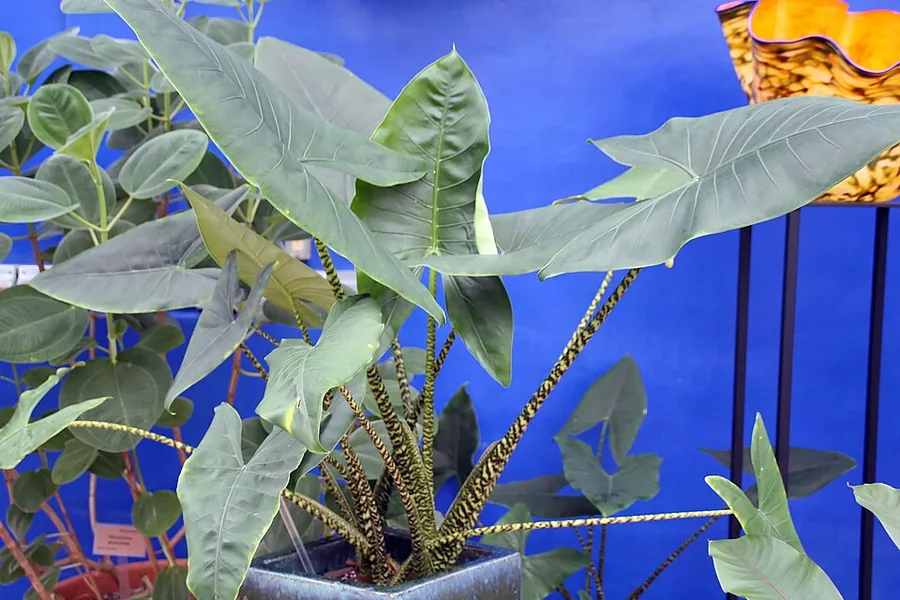
Those zebra-striped stems lift arrow-shaped leaves up high, and honestly the whole thing looks like living sculpture.
Bright indirect
68–77°F · 20–25°C
USDA 10–12
3 ft · 0.9 m
Overview
See those cream-and-dark striped stems holding up each shiny, arrow-shaped leaf? That's exactly where the zebrina name comes from. It's a Philippine rainforest plant, used to a warm, damp forest floor, and once you know that, most of what it wants indoors just clicks. People grow it for that eye-catching shape, not for any flowers.
It's got a name for being a bit of a diva, and yeah, that's fair. It's picky about water, it wants humid air, and it really doesn't like its roots sitting wet. But give it bright indirect light and go easy with the watering can, and it grows fast, pushing out fresh leaves all spring and summer before it settles in for a quiet winter break.
One thing to sort out before it comes home, though: the whole plant is toxic to pets and people, thanks to the calcium oxalate crystals tucked through its tissue. It's gorgeous, sure, but it needs a smart spot, up and away from curious cats, dogs, and little kids.
Care
The short version: it wants bright indirect light, humid air, and warmth somewhere around 68°F to 77°F (20°C to 25°C). Let the top half of the soil dry out before the next watering, take it easy in winter, and don't ever let the roots sit wet.
Light
Zebrina's happiest in bright indirect light, somewhere close to a window but out of the harsh midday sun. Can it cope with partial shade or medium light? Sure, but the stems get long and weak when it does. And strong direct sun will scorch the leaves, so if your window's a hot one, hang a sheer curtain to take the edge off.
Water
Hold off watering until the top half of the soil has dried, then give it a good drink and let it run through. Soggy roots are this plant's worst enemy, and going overboard with the can is the fastest route to rot and spotted leaves. When winter comes and it's resting, cut right back, because it's hardly drinking.
Soil
Go with an organically rich, well-draining mix that holds a little moisture but never turns to mush. The genus isn't fussy about texture, so clay, loam, or sand all work, and it's happy across a wide pH from 5.5 to 8.0.
Temperature
Keep it cozy, somewhere between 68°F and 77°F (20°C to 25°C). It's a tropical plant with zero tolerance for cold, so steer it clear of drafty windows and chilly rooms, and if it's been outside for summer, bring it back in well before the nights get cold.
Humidity
This one really wants high humidity, way more than your average room has. A pebble tray, a humidifier, or a bright, naturally damp bathroom all do the trick. Dry air wears it out and basically invites spider mites over.
Feeding
Save the feeding for the growing season, roughly spring into summer, while it's actually working on new leaves. A regular fertilizer, just on a seasonal basis, covers it. Once winter hits and it goes quiet, stop, because a resting plant can't do anything with the food anyway.
Pruning
There's barely any pruning to bother with here. Just snip off any dead, yellowing, or damaged leaves as you spot them, right at the base. Clearing out the tired old leaves keeps it looking good and takes away the little spots where pests like to hide.
Repotting
Nobody's published a set schedule for zebrina, so just let the plant lead and repot it when it outgrows the pot or the mix gets worn out. Bumping it up to a slightly bigger pot in spring, right as growth kicks off, gives the roots the easiest start.
Overwintering
Think of zebrina as a year-round indoor plant, basically a normal houseplant. Has yours been outside for the summer? Get it back in ahead of that first fall frost, then keep it on the cool side, around 60°F to 65°F (16°C to 18°C), keep the air humid, and water it lightly while it takes its winter break.
Size & spacing
Indoors it gets to about 3 feet (91 cm) tall and roughly that wide, so leave it some floor or table space where those arching leaves and tall stems can spread out without bumping into stuff.
Troubleshooting
Almost everything that goes sideways with zebrina traces back to water or light, which is good news, since both are easy to tweak. Keep an eye on the leaves and stems early, and since one symptom can mean two different things, a quick poke at the soil usually clears it up.
A soft base and droop even when the soil's soaked
Wilting while the soil's still wet usually means root rot, and that's almost always too much water. Slide the plant out and feel around: firm white roots are good, but mushy brown ones have to come off. Snip those away, settle it back into fresh airy mix, water less from here on, and let the pot drain like it should.
Fix:
- Reduce watering frequency
- Repot into fresh, well-draining mix and remove rotted roots
- Ensure the container drains freely
Stems going long and floppy and leaning at the window
Stems gone long, soft, and tilting toward the glass? That's the plant begging for more light, plain and simple. Scoot it somewhere brighter with bright indirect light. Give the pot a quarter spin every week or so too, so it grows up even instead of all to one side.
Fix:
- Move to a brighter spot with bright indirect light
- Rotate the plant periodically for even growth
Tiny webs and a speckled, bronzy look on the leaves
When the air goes dry, spider mites love to move in, leaving the leaves speckled and dull with thin little webs underneath. Give the foliage a good rinse, bump up the humidity, and hit it with insecticidal soap or horticultural oil, following the label. And keep it away from your other plants for a bit so the mites don't go wandering.
Fix:
- Rinse foliage and increase humidity
- Treat with appropriate insecticidal soap or horticultural oil per label
- Isolate the plant to limit spread
A sticky film with bugs bunched on stems and leaves
Little white cottony blobs? Those are mealybugs. Tight bunches of soft tiny bugs? That's aphids. Either way they leave behind a sticky honeydew that gives them away. Wipe them off, then treat with insecticidal soap or horticultural oil per the label. Keep the plant off on its own and treat again now and then until it's finally clean.
Fix:
- Wipe off insects and treat with insecticidal soap or horticultural oil per label
- Isolate the plant and repeat treatment as needed
Fewer leaves and a growth pause once it turns cold
Losing a few leaves and slowing way down come winter? Don't sweat it, that's just winter rest, especially if the rhizome still feels nice and firm. Back off the water, hold the heavy feeding, and keep it warm and bright. Once spring rolls around, it'll perk up and start growing again all by itself.
Fix:
- Reduce watering and stop heavy feeding during dormancy
- Keep the plant warm (cool but not cold) and in good light
- Resume normal care as growth restarts in spring
Leaves going yellow on you
A yellow leaf usually comes down to watering, though a too-dim spot can do it as well. Here's the catch: too much water and too little look exactly the same, so feel the soil before you decide anything. Keep it evenly damp but never soggy, and move the plant into that bright indirect light it likes.
Fix:
- Adjust watering to keep soil evenly moist but not saturated
- Correct light levels to bright indirect light
Toxicity
No way around it, this plant's genuinely toxic. Every part is loaded with sharp calcium oxalate crystals that sting the mouth and throat the second anything chews on it. So keep it well out of reach of pets and kids, and get in the habit of washing your hands once you've handled it.
Toxic to
Cats · Dogs · Horses · Rabbits · Livestock · Birds · People
Cats Moderate
If your cat bites a leaf, it's basically chewing into a cluster of sharp little oxalate needles, so you'll likely see drooling, pawing at the mouth, and a sore, puffy tongue and lips. Throwing up and struggling to swallow usually aren't far behind.
Dogs Moderate
Dogs get the same deal cats do. The mouth, tongue, and lips puff up and sting within minutes of a chew, and then come the heavy drooling, the vomiting, and the trouble getting food down.
Horses Moderate
Those same crystals leave a horse with a sore, swollen mouth and lips, lots of drool, and a hard time swallowing. And since horses can't throw up, all that discomfort just sticks around in the mouth and throat.
Rabbits Toxic
The oxalate crystals sting a rabbit's mouth and belly the same way they'd get any grazer, so a nibble's a bad idea. Keep this one somewhere a loose rabbit can't possibly reach.
Livestock Toxic
Cattle, goats, and sheep that munch the leaves end up with the same burning and swelling in the mouth, plus drooling and a flat-out refusal to eat. So fence it off anywhere your stock could get to it.
Birds Toxic
A nosy bird that pecks at a leaf gets that same nasty oxalate sting on its beak and in its mouth. There's just no safe bit to offer, so keep it well clear of any pet birds.
People Caution
Nobody should be eating any of this, and one bite brings a fast burning, swelling feeling in the mouth and throat. The sap can bug your skin and eyes too, so wash up after you handle it and keep it away from little kids.
Sap and chewed tissue release needle-like calcium oxalate raphides; keep away from pets and children and wash hands after handling
Helpline numbers

United States
ASPCA Animal Poison Control: (888) 426-4435 (fee applies)
Poison Control: (800) 222-1222



Canada
Poison Centres: 1-844-764-7669
How to propagate
Here's the thing about zebrina: it won't grow from a cutting like a lot of houseplants do. To make more, you divide the rhizome and split off the baby pups it sends up.
DivisionModerate
Spring to summer · Several weeks
Want more of these? You don't take cuttings, you divide. Sometime in spring or summer, ease the plant out of its pot and gently break off the little pups growing along the rhizome or corm, then give each one its own pot. Just be patient, since the divisions need several weeks to settle in and root before they start putting out new leaves.
Myths
Elephant ears are all the same plant, so grabbing any of them for the yard is perfectly fine.
That one name actually covers a few different genera, and they don't all act the same. UF/IFAS nudges gardeners toward the ornamental Alocasia instead of the invasive elephant ears Colocasia esculenta and Xanthosoma sagittifolium, and says to keep any of them away from natural waterways. So figure out which plant you've really got before it goes in the ground.