Houseplant · Araceae
Glorious Philodendron
Philodendron gloriosum
Give it warmth, humidity, and bright indirect light, and this velvet-leaf crawler keeps pushing out one heart-shaped leaf after another.
Bright indirect
65–85°F · 18–29°C
USDA 10–12
Overview
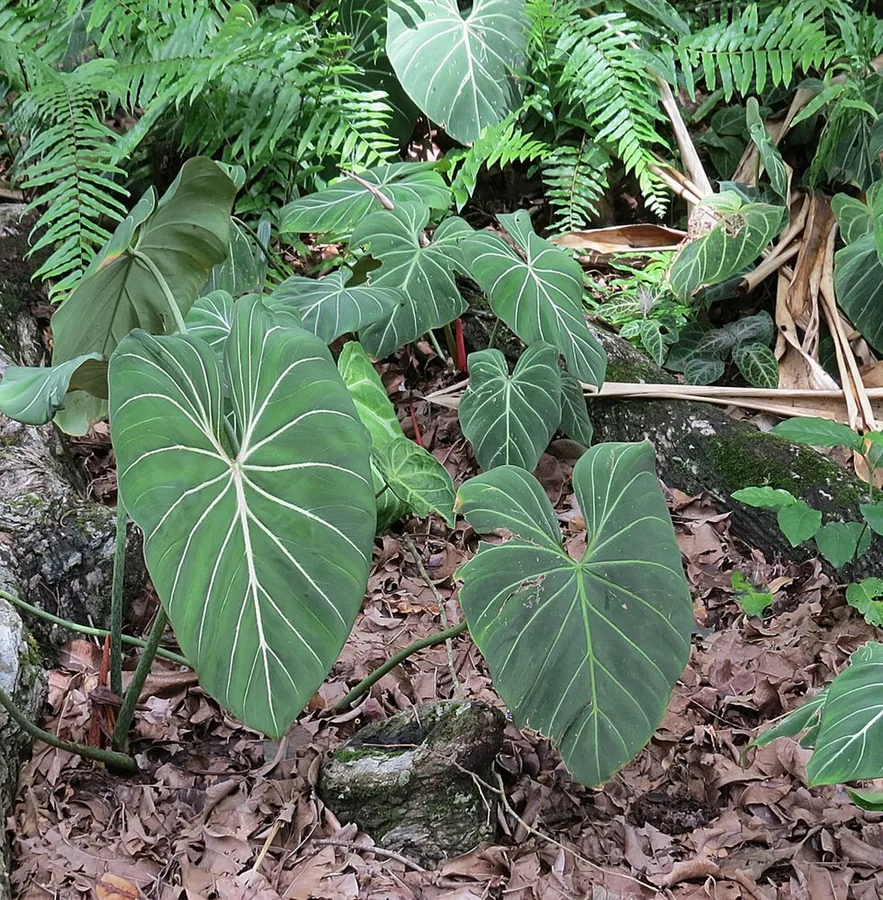
Philodendron gloriosum really does live up to its name, with big heart-shaped leaves in deep green velvet and soft silvery veins running through them. Here's the twist: instead of climbing like most philodendrons, it's a crawler, so its thick stem creeps sideways across the top of the soil rather than up a pole. It's from the rainforests of Colombia, and indoors it wants the same stuff it had back home, meaning warmth, steady moisture, and damp air.
It's got a bit of a collector reputation, but don't let that fool you, because it's easygoing once you get the hang of it. The one thing to nail is drainage, since those fleshy roots rot fast in a soggy mix. Sort out the soil and watering and everything else pretty much takes care of itself, with a new leaf popping up every few weeks through the growing season.
Every part of this plant holds calcium oxalate crystals, so it's an irritant to people and pets alike. Think of it as a plant to look at and grow, not one to nibble. And just keep it somewhere curious cats, dogs, and small children can't get at the leaves.
Care
The short version: bright indirect light, a loose free-draining mix, and water only when the top of the soil dries. Keep it warm and humid, feed it lightly through the growing season, and don't ever let it sit in water.
Light
Give it bright indirect light, the kind you get near a window but out of the sun's direct path. It'll manage in medium light or dappled shade too, just a bit slower. Keep it clear of direct summer sun, though, since that bleaches and scorches the velvety leaves.
Water
Wait until the top of the soil has dried, then water it well and let all the extra drain away. Those fleshy roots rot fast in a mix that stays wet, so lean dry when you're unsure and never leave the pot sitting in a saucer of water.
Soil
Go with a loose, free-draining aroid mix made from peat or coir with some bark and perlite or sand. It likes things a little acidic, around a pH of 5.0 to 6.0, and plenty of air around the roots.
Temperature
Keep it in the warm range it's used to, 65°F to 85°F (18°C to 29°C). It can't handle cold at all, so keep it away from drafty doors and chilly windowpanes once winter rolls in.
Humidity
This is a high-humidity plant from the rainforest floor, so it grows best in damp air. It'll get by in normal room humidity, but grouping it with other plants or popping it on a pebble tray gives it a nice boost.
Feeding
Feed it monthly through the growing season, from spring into early autumn, with a balanced houseplant fertilizer at a weak dilution. Back off in winter when growth slows, and flush the soil now and then so salts don't build up.
Pruning
There's not much to do beyond a quick tidy. Pull off dead, damaged, or yellowing leaves as they show up, and if a stem gets straggly, cut just after a leaf node in spring. Wear gloves while you're at it, since the sap can irritate skin.
Repotting
Repot it every 2 to 3 years, or sooner once the roots pack the pot, and do it in spring. Since this plant crawls sideways, a wide, shallow pot suits it way better than a deep one.
Troubleshooting
Almost every problem here comes back to water and light. Yellow leaves, mushy roots, scorched patches? Each one is telling you something's off. Find your symptom below and tweak it before it spreads.
Wilting plant with soft stems and soil that smells off
That droop and sour smell? It's root rot, and it nearly always comes from soil that stayed wet too long. Pop the plant out of its pot and feel the roots, because the good ones are firm and pale while the rotten ones go brown and mushy. Snip off the bad roots, repot into a fresh free-draining mix, and go easier on the watering from here.
Fix:
- Remove from the soggy medium and cut away rotten roots
- Repot into fresh free-draining mix
- Reduce watering frequency and empty saucers
The oldest leaves down low going yellow
When the lowest, oldest leaves yellow first, it's usually too much water or not enough light. So check two things: is the mix staying soggy, and is the plant stuck in a dim corner? Let the soil dry out between waterings and shift it somewhere with bright indirect light, and it'll settle down.
Fix:
- Allow the medium to dry appropriately between waterings
- Move to a brighter spot with bright indirect light
Pale, scorched patches on the leaves facing the light
Pale, burnt-looking patches mean the leaves are catching too much direct sun, usually through a warm summer window. You'll see the marks on whichever leaves sit closest to the glass. Just move the plant back into bright indirect light, and the new leaves will come in clean.
Fix:
- Move out of direct sun into bright indirect light
Sticky spots, fine webbing, or little bugs on the foliage
Sticky honeydew, thin webs, or tiny specks on the move usually mean sap-sucking pests have moved in, like mealybugs, spider mites, scale, or aphids. Where do they hide? Flip the leaves over and look where each leaf meets the stem, because that's their spot. Wipe or wash them off, then treat with insecticidal soap or horticultural oil, and keep at it until they're gone.
Fix:
- Wipe off or wash off pests
- Treat with insecticidal soap or horticultural oil and repeat as needed
Crispy brown tips and edges on the leaves
Browning that creeps in from the tips and edges is usually just fertilizer salt build-up after too much feeding. Look for a white crust on the soil or around the pot rim, and there's your answer. Stop feeding, run plenty of plain water through the mix to rinse it out, and when you feed again, keep it nice and weak.
Fix:
- Stop fertilizing and flush the medium thoroughly with water
- Resume feeding only at dilute rates during the growing season
Toxicity
This one's for admiring, not tasting. Every part holds insoluble calcium oxalate crystals that burn the mouth and throat if chewed, and the sap can irritate bare skin too. It's toxic to cats, dogs, and horses, and not safe for people either, so keep it out of reach of pets and small children and slip on gloves before you prune.
Toxic to
Cats · Dogs · Horses · Rabbits · Livestock · Birds · People
Cats Moderate
If a cat chews any part, its mouth burns, it drools a lot, and its tongue and lips can puff up. You'll often see it pawing at its face, skipping meals, and sometimes being sick or having trouble swallowing.
Dogs Moderate
A dog that bites a leaf feels the sting right away, so it paws at its mouth, drools, and shows swollen lips and tongue. Vomiting and trouble swallowing can come next, so it's worth a call to the vet.
Horses Moderate
Those same crystals bother a horse's mouth and throat, so it drools, the tissue swells painfully, and swallowing gets hard. And since horses can't vomit, the trouble stays in the mouth and gut.
Rabbits Caution
The oxalate crystals bug a rabbit's mouth and gut just like they do bigger animals, so keep the plant well out of reach. If a rabbit does chew a leaf, treat it as a reason to call your vet.
Livestock Caution
Grazing animals that mouth the leaves can end up with the same burning irritation and drooling. It's an unlikely snack indoors, but fence the plant off if it ever heads outside.
Birds Caution
A curious bird that nibbles a leaf risks the same sore mouth and swelling. So keep pet birds away from the foliage entirely.
People Caution
None of this plant is food, plain and simple. Chew a leaf and it burns the mouth and lips, and the sap can leave skin red and itchy, so wear gloves when you prune and keep it away from small children.
Plant sap can cause skin irritation / contact dermatitis; wear gloves when cutting stems and wash hands afterward (genus-level)
Helpline numbers

United States
ASPCA Animal Poison Control: (888) 426-4435 (fee applies)
Poison Control: (800) 222-1222



Canada
Poison Centres: 1-844-764-7669
How to propagate
This philodendron is easy to make more of, whether you split the creeping stem, root a cutting in a glass of water, or layer a stem before cutting it free.
DivisionModerate
Spring to summer, during active growth · Roots in a few weeks
Since this plant creeps along a thick surface stem, splitting it up is the obvious way to make more. Wait for spring or summer while it's growing, then cut the rhizome into pieces so each one keeps at least one node. Pot the pieces up and they'll be rooting within a few weeks.
Stem cuttingsEasy
Spring to late summer · Roots in about 2 weeks in water
Want the easy way? Take a stem cutting. Any time from spring to late summer, cut a piece about 4 inches (10 cm) long, just below a leaf node. Stand it in a glass of water and it'll root in about two weeks.
Air layeringModerate
Any season · Several weeks
Air layering is handy because it lets a stem grow roots before you ever cut it off. You can do it any season: nick a node, wrap it in damp moss, and keep that moss moist while roots form over several weeks. Once they have, cut the rooted bit free and pot it up.
Myths
Philodendrons are harmless houseplants that are totally safe around pets.
Not quite, unfortunately. The ASPCA lists philodendron as toxic to cats, dogs, and horses, and every part holds insoluble calcium oxalate crystals. Chew a leaf and you get a burning, swollen mouth and drooling, so it's one to keep out of reach of pets and children.
Philodendrons need bright, direct sunlight to thrive.
Actually, they're happiest in bright indirect light, not full sun. Direct rays, especially through a summer window, scorch the velvety leaves and leave pale burnt patches, so a spot just out of the sun keeps them looking great.