Houseplant · Araceae
Chinese Evergreen
Aglaonema commutatum
Forgiving, shade-friendly, and happy in a warm room, Chinese evergreen is about as easygoing as houseplants get.
Bright indirect
60–80°F · 16–27°C
USDA 10–12
12–20 in · 30–51 cm
Overview
Want a plant that won't keep you on your toes? Chinese evergreen is a great pick. It's part of the arum family and comes from the shaded, humid forest floors of the Philippines and Sulawesi, where it grows in warm, dim, damp air. That's exactly why it's so relaxed about the dark corners and steady heat of a normal home.
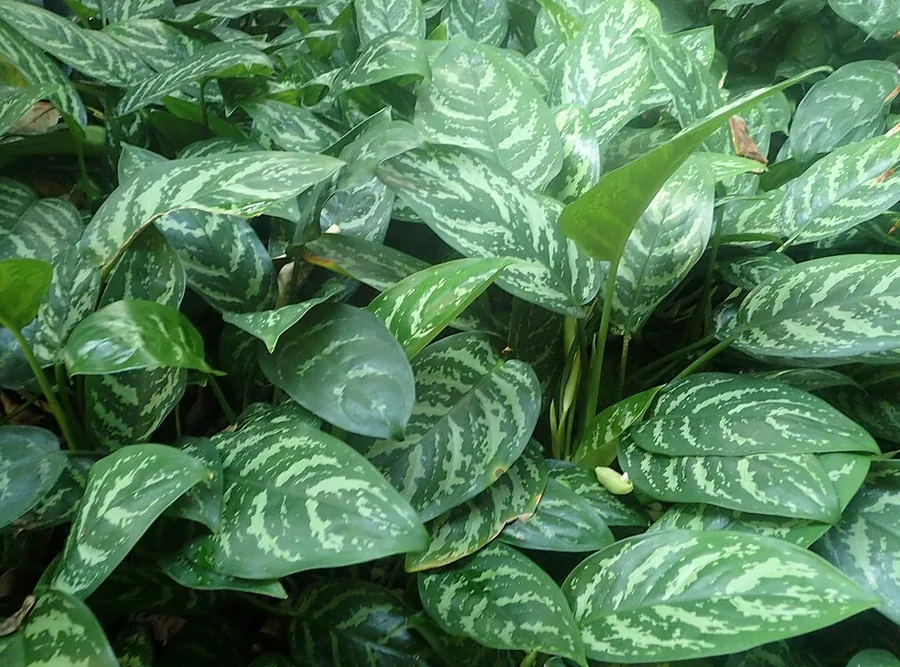
The leaves are the whole point here. They show up marbled, streaked, and splashed with silver, green, cream, and deep red, and the type you grab decides how much light it wants. The solid-green ones are totally fine in the gloom, while the red and heavily variegated types only keep their color if you give them brighter indirect light.
It stays small, usually about 12 to 20 inches (30 to 51 cm) tall, and it's in no hurry to grow. Keep it warm, go easy on the watering, and honestly that's most of it. Just know one thing before you set it down: every part of the plant is toxic to pets and irritating to people, so put it somewhere that takes care of that.
Care
The short version: bright indirect light for the colorful types and low light for the green ones, water only once the top inch or two of soil is dry, keep it warm above 60°F (16°C), and feed it lightly.
Light
Give the colorful and variegated types bright indirect light and they'll hold onto their markings. The plain green ones are the exception, since they're fine in low light and even deep shade. Whatever you do, keep all of them out of direct sun, because it'll scorch the leaves.
Water
Let the top 1 to 2 inches (about 3 to 5 cm) of soil dry out before you water again, and keep the mix lightly moist from spring through fall. Ease off from early fall to late winter, but don't let it go totally dry. Use room-temperature water instead of cold, which can shock the roots, and keep in mind that soggy soil is what causes root rot.
Soil
Pot it in a well-drained peaty or soilless mix with some extra humus, and make sure the pot's got drainage holes. It likes things a little on the acidic side, with a pH at or below 6.0.
Temperature
Keep it warm, ideally somewhere between 68°F and 80°F (20°C to 27°C). It'll handle a dip to about 55°F (13°C), but it takes chilling damage below 50°F (10°C), so hold a 60°F (16°C) minimum in winter and keep it away from cold drafts.
Humidity
Regular household humidity is totally fine, so there's no number to worry about. The thing to dodge is very dry air, since that's what browns the leaf tips over time.
Feeding
Feed it lightly during the spring-through-fall growing season and leave it at that. Too much fertilizer burns the leaf edges, so if you're not sure, just give less.
Pruning
There's not much to do besides pinching off old flowers and any fruit so the plant can put its energy into leaves. It does get leggy as it ages, and if the lower leaves drop, you can cut the bare top off and re-root it into a brand-new plant.
Repotting
Only repot when it outgrows its pot or the soil falls apart, which won't be often. How can you tell? Roots circling the top or poking out the drainage holes, or a top-heavy, leggy plant.
Size & spacing
Expect a tidy little plant, 12 to 20 inches (30 to 51 cm) tall and 12 to 18 inches (30 to 46 cm) wide. Give it enough space that air can move around the leaves.
Troubleshooting
Most of the time, whatever's bugging your Chinese evergreen comes down to water or warmth, and it tends to show up at the roots or along the leaf edges. Spot what matches below, and you can usually sort it out before it gets worse.
Yellow leaves and a mushy, soft base to the stems
This is root rot, and it pretty much always comes from soil that stays too wet. Once the roots go brown and slimy they can't drink, so the plant wilts even though it's basically drowning. Pop it out of the pot, cut away the rotted roots, and replant it in fresh well-drained mix in a pot that actually drains.
Fix:
- Stop watering and let the soil dry appropriately
- Unpot and remove rotted roots; repot into fresh well-drained mix
- Ensure the container has working drainage holes
Blotchy, curling leaves that appear once it gets cold
Chinese evergreen is a tropical plant, so it takes chilling damage below about 50°F (10°C), and the discoloration and curling tend to show up after the fact. A cold draft or even a drink of cold tap water can do it too. Move it to a warm spot in the 68°F to 80°F (20°C to 27°C) range and keep it well above 55°F (13°C) from then on.
Fix:
- Move the plant to a warmer spot in the preferred 68-80°F range
- Keep above 60°F, ideally well above 55°F
- Avoid cold drafts and use room-temperature water
Cottony tufts, sticky bumps, or webbing on the leaves
A few common pests like to show up here. Fine webbing with speckled leaves means spider mites, white cottony tufts down in the leaf joints are mealybugs, and little brown limpet-like bumps are scale. Wipe or wash them off, keep the plant away from your others, and treat it with insecticidal soap or horticultural oil, going again until they're gone.
Fix:
- Wipe off or wash off pests; isolate the affected plant
- Treat with insecticidal soap or horticultural oil, repeating as needed
- Raise humidity to discourage spider mites
Crispy brown tips creeping in along the leaf edges
Usually this is just dry air, though a cold draft or a bit too much fertilizer can scorch the edges the same way. Move the plant off the vents and away from chilly windows, dial back the feeding, and snip the worst tips so it looks tidy. If the green middle of the leaf still looks good, the roots are fine.
Fix:
- Move the plant away from drafts, heating/AC vents, and cold windows
- Raise ambient humidity or avoid very dry air
- Flush the soil and reduce fertilizer if over-fed
- Trim off badly browned tips for appearance
Red and variegated leaves washing out and stretching where it's dim
Here's the thing: the colored and variegated types want more light than people expect, and in a dark corner they lose their markings and stretch toward the window. The solid-green ones don't mind low light at all, so this is really just a matching problem. Move the colorful ones to brighter indirect light and let the plain green forms keep the dimmest spots.
Fix:
- Move variegated and red cultivars to brighter indirect (low-to-moderate) light
- Keep solid-green cultivars for the darkest spots
- Avoid direct sun, which scorches foliage
Toxicity
Here's the deal: this one belongs up out of reach. Every part of it carries insoluble calcium oxalate crystals, so a chewed leaf means burning, swelling, and drooling for pets, livestock, and people alike. Nothing on it is safe to eat, and the sap can bother your skin, so give your hands a wash after you've handled it.
Toxic to
Cats · Dogs · Horses · Rabbits · Livestock · Birds · People
Cats Moderate
Bite into a leaf and a cat gets an instant burning mouth, so you'll likely see drooling, face-pawing, and maybe some vomiting. Ever noticed swollen lips? The tongue can puff up too and make swallowing tough.
Dogs Moderate
The crystals sting the second a dog chews, so you'll get heavy drooling, pawing at the mouth, and vomiting. Swelling of the tongue and throat can come next.
Horses Moderate
Chewing brings on intense oral burning, a swollen mouth and tongue, and steady drooling. Horses can't vomit, so the irritation and the trouble swallowing are what you'll see.
Rabbits Toxic
Those same calcium oxalate crystals irritate a rabbit's sensitive mouth and gut, leaving it drooling and off its food. Keep the plant well out of reach.
Livestock Toxic
Cattle, goats, and sheep that browse the foliage end up with a burning, swollen mouth and heavy drooling, and they usually back off after that first painful bite.
Birds Toxic
A pet bird that nibbles the leaves gets the same oral burning and irritation. They're so small that even a little is worth a vet call.
People Caution
None of it is safe to eat, and chewing a leaf sets the mouth burning while puffing up its tongue and lips. The sap can bother skin too, so wash up after handling and keep it out of little kids' reach.
All parts contain calcium oxalate crystals and sap can cause skin/mucous-membrane irritation in people; wash hands after handling and keep away from pets and young children
Helpline numbers

United States
ASPCA Animal Poison Control: (888) 426-4435 (fee applies)
Poison Control: (800) 222-1222



Canada
Poison Centres: 1-844-764-7669
Varieties
Chinese evergreen turns up under loads of cultivar names, mostly grouped by leaf color and how much light each one needs. Here are the ones you're most likely to come across.
'Maria'
It's got dark green leaves streaked with silver, and since it's one of the more shade tolerant cultivars, it's a solid pick for a dim corner.
'Silver Bay'
Its green leaves are washed with silver variegation right down the center of each one.
'Siam Aurora' (also sold as 'Red Aglaonema')
Deep crimson runs along the veins and edges, and because it's a colorful type, it wants brighter indirect light than the plain green forms.
'Silver Queen'
It carries dark green leaves with heavy silver-gray variegation spread across most of the surface.
'Crete'
Its green leaves are splashed and edged in burgundy red, with pale pink stems setting the whole thing off.
How to propagate
Want more Chinese evergreens? Good news, it's easy, and you'll usually do it right when you're repotting or when an older plant starts looking leggy.
DivisionEasy
Spring at repotting · Several weeks
The easiest way to get more is to split a plant you've already got. When you repot in spring, gently pull the clump apart into chunks that each keep their own roots, pot them up, and they'll settle in over the next few weeks.
Stem cuttingsEasy
Spring to summer · Several weeks to root
If an old plant gets leggy and drops its lower leaves, don't throw it out. Cut the bare top off in spring or summer and re-root it, and it'll take a few weeks to grow new roots and get going again.
SeedModerate
When fresh seed is available · Slow
You can grow it from seed when fresh seed shows up, but it's the slow way and takes more patience than the other two. Most folks just stick with division or cuttings.
Myths
A Chinese evergreen basically works like an air filter for your rooms.
A 2020 research review found that potted plants don't really do anything for indoor air quality at any density you'd actually live with. To match what your building's normal ventilation already pulls off, you'd need somewhere between 10 and 1,000 plants per square meter. So keep this one because it looks great, not as an air purifier.