Bulb · Asparagaceae
English Bluebell
Hyacinthoides non-scripta
Drop the bulbs in this fall and they'll carpet the shade in violet-blue by spring.
Partial shade
Every 5–10 days
USDA 5–8
12–18 in · 30–46 cm
Overview
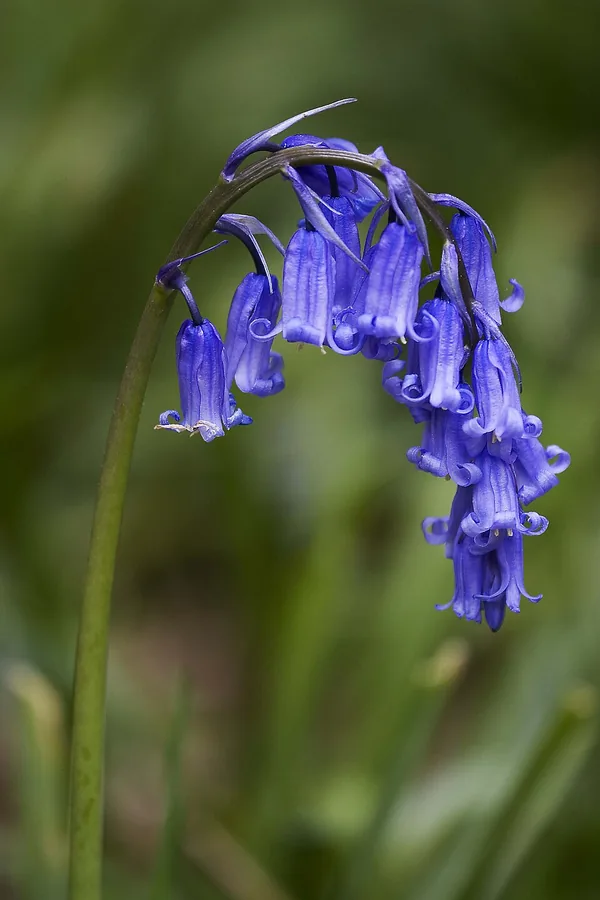
Not much beats a woodland floor washed in English bluebells in spring, does it? It's a bulb from the asparagus family, and each spring it throws up narrow strap leaves and a one-sided arching stem of fragrant violet-blue bells from April into May. It's hardy across zones 5 to 8, and once it's in the ground it really doesn't ask for much.
Bluebells are happiest in the dappled light under trees, which is the same part shade they'd get on a woodland floor, but they'll take full sun or deep shade too. After the flowers fade, the leaves yellow and the plant slips into summer dormancy, just resting underground until next spring rolls around. Leave a small planting in decent soil and it'll drift wider year after year into a real sweep of color.
Here's the catch, though: every part of this plant is toxic. The bulbs, leaves, flowers, and sap all carry cardiac glycosides, and the bulb's the most poisonous bit of all. So treat it as a plant to enjoy with your eyes, set well clear of pets, grazing animals, and small children.
Care
The short version: give bluebells dappled part shade and moist, well-drained, humus-rich soil, plant the bulbs deep in fall, and let the foliage die back on its own, since that's what feeds next year's bloom.
Light
Bluebells love dappled part shade under deciduous trees, which is just the light they'd get on a woodland floor. They'll cope with full sun or full shade too, but that soft light beneath a high canopy gives you the best flowering and the most natural look.
Water
Keep the soil evenly moist but well drained all through spring, watering every 5 to 10 days whenever the rain falls short. Once the foliage yellows and the bulb goes dormant in summer, the plant wants next to nothing, and it'll rot if it's left sitting in soggy ground.
Soil
Go for sandy, humus-rich, well-drained soil and stay away from heavy, unimproved clay. Any pH from 5.5 to 7.5 works for them, so most garden ground is fine once you dig in a bit of compost or leaf mold.
Temperature
Bluebells are tough, hardy from about -20°F to 75°F (-29°C to 24°C). They actually need that winter chill to flower well, and they shrug off hard frosts, which is exactly why they belong outside rather than on a windowsill.
Humidity
Plain old outdoor humidity is all they want, so there's no number to keep an eye on. The woodland setting they like tends to stay a touch damp at ground level all by itself anyway.
Feeding
Feed lightly in fall and again in early spring with a balanced bulb fertilizer or some compost worked into the soil. A yearly top-dressing of organic matter is usually all a naturalized planting needs to keep ticking along.
Pruning
There's no pruning to do here, just a bit of patience. Let the foliage die back on its own after the flowers fade so the bulb can recharge, then clear away the spent leaves only once they've gone completely yellow.
Repotting
Bulbs left in the ground only need lifting every 3 to 4 years, and only when clumps get crowded and the blooms start to thin. Lift and divide them after flowering, then replant the offsets with room to spread.
Size & spacing
Plants get to about 12 to 18 inches (30 to 46 cm) tall with a slim spread of 3 to 6 inches (8 to 15 cm). Set the bulbs 4 to 6 inches apart so they've got the room to multiply into a drift over the years.
When to plant
Bluebells run on the woodland clock. Get the dormant bulbs in the ground in fall so they root over winter, enjoy the bells from April into May, then let the leaves yellow and fade while the plant rests through summer.
Northern hemisphere
Southern hemisphere
Typical months for a temperate climate: start earlier in warm zones, later where spring frosts linger.
- Sow: Not typically started indoors; sow seed or plant bulbs directly outdoors
- Plant: Plant bulbs in fall, 3-4 inches deep and 4-6 inches apart
- Harvest: April to May
Hardiness
USDA hardiness zones: 5–8
Temperature: down to -29°C
Troubleshooting
Bluebells are pretty easygoing, and a lot of what looks like trouble is really just the plant doing its seasonal thing. The few real issues come down to crowding, weak flowering, or spread you didn't want. Find what matches below and act while it'll still do some good.
Not many flowers from clumps that have gotten too crowded
When the blooms thin out, it's usually down to overcrowding, since years of bulb offsets pile up together and end up starving each other. Heavy shade or thin, hungry soil can drag things down too. The good news? Just lift the clump after it flowers, ease the offsets apart, and replant them with elbow room in rich, well-drained ground.
Fix:
- Lift and divide congested clumps after flowering
- Replant offsets at proper spacing in well-drained, humus-rich soil
Seedlings popping up past the bed, and a few that look off
English bluebells spread two ways at once, sending offsets out underground and dropping seed up top, so a neat little clump can turn into a colony before you know it. The bigger thing to watch is a Spanish bluebell growing nearby, because the two cross easily and the hybrids muddy up the native look. Snip the spent flower stems before they set seed, and just keep your bluebells away from Hyacinthoides hispanica.
Fix:
- Deadhead spent flower stems before seed sets to limit self-seeding
- Avoid planting near Hyacinthoides hispanica to prevent hybridization
Leaves going yellow and flopping once the flowers are done
Seeing yellow leaves right after the blooms? That's almost always just summer dormancy, not anything wrong. With the flowers spent, the bulb pulls its energy back down, so the leaves are supposed to yellow and slump about now. Let them fade on their own, and only worry if the soil went bone dry in spring and forced the whole thing to give up early.
Fix:
- Leave foliage in place until fully yellowed so the bulb can recharge
- Remove leaves only after they have completely died down
Toxicity
This one's a beauty, but it's genuinely poisonous, so it's worth a little respect. Every part holds scillaren-type cardiac glycosides, with the bulb the most toxic, and eating any of it can upset the stomach and throw off the heartbeat. Keep the bulbs, foliage, flowers, and sap well away from pets, livestock, and kids.
Toxic to
Cats · Dogs · Horses · Rabbits · Livestock · Birds · People
Cats Severe
If a cat chews on any part, you'll usually see vomiting, a sore tummy, and diarrhea to start. And since the glycosides go after the heart, a bigger dose can slow or unsettle the heartbeat, so any real mouthful means a trip to the vet.
Dogs Severe
Dogs are the ones most likely to dig up and chomp a bulb, which happens to be the most toxic part. Drooling, vomiting, and diarrhea show up first, and a heavy dose can drop the heart rate or throw the rhythm off.
Horses Toxic
Those same cardiac glycosides get to horses through grazed foliage or bulbs that turn up in a pasture. Keep an eye out for colic, weakness, and an irregular pulse, and just keep the plant out of any field they can wander into.
Rabbits Toxic
Bluebell isn't anything a rabbit should be eating. The leaves and bulbs hold enough glycoside to upset the gut and strain the heart, so fence it off from any rabbit that's got the run of the garden.
Livestock Toxic
Cattle, sheep, and goats can get poisoned if they browse the foliage or root out bulbs, though most will skip the bitter plant when there's better grazing around. A real feed brings on stomach trouble and cardiac effects.
Birds Caution
There just aren't many solid reports on birds, so caution's the smart call. The cardiac glycosides that hurt mammals are reason enough to keep pet birds and poultry away from the bulbs, sap, and foliage.
People Caution
None of this plant is food, and eating the bulbs or leaves can bring on nausea, vomiting, and a disturbed heartbeat. The sap can leave skin red and itchy too, so wash up after handling bulbs and keep kids away.
Keep bulbs, foliage, and flowers away from pets and children; sap may also cause minor skin irritation. In reported companion-animal cases, signs are most often gastrointestinal, but cardiac glycoside content warrants caution.
Helpline numbers

United States
ASPCA Animal Poison Control: (888) 426-4435 (fee applies)
Poison Control: (800) 222-1222



Canada
Poison Centres: 1-844-764-7669
Varieties
Bluebells come in more than one form, and the one distinction really worth knowing is how to tell the true English plant from its Spanish cousin.
Hyacinthoides non-scripta (species, English bluebell)
Want to know which one's the real English bluebell? It's the one whose slim stem nods to one side under fragrant deep violet-blue bells with curled-back tips and creamy-white pollen, while the Spanish kind stands upright, fans its flowers all the way around, and hardly smells of anything.
How to propagate
Bluebells spread easily on their own, and you can give them a hand by planting bulbs, splitting offsets, dividing tired clumps, or sowing seed if you've got the patience.
Offsets & pupsEasy
Lift after flowering as foliage dies back · 1 to 2 seasons
Bluebells pretty much multiply themselves, packing small offset bulbs in around the parent. Once the flowers fade and the leaves start dying back, lift a clump, pull the offsets apart, and plant them wherever you'd like more. Each one only needs a season or two to settle in and bloom.
Bulbs & cormsEasy
Plant dormant bulbs in fall, 3-4 inches deep and 4-6 inches apart · One growing season to first bloom
The easiest way to start? Pop dormant bulbs in the ground in fall, 3 to 4 inches deep and 4 to 6 inches apart. They'll overwinter right where they are and flower the next spring, then naturalize and drift wider every year wherever the soil and shade suit them.
DivisionEasy
Divide congested clumps after flowering · 1 to 2 seasons
Dividing's a nice two-in-one, since it gives you new plants and perks up a tired clump at the same time. When a clump gets crowded and the flowers thin out, lift it after blooming, break it into smaller pieces, and spread them out. Flowering picks right back up over the next season or two.
SeedModerate
Self-sows; collect and sow ripe seed in summer · Several years to flowering size
Seed's the route for the patient. Bluebells scatter their own all over the place, but a seedling takes several years to reach flowering size, so most folks just start with bulbs. If you do want to raise your own, gather and sow ripe seed in summer, and deadhead the rest so that free sowing doesn't turn into spread you didn't ask for.
Myths
Bluebells must be safe since animals and people leave them alone.
Just because animals steer clear doesn't mean a plant's safe, and the bluebell's a perfect example. Every part carries scillaren-type cardiac glycosides, the bulb most of all, and the whole genus is rated highly toxic and potentially fatal if eaten.