Bulb · Asparagaceae
Common Camas
Camassia quamash
The hardy meadow bulb that puts on a blue spring show, then quietly rests all summer.
Full sun
Every 3–7 days
USDA 3–8
1–4 ft · 0.3–1.2 m
Overview
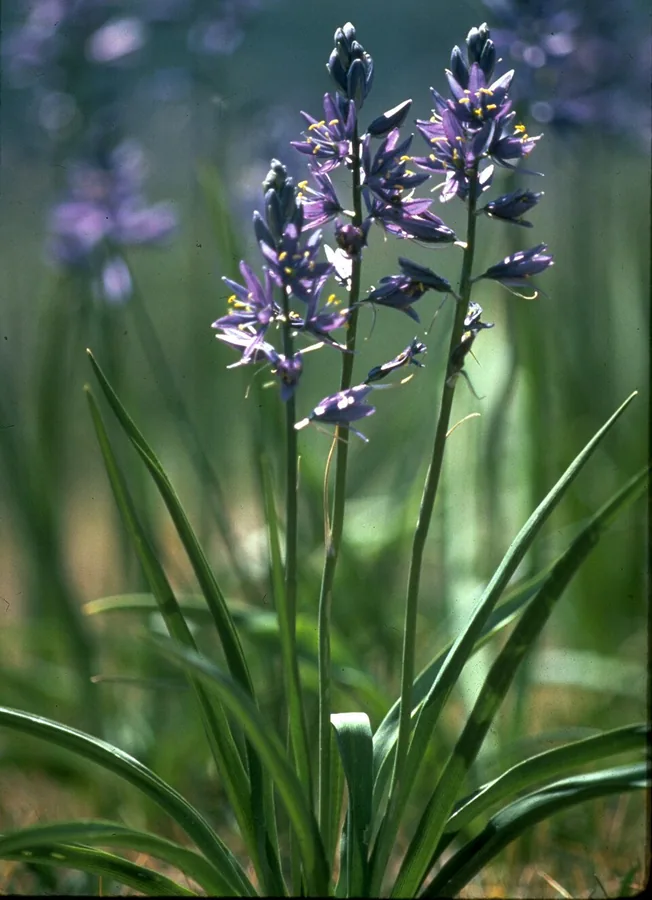
Common camas (Camassia quamash) is a hardy North American bulb in the Asparagaceae family, and it's an easy, forgiving perennial for the garden. It lives outdoors only, where its blue-violet flower spikes carpet damp meadows every spring.
Want to know its yearly rhythm? In spring it throws up leaves and tall flower spikes, blooms from March to June, then dies back and rests underground all summer. That summer dormancy is its quiet season, so it asks for wet soil while it's growing and drier soil while it sleeps.
One thing worth knowing: Native American peoples cooked the bulbs as food, and true common camas is safe to eat. But it looks a lot like deadly death camas, so never forage a wild bulb without an expert's say-so.
Care
The short version: give it full sun and soil that stays moist through spring, then drier over summer while the bulb rests. Plant bulbs in fall, enjoy the blooms from March to June, and let the leaves yellow on their own afterward. It's an easy, low-fuss outdoor bulb that mostly wants to be left alone.
Light
Camas is happiest in full sun, and that's where you'll get the most flowers. It'll put up with partial sun or a bit of light partial shade, but push it into too much shade and you'll get plenty of leaves with hardly any blooms.
Water
Think of where this plant grows in the wild: wet meadows. So through spring growth and bloom, keep the soil evenly moist, topping it up whenever it starts to dry while it's actively growing. Once it slides into summer dormancy, ease right off and let the resting bulbs stay drier.
Soil
Give it well-drained, moist, humus-rich soil with plenty of organic matter mixed in. It isn't picky about pH and does fine anywhere in the 5.5 to 7.5 range.
Temperature
This is a tough, cold-hardy bulb for USDA zones 3 to 8. It shrugs off cold down to about 10°F (-12°C), and on the warm end it handles heat up to roughly 86°F (30°C) before settling into dormancy.
Humidity
Air humidity? Not something you need to think about with this outdoor bulb, so average conditions are completely fine. What actually matters is moisture at the roots during its spring growth.
Feeding
Feeding is light and simple. Just work a balanced bulb fertilizer or some compost into the soil at planting in spring, and that takes care of the whole season.
Pruning
There's no routine pruning to bother with. Let the foliage die back on its own after the flowers fade so the bulb can recharge for next year. The only snipping worth doing is removing spent flower stalks if you'd rather it didn't self-seed.
Repotting
Honestly, this one's best left undisturbed, so you'll rarely need to lift it. Only divide a clump when it gets so crowded that flowering drops off, or when offsets start pushing up to the soil surface.
Size & spacing
Flower spikes reach 1 to 4 feet (30 to 120 cm) tall, and each clump spreads about 12 to 24 inches (30 to 60 cm) wide. Give it room and it'll knit together into natural drifts over time.
When to plant
Camas runs on a clear seasonal clock, so timing your moves around it makes everything easier. Here's when to plant, when to expect blooms, and when the bulbs settle in to rest.
Northern hemisphere
Southern hemisphere
Typical months for a temperate climate: start earlier in warm zones, later where spring frosts linger.
- Plant: Plant bulbs in fall; sow seed outdoors in fall or spring
- Harvest: Spring (March to June)
Hardiness
USDA hardiness zones: 3–8
Temperature: down to -40°C
Troubleshooting
Camas is pretty trouble-free, but a couple of things can trip you up. Here are the two you're most likely to run into and how to sort them out.
Soft, tunneled bulbs hiding underground
If you dig up bulbs that feel soft and mushy or show little tunnels, you're likely looking at narcissus bulb fly grubs, or bulbs that sat in soggy, poorly drained soil while they were dormant.
Fix:
- Remove and destroy infested or rotten bulbs
- Improve soil drainage for summer dormancy
- Avoid leaving wounded bulbs in waterlogged soil
Lots of leaves, but where are the flowers?
So the plant looks healthy and leafy, yet barely any blooms show up? Usually that's too much shade, a clump that's gotten overcrowded, or simply bulbs and seedlings that haven't matured enough to flower yet.
Fix:
- Site in full sun for best flowering
- Lift and divide crowded clumps of bulb offsets after foliage dies back
- Be patient with seed-grown plants, which need several years to bloom
Toxicity
Good news on the safety front: true common camas isn't poisonous to people or pets, and the bulbs were a traditional food. The real risk is misidentification, so let's break down what that means.
Safe for
People · Cats · Dogs · Horses · Rabbits · Livestock · Birds
Cats None
This one's not poisonous to cats, so if a curious cat takes a little nibble in the garden, there's nothing to worry about.
Dogs None
It's not poisonous to dogs either, so a pup that digs up a bulb and chews it should be just fine.
Horses Safe
Grazing horses are safe around it, since there's no reported toxicity for them.
Rabbits Safe
Rabbits can browse on it without harm, because the plant carries no toxin for them.
Livestock Safe
Cattle, goats, and sheep can graze true common camas safely, with no risk reported.
Birds Safe
Birds are safe too, as there's no known danger to them.
People Safe
The bulbs were a staple cooked food of Native American peoples and are safe to eat when correctly identified. The catch? Don't ever eat a wild bulb without an expert's confirmation, because it's easy to mistake for deadly death camas.
The true danger is misidentification: edible camas bulbs closely resemble the highly poisonous death camas (Toxicoscordion/Zigadenus). Never forage or consume wild bulbs without expert identification.
Varieties
Looking for a named pick? A couple of selections stand out, whether you're after pretty foliage or a bulb that's great for naturalizing.
Camassia quamash 'Blue Melody'
Deep blue-violet blooms are the headline, but the cream-edged variegated leaves mean it earns its keep even before flowering starts.
Camassia quamash 'Orion'
Tall stems hold deep blue flowers, which makes it a strong pick for naturalizing across a moist meadow.
How to propagate
Want more camas? You've got a few easy routes, from splitting clumps to letting it self-seed. Here's how each one works.
Offsets & pupsEasy
After foliage dies back in summer dormancy · 1 to 2 seasons
Once the foliage dies back into summer dormancy, dig up a clump and gently pull off the bulb offsets clustered around the parent. Replant them in moist humus-rich soil and they'll settle in over 1 to 2 seasons. It's the fastest way to build a drift.
Bulbs & cormsEasy
Fall · 1 to 2 seasons
Pop dormant bulbs into moist humus-rich ground in fall and let them root through winter, ready to bloom the next spring. Give them 1 to 2 seasons before you get a full show.
SeedModerate
Sow outdoors in fall or spring · Up to 3 years to flower
It self-seeds happily in a damp meadow, but you can sow your own outdoors in fall or spring too. Just know the seedlings need up to 3 years to reach blooming size, so a bit of patience helps.
DivisionEasy
During summer dormancy · 1 to 2 seasons
Splitting up an established clump during summer dormancy keeps it vigorous and helps it spread. The divided pieces usually re-establish within 1 to 2 seasons.
Myths
All camas bulbs must be safe to eat, right? Native Americans ate camas, after all.
Here's the problem: edible common camas looks almost identical to death camas (Toxicoscordion/Zigadenus), and those bulbs are poisonous and can kill. They're especially easy to mix up out of bloom, once the flower color that tells them apart is gone. So never eat a wild bulb without expert identification.