Bulb · Asparagaceae
Glory-of-the-snow
Chionodoxa forbesii
One of the first bulbs to bloom, glory-of-the-snow spreads a carpet of blue before winter's really done.
Full sun
Every 5–10 days
USDA 3–8
6–12 in · 15–30 cm
Overview
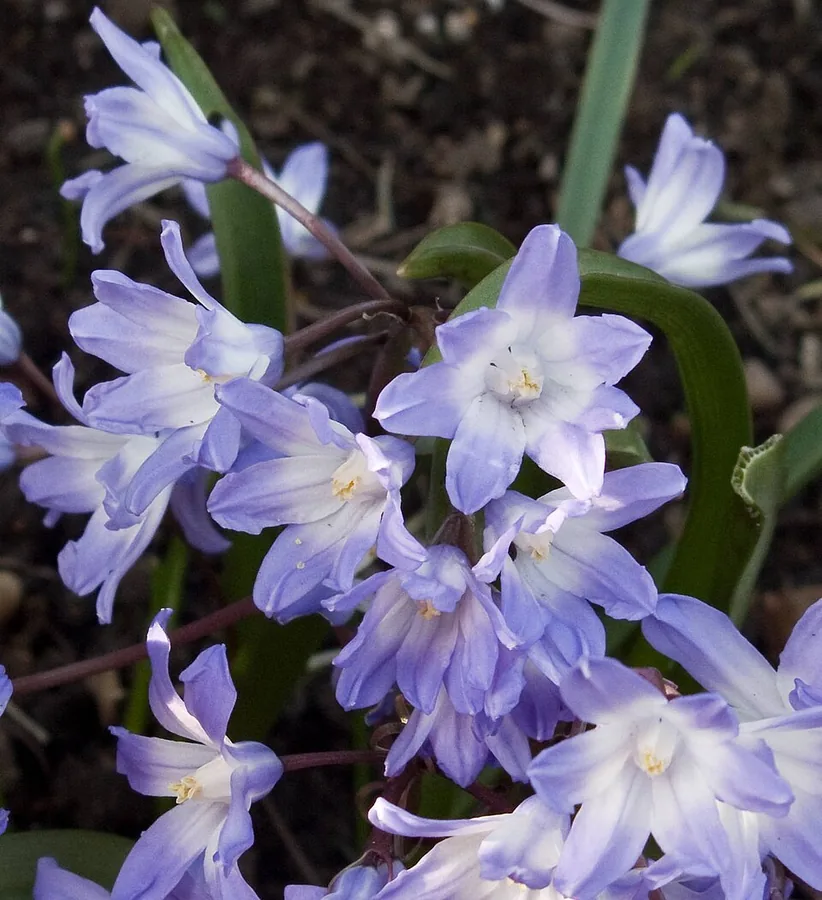
Glory-of-the-snow opens some of the very first flowers of the year, and it'll often do it right through a thin crust of late snow. It's a small spring bulb in the asparagus family, and it comes from the mountains of Turkey, where it flowers as the snow starts to melt. It does the same thing in the garden, throwing up star-shaped blue flowers with bright white centers while the rest of the bed still looks bare.
So what makes it special? It spreads like a champ. The bulbs multiply by offsets, the plant self-seeds, and a small planting knits into wide drifts in just a few years. It's happy naturalizing in lawns, rock gardens, and the open ground under deciduous trees, flowering before the canopy leafs out and casts any shade.
Best of all, it barely asks for anything. It's hardy from zone 3 to zone 8, it shrugs off hard cold, and it puts up with deer and black walnut, coming back stronger each spring. Plant the bulbs in fall, then leave them alone, and the colony takes care of the rest.
Care
The short version: plant the bulbs in fall in well-drained soil, in full sun or the light shade under deciduous trees. Keep them watered through spring growth and bloom, then just let them dry out as the foliage fades into summer dormancy.
Light
Glory-of-the-snow flowers best in full sun, but it takes partial shade just fine too. The light shade under deciduous trees is a great fit, since it blooms in early spring before those leaves come out and start casting real shade.
Water
Keep the soil evenly moist through spring growth and bloom, watering every 5 to 10 days if the rain doesn't come. Once the flowers fade and the foliage starts to yellow, back off, and keep the bulbs dry through their summer rest.
Soil
Give it average, well-drained soil with medium moisture and it won't ask for much else. Drainage is really the thing that matters, since bulbs left in soggy ground will just rot.
Temperature
It's a tough, cold-hardy bulb that handles winter lows all the way down to -29°F (-34°C) and grows on up to about 75°F (24°C). The hard cold isn't a problem at all; in fact, the bulbs need a winter chill to flower well.
Humidity
Regular outdoor humidity is all it wants, so there's nothing to fuss over there. For this bulb, soil moisture and drainage matter way more than anything in the air.
Feeding
Work a balanced bulb fertilizer, or some compost and aged manure, into the soil in fall and again in early spring. One seasonal feed is plenty, and the bulbs pull from it as they grow and recharge.
Pruning
There's nothing to prune here. Just let the foliage die back on its own after bloom and leave it until it's fully yellow, since those leaves are feeding the bulb for next year.
Repotting
These bulbs are rarely disturbed and would honestly rather be left alone for years. Only lift and divide when clumps get crowded and flowering drops off, or when offset bulbs start pushing up to the surface.
Size & spacing
They stay small, only 6 to 12 inches (15 to 30 cm) tall with a 3 to 6 inch (8 to 15 cm) spread. Set the bulbs about 2 to 3 inches apart so they can knit into drifts over time.
When to plant
Glory-of-the-snow runs on a tight little spring schedule, and it's easy to keep up with. Plant the dormant bulbs in fall, about 3 inches deep, and they'll break ground and flower in early spring, somewhere from February to April depending on where you are. Once it's done blooming, the foliage yellows and dies back, and the bulb rests through summer.
Northern hemisphere
Southern hemisphere
Typical months for a temperate climate: start earlier in warm zones, later where spring frosts linger.
- Plant: Plant bulbs in fall, about 3 inches deep and 2-3 inches apart.
- Harvest: Early spring, typically February to April (mid-March to mid-April in the St. Louis area).
Hardiness
USDA hardiness zones: 3–8
Temperature: down to -40°C
Troubleshooting
Good news: glory-of-the-snow is an easy bulb with very few problems, and most of what goes wrong starts underground in wet soil. So when a clump looks off, lift a bulb or two, since the answer's usually right there once you dig. Match what you see below, then act before the rot has a chance to spread.
Wilting, twisted leaves and clumps that never fill out
When a whole clump wilts, twists, and just won't fill in, the usual suspect is a nematode infestation in the soil, though soggy ground can leave things looking just as rough. So dig up a few bulbs and take a look, and if they're soft or rotting, pull them out along with the dirt around them. Then sort out the drainage and plant the next round somewhere fresh, not right back in the same spot.
Fix:
- Lift and discard affected bulbs and surrounding soil
- Improve drainage and avoid replanting bulbs in the same infested spot
Soft, mushy bulbs that never come up
Ever had a bulb that just never shows up in spring? If it's gone soft, it has rotted, and almost always that's from sitting in wet ground. That's bulb rot, and you'll know it right away, since a lifted bulb will be mushy and either smell bad or look fuzzy with fungus. Toss the bad ones and replant only the firm, healthy bulbs in well-drained soil or a raised bed.
Fix:
- Discard rotted bulbs
- Replant healthy bulbs in well-drained soil or raised beds
Toxicity
This is one to be a little careful with around pets and kids. Since it's a Scilla relative, every part holds cardiac glycosides, and the bulb is the riskiest piece. Eating it tends to bring on drooling, vomiting, and diarrhea, so keep stored bulbs out of reach and wash your hands after planting.
Toxic to
Cats · Dogs · Horses · Rabbits · Livestock · Birds · People
Cats Mild
If a cat chews a leaf, or worse a bulb, it'll probably drool, bring it back up, and get a bit of diarrhea. The bulb has the most toxin, so that's the part to keep tucked away out of reach.
Dogs Mild
A dog that digs up and gnaws a bulb usually drools, throws up, and gets loose stools within a few hours. Most cases stay mild, but if a dog swallows several bulbs, the glycosides can start causing real heart trouble, so don't wait to call the vet.
Horses Caution
Horses hardly ever go looking for these little spring bulbs, but the cardiac glycosides still make them a bad snack. If one does eat the foliage or dig at the bulbs, expect some drooling and an upset stomach.
Rabbits Caution
The whole plant has those same glycosides, so it isn't safe browse for a rabbit. A nibble can bring on drooling and a runny gut, and the bulb is the part to watch most.
Livestock Caution
Cattle, goats, and sheep can get poisoned if they graze a patch, first with an upset stomach and then, after a bigger helping, a slow and irregular heartbeat. The simple fix is to fence them off from any naturalized drifts.
Birds Caution
The glycosides are a risk for birds too, so don't let poultry or pet birds peck at the bulbs or leaves. It's safest to treat the plant as off-limits rather than food.
People Caution
None of this plant is food, and eating the bulb can bring mouth pain, nausea, stomach cramps, vomiting, and diarrhea, plus a slowed heartbeat after a big dose. Keep curious kids away, and wash your hands after planting.
Keep bulbs and plants away from pets and children; wash hands after handling and store bulbs out of reach.
Helpline numbers

United States
ASPCA Animal Poison Control: (888) 426-4435 (fee applies)
Poison Control: (800) 222-1222



Canada
Poison Centres: 1-844-764-7669
Varieties
The plain species is what most folks grow, but a few named picks stretch the color range and the flower size a bit. Here are the ones worth hunting down.
Blue Giant
It's a strong grower with bigger blue, white-centered flowers on 6 to 12 inch (15 to 30 cm) stems, and each one can hold up to 10 blooms.
Pink Giant
This one trades the usual blue for soft pink, keeping that same bright white eye in the middle.
Alba
It's a pure white pick for anyone who wants that early drift but would rather skip the blue.
Companions
Glory-of-the-snow pairs best with other early bulbs that bloom alongside it and with the deciduous trees it naturalizes beneath.
Plant near
Daffodils (Narcissus): Both are early-spring bulbs that naturalize together and bloom in overlapping seasons for layered color.
Crocus: Another very early small bulb that combines well in drifts, lawns, and rock gardens.
Deciduous trees and shrubs: Glory-of-the-snow thrives and naturalizes in the partial shade beneath deciduous trees, blooming before the canopy leafs out.
How to propagate
This bulb basically multiplies on its own, so most people just let it spread, but you can speed things up by lifting offsets, dividing clumps, or starting fresh bulbs.
Offsets & pupsEasy
After foliage dies back in late spring/summer, or lift and separate in fall. · 1 to 2 seasons
Here's the nice part: the bulbs pretty much handle it themselves, throwing offsets that grow into spreading colonies. Want to hurry it along? Lift a clump once the foliage has died back in late spring or summer, or in fall, snap off the little offset bulbs, and plant them again. Give them a season or two and they'll settle in and bloom.
Bulbs & cormsEasy
Fall · 1 season
Honestly, starting from bought bulbs is the easiest way to go. Just set the dormant bulbs about 3 inches deep in fall, and they'll pop up and flower the very next spring, one season from planting to bloom.
SeedModerate
Self-sows in spring/early summer; can be direct sown outdoors in fall. · 2 to 3 years to flowering
Leave it be and it self-sows on its own in spring and early summer, and you can also direct-sow the seed outdoors in fall if you'd like. The only catch? A bit of patience, since seedlings need 2 to 3 years before they're big enough to flower.
DivisionEasy
When clumps become crowded, lift and divide after foliage dies back. · 1 to 2 seasons
When a clump gets crowded and the flowers start to thin out, dividing it fixes things right up. Lift the packed clump after the foliage has died back, pull it apart, and give the pieces some space, and they'll settle back in over the next one to two seasons.
Myths
Glory-of-the-snow is completely safe because it is not on the ASPCA toxic plant list.
Just because it's not on the ASPCA list doesn't mean it's harmless. It's a Scilla relative, so every part holds cardiac glycosides, and the genus is on record as poisonous, which means eating it really can upset a stomach. So keep the bulbs and plants away from pets and children.