Bulb · Asparagaceae
Siberian Squill
Scilla siberica
Plant the bulbs one time, and a wash of early blue just keeps coming back every spring.
Full sun
Every 7–14 days
USDA 2–8
3–6 in · 8–15 cm
Overview
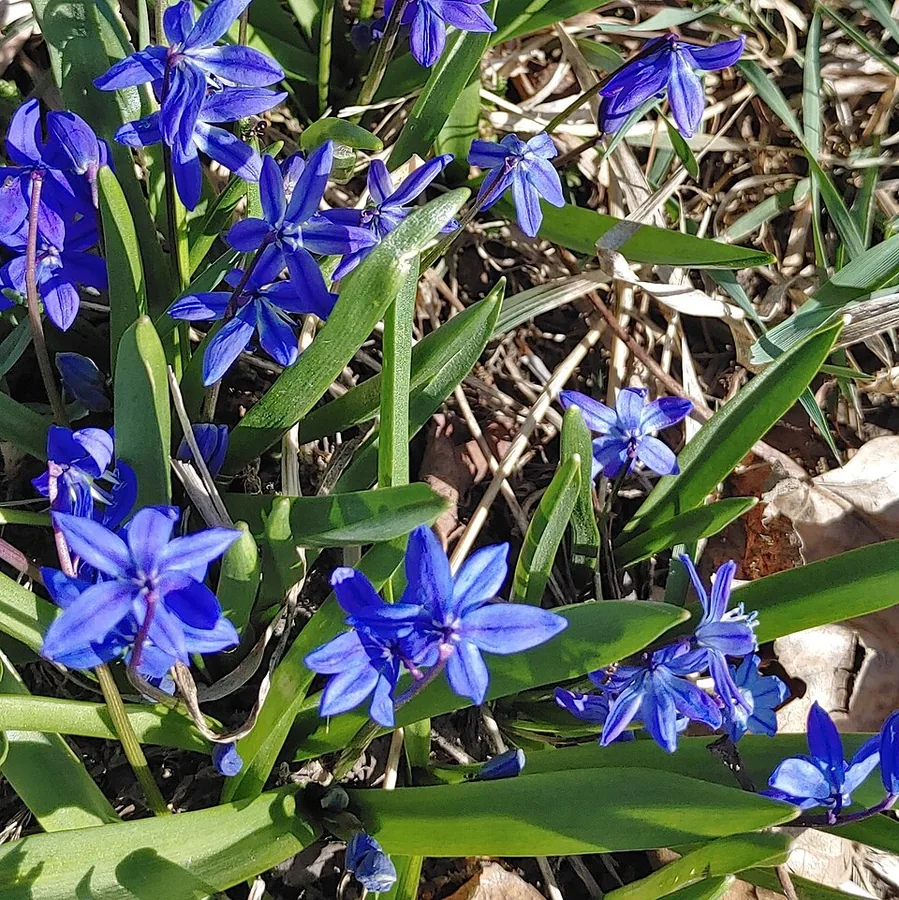
Want the first splash of color after winter? Siberian squill is right there for it, opening its deep blue bells in early spring just after the snowdrops. It's a little thing, only 3 to 6 inches (8 to 15 cm) tall, so it looks best in loose drifts under trees, along a path, or sprinkled through a lawn you're not going to mow right away.
Here's the fun part and the catch rolled together. These bulbs are seriously cold hardy, laughing off winters down to -40°F (-40°C), and they barely ask for anything once they're in. But squill spreads fast, both from seed and from little offset bulbs, so it'll wander out of the bed into the lawn and the woods, and in parts of the US it's treated as invasive.
There's one thing you can't ignore, though. Every part of this plant is poisonous, the bulb worst of all, so it's not one for a yard where pets nibble or little kids dig around. Just put it somewhere that makes sense, and it'll give you years of easy color.
Care
The short version: pop the bulbs 2 to 3 inches deep in fall, give them sun to part shade and soil that drains well, water them through the spring growth and then let them dry out while they nap, and deadhead if you'd rather keep the spread down.
Light
Squill blooms best in full sun, but it's totally fine in partial sun or partial shade too. Since it flowers so early, before the trees leaf out, a spot under deciduous trees still gets loads of light right when it matters.
Water
Keep it at a nice medium moisture while it's growing and flowering in spring, then back off once the leaves die down. The bulbs go to sleep for summer and want next to no water, and letting them sit in soggy soil is the one thing that'll rot them.
Soil
It's not picky. Average, well-drained soil does the job, and pH doesn't really matter to it. Good drainage counts way more than rich ground, especially over those dry summer months.
Temperature
This little bulb is tough as they come, happy through zones 2 to 8 and fine with lows of -40°F (-40°C). It grows while early spring is still cool and then settles down to rest once things warm past about 75°F (24°C).
Humidity
You don't have to fuss over humidity here, since regular outdoor air suits it just fine. What actually matters is that the soil dries out for the bulb's summer rest.
Feeding
Squill barely needs feeding in average soil. A once-a-year topdressing of compost or a balanced bulb fertilizer in fall or early spring is plenty, and anything more is just wasted.
Pruning
There's really no pruning to bother with. Just let the leaves die back on their own after flowering so the bulb can recharge, and only snip the old flower heads if you want to slow down all that self-seeding.
Repotting
Settled bulbs almost never need lifting. The time to jump in is when the blooms fizzle in a crowded clump or the bulbs start shoving up to the surface, and then you just dig them up and divide.
Size & spacing
These stay tiny, only 3 to 6 inches (8 to 15 cm) tall and about as wide, which is exactly why they work in drifts. Set the bulbs 2 to 3 inches deep in fall and leave a bit of room so they can multiply into a blue carpet.
When to plant
Squill keeps things simple. Get the bulbs in the ground in fall while the soil's still easy to work, let winter do its thing, and those blue flowers show up around April, right as the snowdrops are fading out.
Northern hemisphere
Southern hemisphere
Typical months for a temperate climate: start earlier in warm zones, later where spring frosts linger.
- Plant: Plant bulbs in fall, 2-3 inches deep
- Harvest: Blooms in early spring (around April), shortly after snowdrops
Hardiness
USDA hardiness zones: 2–8
Temperature: down to -46°C
Troubleshooting
Honestly, squill hardly ever gives you grief. The few problems it does have come down to soggy soil, one bulb pest, and its own love of spreading. Find what matches below and sort it out before a little patch turns into a whole colony.
Soft, squishy bulbs and a sinking crown
This one isn't a disease you can spray away, it's plain old crown and bulb rot from soil that stays too wet. Squill really can't stand sitting in water, especially during its summer nap. Dig a few bulbs up, feel for soft, brown, stinky tissue, chuck anything mushy, and move the whole planting somewhere that drains better.
Fix:
- Remove and discard affected bulbs
- Improve drainage or move planting to a better-drained site
- Reduce watering, especially during dormancy
Hollow bulbs and growth that just won't show
If a bulb comes up all twisted or never sprouts at all, the narcissus bulb fly is probably to blame. Its larva burrows in and eats out the middle, leaving a hollow shell full of frass. Cut a suspect bulb open and look for one fat, cream-colored maggot, then dig up and toss anything infested and turn the soil over to bring the pupae up.
Fix:
- Dig and destroy infested bulbs
- Cultivate soil to expose pupae
Squill showing up where you never planted it
Siberian squill is a real self-seeder, and it multiplies by offset bulbs too, so its colonies creep into lawns, beds, and the woods nearby. Parts of the US actually call it invasive. Mow or deadhead the flowers before they set seed, dig and thin the crowded clumps, and keep it away from natural areas.
Fix:
- Mow or deadhead while in bloom to remove seed heads before seed sets
- Dig and thin clumps before seeds mature
- Compost removed material at temperatures above 130 degrees F
Toxicity
Here's where you do need to be careful. Every part holds cardiac glycosides, and the bulb's the worst, so eating any of it can bring on drooling, vomiting, and cramping, and a big enough dose can slow or scramble the heartbeat. Keep it away from pets, livestock, and kids, and call a vet or poison control if any goes down.
Toxic to
Cats · Dogs · Horses · Rabbits · Livestock · Birds · People
Cats Severe
A cat that chews on any part can start drooling and throwing up pretty quickly. The bulb's got the most cardiac glycoside in it, so a real mouthful can mess with the heart rhythm, and that's an emergency.
Dogs Severe
Dogs usually dig up and bite the bulb, which happens to be the most dangerous bit. You'll see drooling, vomiting, and diarrhea first, then a slow or uneven heartbeat if a lot goes down.
Horses Severe
Those same cardiac glycosides hit horses too, bringing on colic and leaving the animal dull and unsteady on its feet. A big dose can throw the heartbeat off, and that's serious in something that size.
Rabbits Toxic
Squill isn't safe for rabbits to nibble. The bulb and leaves can upset their stomach and, in any amount, reach the heart, so keep the plant way out of reach.
Livestock Toxic
Cattle, sheep, and goats can all get poisoned from grazing the leaves or digging up bulbs. Watch for drooling, an upset gut, and an off heartbeat, and just fence the patch off from the pasture.
Birds Toxic
Those cardiac glycosides make every part risky for birds, even backyard chickens that scratch up bulbs. Keep your hens and pet birds clear of the plantings.
People Caution
None of this plant is food, plain and simple. Swallow it and you can get mouth pain, nausea, vomiting, and cramping, and the bulb in quantity can slow or upset the heart, so keep curious kids away and call poison control if any gets eaten.
Keep bulbs and plants away from pets and children; wear gloves when handling, as sap can cause minor skin irritation in susceptible individuals.
Helpline numbers

United States
ASPCA Animal Poison Control: (888) 426-4435 (fee applies)
Poison Control: (800) 222-1222



Canada
Poison Centres: 1-844-764-7669
Varieties
There's not a whole lot to sort through here. Apart from the wild species, there's one named form you'll run into most, and telling them apart isn't hard.
Spring Beauty
It looks a lot like the wild species, just a bit bigger, blooming for longer, and showing off a deeper blue.
Scilla siberica (species)
The plain species puts up 3 to 4 skinny scapes, and each one dangles 1 to 3 nodding, bell-shaped, deep blue flowers with blue anthers to match.
Companions
Squill pairs best with the other earliest bulbs that bloom alongside it and naturalize the same way, building a layered carpet of late-winter and early-spring color.
Plant near
Galanthus (snowdrops): Both are very early spring bulbs that bloom in sequence and naturalize well together in drifts.
Crocus: Similar early-spring bulb that can be naturalized in lawns and beds alongside squill for layered bloom.
How to propagate
Getting more squill? That's almost too easy, since the plant does most of the work itself. You can hurry it along by splitting clumps or planting fresh bulbs, or just let it seed itself around.
Offsets & pupsEasy
Lift and separate dormant bulbs after foliage dies back · One growing season
The easiest way to get more is to let squill do the building and then split the results. Once the leaves have died back and the bulbs are dormant, lift a crowded clump and just pull the offset bulbs apart with your fingers. Replant them and they'll settle right in within one growing season.
Bulbs & cormsEasy
Plant bulbs 2-3 inches deep in fall · Blooms the following spring
Starting from store-bought bulbs is about as easy as planting gets. Tuck them 2 to 3 inches deep in fall, leave them be, and they'll flower the very next spring. The bulbs are tough and extremely cold hardy, so a rough winter won't faze them.
SeedEasy
Self-sows in spring as seed matures · Several years to flowering size
Squill sows itself with zero help, dropping seed in spring as the pods ripen. That free spread is exactly why it naturalizes so aggressively. The catch? Seedlings take several years to reach flowering size, so this is the slow lane if you actually want it.
Myths
Siberian squill's just a harmless little spring bulb that's fine around pets.
Not quite, because every part holds cardiac glycosides and rates as a high-severity poison. Eat it and you're looking at vomiting, diarrhea, and a lowered heart rate, and a real dose can be deadly. Keep the bulbs and plants away from pets and children.
It's a small ornamental bulb, so surely it stays where you plant it.
Nope, it naturalizes fast through self-seeding and offset bulbs, slipping out of the beds and into lawns and woodlands. Parts of the US call it invasive, so deadhead it and keep it well away from wild ground.