Bulb · Asparagaceae
Tuberose
Polianthes tuberosa
Give it full sun and soil that drains fast, and tuberose will scent your late-summer evenings for you.
Full sun
Every 5–10 days
55–84°F · 13–29°C
90–120 days
Overview
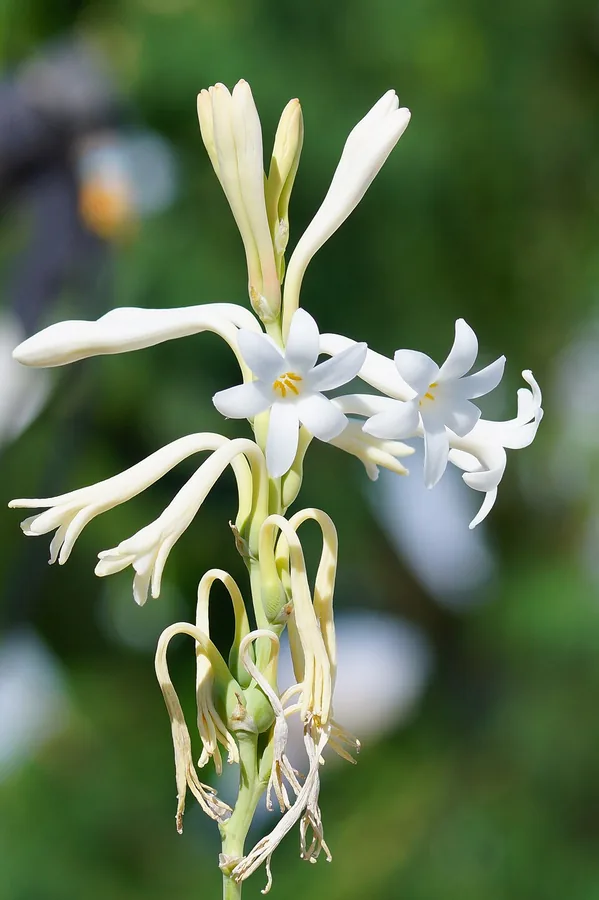
Want to know why people grow tuberose? It's all about the scent. Those tall spikes open creamy white flowers in late summer, and the fragrance keeps going well after dark, which is exactly why it's been a go-to for cut bouquets and evening gardens forever. And no, despite the name, it isn't related to roses at all. It's really a tuberous-rooted cousin of the agaves, from Mexico, where it's been grown for centuries.
So how big does it get? Tuberose runs about 2 to 3 feet (61 to 91 cm) tall, pushing up thin, grassy leaves and then a spike that just keeps opening flowers for weeks. It's a tender perennial, so it's happiest where summers are warm and winters stay mild. Live somewhere colder? No problem, just lift the tubers in fall and store them, the same way folks do with dahlias.
Honestly, tuberose isn't demanding. It wants warmth, plenty of sun, and soil that drains well. Pop the tubers in during spring, water them through the summer heat, and then back off once the leaves start yellowing in fall. The one thing it won't put up with is wet feet, so soggy, heavy soil is the quickest way to lose it.
Care
The short version: tuberose wants full sun and rich soil that drains fast, plus steady moisture all through the summer growing season. Feed it monthly, ease off the water once the leaves yellow in fall, and split the clumps every few years so it keeps blooming.
Light
Tuberose really wants full sun if you're after the best flowers, so pick a spot that's sunny for most of the day. A bit of afternoon shade is okay, but too much and you'll get floppy, leafy growth with hardly any blooms.
Water
Keep the soil evenly moist all through the summer growing season, and let the top half dry out between waterings so the tubers aren't sitting in water. For most gardens, a drink every 5 to 10 days is about right. Once the leaves start yellowing in fall, ease off and let it settle into dormancy.
Soil
Here's what matters most: rich, well-drained loamy or sandy soil. The good news is tuberose isn't picky about pH and handles anything from 6.0 to 8.0, so most garden beds are fine, as long as water drains through and doesn't pool.
Temperature
Tuberose likes it warm, somewhere around 55°F to 84°F (13°C to 29°C). It's tender and won't make it through frost, so if your winters get cold, just dig up the tubers and store them before the first freeze.
Humidity
Don't overthink humidity, because regular outdoor air is fine and there's no number to hit. Tuberose cares way more about warmth and drainage than how moist the air is.
Feeding
Feed it monthly through spring and summer while it's actively growing, using a balanced general-purpose garden fertilizer. That steady feeding is what powers those tall spikes and keeps the flowers coming.
Pruning
Not a fan of pruning? You're in luck, because there's none to do here. Snip off the flower spikes once they're spent, and just leave the foliage to die back on its own in fall so the tuber can stock up energy for next year's flowers.
Repotting
Tuberose doesn't really need repotting, it needs dividing, and that's what keeps it going strong. When you spot loads of offsets, fewer flowers, or tubers poking up out of the soil, split the crowded clumps every 2 to 3 years.
Size & spacing
24–36 in (61–91 cm) tall
When to plant
Tuberose is a warm-season plant through and through, and frost is a deal-breaker for it. Start the tubers indoors in early spring, move them outside once the cold's gone, and you'll see the spikes open from August into September, scenting things up through late summer.
Northern hemisphere
Southern hemisphere
Typical months for a temperate climate: start earlier in warm zones, later where spring frosts linger.
- Sow: Early spring, started in containers before last frost
- Plant: Spring after the last frost date, planted 2 inches deep and 6-8 inches apart
- Harvest: August to September (late summer to early fall)
Hardiness
USDA hardiness zones: 7–10
Temperature: down to -18°C
Troubleshooting
Most tuberose problems either start down at the tubers or turn up as a whole lot of leaves and barely any flowers. Spot them early, though, and the fix is usually pretty easy. Just find the symptom that matches below and step in before the tuber takes a hit.
Squishy tubers and leaves that yellow and keel over
This one's tuber rot, and it pretty much always comes down to soil that's staying too wet. Plant the tubers deep in heavy ground and they end up sitting in trapped water, going soft from the inside out. Dig the plant up, trim off anything mushy and smelly, and put just the firm tubers back into sandy or loamy soil that drains quick.
Fix:
- Stop watering and improve drainage
- Lift affected tubers and discard rotted ones
- Replant healthy firm tubers in well-drained sandy or loamy soil
Lots of leaves but almost no flowers after the first year
When the flowers dry up, it's usually because crowded clumps are all fighting for the same soil, or the leaves got cut off before the tuber could stock up energy. So divide the clump every 2 to 3 years, and let the leaves die back on their own each fall. Keep just the biggest tubers, since the little offsets need a season or more before they'll bloom.
Fix:
- Divide clumps every 2-3 years
- Allow foliage to die down naturally before lifting
- Replant only the largest tubers for reliable bloom
Weird, twisted new growth with little bugs all over it
Those little pests are almost always aphids, and they crowd onto the soft new shoots, sip the sap, and leave the growth puckered and sticky with honeydew. Sometimes thrips, spider mites, or scale jump in too. Try blasting them off with a strong jet of water first, and only grab insecticidal soap if they keep coming back.
Fix:
- Spray off with a strong jet of water
- Apply insecticidal soap if needed
Toxicity
Good news if you've got pets or kids: tuberose is safe to have around. There aren't any known toxins in it, and it never shows up on the ASPCA's toxic plant lists, so a curious nibble is no big deal. The only thing worth a mention is the sap, which can mildly irritate sensitive skin, so just rinse your hands after you've cut some stems.
Safe for
People · Cats · Dogs · Horses · Rabbits · Livestock · Birds
Cats None
Tuberose is totally safe around cats, and it doesn't show up on the ASPCA's toxic list. A curious nibble on a leaf might give a cat a little mild tummy upset, like any unfamiliar plant can, but nothing serious.
Dogs None
Dogs can hang out in a garden with tuberose no problem. There's no toxin here to worry about, so a chewed leaf or flower won't hurt them.
Horses Safe
Horses are perfectly fine around tuberose. It's got no known toxic compounds and isn't flagged as trouble for grazing animals.
Rabbits Safe
Rabbits can munch on tuberose foliage safely, since there's nothing in it that could hurt them.
Livestock Safe
Cattle, goats, and sheep are all fine around tuberose, which doesn't have any toxicity on record for farm animals.
Birds Safe
Birds are safe with tuberose too, whether they peck at it or just share the space.
People Safe
Tuberose is safe for people, and those flowers are loved for their scent. The only catch is the sap, which can mildly irritate sensitive skin, so rinse your hands after handling cut stems.
The flowers are intensely fragrant; the strong scent may be overwhelming to some people in enclosed spaces.
Varieties
Only a handful of tuberose types come up often, and they mostly differ in their flowers and how strong they smell. Here are the ones worth knowing.
The Pearl
It's a popular double-flowered type, and its fully petaled, waxy white blooms look a lot like a little gardenia.
Mexican Single
This single-flowered one is the type most people say smells the strongest of any tuberose.
Sensation
A fragrant pick that stands out thanks to its soft pink-tinted flowers.
Marginata
A little miniature form that's grown as much for its variegated leaves as for its flowers.
How to propagate
The easiest way to get more tuberose? Lift the tubers and split them up, which also happens to be the same thing that keeps an older clump flowering nicely.
Offsets & pupsEasy
Spring, when lifting and dividing dormant tubers · Largest offsets may bloom the next season; small offsets often take a year or more to reach blooming size
The nice thing is tuberose multiplies itself, sending up offsets all around the parent tuber. Just lift and split them in spring while the tubers are dormant. The biggest offsets will often bloom the very next season, but the smaller ones need a year or more to grow before they're big enough to flower, so hang onto them and give them time.
DivisionEasy
Spring, every 2-3 years · One or more growing seasons before reliable flowering
Splitting up crowded clumps every 2 to 3 years in spring keeps everything vigorous and blooming well. Pull the tubers apart and replant only the biggest for the best display. Just know it usually takes a growing season or more before the divisions settle in and flower reliably.
SeedModerate
Spring · Several years to reach flowering size
Sure, you can grow tuberose from seed sown in spring, but it's the slow way to go. Seedlings take several years to reach blooming size, way longer than offsets, which is why most people just divide the tubers instead.
Myths
Tuberose is just a kind of rose.
Yeah, the name throws pretty much everyone off, but tuberose isn't related to roses one bit. It's actually a tuberous-rooted member of the Asparagaceae family, called Polianthes tuberosa and also classed as Agave amica. The name just comes from its swollen tuber, from the Latin tuberosa, and has nothing to do with any flower.