Shrub · Nyctaginaceae
Bougainvillea
Bougainvillea spectabilis
Give it plenty of sun, a little thirst, and some benign neglect, and bougainvillea pays you back with wild color.
Full sun
Every 7–14 days
USDA 9–11
15–40 ft · 4.6–12.2 m
Overview
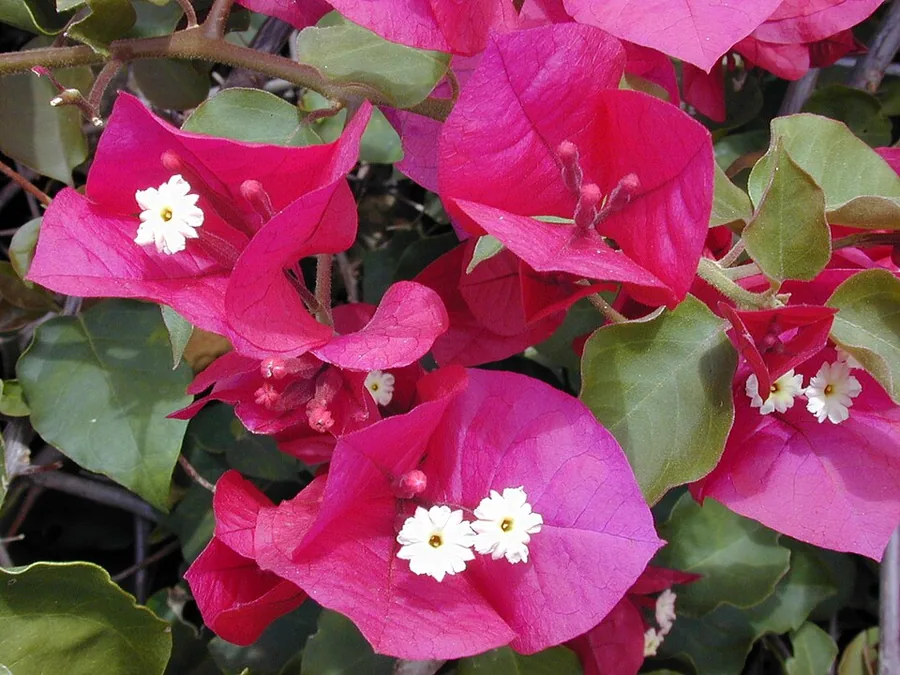
Ever notice those sheets of color spilling over fences and arches in warm regions? That's bougainvillea. It's a woody, thorny shrub out of South America that'll scramble or sprawl to 15 to 40 feet (4.6 to 12.2 m) when content, or stay tidy and compact in a container. The part that reads as a bloom is really a haze of papery bracts, which is exactly where the nickname paper flower comes from.
Here's the funny thing about bougainvillea: it flowers best when life's a bit tough. Spoil it with rich dirt, regular water, and lots of food, and you'll end up with a leafy green plant and almost no color. Do the opposite, hand it scorching sun and lean, dry conditions, and the bracts come tumbling out from spring on into fall.
Outdoors it only takes the cold in USDA zones 9 to 11, where a serious frost hardly ever shows up. Anyone in a chillier spot grows it in a pot and tucks it somewhere sheltered for winter, which works fine because it grows fast and shrugs off pruning. The one thing that never changes? Those thorns, so heavy gloves come with the territory.
Care
The short version: sun all day long, fast-draining soil, and water only after the top has dried. Feed it lightly, keep the nitrogen down, prune once it's finished flowering, and shield it from frost.
Light
Bougainvillea is after full sun, at least 6 hours each day, and honestly the more it gets, the better. Stick it in shade and you're on the fast track to a green plant with zero color, because it needs that strong light just to form bracts.
Water
Soak it well, then let the top of the soil dry out before you water again, which usually works out to every 7 to 14 days once it's settled in. It's drought tolerant and actually flowers better on the dry side, while keeping it constantly wet gives you leaves instead of bracts and invites root rot.
Soil
Put it in well-drained sandy or loamy soil. It prefers things slightly acidic to neutral, somewhere around 6.0 to 7.0, and it really won't put up with ground that stays soggy.
Temperature
Heat is its happy place, and it copes with roughly 30°F to 100°F (-1°C to 38°C). Frost, though? That's the one line it won't step over, so anything below freezing means cover it or bring it inside.
Humidity
Average humidity is perfectly fine, and there's no magic number you need to chase. It cares a lot more about sun and dry roots than about how much moisture is floating in the air.
Feeding
Feed it monthly from spring into midsummer using a balanced fertilizer at half the usual rate. Keep the nitrogen on the low side, since a big feed just drives leafy growth and shortchanges the bracts you actually want.
Pruning
Do your pruning in late winter or early spring after flowering, and hold off on any heavy cutback until the bloom period is done. And always pull on heavy gloves, because those thorns really do bite.
Repotting
Repot it every 2 to 3 years, or whenever it gets too big for its pot. A cozy, slightly pot-bound root ball actually nudges it to flower, so there's no need to rush into a bigger container.
Size & spacing
Give it space and it'll hit 15 to 40 feet (4.6 to 12.2 m) tall with a matching spread, so a climbing one needs a solid wall or trellis to lean on. In a pot it stays a whole lot smaller, and the dwarf cultivars are tailor-made for cramped corners.
When to plant
Warmth is the whole story here, and frost is a deal-breaker. Pop plants outside in spring once the cold's really gone, and you'll see color from spring through fall, with a few blooms hanging on into winter where things stay mild.
Northern hemisphere
Southern hemisphere
Typical months for a temperate climate: start earlier in warm zones, later where spring frosts linger.
- Plant: after all danger of frost has passed in spring
- Harvest: spring through fall, sometimes into winter
Hardiness
USDA hardiness zones: 9–11
Temperature: down to -7°C
Troubleshooting
Almost every bougainvillea hiccup turns up as one of two things: no color, or leaves falling off. Both usually point back to how it's being grown rather than to any disease. Look over the signs below, match them to what you're seeing, and tweak things early before your shrub goes bare and grumpy.
Leaves and bracts falling off all at once
A sudden drop usually comes right after a shock, often a cold snap, a draft, or a move to somewhere new. Frozen leaves and shoots go water-soaked looking and then turn black. Settle it into one steady, warm, sunny spot, keep the watering even, and get containers indoors before things dip toward 30°F (-1°C).
Fix:
- Protect from frost and bring containers indoors before temperatures fall below about 30 degrees F
- Keep the plant in a stable location and avoid moving it
- Maintain consistent watering, avoiding both drought and waterlogging
Yellow leaves with the veins still green
When the new leaves go yellow but the veins stay green, the plant can't draw up enough micronutrients, and the usual culprit is soil that's too alkaline or stays wet for too long. Keep it in slightly acidic, well-drained ground and let things dry out between waterings. A foliar micronutrient spray meant for citrus or palms will bring the green back.
Fix:
- Maintain slightly acidic, well-drained soil
- Apply a foliar micronutrient spray suitable for citrus or palms
- Improve drainage and avoid keeping soil constantly wet
Tons of green leaves but hardly any color
A leafy plant with no bracts nearly always means it's having too easy a time. Bougainvillea flowers when it's stressed, so dial back the water, give it a minimum of 6 hours of full sun, and lay off the nitrogen. A touch of drought, plus roots that feel a little cramped, will nudge it into bloom.
Fix:
- Move to or provide full sun (6 or more hours direct)
- Allow soil to dry out between deep waterings and reduce watering
- Stop high-nitrogen feeding; use a balanced fertilizer at a reduced rate
- Allow the plant to become slightly pot-bound or stressed to encourage blooming
Notched, nibbled leaf edges with dark droppings
Say hello to the bougainvillea looper, an inchworm-style caterpillar that munches after dark and scallops the leaf margins. Want to catch it? Check the plant at night while it's feeding, then pluck them off by hand. If the numbers get out of hand, treat the young larvae with Bt, or grab spinosad, which takes out both the little ones and the grown caterpillars.
Fix:
- Handpick caterpillars, checking at night when they feed
- Apply Bacillus thuringiensis (Bt) to control young larvae
- Apply spinosad, which controls both young and mature larvae
Toxicity
Pet and animal owners can relax a bit: bougainvillea has no known toxin, so a nibbled leaf won't poison a cat, a dog, or anything that grazes. The catch is purely physical. Sharp, stiff thorns run along the stems and can leave puncture wounds, scratches, and now and then some dermatitis, plus the sap can sting touchy skin, so glove up before you handle it.
Safe for
People · Cats · Dogs · Horses · Rabbits · Livestock · Birds
Cats None
There's no toxic compound in play, so a nosy cat won't get poisoned by a quick taste. The actual worry is the stiff thorns, which can scratch a paw or a face, so keep a potted one clear of a jumping cat's route.
Dogs None
Bougainvillea is fine for dogs to be near, and a chewed leaf won't poison them. That said, a dog pushing through the canopy might snag a thorn, so watch for the occasional scratch or puncture rather than any illness.
Horses Safe
Nothing in this plant hurts a horse that grazes on it. The sharp spines are the lone concern, since a horse leaning into the branches can come away with a puncture wound.
Rabbits Safe
A rabbit can chew bougainvillea leaves with no poisoning at all. Just keep the thorny stems away from a little animal, where a spine could really hurt soft skin or an eye.
Livestock Safe
Cattle, goats, and sheep run no toxic risk from this plant. It's the woody thorns to keep an eye on, since they can scratch hide or muzzle as animals browse through the growth.
Birds Safe
Birds happily perch and nest in bougainvillea, and there's no toxin to fret about. Those dense, spiny branches actually hand small birds some nice cover.
People Safe
The plant won't poison you, but the thorns absolutely can do damage. Their punctures and scratches can turn into dermatitis or, on rare occasions, a skin infection, and the milky sap may sting touchy skin, so wear heavy gloves any time you prune or handle it.
Not chemically poisonous, but the plant has sharp woody thorns/spines that cause puncture wounds and scratches (rarely skin infection or dermatitis), and the sap may cause mild skin irritation in sensitive people. The physical thorns are the real hazard, not chemical poisoning. Wear heavy gloves when pruning or handling.
Varieties
Want options? Bougainvillea ranges across plenty of colors and sizes, from huge climbers to little dwarf types built for containers. Here are the ones you're most likely to come across.
Barbara Karst
A strong grower that pumps out bright red to magenta bracts in big flushes.
San Diego Red
A well-loved large red type that's prized for just how freely it flowers.
Raspberry Ice
A compact choice with variegated leaves playing off rose-red bracts.
California Gold
Notable for its warm yellow to gold bracts rather than the usual pinks and reds.
Pixie
A dwarf, naturally tidy form that's right at home in a container.
Helen Johnson
A dwarf, compact type that thrives in pots and hanging baskets.
How to propagate
Making more bougainvillea isn't hard if you don't mind waiting, and the surest bet is to copy a plant you've already got rather than fussing with seed.
Stem cuttingsModerate
Summer · Several weeks to a few months
The go-to method for more plants is cuttings taken in summer. Snip a length of current-season growth, tuck it into a sand and peat mix, and then just wait, because roots show up anywhere from a few weeks to a few months out.
LayeringModerate
Growing season · Several weeks to months
Layering works too during the growing season: pin a low stem to the ground so it roots while still joined to the parent. Give it several weeks to months until the new piece has roots enough to cut loose.
SeedDemanding
Warm season · Slow and variable
Seed is doable in the warm season, but it's slow and unpredictable, and the seedlings seldom look like the parent. That's exactly why named cultivars almost always come from cuttings or layers instead.
Myths
Those colorful parts on a bougainvillea are the flowers.
Truth is, those bright papery petals are really modified leaves called bracts, not flowers at all. The actual flowers are the tiny white or cream tubes sitting in the middle of each cluster, and they're easy to overlook with all that color around them.