Shrub · Celastraceae
Burning Bush
Euonymus alatus
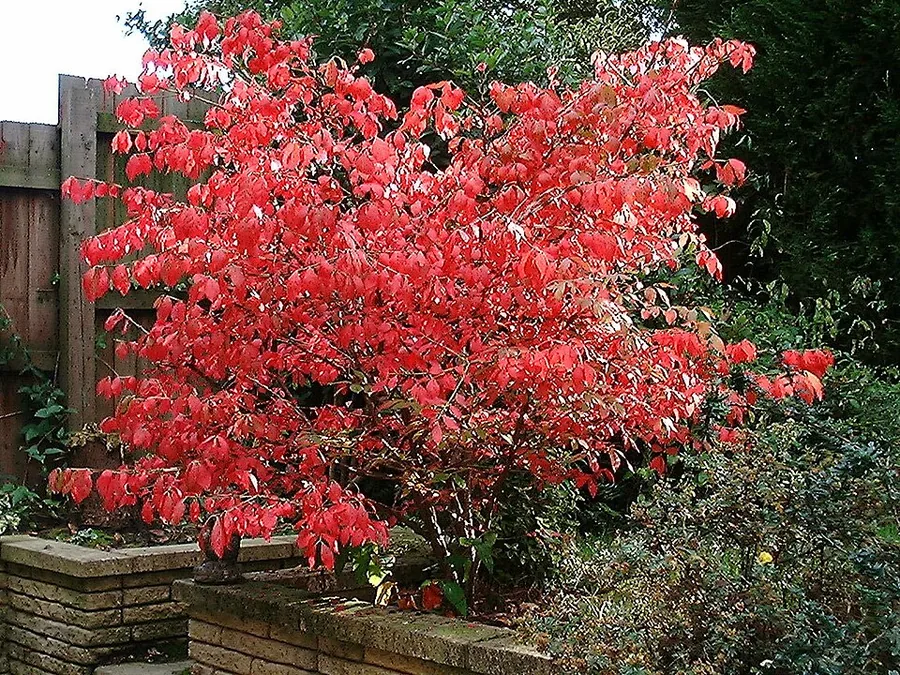
Put it in full sun and the autumn leaves blaze a deep scarlet you'll catch from clear across the yard.
Full sun
Every 7–14 days
USDA 4–8
15–20 ft · 4.6–6.1 m
Overview
Folks grow burning bush for one big reason, and that's the fall color. All summer the leaves stay a plain, reliable green, but once the days get shorter they switch over to a blazing scarlet-red that lit up yards and parking lots for decades. See those corky, winged ridges running down the stems? That's where names like winged euonymus come from.
This plant barely asks for a thing. Once it's rooted in, it laughs off drought, handles clay, loam, or sand without a fuss, and rides out winters all the way down to -29°F (-34°C). The trouble is that same toughness. Birds eat the orange-red fruit and drop the seed in the woods and along fencerows, where it grows up into dense thickets that push out the native plants.
That's why burning bush has become invasive across much of the eastern and central United States and is flat-out banned in several states. Still want that fall blaze without the spread? Reach for natives like chokeberry, serviceberry, or ninebark instead.
Care
The short version: stick it in full sun for the brightest fall color, hand it well-drained soil of pretty much any type, water it while it settles in and then mostly forget about it, and prune in late winter to keep the shape you want.
Light
Hand burning bush full sun if you want the boldest fall color. Sure, it puts up with partial shade and grows fine that way, but a shaded plant just leafs out green come autumn and skips the scarlet show that's the whole reason to plant it.
Water
Keep a new plant watered regularly through year one, then ease up. After it's established it's truly drought tolerant and only asks for water every 7 to 14 days during a dry spell. Just stay away from constantly wet soil, which is an open door for twig blight.
Soil
This shrub will take just about any well-drained soil, whether that's clay, loam, or sand, across a broad pH of 5.5 to 8.0. The one thing it won't budge on is drainage, since soggy ground is behind most of the grief it ever gives you.
Temperature
Burning bush handles cold from roughly -29°F to 95°F (-34°C to 35°C), which lines up with USDA zones 4 through 8. Tough winters don't bother it one bit, and that same hardiness is a big reason it slips into the wild so easily.
Humidity
Regular outdoor humidity is plenty, so there's nothing to fuss over there. What counts more is good air movement, because stagnant, crowded growth is exactly what hands fungal twig blight its opening.
Feeding
Feeding is rarely on the to-do list with this shrub. A single balanced slow-release fertilizer in spring is all it needs, and only when growth looks weak. Pour on too much nitrogen and you'll trade the fall color you wanted for a flush of leafy green.
Pruning
Prune in late winter or early spring before new growth kicks off, whether you're tidying it up or cutting it back hard, which it shrugs off. Trimming away the spent fruit also cuts down on the seedlings that make this plant such a nuisance.
Repotting
Burning bush is a landscape shrub and almost never lives in a pot, so repotting rarely comes up. But if you do keep a young one in a container, bump it up a size when roots start circling the bottom, water races straight through, or the top growth stalls out.
Size & spacing
Leave it be and it'll grow into a big shrub somewhere around 15 to 20 feet (4.5 to 6 m) tall and 8 to 12 feet (2.4 to 3.7 m) wide. Give it room like that, or count on pruning it regularly to keep it in check.
When to plant
Burning bush is a hardy deciduous shrub, so its schedule is about as easy as they come. Get it in the ground in spring or fall while things are mild, keep an eye out for the small green flowers around May, then sit back for the main event when the leaves go red in fall right alongside the orange-red fruit.
Northern hemisphere
Southern hemisphere
Typical months for a temperate climate: start earlier in warm zones, later where spring frosts linger.
- Plant: Spring or fall
- Harvest: Inconspicuous yellow-green flowers in spring (about May), followed by red-purple fall foliage and orange-red fruit
Hardiness
USDA hardiness zones: 4–8
Temperature: down to -34°C
Troubleshooting
Burning bush hardly ever causes a headache, and the few problems it does have are pretty easy to read. Weak fall color is usually about where it's planted, while spots, webbing, or dieback usually mean a pest or a waterlogged root zone. Find what matches below and step in before it gets worse.
Speckled, bronzy leaves and thin webbing in the heat
Leaves that look faded and sandblasted, with a wispy webbing underneath, are a classic sign of spider mites, and they love hot, dry, dusty stretches of weather. Hold a sheet of white paper under a leaf, give it a tap, and watch for little dots scurrying around. A hard spray of water knocks plenty loose, then a round of horticultural oil or insecticidal soap finishes the job, repeated to catch what hatches next.
Fix:
- Spray foliage forcefully with water to dislodge mites
- Apply horticultural oil or insecticidal soap
- Repeat treatments to break the mite life cycle
Twigs and little branches giving up the ghost
Random dead twigs paired with sunken, dented cankers usually add up to twig blight, a fungus that gets comfortable in wet ground. You'll find it most often where drainage is bad or the soil just never gets a chance to dry out. Cut well below each sore spot, wipe your tools between cuts so you aren't spreading it around, and sort out the drainage that gave it a foothold.
Fix:
- Prune out and dispose of affected twigs well below the damage
- Improve drainage and avoid overwatering
- Clean pruning tools between cuts
Crusty white scale on the stems with yellowing leaves
Those crusty white and brown bumps stuck along the stems? That's euonymus scale, a sap-feeding bug that yellows the leaves and slowly wears the plant down. Snip out the stems that are coated the worst, then smother whatever's left with horticultural oil. The trick is timing it for late spring and summer when the baby crawlers are on the move, because that's when a spray can actually reach them.
Fix:
- Prune out heavily infested stems
- Apply horticultural oil to smother scale
- Treat crawlers when active in late spring to summer
Fall color comes in dull instead of fiery red
The whole point of this shrub is the autumn display, so if you get a flat green or washed-out look instead, the culprit is almost always not enough sun. A plant sitting in shade will leaf out just fine all season, yet never blush red, and piling on nitrogen does the same thing by pushing leaves over color. Want the scarlet back? Give it a sunnier home and back way off the fertilizer.
Fix:
- Relocate or transplant to a full-sun site
- Reduce or stop nitrogen fertilizing
- Thin overhanging vegetation to increase light
Toxicity
Think of the whole shrub as poisonous. The leaves, bark, and fruit carry alkaloids and cardiac glycosides that bring on vomiting and diarrhea, and in bigger amounts they can throw off the heartbeat. It's not safe for dogs, cats, horses, livestock, or people, so keep those fallen berries and prunings well out of the way.
Toxic to
Cats · Dogs · Horses · Rabbits · Livestock · Birds · People
Cats Moderate
Chew on the leaves or fruit and a cat will usually start drooling and throwing up, with diarrhea and a sore stomach close behind. If it eats a real amount, the cardiac glycosides can start messing with the heartbeat, and that's when a rough night becomes an emergency.
Dogs Moderate
A dog that nibbles any part of the shrub tends to vomit and pass loose, painful stools within a few hours. Down a big mouthful and you may see weakness and an off-beat heart rhythm, which is your cue to call the vet.
Horses Moderate
Horses can't throw up, so the toxins hang around and turn into colic, diarrhea, and a slow, wobbly walk. Eat enough and the heartbeat can get thrown off, so don't wait on the vet.
Rabbits Toxic
Those same alkaloids and glycosides land hard on a rabbit's tiny frame, triggering gut stasis, diarrhea, and a fast downhill slide. Bottom line, none of this plant should ever sit within a rabbit's reach.
Livestock Toxic
Cattle, sheep, and goats that strip the leaves or scoop up fallen fruit end up with serious digestive misery and, in bigger doses, scary heart-rhythm problems. Keep grazing animals away from any hedge or windbreak that has it mixed in.
Birds Caution
Birds gulp down the bright fruit and pass the seed just fine, which is exactly how this shrub creeps out into wild places. They cope with the arils, but the seeds and leaves are still trouble for caged or ground-feeding birds.
People Caution
Nothing on this shrub is food. The fruit and seeds can bring on vomiting and diarrhea, and a big dose carries that same heart-rhythm danger, so steer curious kids clear of those showy berries.
Keep fallen fruit and prunings away from pets and small children; ingestion of several leaves or seeds commonly causes gastrointestinal upset.
Helpline numbers

United States
ASPCA Animal Poison Control: (888) 426-4435 (fee applies)
Poison Control: (800) 222-1222



Canada
Poison Centres: 1-844-764-7669
Varieties
You'll spot a handful of named picks at garden centers, mostly just smaller versions of the same plant. Good to keep in mind, though: not one of them fixes the invasive issue.
Compactus
A dwarf winged version that maxes out near 10 feet and fills in tighter than the species, but here's the catch: it still cranks out loads of seed and spreads just as invasively.
Rudy Haag
A really tight, slow grower that holds at roughly 3 to 5 feet tall and produces far less fruit than the rest.
How to propagate
Burning bush is dead simple to multiply, and that's a big part of why it runs wild out there. You can deliberately root some cuttings, or, way too often, just watch seedlings pop up all on their own.
Stem cuttingsModerate
Softwood cuttings in early summer or semi-hardwood cuttings in mid to late summer · Several weeks to root, then grown on for a season or more
Grab softwood cuttings in early summer, or wait a bit and take semi-hardwood ones, then dip the cut ends in rooting hormone and keep them nice and humid until they catch. Figure on several weeks for roots, plus a full season or more of growing on before they're ready for the garden.
SeedEasy
Seed sown after cleaning and cold stratification · Germinates readily; note that prolific self-seeding is the main reason this plant is invasive
Clean the seed, give it a cold stratification, and it sprouts without much fuss, which is honestly the whole problem. Birds eat the fruit and scatter the seed all over, so this is how the shrub hops the fence and turns invasive. Growing it from seed on purpose is something to skip.
Myths
The dwarf and compact cultivars of burning bush are safe to plant because they are not invasive.
Compact picks like Compactus still churn out plenty of bird-carried seed, so they slip into the wild every bit as easily as the full-size shrub. Burning bush is banned or regulated in several states regardless of the cultivar, dwarf forms very much included.