Ornamental · Osmundaceae
Cinnamon Fern
Osmundastrum cinnamomeum
Hand it wet, acidic shade and the cinnamon fern keeps throwing up tall green fronds and rust-colored spikes every single year.
Partial shade
Every 2–4 days
USDA 3–9
2–5 ft · 0.6–1.5 m
Overview
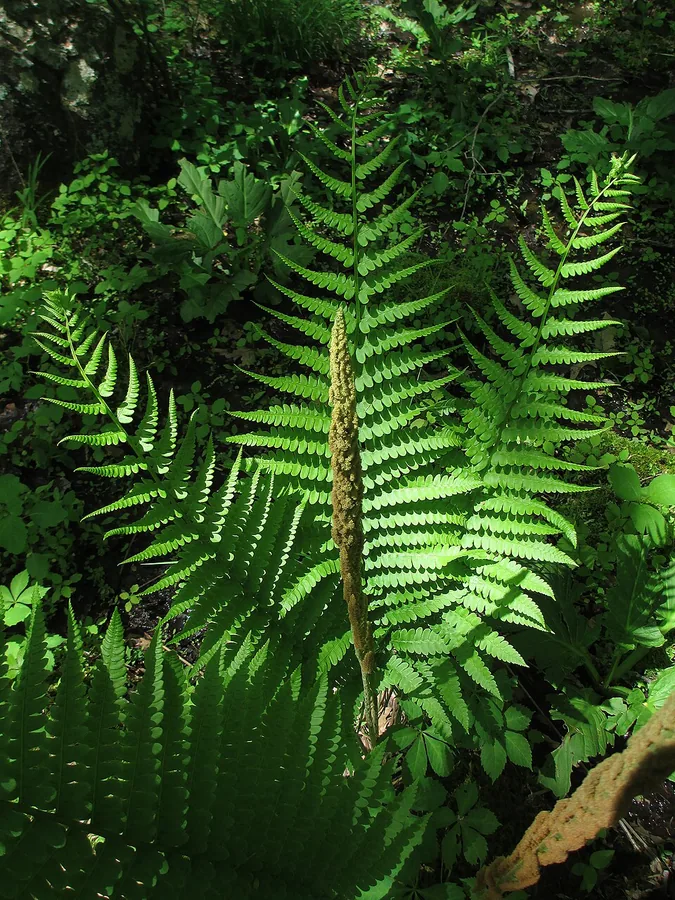
Cinnamon fern is a big, clump-forming native that calls North American bogs and wet woodlands home, and it does the exact same thing across a lot of eastern Asia. When spring rolls around, the crown sends up a ring of tall green fronds that can hit 2 to 5 feet (60 to 150 cm), all gathered into a pretty vase shape. Then, right from the middle, up come separate fertile fronds covered in rust-colored spores, and those cinnamon-brown spikes are exactly where the name comes from.
Got a damp, shady corner where nothing seems happy? This is your plant. Pond edges, rain gardens, stream banks, those soggy low spots that never quite drain, it loves all of them, and it shrugs off cold right down to USDA zone 3. It's not a fast grower, more of a steady one, but a content clump spreads out to 2 to 4 feet (60 to 120 cm) wide and comes back a bit bigger every year.
What does it actually want? Honestly, not much: shade, acidic ground, and water that just keeps coming. Let the soil dry out in summer and the fern protects itself by going dormant early, dropping its fronds way before fall shows up. But keep it wet and it stays full and lush from the first spring fiddlehead all the way to that first hard frost.
Care
The short version: part to full shade, rich acidic soil that stays consistently moist to wet, and steady water all season long so it never dries out and calls it quits early.
Light
Cinnamon fern is happiest in partial to full shade, the kind of dappled light you'd find on a woodland floor. Can it handle full sun? Sure, but only if the soil stays wet enough to stop the frond edges from scorching.
Water
This is the one thing the fern really won't let slide. Keep the soil consistently moist to wet, watering every 2 to 4 days when it's dry out, and never let it dry up. It's totally fine with standing water and boggy ground, but a summer drought will tip it into early dormancy.
Soil
Get it into rich, humusy, acidic ground that hangs onto moisture, ideally around a pH of 4.5 to 6.0. Those boggy, low-lying spots that stay wet are perfect, and a good thick layer of leaf mold keeps the roots cool and damp.
Temperature
When it comes to cold, this thing's basically bulletproof, hardy from -40°F to 86°F (-40°C to 30°C), which covers USDA zones 3 through 9. Brutal winters don't bother it one bit, since the crown just sits dormant underground until spring.
Humidity
Coming from wet woods and bog edges, it likes the air on the damp side, somewhere around 50% to 80%. In a naturally moist, shady spot the humidity sorts itself out, so there's usually nothing for you to fuss with.
Feeding
With rich soil, this fern hardly needs feeding at all. A light spring top-dressing of compost or leaf mold does the job, and honestly, in really good ground you can skip even that.
Pruning
Just leave the healthy green fronds be all season. The only cut worth bothering with is clearing out the old, dead, or frost-damaged fronds in late winter, before the new fiddleheads come pushing up.
Repotting
Settled clumps barely ever need messing with. Once the crowns get crowded and start overlapping and the fronds come in smaller, that's your sign to lift and divide rather than just shuffle the plant somewhere else.
Size & spacing
Expect a vase of fronds 2 to 5 feet (60 to 150 cm) tall, spreading 2 to 4 feet (60 to 120 cm) wide as time goes on. Give each crown that much room so the grown-up clump has space to really fill in.
When to plant
There's no harvest to plan around here, just the one planting window that really matters. Pop new plants in during spring as the soil warms up and the fiddleheads start rising, and you'll give the crown a whole season to get its roots down before winter hits.
Northern hemisphere
Southern hemisphere
Typical months for a temperate climate: start earlier in warm zones, later where spring frosts linger.
- Plant: spring
Hardiness
USDA hardiness zones: 3–9
Temperature: down to -40°C
Troubleshooting
Good news up front: cinnamon fern doesn't get bothered by any serious pests or diseases, so just about every problem comes back to the same thing, dry soil. The fronds are pretty honest about it, too, and they'll let you know when the plant's thirsty. Spot it early and a quick deep soak usually sorts it out.
Brown, crispy edges that look like the fronds got scorched
Nine times out of ten, this is just a thirsty plant. Cinnamon fern grew up in bogs and wet woods, so the second its roots run low on water the edges start to brown, and you'll see it worst wherever the sun hits hardest. So what helps? Give it a good deep soak to get the soil back to evenly moist, lay down some leaf mold to keep it that way, and if it's been baking in full sun, slide it somewhere shadier.
Fix:
- Water deeply to keep soil consistently moist
- Mulch with leaf mold to retain moisture
- Provide more shade if sited in full sun
Fronds going yellow and flopping down early in summer
Looks scary, doesn't it? Here's what's really happening: when the soil dries out in midsummer, the fern just shuts down early to protect itself, so the fronds yellow and fold over ahead of time. It rarely kills the plant, though. It'll almost always pop back up next spring as long as you get back to steady deep watering and work some more organic matter into the soil so it holds onto moisture better.
Fix:
- Resume consistent deep watering
- Improve soil organic matter and moisture retention
Toxicity
If your home's full of pets and kids, here's some relief. Cinnamon fern is a true fern with no known toxin, so a curious nibble isn't going to poison a cat, a dog, or anybody else. The only thing to keep an eye on? Those wiry, cinnamon-colored hairs at the base of the fronds can scratch or bug sensitive skin, so just wash your hands after you've handled them.
Safe for
People · Cats · Dogs · Horses · Rabbits · Livestock · Birds
Cats None
Got a curious cat? No problem here. Cinnamon fern is a true fern with no known toxin, so a nibbled frond won't hurt it. The worst that might happen is the little tummy upset any pet gets from eating too much greenery.
Dogs None
Dogs are totally fine around this one. There's nothing toxic in the fronds, though it's worth keeping a determined chewer away from the stiff fibers down at the frond bases.
Horses None
Horses have nothing to worry about with these fronds. It's a safe pick to plant along paddocks and around the edges of pasture.
Rabbits None
Rabbits can nibble away without any trouble. Neither the young fiddleheads nor the older fronds carry a toxin.
Livestock None
Cattle, goats, and sheep won't get poisoned by it either. It's safe out in fields and along the wet ground wherever stock wander.
Birds None
Birds are in the clear with the fronds and spores. Backyard flocks can scratch and forage around the crowns all they like.
People None
It's not poisonous, and people actually eat the fiddleheads of related ferns in spring. The one thing to watch? Those wiry hairs at the frond bases can scratch sensitive skin, so just wash your hands once you're done handling them.
The cinnamon-colored hairs and fibers at the frond bases may cause mild mechanical skin irritation in sensitive individuals.
Varieties
Most folks grow cinnamon fern as the plain wild species, but botanists do count a couple of regional forms that are good to know about.
var. glandulosum
You'll know this one by the glandular hairs running along its frond axes, and it shows up in the southeastern parts of North America.
var. asiaticum
This is the Asian one, and it stretches from the Russian Far East all the way down into Indochina.
How to propagate
You're not going to grow this fern from seed, because ferns don't make any in the first place. The reliable way is splitting an established clump, and if you've got the patience, growing from spores is the other option.
DivisionModerate
Early spring before the fronds unfurl · 1-2 years
Want more plants? The easy, reliable way is to dig up an established clump in early spring, before the fiddleheads open, and split the crown into chunks. Each piece needs a year or two to settle in and bulk up. You can grow it from spores too, sown fresh on a moist, sterile mix, but be warned, that route's slow and a bit finicky.
Myths
Cinnamon fern is where culinary cinnamon comes from.
Nope, the name's just about the color. It comes from the cinnamon shade of the fibers and the fertile fronds, not the spice. Real cinnamon is the bark of unrelated Cinnamomum trees, so this fern has nothing to do with what ends up in your spice rack.
Cinnamon fern spreads and reproduces by seed.
Here's the thing: ferns don't do seeds or flowers at all. This one gets around by spores instead, which ride up on those separate upright fertile fronds, the rust-colored spikes that gave the plant its name.