Ornamental · Osmundaceae
Royal Fern
Osmunda regalis
Keep it in wet, acidic soil and gentle shade, and this big friendly fern will send up fronds taller than you'd expect.
Partial shade
Every 2–4 days
USDA 3–9
2–6 ft · 0.6–1.8 m
Overview
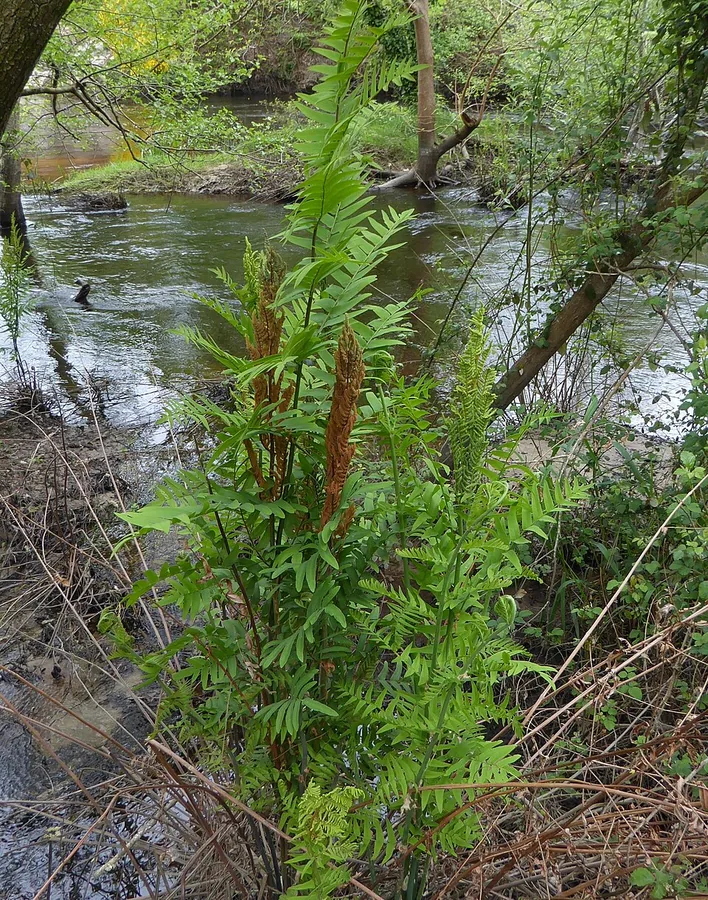
Want a fern that really makes a statement? Royal fern is about as big and graceful as they come, throwing up arching fronds that can hit 6 feet (180 cm) when it's happy. It's part of a seriously old plant family, the Osmundaceae, and it builds such a full, tidy clump that folks started calling it royal. Come late season, the tips of its fertile fronds go rusty brown and pack themselves with spores, which is why you'll sometimes hear it called the flowering fern, even though it doesn't actually flower.
Here's the thing that matters most: this fern is all about water at the roots. It loves pond edges, boggy corners, and pretty much anywhere the ground stays damp to wet all year, and it won't mind sitting in a bit of shallow standing water either. Give it acidic, humus-rich soil and a little shade, and honestly? It doesn't ask for much else.
Winter's no problem for this one. It's tough and long-lived, taking cold all the way down to -31°F (-35°C), and it comes back every spring from that same woody crown. The fronds die off in autumn and then unroll again as fiddleheads once things warm up, so it's a plant that quietly keeps track of the seasons for you.
Care
The short version: give it some shade and soil that never dries out, kept a bit acidic and full of organic matter. Keep it reliably moist to wet, feed it lightly in spring, and then pretty much leave it to do its thing.
Light
Partial shade is the sweet spot here, the kind of dappled light you'd get under open trees. It'll handle full shade or even full sun, but only go full sun if the soil stays properly wet, because dry roots plus strong sun will scorch those fronds in no time.
Water
This is the big one, so don't skip it. Keep the soil moist to wet and never let it dry out, watering every 2 to 4 days and more often when it's hot or sunny. It's totally at home at a pond edge or in a bog, and it'll even put up with a bit of shallow standing water.
Soil
Plant it in moist, rich, humusy soil that's a touch acidic, ideally around a pH of 4.5 to 6.5. It's not picky about texture and will take clay, loam, or sand, as long as things stay wet, and a good helping of leaf mold or compost keeps it really happy.
Temperature
This fern's a champ in the cold, coping with anything from -31°F to 86°F (-35°C to 30°C). That kind of hardiness means it grows way up north no problem, and every year it just dies back and pops up again from the crown.
Humidity
Like most ferns, it likes the air on the damp side, somewhere around 50% to 80%. Sheltered spots near water tend to give it that for free, which is exactly why it does so well by a pond or stream.
Feeding
No need to go heavy on the food here. A spring topdressing of compost or leaf mold is usually all it needs, or you can mix in a balanced slow-release fertilizer once when growth kicks off.
Pruning
There's barely anything to do. Just cut off the faded, browned, or frost-killed fronds in late autumn or early spring, before the new fiddleheads come up, and otherwise leave it alone.
Repotting
If it's in a container, repot only every 3 to 4 years, because it really doesn't like having its roots messed with. You'll know it wants more room when roots start poking out the drainage holes, the woody crown lifts up above the soil, and the fronds come in smaller and weaker.
Size & spacing
Give this one some space, because a grown clump gets 2 to 6 feet (60 to 180 cm) tall and spreads 2 to 3 feet (60 to 90 cm) wide. Set your plants far enough apart so each crown can arch out into a nice full mound.
When to plant
The timing here couldn't be much easier. Pop new plants in during spring or early autumn while the soil's cool and damp, enjoy watching the fiddleheads unroll as it warms up, and keep an eye out for those rusty fertile tips from late spring into summer.
Northern hemisphere
Southern hemisphere
Typical months for a temperate climate: start earlier in warm zones, later where spring frosts linger.
- Plant: Spring or early autumn
- Harvest: Non-flowering; spore-bearing fertile frond tips develop late spring to summer
Hardiness
USDA hardiness zones: 3–9
Temperature: down to -40°C
Troubleshooting
Good news: almost everything that goes wrong with a royal fern comes back to one thing, and that's soil that got too dry. Brown tips, early yellowing, weak growth? Check the moisture before you worry about anything else. Find what's happening below and sort it out while the crown's still healthy.
Frond Edges And Tips Turning Brown And Crispy
Crispy brown edges? Nine times out of ten that's drought stress, the one thing a royal fern really won't put up with. It wants soil that stays moist to wet, so dry roots, harsh sun, or a drying wind will burn those tips quick. Water it deeply, throw some mulch over the root zone, and move any potted ferns into part shade.
Fix:
- Water deeply and keep soil consistently moist to wet
- Apply organic mulch to conserve moisture
- Move container plants to part shade or provide afternoon shade
- Trim badly damaged fronds at the base
Fronds Yellowing And Dying Back Early In Summer
When a dry spell rolls in, this deciduous fern can just call it quits early and slide into early dormancy. It looks scary, but the woody crown usually pulls through and sends up fresh fronds next spring. Get back to a deep watering routine and trim off whatever's collapsed.
Fix:
- Resume deep, consistent watering to keep soil wet
- Cut back collapsed fronds; the crown usually re-flushes the following spring
Pale, Washed-Out Fronds Growing Weakly
Thin, yellowy growth usually means the soil's gone too alkaline or too lean for a fern that really wants acidic, humus-rich ground. Uneven watering just makes it worse. Work in some fibrous, acidic stuff like leaf mold or composted bark, keep the watering steady, and it'll perk back up.
Fix:
- Incorporate fibrous, acidic organic matter such as leaf mold or composted bark
- Maintain even moisture
Toxicity
Got pets or kids? You can breathe easy here, because royal fern is a true fern and isn't considered toxic. A chewed frond might give a bit of harmless, passing tummy trouble, but there's no real poison to stress about. The one thing worth flagging is that the fine hairs or spores can be a little itchy on sensitive skin, so it's smart to wash your hands after a big handling session.
Safe for
People · Cats · Dogs · Horses · Rabbits · Livestock · Birds
Cats None
Royal fern's a true fern, so it's totally fine to have around cats. A curious nibble might bring on a little drool or a quick upset stomach, but that's really as bad as it gets.
Dogs None
There's nothing here that'll hurt a dog. Worst case, a chewed frond leaves them with some mild, short-lived tummy upset that clears up on its own.
Horses None
Horses can graze right nearby without any trouble, since the fronds aren't poisonous. A big mouthful of any greenery might loosen things up for a bit, and that's about it.
Rabbits None
Rabbits can munch on royal fern no problem. Just like with any new leafy green, ease it in slowly so their digestion has time to catch up.
Livestock None
Cattle, goats, and sheep won't get poisoned by this fern, which makes it a solid pick for the damp edges of a grazing field.
Birds None
Backyard birds and pet birds are perfectly safe around the fronds and spores. There's just nothing toxic here for them to peck at.
People None
It's safe to have around kids, with no poison anywhere in the plant. The young fiddleheads of some ferns actually get eaten once cooked, though the spores or fine hairs can be a little irritating on sensitive skin.
Royal fern is not known to be toxic, but as with any non-food plant, chewing fronds may cause mild, transient gastrointestinal upset, and spores or frond hairs can be a minor contact irritant.
Varieties
Most people just grow the regular species, and it's lovely as is. Still, there are a few named forms worth tracking down if you want something with different color or shape, and these are the ones you're most likely to find.
'Purpurascens'
Its new fronds and stalks come up a rich purple-bronze that really pops next to all the mature green growth.
'Cristata'
The tips of the fronds and pinnae are crested and forked, so the whole plant ends up looking kind of tasselled and frilly.
var. spectabilis
This is the North American royal fern, and some folks split it off as its own species called Osmunda spectabilis.
'Gracilis'
It's a slimmer, more compact version, and its new growth shows up with a reddish tint.
How to propagate
Royal fern isn't a fast multiplier, but it's a steady one. You've basically got two options: split up an established crown, or raise new plants from its short-lived spores.
DivisionModerate
Early spring or autumn · 1 to 2 growing seasons
The dependable way to get more royal fern is to split that woody crown in early spring or autumn, making sure each chunk keeps its own roots and growing points. It hates being disturbed, though, so only divide it once in a while, and give a fresh division 1 to 2 growing seasons to settle in and fill out. Fancy trying spores? Sow the short-lived green spores onto moist, sterile peat as soon as they ripen, keep them humid and shaded, and wait a few months for tiny prothalli and then baby ferns to show up.
Myths
Since it's called the flowering fern, royal fern must have flowers.
Nope, it never flowers at all. Those flower-looking clusters at the frond tips are just packed sporangia full of spores, and the plant makes more of itself with spores instead of flowers or seeds.
Ferns grow from seeds, like most plants.
Ferns don't make seeds at all. Royal fern grows from the spores its fertile tips drop, or you can just dig up and split the crown to get more plants.