Ornamental · Osmundaceae
Interrupted Fern
Claytosmunda claytoniana
Give it damp shade and rich, acidic soil, and this tough native fern throws up fresh fronds every spring.
Partial shade
Every 3–7 days
USDA 3–8
2–5 ft · 0.6–1.5 m
Overview
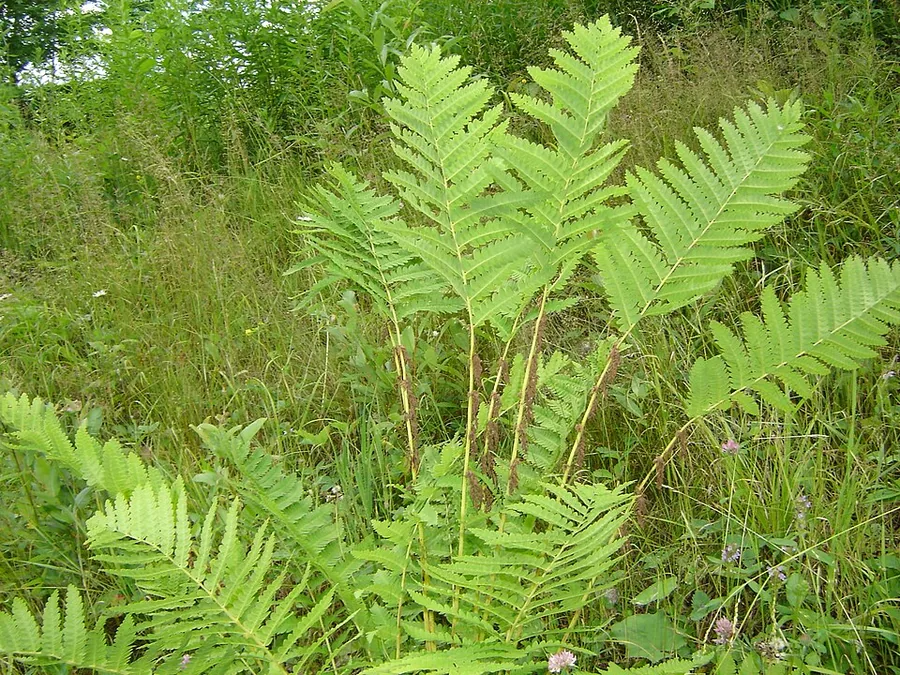
The interrupted fern is about as laid-back as ferns get, and it's perfectly happy tucked into a shady, damp corner. So where does the name come from? It's a quirk in the frond: a few pairs of brown, spore-bearing leaflets sit smack in the middle and break up the green, so the leaf looks like something interrupted it. Those fertile leaflets pop up in mid to late spring and fade away by summer, and you're left with a neat green arch.
This one's a real native of cool, damp woodlands, and it's built to take a beating. It handles winters right down to -40°F (-40°C), and it just ignores the deer and rabbits that flatten softer plants. Keep the moisture coming and it slowly builds into a wide, vase-shaped clump that comes back bigger every year.
Grow it for the texture and the sheer toughness, not for flowers, because there aren't any. Its closest lookalikes are the cinnamon fern and the royal fern, but only this one wears that band of brown leaflets across the middle of its fronds, so you'll never mix them up.
Care
The short version: part to full shade, soil kept evenly moist and a bit on the acidic side, and a compost top-dressing once a year. Once it's settled it barely asks for a thing beyond water when things get dry.
Light
Part shade is the sweet spot, but this fern's pretty easygoing and takes anything from full shade to full sun. The catch with sun? Water. It only puts up with bright, open spots where the soil stays wet all the time.
Water
Keep the soil consistently moist and never let it dry out, and reach for the hose more often when it's dry. Deep down it's a wetland fern, so you don't have to sweat overwatering, it even shrugs off soggy ground and short spells of standing water that would rot most plants.
Soil
It's after moist, humus-rich, acidic ground, happiest around a pH of 4.5 to 6.5. Past that it isn't fussy and it'll settle into clay, loam, or sand just fine, as long as the moisture's there.
Temperature
Not many garden plants are this hardy. It copes with anything from -40°F to 86°F (-40°C to 30°C), riding out savage northern winters and bouncing back every single spring.
Humidity
Like most woodland ferns, it likes the air a bit damp, ideally around 50% to 80% humidity. Out in the garden though, steady soil moisture and a shady, sheltered spot do most of that work for you.
Feeding
This fern barely wants feeding at all. A single spring top-dressing of compost or leaf mold is plenty, and it slowly feeds the soil the way fallen leaves would on a forest floor.
Pruning
There's no routine pruning to keep on top of. Just snip off dead or ragged fronds in late winter or early spring, before the new growth pushes up, to keep the clump looking sharp.
Repotting
It's not really a pot plant, so think dividing rather than repotting. Lift and split established garden clumps every 3 to 5 years, which also perks up a crown that's started to die out in the middle.
Size & spacing
A grown clump gets 2 to 5 feet (61 to 152 cm) tall and spreads 2 to 4 feet (61 to 122 cm) wide. Give each plant room for that full spread so the fronds can arch out without bumping into each other.
When to plant
You'll pop this fern in the ground in spring, once the soil's thawed and starting to warm up. New fronds unfurl as the season kicks off, the brown fertile leaflets turn up in the middle of each one by mid to late spring, and they fade off by midsummer while the green sticks around through fall.
Northern hemisphere
Southern hemisphere
Typical months for a temperate climate: start earlier in warm zones, later where spring frosts linger.
- Plant: spring
- Harvest: Non-flowering; fertile pinnae appear in the middle of the frond in mid-to-late spring and typically wither by midsummer
Hardiness
USDA hardiness zones: 3–8
Temperature: down to -40°C
Troubleshooting
Honestly, an interrupted fern hardly ever gives you trouble, and when it does it nearly always comes down to dry soil or too much sun. Just keep half an eye on the fronds and the crown for the early signs below, then go after the actual cause instead of the symptom.
Fronds going brown and crispy at the tips
Nine times out of ten it's just thirst, and dry soil plus a lot of sun is what really speeds it along. This fern likes damp roots all the time, so give it a proper deep drink and pile some leaf mold or compost on top to keep that moisture from escaping. Is it stuck baking in the noon sun? Then shift it somewhere shadier and it'll come right.
Fix:
- Water deeply to keep the soil consistently moist
- Mulch with leaf mold or compost to retain moisture
- Relocate to a shadier site if planted in full sun
The middle's gone bare but the edges look great
No need to panic, because that's just the rhizome crown getting on in years, and it happens to most older clumps sooner or later. Come early spring, dig it up, split it, and pop the healthy outer bits back in while the dead middle goes on the compost. Do that every few years and the whole clump keeps chugging along nicely.
Fix:
- Divide the clump in early spring and replant the healthy outer sections
Toxicity
Good news if you've got pets: this is a true fern with no known toxins, so plant it wherever the cats, dogs, and everyone else wanders. It's not a food plant, but a curious nibble won't hurt a soul, and get this, the species is actually known for standing up to rabbit and deer browsing.
Safe for
People · Cats · Dogs · Horses · Rabbits · Livestock · Birds
Cats None
A cat's totally fine around it. If yours decides to chomp a frond, there's nothing to worry about, though honestly a huge mouthful of any plant can leave a tummy feeling a bit off for a bit.
Dogs None
Dogs are safe here too, no question. Chewing or bumping into a frond does no harm, and even a proper chewing session would, at worst, mean a bit of passing tummy trouble.
Horses None
Horses don't have anything to fear from this true fern, since there's nothing poisonous in it. And grazers tend to walk right past it anyway, so it rarely even comes up.
Rabbits None
Rabbits can hang out in the same garden no problem. If anything, the plant just laughs off a bit of rabbit nibbling instead of doing them any harm.
Livestock None
Cattle, goats, and sheep are in no danger from it. Stock usually give it a miss, and a stray mouthful won't do a thing.
Birds None
There's nothing in the fronds that would bother a bird, so the backyard hens and the wild ones can poke around it all they like.
People None
You can handle it without a second thought, since there's nothing irritating about it. It's not something you'd eat, so just rinse your hands after digging, more out of habit than anything.
No documented toxicity. Handle normally and wash hands after working with soil.
Varieties
There's no big lineup of named selections for this fern, and that's honestly fine. The one form worth knowing is just the wild type itself.
Osmunda claytoniana var. vera
What you've got here is just the plain wild form of the interrupted fern, an infraspecific variety that Wherry named and that Kew's Plants of the World Online still lists.
How to propagate
The simplest way to get more interrupted ferns is to split an established clump rather than mess about with seed, since it carries spores instead.
DivisionModerate
Early spring · 1-2 years
Want more of these ferns? The easy route is to split a settled clump in early spring. Just lift the rhizome crown, cut it apart, and replant the pieces, but keep in mind it creeps along slowly on horizontal rhizomes and a fresh division takes 1 to 2 years to really settle in and fill out. Sure, it'll seed itself from the spores on the fertile leaflets, but going that way is slow and finicky, so most folks don't bother.
Myths
The interrupted fern grows flowers or seeds.
Nope, it never flowers and it doesn't make seed at all. Like every fern, it gets around by spores, and here they ride on a band of brown fertile leaflets tucked into the middle of a frond that's otherwise green and sterile.
Interrupted fern, cinnamon fern, and royal fern are all one plant.
Not quite, since they're really three separate species that just happen to share the family Osmundaceae. The giveaway for the interrupted fern? That band of brown fertile leaflets breaking up the middle of each frond, with green leaflets left above and below.