Bulb · Araceae
Elephant Ear
Colocasia esculenta
Hand it rich soil, full sun, and water it can't run out of, and elephant ear throws up giant tropical leaves all season.
Full sun
45–86°F · 7–30°C
USDA 8–11
3–6 ft · 0.9–1.8 m
Overview
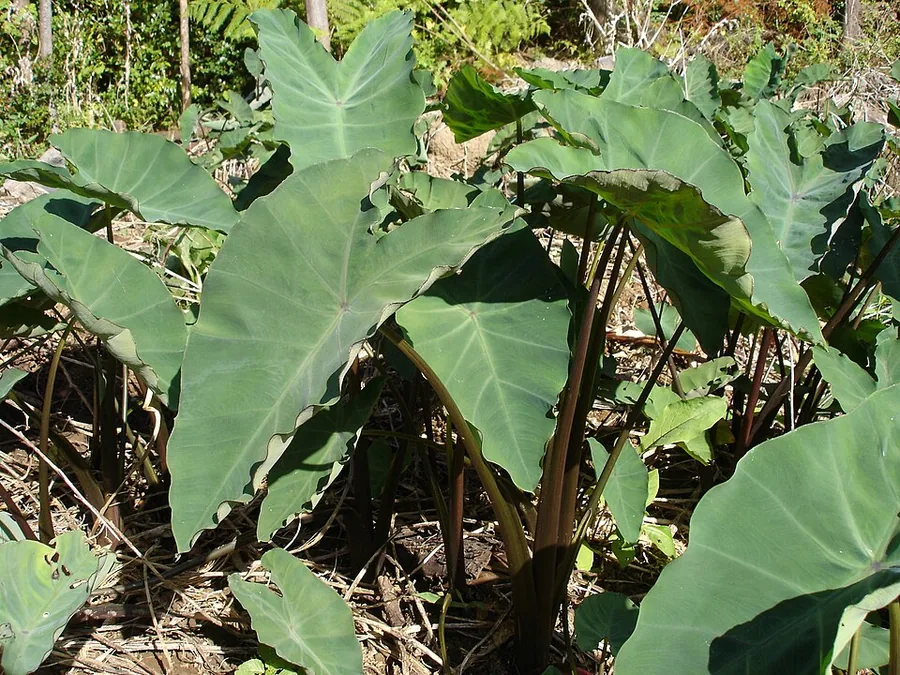
Want a yard that feels tropical in a hurry? Elephant ear is hard to beat. Those huge, heart-shaped leaves can top 3 feet (91 cm) and wave around on tall stalks over a pond or a soggy bed. It's in the arum family and grows from a chunky corm, which is the very same thing you'll find in the kitchen as taro.
Here's the thing: this plant's all about warm, wet ground. In its comfy range of zones 8 to 11 it just keeps coming back year after year, and where it gets too cold, you simply treat it as an annual or bring it inside for winter. It's totally fine with a bit of standing water at a pond's edge, so you really can't overdo the moisture.
As long as you don't let it get thirsty, it's an easy one to keep happy. Keep the soil good and wet, feed it through the warm months, and keep it out of rough wind, and you'll get a big, fast clump of leaves. One catch worth remembering, though: every raw part is toxic, so put it somewhere pets and kids won't get into it.
Care
The short version: rich soil that stays wet and never dries out, full sun to part shade, lots of warmth, and a monthly feed through spring and summer, and don't forget to lift the corms before frost where it isn't hardy.
Light
Elephant ear loves full sun, but it's totally happy in part sun or part shade too. More light means the richest, biggest leaves, though if your summers get really hot, a little afternoon shade keeps the foliage from scorching, so don't sweat it if you've only got a partly shaded spot.
Water
This is the big one, and it's an easy rule to follow. The plant wants constantly wet, boggy soil and should never dry out, and it'll even sit happily as a pond marginal in up to 6 inches of standing water. The more sun and heat it gets, the thirstier it is, so keep the water coming.
Soil
Plant it in fertile, humus-rich clay or loam that holds moisture, the kind of damp ground that would make most plants miserable. It shrugs off the odd flood, too, which is exactly why it's such a natural at a pond edge.
Temperature
It likes it warm, doing well from around 45°F to 86°F (7°C to 30°C), and it slows down as things cool off. There's zero frost tolerance here, so the first freeze ends the season above ground, but that's fine as long as you've saved the corms.
Humidity
Since it comes from steamy tropical ground, it's all about high humidity. Damp air keeps those broad leaves from drying out at the edges, which is one more reason it loves hanging out near water.
Feeding
Through spring and summer, while it's busy growing, give it a balanced fertilizer once a month. Rich soil plus steady feeding is really what powers those oversized leaves.
Pruning
There's not much to do here beyond a little cleanup. Snip off tattered, yellowing, or frost-damaged leaves when you see them, and keep the plant out of strong wind, which tears up the big soft leaves.
Repotting
Divide and repot the corms in spring as the clumps get full. Crowded corms, smaller leaves, or a clump pushing up out of the pot? That's your cue to split it and give it some breathing room.
Size & spacing
Give it room, because a grown clump hits 3 to 6 feet (91 to 183 cm) tall and just as wide. Space your plants far enough apart that those huge leaves can spread out without bumping into each other.
When to plant
Elephant ear's all about heat, and frost is a no-go, so the timing's pretty easy to remember. Pop the corms in around mid-spring once the soil's warmed up and the cold's behind you, let the leaves fill in through the warm stretch, and dig the corms back up before that first fall frost anywhere the plant isn't hardy.
Northern hemisphere
Southern hemisphere
Typical months for a temperate climate: start earlier in warm zones, later where spring frosts linger.
- Plant: Plant corms in mid-spring after the soil warms and frost danger has passed
- Harvest: Rarely flowers in cultivation (yellowish-white spathe); grown as a foliage plant
Hardiness
USDA hardiness zones: 8–11
Temperature: down to -12°C
Troubleshooting
Good news: elephant ear's an easy plant with hardly any pests, so when it looks unhappy it's almost always either too dry or too cold. Take a look at the leaves and you'll usually spot it right away. Find your match below and fix it before you lose more foliage.
Browning, scorched leaf edges and wilting leaves
Nine times out of ten this just means the bog plant's gone thirsty. Elephant ear wants wet soil all the time, and in full hot sun it dries out fast and the big leaves crisp up at the edges. Water it deeply, lay down some mulch to hold the moisture, and give it afternoon shade if your summers are brutal.
Fix:
- Water deeply and keep soil consistently wet
- Mulch to retain moisture
- Provide afternoon shade in hot climates
Leaves collapse and turn black after a cold night
That's frost damage, and it hits the moment a tropical plant meets freezing air. The first fall frost will blacken the leaves overnight, but don't panic, the plant isn't gone. Cut back the ruined foliage, then dig the corms and stash them somewhere cool and dry above 45°F (7°C) until spring.
Fix:
- Cut back damaged foliage
- Dig corms after first frost and overwinter in a cool, dry place above 45°F
Toxicity
Quick heads-up before anything goes near a mouth: no raw part of this plant is safe to chew. The leaves, stems, and corm are loaded with insoluble calcium oxalate crystals that sting and swell the mouth and throat the second they're bitten, and that swelling can get serious. It hits cats, dogs, horses, and people the same way, and only the cooked corm turns into edible taro, so just keep the raw plant away from pets, livestock, and kids.
Toxic to
Cats · Dogs · Horses · Rabbits · Livestock · Birds · People
Cats Moderate
Bite a leaf and a cat gets a fast, painful sting in the mouth, so keep an eye out for heavy drooling, pawing at the face, a swollen mouth and tongue, vomiting, and trouble swallowing.
Dogs Moderate
The crystals burn a dog's mouth on contact, so most spit it right back out. After that you'll usually see drooling, retching, a swollen tongue, and difficulty swallowing.
Horses Moderate
A grazing horse gets the same searing of the mouth and lips, with drooling and not wanting to eat once the swelling sets in.
Rabbits Toxic
Those same raphides irritate a rabbit's mouth and gut, and a little animal hasn't got much margin, so keep elephant ear well out of any rabbit's reach.
Livestock Toxic
Cattle, goats, and sheep that munch the raw foliage get painful mouth swelling and an upset gut, and they might turn down food while the mouth heals up.
Birds Toxic
A curious bird that nibbles the leaves gets the same caustic burn to the mouth and crop, so just treat the whole raw plant as off limits.
People Caution
Raw, every part stings the mouth and throat and can swell the airway, so this is definitely no salad green. The corm only becomes edible taro after a thorough cook in salted water, and cooked right it's safe, raw it's not.
Wear gloves when dividing corms; plant sap and raphides can irritate skin and mucous membranes.
Helpline numbers

United States
ASPCA Animal Poison Control: (888) 426-4435 (fee applies)
Poison Control: (800) 222-1222



Canada
Poison Centres: 1-844-764-7669
Varieties
Most of the elephant ears people fall for are grown for their dark, dramatic leaves. Here are the ones you'll bump into most, and honestly, you can't go wrong with any of them.
'Black Magic'
It's got dusky purple-black leaves on matching dark stems, so the whole plant reads almost charcoal.
'Illustris'
Its dark, almost black leaves are laced with bright green veins that really stand out against all that deep color.
'Black Coral'
It's the one with glossy, ruffled foliage in a deep blue-black that catches the light.
'Mojito'
Its green leaves are flecked and splashed at random with dark purple-black, so honestly no two are quite alike.
How to propagate
Making more is about as simple as it gets, since the plant spreads through its own corms. Basically, you just split up what you've already got, so why buy more?
DivisionEasy
Spring, as new growth begins · A few weeks to establish in warm, moist conditions
The easiest move is to split a clump in spring right as new growth kicks in. Just pull the corms apart, pot them in rich, peaty mix, and keep them constantly moist. Give them some warmth and they'll settle in within a few weeks.
Bulbs & cormsEasy
Plant corms in mid-spring after frost · Sprouts and establishes over several weeks once soil is warm
You can also start with stored corms set out in mid-spring, once frost's passed and the soil's warm. They'll sprout and root over several weeks. Where it gets colder than the plant's hardy range, just lift the corms each fall and keep them above 45°F (7°C) through winter.
Myths
Elephant ear and taro are poisonous, so they can never be eaten.
Raw? Yeah, it's toxic, thanks to insoluble calcium oxalate raphides that burn your mouth. But cook the corm through in salted water and you've got a tropical staple, the taro behind Hawaiian poi. Cooking's what makes it safe to eat, and raw it stays poisonous.