Tree · Ginkgoaceae
Ginkgo
Ginkgo biloba
Slow, tough, and basically impossible to kill, the ginkgo is a tree you plant for the long haul.
Full sun
Every 7–14 days
USDA 3–8
50–80 ft · 15.2–24.4 m
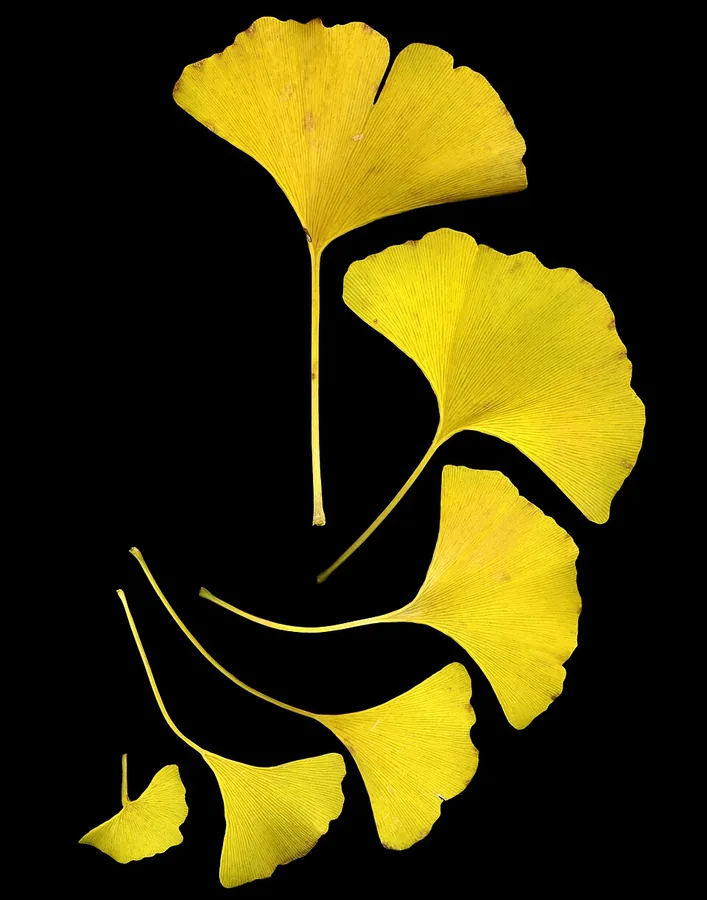
Overview
Here's a fun one to plant: the ginkgo is a living fossil, the last survivor of a plant line that goes back more than 200 million years. Nothing else in the yard looks quite like it, with those fan-shaped leaves and a shape all its own, and it just shrugs off drought, heat, pollution, road salt, and pests that wear down most shade trees. That toughness, plus a really long life, is why you'll still spot it lining city streets.
It's a slow grower and it lives forever, more or less, so it asks for patience way more than work. Give it time and a young tree climbs to 50 to 80 feet (15.2 to 24.4 m) tall with a wide, open crown, which really just means you hand it some room and then leave it be. And the payoff? Every autumn the whole canopy turns a clear, bright gold and then drops, often in a day or two.
There's one detail that shapes everything about living with a ginkgo: it's dioecious, so each tree is either male or female. A female drops a fleshy, foul-smelling fruit in fall, while the fruitless male cultivars stay nice and clean. That's why nearly every tree sold for landscaping is a grafted male.
Care
The short version: stick it in full sun and well-drained soil, keep it watered for the first few years until it settles in, and once it's established it pretty much handles itself.
Light
Give a ginkgo full sun and it'll grow its fullest and color up best come fall. It'll take partial shade too, but the crown opens up and thins out the less light it gets.
Water
Keep a young tree steadily watered through its first few years while the roots get going, and let the top half of the soil dry out between drinks. Once it's settled in, the ginkgo is genuinely drought-tolerant and only wants extra water through a long dry spell.
Soil
It's not fussy about soil at all, and it grows just fine in loam, sand, or clay as long as the ground drains. A pH anywhere from 5.0 to 8.0 works for it, which honestly covers most yards with no amending needed.
Temperature
This is a cold-hardy, heat-tough tree that handles anything from -40°F to 100°F (-40°C to 38°C). That's a huge range, and it's exactly why it does well from northern zones all the way down to hot southern streets.
Humidity
Ordinary outdoor air is all it needs, so there's really nothing to fuss with here. Average humidity suits it fine in any climate where it's hardy.
Feeding
Feed a young tree a balanced slow-release tree fertilizer in spring to give its early growth a push. An established ginkgo barely needs feeding and gets by just fine on what the soil already has.
Pruning
Prune a young tree in late winter to set one strong central leader and a clean branch structure. A mature ginkgo needs almost nothing, so once the frame's built you can mostly leave the saw in the shed.
Repotting
A ginkgo is a landscape tree, so it's rarely repotted, but a young one in a container will let you know when it's outgrown its pot. Keep an eye out for roots circling or poking out the drainage holes, water running straight through, and new growth stalling.
Size & spacing
Plan for a big tree that reaches 50 to 80 feet (15.2 to 24.4 m) tall and spreads 30 to 40 feet (9 to 12 m) wide. Give it that kind of open room away from buildings, walkways, and power lines so the broad crown can fill right out.
When to plant
The ginkgo is hardy from zone 3 to zone 8, and you'll want to plant it in spring or fall, when the weather's mild and the roots get a chance to settle before the next hot or cold stretch. It grows slowly, so the early years are more about steady watering than quick results, and the reward is that golden show every single autumn.
Northern hemisphere
Southern hemisphere
Typical months for a temperate climate: start earlier in warm zones, later where spring frosts linger.
- Plant: spring or fall
- Harvest: April (inconspicuous; dioecious)
Hardiness
USDA hardiness zones: 3–8
Temperature: down to -40°C
Troubleshooting
The ginkgo gives you next to no trouble, which is a big part of why people love it. The handful of things that do crop up come down to a young tree still settling in, or the mess and irritation from a female tree's fruit. Find what matches below, then act while it can still help.
Leaf margins going brown and crispy with branches dying back
If it's a young tree that hasn't settled in yet, this is usually just heat or drought stress, and you'll see an even browning right along the leaf edges when it's been hot and dry. The trickier one to watch for is bacterial leaf scorch, which moves through the canopy section by section over a few seasons. Give a stressed sapling a deep soak and some mulch, but if a tree's confirmed with the bacterial kind, it's better off removed.
Fix:
- Water deeply during drought, especially for newly planted trees
- Mulch to conserve soil moisture
- Remove severely declining trees if bacterial scorch is confirmed
A red, itchy breakout of blisters after touching the squashed pulp
Here's the culprit: the pulp of a female tree's fruit is full of ginkgolic acids, which are a lot like the urushiol in poison ivy and hit your skin the same way. Wash the spot well with soap and water, then treat it just like you would a poison-ivy rash. Gloves keep it from happening at all, and a male cultivar means there's no fruit to deal with in the first place.
Fix:
- Wash the affected skin thoroughly with soap and water
- Treat dermatitis symptomatically as for poison ivy
That awful autumn stink and squishy fruit littering the ground
So what's that awful smell? It's a female ginkgo letting go of its fleshy seed coats, and the butyric acid inside makes them smell like butter gone bad. Rake the fruit up quickly before it gets tracked everywhere, and pop on some gloves so the pulp doesn't bother your skin. Want to skip all of this from the start? Plant a fruitless male cultivar.
Fix:
- Rake and remove fallen fruit promptly
- Wear gloves when handling crushed fruit to avoid skin irritation
Toxicity
Good news here: the ginkgo is a low-toxicity tree, and its fan-shaped leaves are pretty harmless to pets, livestock, or people. The one thing to watch is the female tree's fruit and raw seeds, since the fleshy pulp can leave a poison-ivy-like rash on bare skin, and raw or large amounts of the inner seed have ginkgotoxin. Most landscape trees are fruitless males anyway, but if a female's dropping fruit, just keep pets and curious kids away from the litter.
Toxic to
Cats · Dogs · Horses · Rabbits · Livestock · Birds · People
Cats Caution
Good news on the leaves, since they're low enough in toxicity that a nibble is nothing to worry about. What you do want to watch is a female tree's fallen fruit and raw seeds, which can upset a cat's stomach, so keep them away from any litter under the tree.
Dogs Caution
A dog nosing around the leaves probably won't come to any harm. The thing to catch is one chewing the dropped fleshy fruit or raw seeds, which can bring on drooling and a queasy stomach, and a big mouthful is the real worry.
Horses Caution
The leaves aren't much of a problem for a horse. Just keep them off the windfall seeds and crushed fruit, since that raw seed has ginkgotoxin in it.
Rabbits Caution
A leaf or two won't bother a rabbit, since the foliage is so low in toxins. But don't let one get at the raw seeds, because a little animal really doesn't handle ginkgotoxin well.
Livestock Caution
Cattle, goats, and sheep can browse the leaves without much fuss. The one thing to fence off is the drop of fleshy fruit and raw seeds that comes down under a female tree in fall.
Birds Caution
Birds will happily scatter the fallen seeds around, and the leaves are no trouble to them. Still, the raw inner seed has ginkgotoxin, so it isn't something you'd set out for backyard poultry.
People Caution
The leaves and leaf extracts are pretty low in toxicity, but a couple of things are worth a little care. Handling the female fruit's pulp can leave you with a poison-ivy-like rash, and eating raw or too much of the inner seed can cause ginkgotoxin poisoning, so cooked seeds are kept to small servings.
Only FEMALE trees produce fleshy seed coats; the fruit pulp contains ginkgolic acids (urushiol-like) that can cause poison-ivy-like contact dermatitis in people handling the crushed fruit, and RAW seeds/nuts contain ginkgotoxin (4'-O-methylpyridoxine) which can cause toxicity such as seizures if many are eaten raw. Plant fruitless male cultivars.
Helpline numbers

United States
ASPCA Animal Poison Control: (888) 426-4435 (fee applies)
Poison Control: (800) 222-1222



Canada
Poison Centres: 1-844-764-7669
Varieties
Just about every ginkgo worth planting in a yard or along a street is a fruitless male cultivar, picked so you can skip the messy fall fruit. These are the ones you'll bump into most.
Autumn Gold
It's a fruitless male with a wide, even crown and bright golden fall color, and it tops out around 50 feet (15 m) tall and 30 feet (9 m) wide.
Princeton Sentry
This one's a fruitless male with a narrow, upright, conical shape, so it's a natural fit for a tight spot or right along the street.
Magyar
It's a fruitless male with a neat columnar-to-pyramidal shape, which makes it an easy, clean pick for a street tree.
How to propagate
Ginkgos get propagated to lock in a known male, fruitless tree, so growers usually reach for grafting and cuttings instead of seed.
GraftingDemanding
Late winter to spring (dormant scion onto seedling understock) · 1-2 years
Grafting is how growers keep the fruitless male cultivars going. A dormant scion gets joined onto seedling rootstock in late winter or spring, which keeps the cultivar true and makes sure you end up with a male, and the union takes a year or two to knit together. It's fiddly, precise work, so yeah, it's the demanding end of things.
Stem cuttingsModerate
Midsummer (semi-hardwood) · 1-2 years
Around midsummer you take semi-hardwood cuttings of 10 to 15 cm off a mature male tree, dip them in IBA rooting hormone, and keep them under mist. They'll root over a year or two and grow slowly after that, but they carry the parent's known sex, and that's really the whole reason to bother.
SeedDemanding
Fall, after cleaning and stratifying seed · Several years
Sure, you can clean and stratify seed in fall and sow it, but the seedlings are slow and need several years to settle in. The bigger catch is the sex thing: a ginkgo won't tell you whether it's male or female for 15 to 20 years or more, so seed's a rough way to go if you're set on a guaranteed fruitless male.
Myths
Ginkgos are toxic trees that put nearby pets at risk.
Not really, and here's why. The ginkgo isn't on the ASPCA toxic-plant lists, and the fruitless male trees sold for landscaping are treated as non-toxic to cats and dogs. The one real concern is pretty specific: it's the female tree's fallen fruit and raw seeds you keep pets away from, not the leaves or the wood.
All ginkgos leave a stinky mess on the ground each autumn.
Only a female tree does that, because it's her fleshy seed coats that smell of butyric acid as they rot on the ground. The male cultivars sold for landscaping are fruitless and odor-free, and honestly that's exactly why they've taken over the trade.