Shrub · Berberidaceae
Japanese Barberry
Berberis thunbergii
Tough, thorny, and richly colored, but think it through before you plant it where it can spread.
Full sun
Every 7–14 days
USDA 4–8
3–6 ft · 0.9–1.8 m
Overview
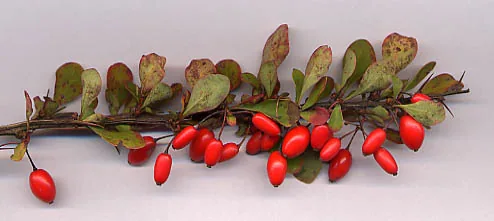
Japanese barberry is a dense, rounded deciduous shrub that people grow for its color and its sheer toughness. It gets to 3 to 6 feet (91 to 183 cm) tall and spreads even wider, with little leaves that turn red, purple, or gold depending on which cultivar you pick. Pale yellow flowers show up in late spring, and then bright red berries follow in fall and hang on well into winter.
So why's it so popular? Because hardly anything bothers it. It shrugs off drought once it's settled in, puts up with poor soil and city grime, and deer leave it alone thanks to those sharp single spines at every node. That same prickly armor is why it makes such a handy low hedge, or a deterrent tucked under a window.
Here's the catch, and it's a real one. Across a lot of the eastern and midwestern US this plant has hopped the garden fence and turned badly invasive, and its thickets are tied to more deer ticks around. In several states it's a regulated noxious weed, so the smart first move is just checking whether you're even allowed to plant it where you are.
Care
The short version: give it full sun for the best color, plant it in any well-drained soil, water it while it settles in and then pretty much leave it be, and always pull on thick gloves before you prune.
Light
Give it full sun for the strongest leaf color, especially on the purple and gold forms. It'll take partial sun and even partial shade, but the foliage drifts toward green and the shrub gets a bit loose and leggy in the shade.
Water
Water it regularly through the first season while the roots settle in, then ease off, because it's drought tolerant once established. Let the top half of the soil dry out between waterings, roughly every 7 to 14 days, and whatever you do, don't let it sit in soggy ground.
Soil
It's about as easygoing as shrubs get, happy in dry to medium soil of just about any texture, from clay to loam to sand. The one thing it won't put up with is poor drainage, so a spot that drains well matters way more than rich ground.
Temperature
It's seriously cold-hardy, comfortable somewhere between -29°F to 100°F (-34°C to 38°C), which covers a big chunk of the country. Hard winters and hot summers? It takes them in stride.
Humidity
Regular outdoor humidity suits it just fine, so there's nothing to fiddle with there. What matters more is air movement, because a damp, crowded canopy is exactly where the few leaf diseases like to start.
Feeding
It hardly ever needs feeding and usually does great in average soil with nothing extra. If the growth looks a little weak, a light application of balanced granular fertilizer in spring is all it takes.
Pruning
Keep pruning light unless you're shaping a formal hedge. Cut it right after flowering or in late winter, and you can take an overgrown one down hard in late winter. Always wear thick gloves, because the stems are loaded with spines.
Repotting
A potted one hardly ever needs moving up. Only bump it to a bigger pot when you spot roots circling around or poking out the drainage holes, water running straight through, or new growth that's stalled out.
Size & spacing
A mature plant stands 3 to 6 feet (91 to 183 cm) tall and spreads even wider, around 4 to 7 feet (122 to 213 cm) across. Give each shrub that kind of room so the canopy stays open and air can move right through it.
When to plant
Think of this as a fall-and-spring shrub, not a seasonal crop. Set new plants out in spring or fall wherever it's legal, look for pale yellow flowers in late spring, and watch the red berries color up in fall and hang on through winter.
Northern hemisphere
Southern hemisphere
Typical months for a temperate climate: start earlier in warm zones, later where spring frosts linger.
- Plant: Spring or fall where legal to plant
- Harvest: Pale yellow flowers in late spring (April to May), followed by bright red berries in fall persisting into winter
Hardiness
USDA hardiness zones: 4–8
Temperature: down to -34°C
Troubleshooting
Japanese barberry hardly ever gives you grief, and when it does, it usually comes back to wet soil or a crowded, stuffy canopy. Match up what you're seeing below and jump on it early, before a little problem digs in.
Branches wilting and dying back while the whole plant slips
Soggy ground is almost always to blame. Root rot creeps in when the soil won't drain, and here's the tough part: once the roots go dark and mushy, the stems above them are done, and no amount of watering brings them back. So fix the drainage, dig out anything too far gone, and don't tuck this shrub into a low, wet corner.
Fix:
- Improve soil drainage
- Remove severely affected plants
- Avoid planting in wet sites
Spotty leaves that fall before their time
Seeing dark blotches and early leaf drop? That's usually anthracnose or a bacterial leaf spot, and it loves wet weather trapped inside a packed shrub. Pull off the spotted leaves, sweep up whatever's fallen, and open the plant up so air can get through. And water down at the base, not over the top.
Fix:
- Remove and dispose of infected leaves and debris
- Thin the shrub to improve air circulation
- Avoid overhead watering
Twisted shoots, a sticky coating, or little bumps on the stems
This one's down to a couple of bugs. Aphids pile onto the soft spring shoots and leave that sticky honeydew behind, and scale insects hang on as hard waxy bumps all along the stems. A strong jet of water or a shot of insecticidal soap handles the aphids, and for the scale, just prune out the worst of it or wipe it down with horticultural oil.
Fix:
- Spray aphids off with water or apply insecticidal soap
- Prune out heavily scale-infested branches
- Apply horticultural oil for scale
Toxicity
This shrub is only mildly toxic, but that doesn't mean it's harmless. The leaves, bark, and roots carry berberine, a bitter compound that can turn a stomach if a pet, kid, or animal eats much of it. The everyday danger is really the mechanical kind, since those sharp spines at every node scratch and puncture skin, so wear gloves and keep little ones away from the canopy.
Toxic to
Cats · Dogs · Horses · Rabbits · Livestock · People
Safe for
Birds
Cats Caution
A quick nibble won't do much, but if a cat really goes at the leaves or roots, the berberine in them can turn its stomach and bring on drooling, vomiting, or loose stools. Honestly, the thorns are the bigger worry, since they'll scratch a mouth or a paw.
Dogs Caution
A little taste rarely bothers a dog, but chewing through a good bit of the leaves or roots can cause drooling, vomiting, or loose stools from the berberine. Keep an eye on those sharp spines whenever a curious nose gets close.
Horses Caution
Horses usually won't touch the thorny stems anyway, and even if they nibble, the berberine's just a mild gut irritant. It's the spines you'd worry about if a horse leans right into the canopy.
Rabbits Caution
Those thick spines tend to keep rabbits out, and that's a good thing, because the bitter berberine can leave a small animal with an upset stomach. Don't hand it over as forage.
Livestock Caution
Cattle, goats, and sheep mostly steer around the thorny growth, and it's only a mild gut irritant even if they do take a bite. The thickets are better known for hiding ticks than for poisoning any stock.
People Caution
People have used the berries and bark in herbal medicine for ages, but eat much of any part and the berberine can hand you stomach cramps, nausea, and diarrhea. More often though, it's those sharp single spines at every node that get you, so pull on gloves and keep the kids back.
Birds None
Birds happily eat the bright red berries and come to no harm at all, then carry the seed all over the place, which is a big reason this shrub spreads the way it does.
Stems are densely covered with sharp single spines at each node that readily scratch or puncture skin; wear thick gloves and long sleeves when handling or pruning, and keep children and pets clear of the thorny canopy.
Helpline numbers

United States
ASPCA Animal Poison Control: (888) 426-4435 (fee applies)
Poison Control: (800) 222-1222



Canada
Poison Centres: 1-844-764-7669
Varieties
Most of the named forms are grown for their leaf color rather than the flowers or fruit. Here are the ones you're most likely to bump into.
'Atropurpurea'
Want the classic purple-leaved barberry? This is the one, keeping its reddish-purple to deep burgundy color all season long.
'Crimson Pygmy' (var. atropurpurea)
It's a small, tidy mound of deep crimson-purple leaves that folks love for low edging and neat borders.
'Aurea'
This golden-yellow form shows its brightest color when you give it plenty of full sun.
How to propagate
Japanese barberry multiplies way too easily, and that's both why it's a cinch to root and why it's turned into such a headache in the wild.
Stem cuttingsEasy
Softwood cuttings in early summer or hardwood cuttings in late fall/winter · 4 to 8 weeks to root
Cuttings root without much fuss at all. Take softwood cuttings in early summer or hardwood ones in late fall and winter, and they'll strike roots in about 4 to 8 weeks. Low branches even root by themselves wherever they touch the soil, which is a habit called layering that helps the shrub spread on its own.
SeedEasy
Seed ripens in fall and is widely bird-dispersed · Germinates the following spring, often at very high rates
The seed ripens in fall, birds haul it off, and it pops up the next spring at really high rates. All that self-seeding is exactly why the plant goes wild, so don't raise it from seed where it's prohibited.
Myths
Japanese barberry is a harmless, well-behaved shrub you can plant anywhere.
Not quite, because it's actually one of the worst invasive shrubs across the eastern and midwestern US, slipping out of gardens on bird-dropped seeds and on branches that root wherever they touch the ground. A bunch of states now ban or restrict selling it as a noxious weed, and its dense thickets go along with more black-legged ticks. Check your state and local rules before you plant it, and lean toward the sterile cultivars or a native instead.