Shrub · Berberidaceae
Heavenly Bamboo
Nandina domestica
Easygoing, drought-proof, and fiery in winter, nandina pulls its weight, but its berries are poison to wildlife.
Full sun
Every 7–14 days
USDA 6–9
3–8 ft · 0.9–2.4 m
Overview
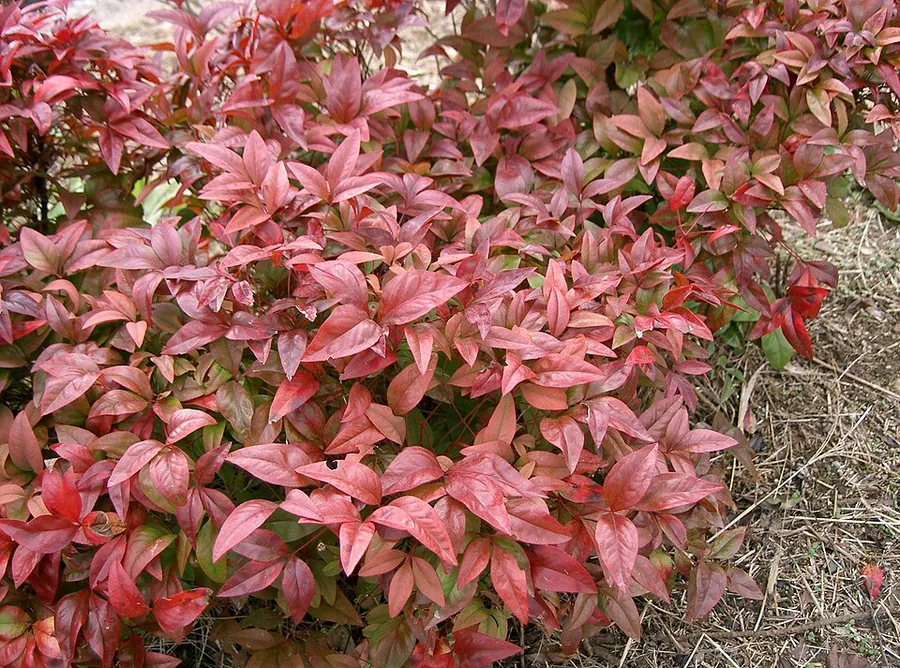
Here's the twist: heavenly bamboo isn't a bamboo at all, and the resemblance is pretty much where it ends. Nandina is an upright, cane-forming evergreen shrub in the barberry family, with airy compound leaves on slender stems that only look bamboo-ish from across the yard. As it cools off outside, it warms into reds and purples, then hangs onto bright berries through the roughest part of winter.
Not much fazes this shrub. Once it's settled in, nandina takes heat, drought, and poor soil without complaint, handles anything from full sun to deep shade, and rides out cold down to -9°F (-23°C). Pests and deer mostly skip it too, which is part of why it caught on all over southern gardens.
But all that toughness has a catch. The whole plant, and the berries especially, carries cyanide-releasing compounds that can poison animals and people, and birds that gorge on the fruit can actually die from it. Nandina also has a way of escaping the garden and turning invasive across the Southeast, so where you put it, and whether you let it fruit, matters just as much as how you grow it.
Care
The short version: pop it into full sun to part shade in just about any well-drained soil, water it through that first season and then mostly leave it be, and renew a few of the oldest canes each late winter so it stays nice and full.
Light
Nandina's happy in just about any light, anywhere from full sun to deep shade. That said, sun is what pulls out the red and purple winter color, so a plant tucked deep in shade just stays green and kind of flat, even though it grows fine.
Water
Give it regular water through the first season while the roots get going, then you can ease way off. Once it's established it's genuinely drought tolerant and only wants a drink during a long dry stretch, roughly every 7 to 14 days when it's hot out.
Soil
This shrub isn't fussy, settling into clay, loam, or sand as long as it drains okay. It takes a really wide pH range too, from 5.0 to 8.5, so most garden dirt suits it just fine without any tinkering.
Temperature
Nandina's cold-hardy down to about -9°F (-23°C) and shrugs off heat up to 100°F (38°C). That big tolerance is exactly why it does so well across USDA zones 6 to 9 without any special coddling.
Humidity
Plain outdoor air is all it wants, so there's no humidity number to fuss over. It handles muggy southern summers and drier spells alike, no problem.
Feeding
Nandina's a light feeder that gets by on next to nothing. One shot of balanced slow-release shrub fertilizer in spring is plenty, and honestly a lot of plants do fine with none at all.
Pruning
Prune in late winter by cane, cutting the stems at different heights just above a node so the shrub fills in instead of thinning out up top. And take a few of the thickest, oldest canes down at the base each year to keep it renewed, since the flowers and fruit come on new growth.
Repotting
Nandina's mostly a landscape shrub, but a potted one likes a fresh, bigger pot every 2 to 3 years. Repot when you notice roots circling, water running straight through, or growth kind of stalling out.
Size & spacing
Figure on a mature shrub around 3 to 8 feet (91 to 244 cm) tall and 2 to 5 feet (61 to 152 cm) wide. Give each one room to hit that spread, or just plan to keep it in line with regular cane pruning.
When to plant
Nandina's an easy one to plant, going in during spring or fall while the soil's workable and the weather's mild. It flowers in late spring, and then the red berries roll in come fall and stick around through the cold months.
Northern hemisphere
Southern hemisphere
Typical months for a temperate climate: start earlier in warm zones, later where spring frosts linger.
- Plant: spring or fall
- Harvest: Flowers in late spring; bright red berries develop in fall and persist through winter.
Hardiness
USDA hardiness zones: 6–9
Temperature: down to -23°C
Troubleshooting
Nandina's about as low-drama as shrubs get, and most of its little issues trace back to how it's pruned, how much light it's getting, or how far it wanders. Spot the early signs below and you can sort out the shape, the color, or the stray seedlings before any of it gets away from you.
Little seedlings turning up all over the yard
Seeing baby nandinas pop up far from the parent? That's the plant showing its invasive streak, and it pulls it off two ways at once. Birds gobble the berries and drop the seed somewhere else, and meanwhile the rhizomes and stray root bits resprout close to home. So pull the berry clusters before they ripen, dig out every seedling and root scrap you can find, and lean toward sterile, non-fruiting types or good native shrubs instead.
Fix:
- Remove berry clusters before they ripen to limit bird dispersal
- Dig out seedlings and rhizomes, removing all root fragments
- Replace with sterile, non-fruiting cultivars or native alternatives
Bare woody canes at the bottom, leaves only up top
Ever notice how an old, unpruned nandina goes thin and woody at the base? That's just its cane habit catching up with it, and deep shade only makes it worse. The fix is easy enough: in late winter, cut about a third of the oldest, thickest canes right to the ground and trim the rest to different heights above a node. And if it's a potted one sitting in the gloom, just moving it somewhere brighter helps it bush back out.
Fix:
- Cut about one-third of the oldest, thickest canes to the ground in late winter
- Head back remaining canes at varying heights just above a node to encourage branching
- Move container plants to a sunnier spot if heavily shaded
Leaves that stay green instead of going red
Wondering why your nandina won't color up in the cold? It really comes down to light, since the purplish-red show only happens with decent sun and a shrub buried in shade just stays green or bluish-green. Move it, or thin out whatever's shading it, and the color tends to come right back. For the richest tones, aim for full sun to a bit of light shade.
Fix:
- Relocate or plant in a position receiving more direct sun
- Thin overhead shade where practical
Toxicity
Just treat the whole plant as poison, and you'll be fine. Every part of nandina, and the berries above all, holds compounds that release cyanide when chewed or digested, and there's no safe amount for a pet, a kid, or grazing livestock. Those berries are especially deadly to birds, so keep animals clear and think twice before letting the shrub fruit at all.
Toxic to
Cats · Dogs · Horses · Rabbits · Livestock · Birds · People
Cats Severe
If a cat chews the leaves or berries, it can turn weak and wobbly on its feet within hours. You'll want to watch for drooling, a heart that races and then slows, seizures, and hard breathing, and honestly any of those means a vet right now, because it's cyanide poisoning.
Dogs Severe
A dog that chews the foliage or swallows some berries might start to stagger, throw up, and run out of steam fast as the cyanide kicks in. Shaking, collapse, and trouble breathing can come on right after, so treat any suspected mouthful like the emergency it is.
Horses Severe
Cyanide is really rough on a horse. You might see bright red gums, fast breathing that slides into gasping, muscle tremors, and a sudden collapse not long after it grazes, and without quick treatment it turns fatal.
Rabbits Severe
Rabbits are so little that even a small nibble is a big deal. Look for weakness, a hunched and checked-out posture, breathing trouble, and a fast slide downhill, so it's smart to keep the plant nowhere near them.
Livestock Severe
Cattle, goats, and sheep that browse nandina can drop fast from the cyanide. Keep an eye out for staggering, labored or gasping breaths, frothing, and collapse, which can show up with barely any warning before things get serious.
Birds Severe
Birds are the ones in the most danger, believe it or not. Cedar waxwings and others that gorge on the winter berries die of sudden cyanide poisoning and often turn up dead with internal bleeding and no warning at all, and one big feeding can take out a whole flock.
People Caution
No part of nandina is food, and those berries just aren't safe to eat. A swallowed berry or two rarely does an adult real harm, but kids are way more at risk, so keep the fruit out of reach and call poison control if any goes down.
Keep berries and foliage away from pets, children, and grazing animals; supervise pets around landscape plantings.
Helpline numbers

United States
ASPCA Animal Poison Control: (888) 426-4435 (fee applies)
Poison Control: (800) 222-1222



Canada
Poison Centres: 1-844-764-7669
Varieties
Most nandina you'll run across is one of a handful of named picks, and quite a few were bred to fruit little or not at all, which quietly dodges the worst of the plant's spreading. These are the ones you're most likely to see.
Fire Power
This little dwarf lights up bright red all winter and barely sets any viable fruit, which makes it the safe, non-invasive one to grab.
Gulf Stream
It's a neat, mounded pick that folks love for strong red fall and winter color, and it hardly fruits at all.
Harbour Dwarf
This low, spreading dwarf often gets massed as a groundcover wherever you'd rather keep the height down.
Alba
Here's an oddball that shows off creamy white berries instead of the usual bright red ones.
How to propagate
DivisionEasy
Late winter to early spring · One growing season
Want more nandina without much hassle? Just divide an established clump in late winter or early spring, pulling apart rooted canes along with chunks of rhizome. Each piece usually settles in over one growing season.
Stem cuttingsModerate
Summer · Several weeks to a few months to root
Come summer, you can take semi-hardwood cuttings off the current season's growth. They're slower and a bit hit-or-miss compared to division, and they'll root anywhere from several weeks to a few months.
SeedModerate
Fall after fruit ripens · Slow; one or more years to germinate and reach size
Seed works too, but it's slow and honestly best skipped. Sow it in fall once the fruit ripens and it can take a year or more to sprout and bulk up. And since birds spread that same viable seed and feed the plant's invasiveness, seed sowing gets discouraged anywhere nandina might escape.
Myths
Heavenly bamboo is actually a bamboo.
The name's a bit of a tease, honestly. Nandina is not a bamboo at all, it's an upright, cane-forming evergreen shrub in the barberry family, Berberidaceae. It's just that the slender canes and fine leaves give it that bamboo-ish look.
Nandina berries are a harmless winter treat for songbirds.
As pretty as they are, those berries carry cyanide-releasing compounds, so they're anything but harmless. Birds like cedar waxwings that gorge on a big clump in winter can die of acute cyanide poisoning, which is exactly why pulling the fruit off helps local wildlife.
Sources
- ASPCA Animal Poison Control Center
- NC State Extension Gardener Plant Toolbox
- Clemson Cooperative Extension Home & Garden Information Center
- University of Florida IFAS Gardening Solutions
- USDA National Invasive Species Information Center
- NIH/NCBI PMC (Journal of Veterinary Diagnostic Investigation)
- Maryland Department of Agriculture