Tree · Taxaceae
Japanese Yew
Taxus cuspidata
A tough, shade-loving evergreen for hedges and topiary that also happens to be one of the deadliest plants you can put in a yard.
Partial shade
Every 7–14 days
USDA 4–7
4–25 ft · 1.2–7.6 m
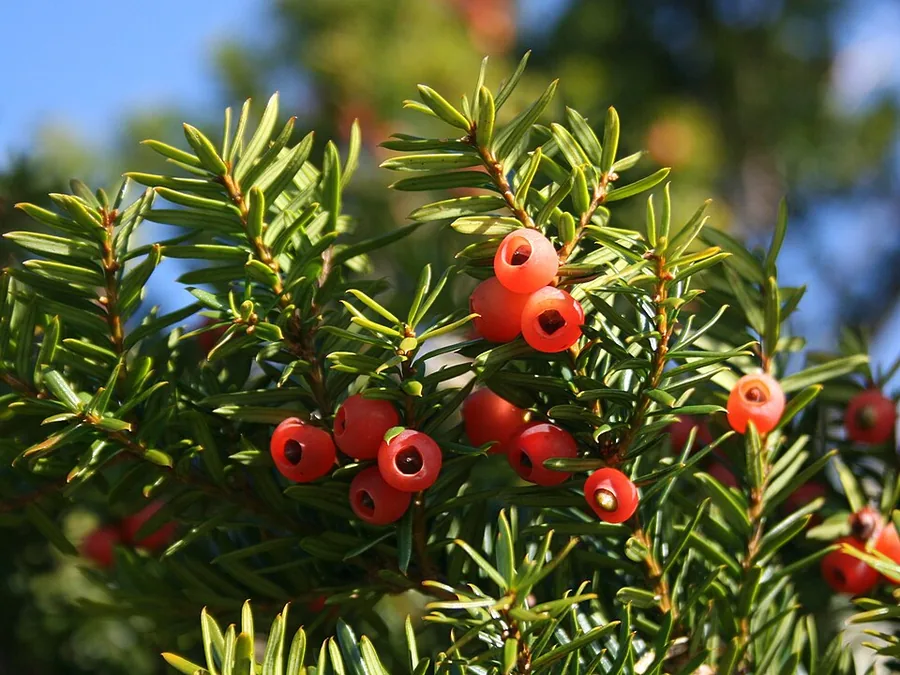
Overview
Japanese yew is a slow-growing evergreen conifer, and its dark green needles keep that color going all year long. Here's the fun part: it takes a haircut better than just about any other shrub, which is exactly why you'll spot it clipped into hedges, screens, and topiary all over cold-winter gardens. Hardy through zones 4 to 7, it laughs off both deep cold and deep shade.
But here's the thing that makes it tricky. Every part of it except the soft red aril is loaded with taxine alkaloids, a poison that goes right for the heart. The needles, bark, and seeds stay toxic whether they're fresh, wilted, or dried out ages ago, and the amount it takes to kill a horse or a child is honestly tiny.
So grow it where drainage is sharp and everyone knows how dangerous it is. It barely asks anything of you once it's settled and it'll live for decades, but it's got no business near pasture, paddock, or a play area, and those clippings can never end up somewhere an animal might reach.
Care
The short version: pop it into well-drained soil anywhere from sun to deep shade, water it until it settles in and then only when it's dry, give it a shear in early spring, and keep every part of it away from animals and children.
Light
Light? Yew is refreshingly easygoing about it. Japanese yew grows in full sun all the way to deep shade, though part shade is where it's happiest. That's the whole reason it does so well on the north side of a house where hardly anything else will.
Water
Keep the soil evenly moist but never soggy while a young plant is settling in, then mostly just water during dry spells once it's established. The real danger isn't drought here, it's the opposite, because standing water and heavy soil bring on fatal root rot. Let the top half of the soil dry out between drinks.
Soil
Give it moist, fertile, well-drained sandy or loamy soil and it won't ask for much else. A pH from 5.5 to 7.0 is perfectly fine, but drainage is the one thing you can't fudge. Yew has zero tolerance for wet ground and it'll just rot.
Temperature
It's a seriously cold-hardy evergreen, comfy anywhere from about -20°F to 95°F (-29°C to 35°C). Deep winter cold doesn't bother it a bit, though dry winter wind can scorch the needles on plants left out in the open.
Humidity
Average outdoor humidity is genuinely all it wants, so there's no number to fuss over. What helps way more is good air movement, which keeps that dense interior dry and pests at bay.
Feeding
A light touch is plenty. Work in some balanced slow-release fertilizer or composted organic matter in early spring and call it done, because this slow grower has no interest in heavy feeding.
Pruning
Yew is one of those rare conifers that shrugs off hard shearing and renewal pruning, even a cut back into old wood. Shape your hedges and topiary in early spring before the new growth pushes out. And never leave the clippings where an animal can get them, because they stay deadly long after they wilt.
Repotting
Yew's hardly ever grown in a pot, so repotting rarely comes up. When the roots start circling the pot, pushing out the drainage holes, or water just runs straight through, that's your cue to move it up a size or into the ground.
Size & spacing
Size really swings with the cultivar, from low spreaders all the way to columns hitting 4 to 25 feet (1.2 to 7.5 m) tall and spreading 5 to 25 feet (1.5 to 7.5 m) across. Check the tag on your variety and give it room to fill out without getting crowded.
When to plant
Yew is a woody evergreen, so there's no sowing season to keep track of, just a window for getting young plants into the ground. Set them out in spring or early fall while the soil's still workable and the roots have time to settle before real heat or hard frost. The flowers in spring are easy to miss, and female plants carry their red arils right into fall.
Northern hemisphere
Southern hemisphere
Typical months for a temperate climate: start earlier in warm zones, later where spring frosts linger.
- Plant: Spring or early fall
- Harvest: Inconspicuous spring; red arils on female plants in fall
Hardiness
USDA hardiness zones: 4–7
Temperature: down to -34°C
Troubleshooting
Good news: a healthy yew is about as trouble-free as they come, and most of what goes wrong traces back to wet feet, a rough winter, or a couple of pesky bugs. Get to know the early signs below and you can jump in before anything gets serious. Just match what you're seeing, then act while it still counts.
Yellow, browning foliage sitting over soft, dark roots
So the foliage is yellowing, then browning, and the whole plant looks like it's giving up? That's usually root rot, and it comes from soil that just won't drain. Yews really can't stand standing water, so a low or packed-down spot slowly drowns the roots until nothing's left to save. Move the plant somewhere that drains, back way off the watering, and toss anything that's already too far gone.
Fix:
- Improve drainage or relocate the plant to a well-drained site
- Reduce watering and avoid standing water
- Remove and discard severely affected plants
Bronzy brown needles on the windy side after a cold winter
Those brown, bronzed needles showing up on the windy side after winter? That's winter burn, and it's not a disease at all. Cold, dry wind and sun keep pulling moisture out of the needles while the frozen roots can't send any back up, so the exposed side dries out while the sheltered foliage stays green. Give it a deep soak in fall before the ground freezes, put up a burlap screen where the wind hits hardest, and once new shoots appear, snip off whatever died.
Fix:
- Water thoroughly in fall before the ground freezes
- Provide a windbreak or burlap screen in exposed sites
- Prune out dead foliage in spring once new growth resumes
Chewed, notched leaf edges while the plant slowly fades
See little C-shaped notches chewed into the leaf edges while the plant wilts and fades? That's the black vine weevil, and the sneaky part is that its grubs are down in the roots doing the real harm while the adults just snack on the leaves. Scale and mealybugs sometimes tag along and drain a plant that's already worn out. Go after the weevil at both the adult and grub stage, hit the scale with horticultural oil, and keep the plant strong with good drainage and steady care.
Fix:
- Treat for weevils targeting adults and larvae
- Control scale and mealybugs with horticultural oil
- Maintain plant vigor with proper drainage and care
Toxicity
Let's be clear, this plant is a serious hazard, not just a pretty shrub with an asterisk. Nearly every part of it holds taxine alkaloids that can stop the heart with little or no warning, and dried clippings stay just as lethal as fresh growth. It's killed cats, dogs, horses, livestock, and people, so keep it far from animals and kids and never plant it anywhere near pasture.
Toxic to
Cats · Dogs · Horses · Rabbits · Livestock · Birds · People
Cats Severe
Here's the hard truth: for a cat, even a nibble can be deadly. You might notice trembling, a wobbly walk, and trouble breathing before it collapses as the heart fails, and sometimes there's no warning at all.
Dogs Severe
If a dog chews any part of this, it's in real trouble. Drooling, vomiting, and muscle tremors can turn into seizures and a sudden cardiac arrest, often within just a few hours.
Horses Severe
Horses are incredibly sensitive to this, and one mouthful of foliage or clippings can kill in minutes. There might be trembling, a shaky walk, and a slowing heartbeat first, but plenty of horses are simply found already gone.
Rabbits Severe
The taxine alkaloids stop a rabbit's heart just as easily, and it doesn't take much at all. Keep every bit of the plant, fresh or dried, well out of reach.
Livestock Severe
Cattle, sheep, and goats are all too often found dead within hours of grazing yew or getting into dumped trimmings. The ones that hang on show trembling, hard breathing, and a sudden collapse as the heart quits.
Birds Severe
Birds can be poisoned by the needles and the seed, hitting the same cardiac collapse that gets other animals. Only the soft red aril flesh is safe, and no, the hard seed inside it isn't.
People Caution
This is honestly one of the most dangerous plants you could have around, and human deaths from eating the needles or seeds are well documented. The red aril flesh by itself is non-toxic, but the seed inside is deadly, so keep kids well away and never assume any green part is fine.
Never leave yew prunings or clippings where animals can reach them; wilted and dried clippings remain lethal. Keep all plant parts away from children, pets, horses, and livestock, and never plant near pasture or dump trimmings within animal reach.
Helpline numbers

United States
ASPCA Animal Poison Control: (888) 426-4435 (fee applies)
Poison Control: (800) 222-1222



Canada
Poison Centres: 1-844-764-7669
Varieties
Most of the yews you'll run into are Anglojap hybrids or close relatives, picked for their shape and their toughness in the cold. These are the ones you're most likely to meet.
Taxus × media 'Hicksii'
This Anglojap yew shoots up tall and columnar to about 20 feet, so it's a favorite whenever you need a real hedge or screen.
Taxus × media 'Densiformis'
It's a dense, low semi-dwarf that ends up wider than it is tall, settling in around 3 to 4 feet.
Taxus × media 'Hatfieldii'
This one's a male, fruitless cultivar with a broad pyramidal to columnar shape that gets to about 12 feet.
Taxus baccata (English yew)
It's the European parent behind the Anglojap hybrids, good-looking but not quite as cold-hardy as Japanese yew.
Taxus canadensis (Canada yew)
It's a low, spreading native from North America that's happy in deep shade and takes harder cold than most of the bunch.
How to propagate
Yew multiplies two ways, and neither one is quick. Cuttings are how nurseries keep a cultivar true, while seed is a slow, fussy path that's really only for the patient. Handle every part carefully at each step, since the whole plant's toxic.
Stem cuttingsModerate
Late summer to fall (semi-hardwood cuttings) · Several weeks to a few months to root
Cuttings are how you copy a named cultivar true to type, and it's the route most growers reach for. Take semi-hardwood cuttings in late summer or fall, then just settle in and wait, because yews are slow and roots can take anywhere from several weeks to a few months to show up.
SeedDemanding
Fall after cleaning seed from arils · Often a year or more due to deep dormancy
Growing from seed? That's a project for the patient. Clean the seed out of the red arils in fall and give it a long cold stratification to break its deep dormancy, and even then it comes up slow and uneven, often a year or more later. Handle the seed carefully, since it's highly toxic.
Myths
The red yew berries are safe to eat because birds eat them.
Easy mistake, but only the soft red aril, the fleshy cup around the seed, is actually non-toxic, and that's the part a bird usually passes right through. The hard seed inside is packed with taxine alkaloids, and so are the needles and bark. Swallow that seed and it can kill you, so it's smartest to treat the whole plant as hands-off.
Dried or wilted yew clippings are safe to feed or discard near animals.
Nope, drying doesn't touch the poison one bit. Wilted and dead clippings are every bit as lethal as fresh growth, and they're a common killer because that limp foliage tempts animals that would ignore the living plant. A lot of horse and livestock deaths trace right back to trimmings someone tossed over a fence.