Houseplant · Araceae
Pothos
Epipremnum aureum
Easygoing, quick to grow, and happy in a shadowy corner, pothos might be the hardest houseplant to kill.
Bright indirect
Every 7–14 days
70–90°F · 21–32°C
USDA 10–12
Overview
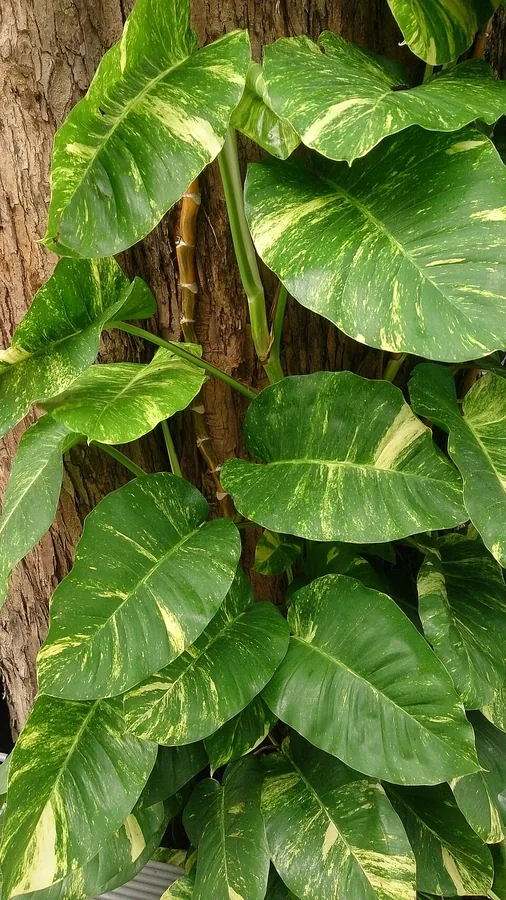
A member of the arum family, pothos hails from the South Pacific islands, where it climbs up tree trunks as a chunky-stemmed vine. Bring it inside and it softens up and trails instead, which is why so many people let it spill from a shelf or guide it up a pole. Between those heart-shaped leaves and its laid-back habit, it's become one of the most popular houseplants going.
The real draw is just how undemanding it is. It shrugs off low light, won't hold a missed watering against you, and keeps right on growing while pickier plants throw a fit. Pop it in a hanging pot and watch the vines tumble down, or pinch the stems and it'll bush out into a tidy mound instead.
Two things are worth flagging before you commit, though. The whole plant is toxic to cats and dogs, so it needs a home where nosy pets can't get at it. And in warm regions it turns invasive the moment it slips out of a pot, which is why it stays strictly indoors across most of the country.
Care
The short version: give it bright indirect light, even though it'll get by on a lot less, and only water once the top half of the soil feels dry. Pot it in a well-drained mix, keep it cozy and clear of cold drafts, and pinch the vines back whenever they start looking leggy.
Light
Pothos is happiest in bright indirect light, but here's the fun part: it'll also put up with medium light, partial shade, even a dim low-light nook. The plain green ones handle the darkest spots best of all. Just steer it clear of harsh direct sun, which will scorch the leaves.
Water
Hold off until the top half of the soil dries out, which tends to land somewhere around every 7 to 14 days. Nothing kills a pothos faster than soggy soil, so if you're unsure, just wait. And always dump out whatever water gathers in the saucer.
Soil
All it really wants is a well-drained peaty potting mix, and any ordinary houseplant blend will do the trick. Drainage is what counts here, because roots left sitting in wet soil rot in no time. Pick a pot with holes in the bottom and the plant handles the rest.
Temperature
Aim to keep it between 70°F to 90°F (21°C to 32°C), which matches most warm homes just fine. Frost is a hard no, and it'll sulk anytime things get chilly. Keep it away from cold drafts and any unheated rooms once winter rolls in.
Humidity
Ordinary indoor humidity works perfectly well, so there's no figure to fuss over. That said, it grows a touch lusher in damper air, which is part of why it thrives in a bathroom or kitchen. Really dry winter air, though, can crisp the leaf tips and bring on spider mites.
Feeding
Through the spring-to-fall growing season, feed it once a month with a diluted balanced houseplant fertilizer. Going with half the dose on the label is plenty. Back right off in winter, when the plant slows way down and hardly grows.
Pruning
Whenever the vines get too long or go bald near the base, just pinch or cut the stems back. Snip just above a leaf node and you'll coax out new side shoots that keep the plant nice and full. Bonus: every piece you trim is a free cutting you can root.
Repotting
Bump it up to a slightly bigger pot every 1 to 2 years, or sooner if it's clearly outgrown the one it's in. Roots looping around the rootball, sneaking out the drainage holes, or soil that dries out within a day are all signs it's ready. Only go up one size, so the new soil doesn't stay soggy.
Size & spacing
Grown indoors, the vines stretch 3 to 10 feet (90 cm to 3 m) long and fan out roughly 3 to 6 feet (90 to 180 cm) across. Leave a hanging plant plenty of room to trail, or run the vines along a wall or up a moss pole.
Troubleshooting
With pothos, most trouble begins down at the roots and turns up in the leaves, and overwatering is behind more of it than anything else by a wide margin. Catch the early hints and you can turn things around before the plant heads downhill. Find what matches below, then step in while it still does some good.
Mushy, dark roots with a foul smell
Of all the pothos problems, this is the one that can take a plant out quickly, and it happens when soil stays wet for too long. The culprit is overwatering in a mix that holds onto water. Pop the plant from its pot, snip off anything black and slimy, then settle it into fresh, well-drained mix before you water at all.
Fix:
- Unpot and trim rotten roots
- Repot in fresh well-drained mix
- Withhold water until recovery
Yellow leaves showing up first near the bottom of the plant
If your pothos leaves are going yellow, odds are it's overwatering and not a thirsty plant. Wet soil chokes the roots, so the bottom leaves fade first. Wait until the surface feels dry before you water again, and make sure the pot can drain so nothing pools down below.
Fix:
- Reduce watering frequency
- Check pot drainage
- Let soil surface dry before watering
White cottony fluff in the leaf joints
See little white tufts wedged where the leaves meet the stems? Those are mealybugs, a sap-feeding pest that loves indoor pothos. Touch each one with an alcohol-dipped cotton swab, then go over the plant with insecticidal soap. Park it away from your other plants until you're sure they're gone.
Fix:
- Dab with alcohol-soaked swab
- Apply insecticidal soap
- Isolate plant
Small brown bumps stuck along the stems
Those firm brown bumps gripping the stems and leaves are scale insects, and they won't wipe away because a waxy shell shields them. Pick them off with a fingernail or an old toothbrush, then give the plant a coat of horticultural oil. A single pass seldom does it, so plan to treat again a week or two down the road.
Fix:
- Scrape off scale
- Apply horticultural oil
- Repeat treatment
Fine webbing and a speckled, dusty look
Wispy webbing on the leaves plus a stippled, faded surface usually means spider mites, and they love it when the air turns hot and dry. Give the foliage a thorough rinse to knock them down, then make the air around the plant more humid. Anything still clinging on will give way to insecticidal soap or a miticide.
Fix:
- Rinse foliage
- Raise humidity
- Apply insecticidal soap or miticide
Leaves picking up dark speckles or a fuzzy gray film
Dark patches or a gray, fuzzy film on the leaves mean a fungus has moved in, usually thanks to wet foliage and stale air. Snip off the leaves that are affected so it can't travel any further. Then open up some space around the plant for better airflow, and aim your water at the soil instead of the leaves.
Fix:
- Remove affected leaves
- Improve air circulation
- Avoid wetting foliage
Tips and edges of the leaves turning brown and crunchy
Crispy edges are usually a watering story, and overwatering tends to blacken the margins more than a dry spell does. Cold drafts and parched indoor air pile on too. Steady your watering routine, shift the plant away from cold glass and heating vents, and add a little moisture to the air around it.
Fix:
- Correct watering
- Keep away from drafts and cold
- Raise ambient humidity
New leaves coming in solid green
Notice the cream and gold disappearing from fresh growth? That's your plant asking for brighter conditions. With too little light, a variegated pothos drops the pattern and reverts to plain green so it can soak up whatever it can. Set it somewhere brighter but still shy of direct sun, and the new leaves will hold their markings again.
Fix:
- Move to brighter indirect light
Toxicity
Pothos is a breeze to live alongside, but it's definitely not something to chew on. Every bit of it holds tiny needle-shaped crystals of calcium oxalate that burn the mouth and throat. Keep the vines, and any cuttings you trim, away from pets and curious little kids.
Toxic to
Cats · Dogs · Horses · Rabbits · Livestock · Birds · People
Cats Moderate
Bite into a leaf and a cat ends up with a mouthful of tiny sharp crystals. Watch for drooling, pawing at the face, throwing up, and a hard time swallowing.
Dogs Moderate
It plays out for dogs just like it does for cats: a stinging mouth, lots of drool, and vomiting after a nibble. Happily, most won't go back for seconds once they've tried it.
Horses Moderate
Those same crystals leave a horse's mouth and throat sore, so you'll see drooling and swallowing trouble. Hang trailing vines well out of reach in any barn or stable.
Rabbits Toxic
A rabbit's mouth and gut take just as harsh a hit from the crystals. Keep your pots and trailing vines far from anywhere a rabbit can nose around.
Livestock Moderate
Cows, goats, and sheep all get that same sore mouth and throat from chewing the sap and leaves. Best to keep the plant nowhere near grazing animals.
Birds Toxic
The sap burns a bird's mouth and crop, plain and simple. Keep pots and dangling vines clear of pet birds and any poultry.
People Caution
Nobody eats this plant, and the sap stings on bare skin and in the mouth. Give your hands a wash after pruning, and keep leaves and cuttings out of little ones' reach.
Sap may irritate skin; wash hands after pruning
Helpline numbers

United States
ASPCA Animal Poison Control: (888) 426-4435 (fee applies)
Poison Control: (800) 222-1222



Canada
Poison Centres: 1-844-764-7669
Varieties
Nearly all the pothos you'll find for sale belong to a small group of named forms, and what tells them apart is how their leaves are colored and patterned. Here are the ones worth knowing by name.
Golden Pothos
You'll know the classic by its heart-shaped green leaves dappled with splashes of golden yellow.
Marble Queen
So much white and cream marbling covers its leaves that it grows slower than its cousins.
Neon
Skip the variegation entirely with this one and you get glowing chartreuse green leaves instead.
Jade
If you like it simple, Jade offers deep green leaves with barely any marbling to speak of.
Pearls and Jade
Born as a sport of Marble Queen, it wears green leaves trimmed in white and silvery gray.
How to propagate
When it comes to making more plants, pothos couldn't be easier, and one healthy vine can hand you several new plants for nothing.
Stem cuttingsEasy
Year-round, spring to summer best · Roots in 3-4 weeks
Want the simplest route? This one works any time of year, though you'll see things move quickest in spring and summer. Cut a piece of vine just under a node and set it in a glass of water or a pot of damp vermiculite. Roots usually appear in about 3 to 4 weeks, and your new plant takes off from there.
Air layeringModerate
During active growth · Several weeks
If you've got a long, mature vine you'd rather not chop, air-layering rewards a little patience. Do the work while the plant is in its active growing season so the stem can root while it's still joined to the parent. Give it several weeks to put out roots before you cut the new plant free.
Myths
That pothos in the corner is scrubbing your room's air.
Here's the catch: those famous studies ran inside sealed chambers, not actual living rooms. When researchers reviewed the science, they found a potted plant barely budges the air in a normal home, where open windows and the furnace shift way more of it. You'd need hundreds of plants per square yard to do what one cracked window does.
Pothos grows fine with no light at all.
Sure, it's famously tough and will hang on in a gloomy corner, but it can't survive on nothing. Park it in deep shade and growth crawls while the variegation slips away. Set it where bright indirect light reaches and it stays full and patterned.
A variegated pothos does fine with whatever light suits a green one.
Those creamy white patches carry no chlorophyll, which means a variegated plant has to hustle harder to feed itself. Stick it in the same dim corner you'd give a solid green one and the new leaves arrive plain. Bright indirect light is what keeps the variegation alive.
Pothos won't do any harm to a curious cat or dog.
Truth is, the whole plant is packed with sharp calcium oxalate crystals that sting the second a pet chomps down. That's exactly why the ASPCA flags pothos as toxic to both cats and dogs. If animals roam the room, hang it somewhere they simply can't reach.
It's fine to stick pothos in the garden wherever you live.
Not so in warm climates, where escaped vines scramble up trees and choke out native plants. UF/IFAS has it pegged as a Category II invasive in Florida and tells homeowners to keep it out of the landscape. Stick to a pot, where the cold or four walls will keep it in line.
Sources
- ASPCA Animal Poison Control
- NC State Extension Plant Toolbox
- Missouri Botanical Garden Plant Finder
- University of Wisconsin-Madison Division of Extension
- UF/IFAS Extension Charlotte County
- UF/IFAS Assessment of Non-native Plants
- Drexel University (Cummings & Waring, J. Exposure Science & Environmental Epidemiology)
- Royal Botanic Gardens Kew, Plants of the World Online