Houseplant · Araceae
Satin Pothos
Scindapsus pictus
Keep it in bright, indirect light and a warm spot, and those silvery leaves will trail along happily for years.
Bright indirect
61–84°F · 16–29°C
USDA 11–12
3–10 ft · 0.9–3 m
Overview
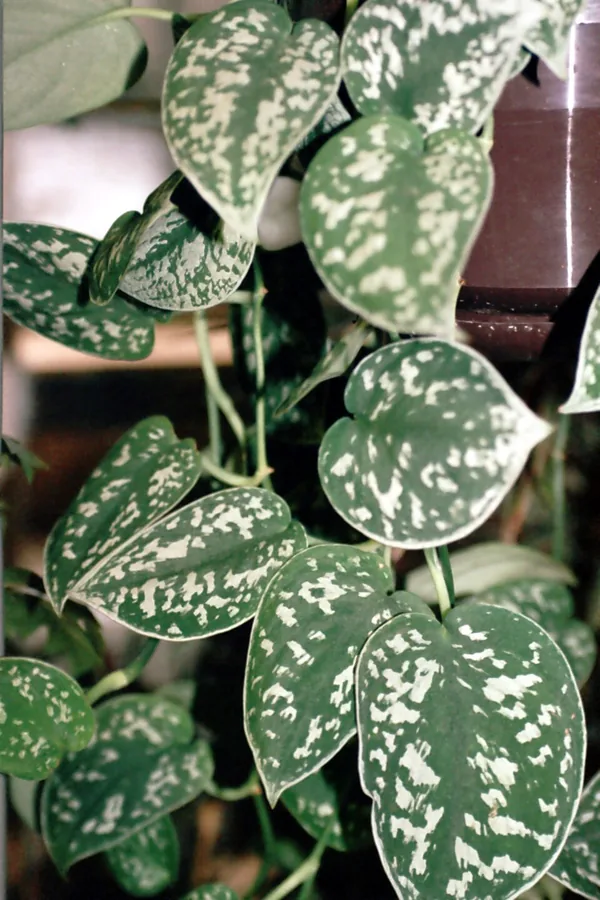
So what's with the name? Satin pothos gets it from leaves that look dusted with silver over a deep, glossy green. It's part of the arum family and comes from the tropics of Southeast Asia, where it scrambles up tree trunks toward the light. At home, it's just as happy spilling off a shelf or a hanging pot.
Here's the twist, though: it isn't actually a true pothos. It's Scindapsus pictus, a close cousin that just happens to share the look and the laid-back attitude. The older leaves get thick and a little bumpy, and the silver really pops when the plant's sitting in bright, indirect light.
The whole game here is watering. Keep it warm, keep it out of blazing sun, and let the top of the soil dry out before you water again, and you'll get long, leafy vines for your trouble. Go overboard with the watering, though, and the roots are the first thing to give out.
Care
The short version: bright, indirect light and a warm room that stays above 61°F (16°C). Keep the soil evenly moist but not soggy, use a peaty mix that drains well, and feed it once a month through spring and summer.
Light
Give it bright, indirect light and the silver markings stay nice and crisp. It'll manage in partial shade, sure, but the patterns go dull and growth crawls, and direct sun? That'll scorch the leaves, so skip it.
Water
Keep the soil evenly moist but not soggy, and let the top dry out a bit before the next round. Come winter, growth slows way down, so ease off the watering. Leaving it to sit in wet soil is the quickest way to rot the roots, so don't.
Soil
Go with a peaty, organic mix that drains well, ideally a little acidic at a pH up to 6.0. Loose, airy soil lets the water run right through, which keeps the roots from sitting in a puddle.
Temperature
Warm is the name of the game, somewhere between 61°F and 84°F (16°C to 29°C). Cold really isn't its thing, and the leaves start to suffer once it dips below the low end of that range, so keep it clear of drafty windows.
Humidity
Regular household humidity works just fine, so there's no number to stress about. That said, it likes a bit more moisture in the air when it can get it, and dry winter air is often what brings spider mites around.
Feeding
Through spring and summer, when it's actively growing, feed it a balanced houseplant fertilizer once a month. Once the darker months roll in, just stop, because it isn't really using the food anyway.
Pruning
Pinch the stems back here and there to keep it looking tidy and to nudge it into growing fuller. Bonus: whatever you trim off a long vine can turn into a new cutting.
Repotting
Bump it up a pot size every 1 to 2 years, or sooner if roots start sneaking out the drainage holes and water zips straight through. A little fresh mix and some extra room, and it's good to keep growing.
Size & spacing
Left to climb or trail, the vines can hit 3 to 10 feet (90 cm to 3 m) long and spread out 2 to 4 feet (60 to 120 cm) wide. Give the stems somewhere to dangle, or something to climb, and they'll do their thing.
Troubleshooting
Honestly, most of what goes wrong here comes down to watering or a pest that snuck in on another plant. The leaves usually give you a heads-up early, so a quick look now and then pays off. Find what matches below and sort it while it's still easy.
Dark mushy roots and a nasty smell
When the soil stays soaked and the roots can't breathe, you end up with root rot. Slide the plant out, snip off anything dark and mushy, and repot into dry, well-draining mix. From there, water less and let things dry out between drinks, because this one gets bad fast.
Fix:
- Remove rotted roots
- Repot in dry well-draining mix
- Reduce watering
Leaves going soft and yellow
Soft yellow leaves sitting over wet soil? That's usually overwatering, and bad drainage just makes it worse. Let the top of the soil dry out before you water again, and get it into a pot that actually drains. If the roots are already struggling, repot into fresh mix and go easy on the water for a while.
Fix:
- Reduce watering
- Improve drainage
- Repot in fresh mix
Fine webbing and a dusty, bronzed look
Hot, dry air is basically an invitation for spider mites, which leave fine webbing and a stippled, bronzy tint on the undersides of the leaves. Blast the foliage with water to knock them loose, then hit it with insecticidal soap or horticultural oil and repeat every week until they're gone. Bumping up the humidity makes the plant a lot less appealing to them.
Fix:
- Rinse forcefully with water
- Apply insecticidal soap or horticultural oil
- Repeat weekly
White fuzzy tufts and sticky spots
Those little white, fuzzy clumps in the leaf joints? Those are mealybugs, and the sticky honeydew nearby confirms it. Touch each one with an alcohol-soaked swab, follow up with insecticidal soap, and cut off anything that's really covered. And give new plants a once-over before they mingle with the rest.
Fix:
- Dab with alcohol swab
- Apply insecticidal soap
- Prune infested parts
Waxy little bumps stuck on the stems
See waxy little bumps clinging to the stems and leaves that barely budge? That's scale insects. Scrape them off by hand, wipe the spot with an alcohol swab, and finish with insecticidal soap or oil to get the young crawlers. Checking new plants first keeps them from turning up at all.
Fix:
- Scrape off by hand
- Wipe with alcohol swab
- Apply insecticidal soap or oil
Dark spots or fuzzy gray mold
Brown-black spots or a fuzzy gray mold usually mean fungal leaf spot or botrytis, and both love wet leaves and stale, still air. Pull off the leaves that are affected, keep water off the foliage, and get some air moving around it. Watering down at the soil and giving it a little breathing room keeps it from coming back.
Fix:
- Remove affected leaves
- Avoid wetting foliage
- Improve airflow
Leaves curling up and drooping
Curled, droopy leaves over dry soil just mean it's thirsty. Give it a proper soak until water runs out the bottom, then try to keep things more consistent. The leaves usually perk back up once the roots have had a chance to drink.
Fix:
- Water thoroughly
- Maintain even moisture
Silvery streaks with tiny black dots
Silvery streaks flecked with tiny black dots are a classic sign of thrips. Treat the plant with insecticidal soap, put out some blue sticky cards to catch the adults, and rinse the leaves to clear off the stragglers. Keep anything new separate for a bit so they don't spread.
Fix:
- Apply insecticidal soap
- Use blue sticky cards
- Rinse foliage
Toxicity
Here's the not-so-fun part: this one isn't pet-friendly. Every bit of it holds insoluble calcium oxalate crystals, and they sting and swell the mouth the second something bites in. Nothing on this plant is meant to be eaten, so keep it well out of reach of pets and little kids.
Toxic to
Cats · Dogs · Horses · Rabbits · Livestock · Birds · People
Cats Moderate
If a cat bites a leaf, it gets a nasty little sting from the calcium oxalate crystals. You'll probably see drooling, pawing at the mouth, some vomiting, and a puffy muzzle pretty quick after.
Dogs Moderate
A dog that chews on it feels its mouth burn right away, usually with drooling, gagging, and some obvious swelling around the lips and tongue.
Horses Moderate
Those same crystals bug a horse's mouth and throat too, so expect heavy drooling and swelling, though horses don't tend to throw up.
Rabbits Toxic
These leaves aren't something a rabbit should be nibbling, since the crystals irritate the mouth and gut. Keep any trailing stems well up and out of a curious bunny's way.
Livestock Toxic
Grazing animals that get a mouthful run into the same burning and stomach upset, so it's best to treat the plant as totally off-limits around them.
Birds Toxic
A bird pecking at the leaves can hurt its mouth and crop on the crystals, so it's smart to keep the plant away from wherever birds hang out.
People Caution
None of this plant is food, and a bite leaves you with burning lips, a swollen tongue, and drooling. Wash your hands after pruning, and keep it somewhere little kids can't grab it.
Chewing sap causes oral irritation; wash hands after handling
Helpline numbers

United States
ASPCA Animal Poison Control: (888) 426-4435 (fee applies)
Poison Control: (800) 222-1222



Canada
Poison Centres: 1-844-764-7669
Varieties
Want a particular look? A few named types each bring their own leaf shape and silver pattern, and these are the ones you'll usually run into.
'Argyraeus'
It's the one with small leaves trimmed in silver-white and freckled with gray blotches.
'Exotica'
This one's got bigger, heart-shaped leaves splashed with bold silver.
'Silvery Ann'
Look for narrow, lance-shaped leaves drenched in heavy silver splotches.
Shimmering Falls Silver Splash
It wears dense silver mottling that runs all the way across the leaves.
How to propagate
Good news if you'd like more of these: it's about as easy as propagation gets, and one healthy cutting is really all you need to start.
Stem cuttingsEasy
Spring or early summer · Roots in a few weeks
Snip a 4-inch (10 cm) piece of stem in spring or early summer and pop it in water or a pot of moist mix. Give it a few weeks and roots will show up, and just like that you've got a new plant that's identical to the one you took it from.
Myths
Satin pothos is a real pothos.
Nope, the name's a bit of a trick. This is Scindapsus pictus, from the genus Scindapsus, while true pothos belongs to Epipremnum. They look and act so much alike that people mix them up all the time, but they're different plants.
Satin pothos is fine around pets.
Afraid not. The ASPCA lists it as toxic to cats, dogs, and horses, thanks to those insoluble calcium oxalate crystals in its tissue that burn and swell the mouth on contact. Best to keep it well away from animals.
It's happy in deep shade or low light.
It'll put up with low light, but it won't exactly thrive there. To keep those silver markings bright, it wants plenty of indirect light, and direct sun is the other extreme that just scorches the leaves.
It can handle the cold.
Not really, it's a tropical plant through and through. The leaves get damaged below about 61°F (16°C), so keep it in a warm room and away from any cold drafts.