Ornamental · Rubiaceae
Sweet Woodruff
Galium odoratum
Give it cool, moist shade and this fragrant carpet pretty much takes care of itself.
Full shade
Every 3–7 days
USDA 4–8
6–12 in · 15–30 cm
Overview
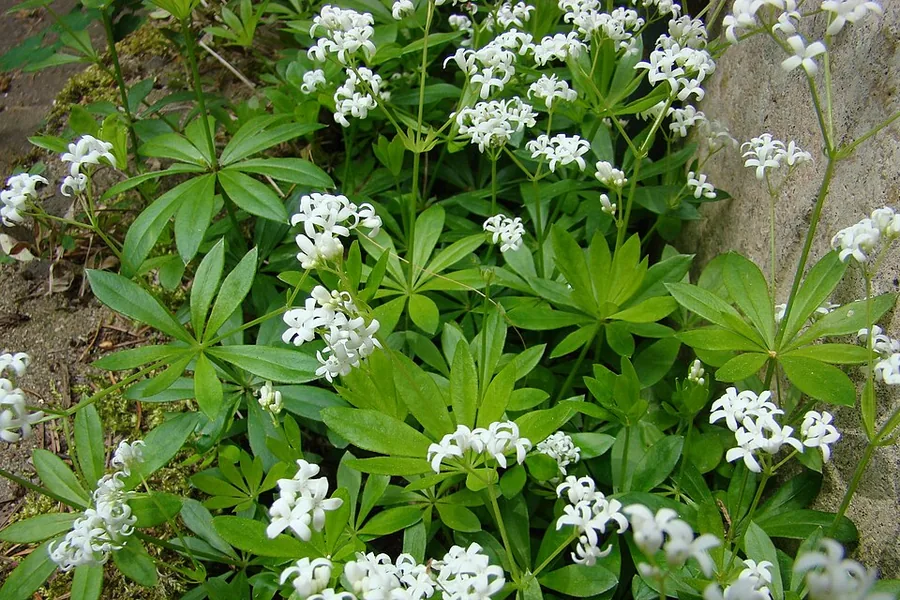
Sweet woodruff is a low groundcover that is genuinely happy in cool shade, filling in those spots where not much else wants to grow. It is part of the Rubiaceae family, and its skinny leaves sit in neat little whorls around square stems, with small white star-shaped flowers popping up in late spring. Give the foliage a crush or let it dry, and you will get a sweet smell like fresh-cut hay, which is why folks have kept it in herb gardens forever.
Plant it in dappled shade under a tree or against a shady north wall, and it will fill in to a thick, even mat in a single season. It gets around by creeping rhizomes and by seeding itself, which is great for covering ground but does mean it likes to wander, so a bit of edging keeps it neighborly where space is tight. Stick it in hot, dry sun, though, and it will scorch and take the summer off.
This is about as low-drama as plants get, with no serious pests or diseases as long as it is in the cool, moist, humus-rich soil it likes. The one catch? The coumarin in its leaves, which is the same thing that makes it smell so nice. A small amount goes into that traditional German May wine, but a big helping just is not safe to eat.
Care
The short version: cool, moist, humus-rich shade and soil that is a touch acidic. Water it when things dry out, barely bother feeding it, and pop in some edging if you would rather it stayed put.
Light
Pop it in full to partial shade, the kind of dappled light you get under a tree. It will handle a bit of morning sun, but hot, dry, full sun will scorch the leaves and send it into an early nap, so when in doubt, go shadier.
Water
Try to keep the soil cool and evenly moist, which usually means watering it about every 3 to 7 days when things get dry. Once it is settled in it can cope with dry shade, but it looks its best where the ground never fully dries out.
Soil
It likes humus-rich, well-drained loam that is a little on the acidic side, somewhere around a pH of 5.0 to 6.5. Mix in some leaf mold or compost and it will spread away happily.
Temperature
It is a tough one, handling cold down to about -29°F (-34°C) and doing fine up to roughly 84°F (29°C). Beyond that, in dry heat, it will scorch and just wait things out until it cools off again.
Humidity
Regular outdoor humidity is all it is after, so there is no number to fuss over. In crowded, stuffy spots, what really counts is good airflow, because still, damp pockets can bring on the odd leaf spot.
Feeding
It is a light eater that hardly needs feeding at all. A thin spring topdressing of compost or leaf mold does the trick, and going overboard just fuels the spreading you are probably already trying to rein in.
Pruning
Pruning could not be simpler. After it flowers, shear or mow it back to tidy up any ragged or scorched leaves, freshen the mat, and keep it from sprawling too far, all in one go.
Repotting
If it is in a pot, plan to divide and repot it every 1 to 2 years as the rhizome mat fills things up. Roots circling the container, a thin patch in the middle, or a mat spilling over the edge are your cues that it is time.
Size & spacing
It stays nice and low at 6 to 12 inches (15 to 30 cm) tall while sprawling out sideways. Each plant covers around 12 to 24 inches (30 to 60 cm), so space them roughly that far apart and let them grow together.
When to plant
Sweet woodruff likes to follow the cool weather. Sow seed in late winter to early spring after it has had a cold spell, plant divisions in spring or early fall while the soil is still moist, and keep an eye out for those white flowers in late spring.
Northern hemisphere
Southern hemisphere
Typical months for a temperate climate: start earlier in warm zones, later where spring frosts linger.
- Sow: Late winter to early spring; seed germinates slowly and benefits from cold stratification
- Plant: Spring or early fall in shade
- Harvest: White star-shaped flowers in late spring (April to May)
Hardiness
USDA hardiness zones: 4–8
Temperature: down to -34°C
Troubleshooting
Good news: sweet woodruff does not cause much drama, and when it does, it usually comes back to where it is planted. Keep half an eye on the edges for wandering and on the leaves for sunburn, and you are set. Spot your issue below and tweak things early.
Wandering off well past where you put it
Sweet woodruff gets around by creeping rhizomes and by seeding itself, and in the cool, damp shade it loves, it will happily march right into the beds next door. The trick is to put in some edging or a root barrier before it really gets going, then dig out any strays by loosening the soil and lifting the runners whole, since those brittle stems snap if you just pull. A quick shear after it blooms stops it seeding itself even further.
Fix:
- Install a physical root barrier or plant in a contained bed or sunken edging
- Dig out unwanted rhizomes by loosening the soil and lifting them whole rather than pulling stems, which break easily
- Deadhead or shear after flowering to limit self-seeding
Brown, crispy leaves and a patch that is thinning
Brown, crispy foliage is usually leaf scorch, and it means the plant is sitting in hot, dry sun instead of the cool shade it wants, sometimes to the point of going semi-dormant for the summer. Move it into part or full shade, mulch to keep the soil cool, and water it through the dry patches. Trim off the burnt bits and fresh growth comes back once things cool down.
Fix:
- Move or establish plants in part to full shade
- Keep soil cool and evenly moist with mulch and supplemental water in dry spells
- Cut back scorched foliage to encourage fresh regrowth once conditions cool
Spotty leaves in a crowded, stuffy spot
Once in a while you will see a fungal leaf spot show up where the air is stuffy and the leaves stay wet. Easy fix: thin out the crowding so air can move, water at the base instead of over the top, and clear away the spotty leaves. Put it somewhere sensible and sweet woodruff really does not get any serious pests or diseases.
Fix:
- Improve air circulation by thinning crowded growth
- Avoid overhead watering and water at soil level
- Remove and discard affected foliage
Toxicity
So is it dangerous? Not really, but it is not a snack food either. The leaves carry coumarin, the stuff behind that sweet smell, and a little of it flavors May wine just fine. Eat a lot, though, and it can thin the blood, wear on the liver, and make you dizzy, so keep the big helpings away from pets, livestock, and people.
Toxic to
Cats · Dogs · Horses · Rabbits · Livestock · Birds · People
Cats Caution
A nibble here and there probably will not do much, but the coumarin in the leaves makes a big mouthful a bad idea. If a cat eats more than a leaf or two, keep an eye out for a queasy stomach or a sleepy, out-of-sorts pet.
Dogs Caution
A little bite usually goes down fine, but that coumarin can thin the blood and stress the liver if a dog really tucks in. Do not let one graze a whole patch, and give the vet a ring if a big amount disappears.
Horses Caution
A taste mixed in with the pasture is no big deal, but a large mouthful of the coumarin-rich leaves can lead to bleeding trouble and leave a horse looking dull and off.
Rabbits Caution
A small nibble is generally okay, though the coumarin means it should not become a regular thing. Just hand over the occasional sprig instead of letting a rabbit make a meal of it.
Livestock Caution
Cattle, goats, and sheep can nibble a bit without any harm, but a big feed of the fresh or dried leaves ramps up the risk of internal bleeding and liver strain thanks to the coumarin.
Birds Caution
Birds usually are not that interested, and a peck or two is nothing to sweat over. What you want to avoid is them feeding steadily on the coumarin-carrying leaves.
People Caution
A little bit flavors May wine and teas just fine, which is its old kitchen trick. Eat a lot of it, though, and the coumarin can bring on liver damage, bleeding, and dizziness, so keep the servings small.
Foliage contains coumarin, the compound behind its sweet, fresh-cut-hay scent (which intensifies as it dries). In large quantities coumarin can have blood-thinning (anticoagulant) effects and cause liver issues, and the FDA prohibits coumarin as a food additive, so only small culinary amounts are traditionally used and large quantities should not be eaten.
Helpline numbers

United States
ASPCA Animal Poison Control: (888) 426-4435 (fee applies)
Poison Control: (800) 222-1222



Canada
Poison Centres: 1-844-764-7669
Varieties
There is not a lot to pick between here, honestly. Almost everyone just grows the plain species and calls it a day.
Galium odoratum (straight species)
Pretty much everyone grows the plain species, since there are not many named cultivars around and it used to go by the older name Asperula odorata.
How to propagate
Want more of it? Easy. Split a clump you have already got, or just let it seed itself around, and you will have new plants without much trouble.
DivisionEasy
Spring (or any time in the growing season if kept moist until established) · A few weeks to a season
Division is the easy way to get more, hands down. Come spring, dig up the rhizomatous clumps, pull them apart, and replant the pieces somewhere shady and moist, where they will knit back together in anywhere from a few weeks to a season.
SeedModerate
Late winter to early spring; benefits from cold stratification · One or more seasons; germination is slow
It self-seeds all on its own without any help, but growing it from seed on purpose does take some patience. Sow in late winter to early spring after a cold spell, and do not be surprised by slow, patchy germination that can drag on for a season or more before it fills in.
Myths
Sweet woodruff flavors May wine, so it must be totally fine to eat as much as you like.
Not so, it is only safe in small cooking amounts. The leaves hold coumarin, which in big doses can thin the blood and hurt the liver, and the FDA will not allow coumarin as a food additive. So use just a little for flavor and do not go eating it by the bowlful.