Shrub · Rubiaceae
Coffee
Coffea arabica
Give it warmth, bright indirect light, and humid air, and the coffee plant turns into a glossy evergreen that might just hand you its own cherries someday.
Bright indirect
Every 5–7 days
59–82°F · 15–28°C
USDA 10–11
Overview
So what exactly is a coffee plant? It's a tropical evergreen from the highland forests of Africa, where it grows in the dappled shade under bigger trees. Out in the wild it can shoot up to the size of a small tree, but indoors and in the garden it stays a neat, glossy-leaved shrub. And here's the nice part: the same plant that fills the world's mugs makes a great houseplant well before it fruits.
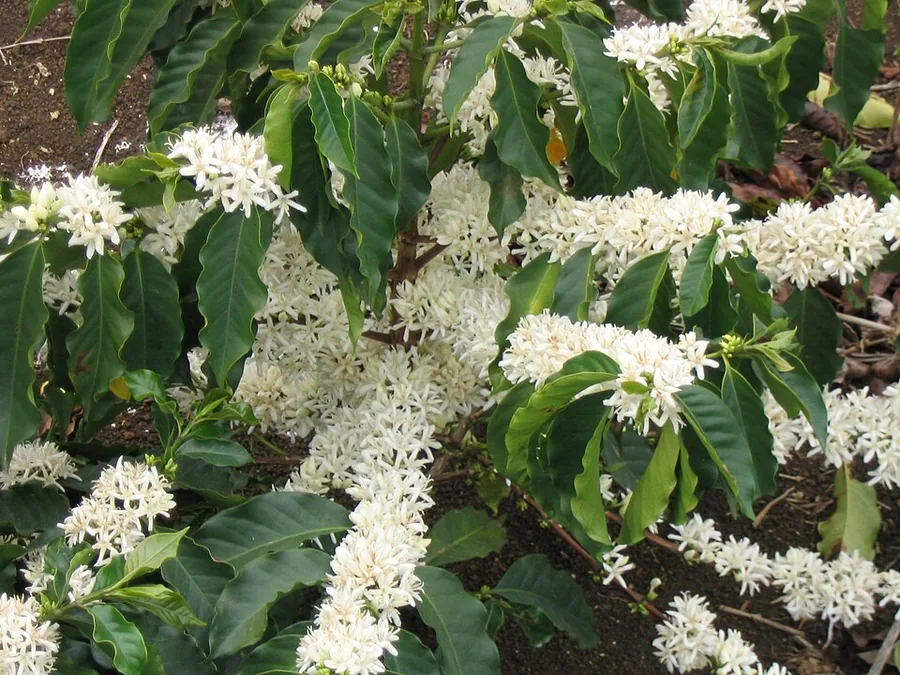
At home, coffee's really grown for those deep green, waxy leaves more than for any beans. Give it enough warmth and a bit of patience, though, and it'll throw out fragrant white flowers, followed months later by red cherries holding the seeds you know as coffee beans. Fruit usually doesn't show up until the plant is 3 to 4 years old, so for most folks the foliage is the real prize.
It does ask for a few specific things, and it pays you back when you nail them. Steady warmth, humid air, and bright light through a curtain keep it happy, while cold drafts and harsh sun knock it back quickly. Match its forest beginnings and it'll stay lush for years.
Care
The short version: bright indirect light, warmth above 60°F (16°C), humid air, and soil kept evenly moist but never soggy, plus a monthly feed through the growing season.
Light
Coffee loves bright, indirect light, the kind that comes through a sheer curtain or sits about an arm's length from a sunny window. It'll cope with partial shade or partial sun, but hot direct rays will scorch the leaves, so steer clear of those. Basically, give it the brightest spot that won't burn it.
Water
Keep the soil evenly moist but never soggy, watering roughly every 5 to 7 days and backing off in winter. Let the top dry out a little between waterings, then water until it runs out the bottom. And whatever you do, don't let the roots sit in water, since that's the fastest way to yellow leaves.
Soil
Go with an organically rich, well-drained loam that's a touch acidic, around a pH of 6.0 to 6.5. A peat-based mix with some extra perlite holds the moisture coffee likes but still drains nicely. Honestly, good drainage is what keeps the roots happy.
Temperature
Shoot for 59°F to 82°F (15°C to 28°C) and keep it warm and steady all year. Cold's the real worry here, since drafts and anything near 50°F (10°C) can bring on sudden leaf drop. So keep it well away from chilly windows once winter rolls in.
Humidity
This one's a humidity fan and does best at 50% to 80%. In a dry room the leaf edges go crispy, so group it with other plants, set it over a pebble tray, or run a little humidifier nearby. The more tropical the air, the better it'll look.
Feeding
Feed it monthly through spring and summer while it's actively growing, using a balanced or acid-loving liquid fertilizer. Ease off in the cooler months when things slow down. A light, regular feed really does beat the odd heavy one.
Pruning
Prune in spring to keep the height and shape under control, because left alone it can get pretty tall. Pinch the growing tips and you'll push more side branching and a fuller, bushier shape. That regular tip pinching is what keeps a young plant nice and dense.
Repotting
Bump it up a pot every 2 to 3 years in spring, or sooner if it seems cramped. Roots poking out the drainage holes, growth that stalls, and soil that dries out almost overnight all mean it's outgrown its home. Just go up one pot size at a time.
Size & spacing
Kept pruned indoors, coffee stays a manageable shrub, but let it run and it'll hit 5 to 10 feet (1.5 to 3 m) tall with a spread of 3 to 6 feet (90 to 180 cm). Leave a bit of room for air to move around the canopy, which helps keep pests and fungal stuff at bay.
When to plant
Indoors there's no real planting season, since coffee just keeps growing year-round as long as it's warm. In the ground it only works in the frost-free tropics of zones 10 and 11, and you'd set it out after the cold's well and truly gone. Flowers turn up in spring and summer, and then the cherries take about 6 to 9 months to ripen.
Northern hemisphere
Southern hemisphere
Typical months for a temperate climate: start earlier in warm zones, later where spring frosts linger.
- Sow: year-round in warm conditions above 70°F using fresh seed
- Plant: after all frost danger has passed; year-round outdoors in zones 10-11
- Harvest: fragrant white flowers in spring/summer; red cherries ripen about 6-9 months later, usually once the plant is 3-4 years old
Hardiness
USDA hardiness zones: 10–11
Temperature: down to -1°C
Troubleshooting
Most coffee trouble comes down to light, water, or temperature wandering out of the range this forest plant likes. The leaves are usually the first to tell you something's off, browning, yellowing, or dropping depending on what's going on. Just match what you're seeing below and tweak things before a little hiccup turns into a bare stem.
Browning leaf tips and burnt-looking patches
Those brown, crispy edges? That's leaf scorch, and it tends to show up when hot direct sun meets dry air. Coffee grew up under a forest canopy, so harsh light just burns the leaves. Move it into bright indirect light, bump up the humidity around it, and the new growth will come back in clean.
Fix:
- Move to bright indirect light or filtered shade
- Raise humidity by grouping plants or using a humidity tray
The bottom leaves going yellow
If the lower leaves go yellow while the soil's still wet, that usually means overwatering, with the roots stuck in soggy ground. Coffee wants steady moisture, not a swamp. So water less often, make sure the pot drains freely, and tip out whatever's sitting in the saucer.
Fix:
- Reduce watering frequency
- Ensure the pot drains freely and empty the saucer
Leaves suddenly dropping once it gets cold
A sudden round of dropping leaves is usually cold-shock leaf drop, and it tends to follow a draft or a chilly night near 50°F (10°C). This is a warmth-loving tropical, and it really doesn't like the cold. Move it somewhere snug above 60°F (16°C) and keep it away from cold windows and doors.
Fix:
- Move the plant to a warm spot above 60°F
- Keep away from cold windows and doors
Sticky spots, fuzzy white bits, or dull leaves
Sticky residue, little cottony tufts, or dull speckled leaves? Those are the signs of sap-sucking pests like scale, mealybugs, or spider mites. Take a look under the leaves and along the stems for bugs, sticky honeydew, or fine webbing. Wipe them off, treat with insecticidal soap or horticultural oil, and keep the plant on its own until it's clean.
Fix:
- Wipe off pests and treat with insecticidal soap or horticultural oil
- Isolate the plant until controlled
Toxicity
Here's the one thing to take seriously: keep this plant away from animals. Every part of it holds caffeine and related methylxanthines, from the leaves to the cherries to any spent grounds lying around, and that stuff is genuinely toxic to cats, dogs, horses, and more. Sure, the roasted bean makes your morning coffee, but the raw plant is no treat for pets or curious kids.
Toxic to
Cats · Dogs · Horses · Rabbits · Livestock · Birds · People
Cats Severe
Just a nibbled leaf or a few beans can leave a cat vomiting and wired, with a racing heart and trembling that might build into seizures, so don't wait around, get to a vet.
Dogs Severe
Dogs usually go for the beans or spent grounds, and the caffeine brings on vomiting, restlessness, a pounding heartbeat, and tremors, and bigger doses can tip into seizures.
Horses Toxic
Horses get hit hard by the same caffeine and related methylxanthines, with colic, a quick pulse, jitteriness, and muscle tremors, so keep every part of the plant well out of reach.
Rabbits Toxic
Caffeine's no friend to a rabbit's small body, and even a little of the leaves or cherries can upset the gut and set off a fast, irregular heartbeat, so this plant's completely off the menu.
Livestock Toxic
Grazing animals like cattle, goats, and sheep can take in dangerous amounts from the foliage and fallen cherries, which leads to digestive trouble and an overstimulated heart and nervous system.
Birds Toxic
Birds are sensitive to caffeine, which can trigger an erratic heartbeat, agitation, and tremors, so keep pet birds away from the plant and from any coffee around the house.
People Caution
The roasted, brewed bean is an everyday drink, but the raw plant's a whole different story, since chewing the leaves or unripe cherries delivers a rough dose of caffeine, so keep kids from sampling it.
Keep the plant, its cherries/beans, and any coffee grounds out of reach of pets and children.
Helpline numbers

United States
ASPCA Animal Poison Control: (888) 426-4435 (fee applies)
Poison Control: (800) 222-1222



Canada
Poison Centres: 1-844-764-7669
Varieties
A few named Arabica selections pop up among home growers, and they differ in size, yield, and how they taste in the cup. These are the ones worth knowing before you pick one.
'Typica'
It's the original tall heirloom Arabica, loved for its cup quality even though it yields less than the newer types.
'Bourbon'
This high-quality heirloom crops more heavily than Typica, and you'll notice its rounder leaves and cherries.
'Caturra'
This one is a Bourbon mutation that came about naturally, giving heavier yields on a smaller, more compact plant.
'Nana' (Dwarf)
A small, bushy little selection bred for container life and easy growing indoors.
Companions
Plant near
shade trees such as banana or Inga: Provide the filtered light and wind protection coffee prefers, mimicking its natural understory habitat.
Keep apart
turfgrass or aggressive groundcovers at the base: Compete with shallow coffee roots for moisture and nutrients.
How to propagate
Want more coffee plants? You can grow them from seed or from cuttings, and the route you go decides how long you'll wait for fruit.
SeedModerate
Spring or year-round in warmth · 2-3 months to germinate; several years to first fruit
Start with fresh seed, because coffee loses viability fast and old seed hardly ever sprouts. Sown somewhere warm it takes 2 to 3 months to germinate, and then the seedling needs several years of growing before it sets its first fruit, so patience is part of the deal. The good news? The flowers are self-fertile, so even a single plant can still bear cherries.
Stem cuttingsModerate
Warm season · About 6-8 weeks to root
Cuttings are your faster route to a fruiting plant. Take semi-hardwood pieces about 3/16 to 5/16 inch thick during the warm season, dip the cut end in rooting hormone, and stand them under a humidity tent in moderate shade. Roots usually form in about 6 to 8 weeks.
Myths
Coffee plants only do well in full sun.
Coffea arabica is a tropical understory shrub, so it actually does best in filtered sun or partial shade. Shove it into harsh direct light and the leaves will scorch. Bright, indirect light is what it really wants, so that's the spot to aim for.
Coffee is a tree, not a shrub.
It's a woody evergreen shrub that can grow into a small tree if you leave it be, though most growers just prune it back to shrub size. Both forms are the very same plant, only cut to different heights, so don't let the labels confuse you.
Old coffee grounds can't hurt pets.
Spent grounds still hang onto plenty of caffeine, and so do the beans and leaves. All of them stay toxic to cats and dogs if they eat them, so the grounds belong in a sealed bin, not anywhere a pet can get to.