Shrub · Rhamnaceae
California Lilac
Ceanothus thyrsiflorus
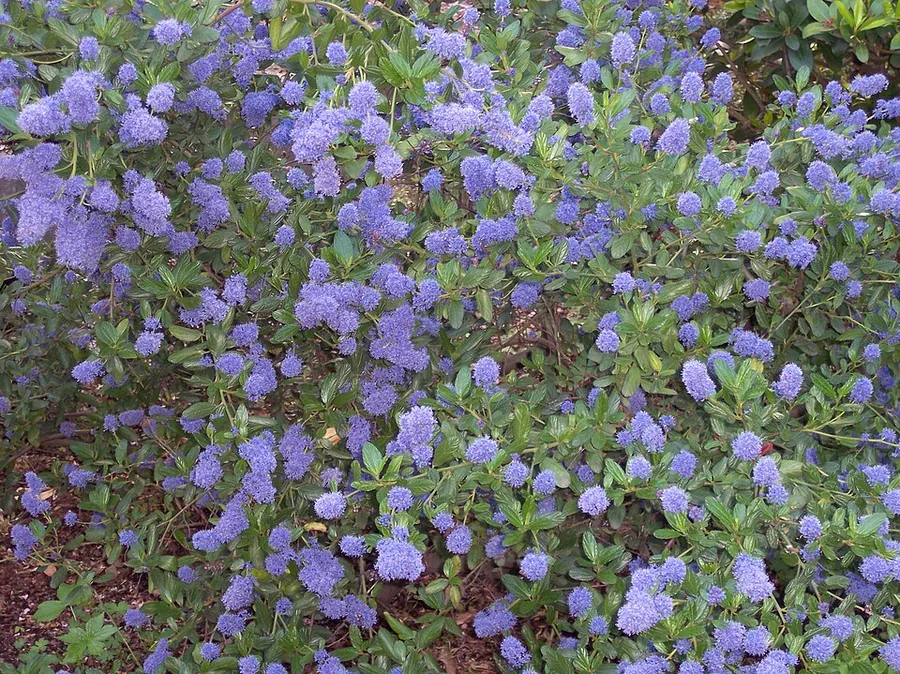
Hand it full sun, sharp drainage, and almost no water, and California lilac gives back a wall of blue every spring.
Full sun
Every 15–30 days
365–730 days
USDA 8–10
Overview
California lilac is just the everyday name for Ceanothus, a fast-growing evergreen shrub that's native to the West Coast. When spring rolls around, it covers itself in dense little flower clusters, usually a clear sky blue and sometimes white or pink. The bees and other pollinators love it, working the blooms from morning till dusk.
It's in the buckthorn family, so despite the name, it isn't related to true lilac at all. And here's the best part: it barely asks for anything. Ceanothus fixes its own nitrogen and is happiest in lean, dry, sun-baked ground, the kind of spot where pickier shrubs would just sit there and sulk.
Of course, all that toughness comes with one rule you can't bend, and it's this: keep it dry. Want to know how most of these plants die? Kindness, an extra summer drink or a bed that holds water, gets far more of them than neglect ever will. Plant it right, then leave it alone, and your Ceanothus pays you back with years of easy blue.
Care
The short version: full sun and sharp, lean drainage matter way more than anything else here. Water it through the first year so the roots settle in, then ease off almost completely, forget the fertilizer, and go light on the pruning.
Light
Give it full sun and you'll get the best flowers along with a nice tight, healthy shape. It'll put up with partial sun or light shade, sure, but the more shade it sits in, the thinner the blooms get and the looser it grows.
Water
Here's where folks usually slip up. Water it through that first year to get the roots settled, then pretty much stop, since an established Ceanothus needs little to no summer water. More of these die from too much water than too little, so just keep it well away from any irrigation.
Soil
Go with lean, fast-draining sandy or rocky soil. Poor ground? No problem, it doesn't care. What it can't stand is wet feet, so if you've got heavy clay, just plant it up on a raised mound. Anywhere from 6.0 to 7.5 on the pH scale is fine.
Temperature
It's pretty unflappable about temperature, coping with about 19°F to 100°F (-7°C to 38°C). It's happy in hardiness zones 8 through 10 and shrugs off both serious heat and a light freeze.
Humidity
Dry air is exactly its thing, so don't bother chasing a number. It's from sun-baked western slopes, after all, and it's got zero use for the muggy, stagnant air that brings on fungal trouble.
Feeding
Honestly? Don't feed it at all. Ceanothus makes its own nitrogen down in the roots, and a shot of fertilizer or rich soil can actually cut its life short and mess with the helpful microbes doing their thing underground.
Pruning
Keep it light and you'll be fine. It's happy with tip pruning and a little thinning to keep its shape, but cut into bare old wood and you'll get dieback that never grows back. Make your cuts on a warm, dry midsummer day to steer clear of disease.
Repotting
Most California lilac just goes right into the ground and hardly ever spends much time in a pot. If yours is potted, watch for roots circling around, water running straight through, or growth that just stalls out, all signs it's outgrown its home.
Size & spacing
Plan for a pretty big shrub here. Full-grown plants hit 4 to 10 feet (1.2 to 3 m) tall and spread 5 to 10 feet (1.5 to 3 m) wide, so give each one plenty of elbow room right from the start.
When to plant
California lilac runs on a dry-summer schedule, so it pays to work with it. Get young plants in the ground in fall or early spring while the soil's still got some moisture, that way the roots dig in before the summer heat shows up, and you'll get a wave of blue from around March to May.
Northern hemisphere
Southern hemisphere
Typical months for a temperate climate: start earlier in warm zones, later where spring frosts linger.
- Sow: Late winter to early spring after scarifying and heat-treating seed
- Plant: Fall or early spring while soil is moist so roots establish before summer heat
- Harvest: Spring (about March to May), dense clusters of tiny blue, sometimes white or pink, flowers
Hardiness
USDA hardiness zones: 8–10
Temperature: down to -12°C
Troubleshooting
Almost every Ceanothus problem comes back to the same culprit: too much water. Keep an eye on the roots and the base of the plant, because that's where things start to go sideways. Find your symptom below and jump on it early, before a quick slide turns into a goner.
A shrub that suddenly wilts and falls apart
When a plant goes downhill this fast, it's nearly always Phytophthora root and crown rot, which gets going when there's too much water or the soil just won't drain. Armillaria, the oak root fungus, can look exactly the same. Shut off every drop of extra water right away, sort out the drainage, and whatever you do, don't pop a new Ceanothus into the spot where one already rotted.
Fix:
- Stop all supplemental irrigation immediately
- Improve drainage; remove mulch piled against the crown
- Avoid replanting Ceanothus in the same infected spot
Branches dying off after a big trim
Cut a Ceanothus back into bare old wood and it just won't bounce back, so those branches go. And if you trimmed in damp weather? That opens the door to disease as well. Take off only the dead wood, cutting back to where it's still green and alive. After that, stick to light tip pruning and a bit of thinning, always on a warm, dry day.
Fix:
- Remove only dead wood back to live tissue
- Limit future cuts to light tip pruning and thinning
Sticky leaves and a coat of black mold
Notice sticky leaves and some twisted new growth? That's sap-sucking bugs, usually aphids, scale, or mealybugs all bunched up on the tender new shoots. The sticky honeydew they leave behind brings in ants and grows that black sooty mold you're seeing. A good blast from the hose handles the light stuff, and the helpful bugs out there usually mop up the rest for you.
Fix:
- Hose off light infestations with water
- Tolerate minor populations as natural enemies usually control them
- Spot-treat persistent scale or mealybugs
Toxicity
Got pets or kids? Good news: California lilac isn't toxic. The ASPCA doesn't flag it as a problem for cats or dogs, and there's no known poison in the plant. Like with any greenery, a really big mouthful might lead to a passing stomach upset, but that's about as bad as it gets.
Safe for
People · Cats · Dogs · Horses · Rabbits · Livestock · Birds
Cats None
Cats are totally fine with it nearby. If one decides to taste a leaf, the worst that's likely to happen is the little stomach upset any plant might cause.
Dogs None
No need to fuss over the dog here. Even a nosy pup that grabs a couple of leaves probably won't get more than a quick tummy ache.
Horses Safe
Horses can graze right next to it, since there's nothing in the shrub that's known to do them any harm.
Rabbits Safe
Rabbits won't run into trouble around the leaves, and a random bite or two is no big deal.
Livestock Safe
Cattle, goats, and sheep can browse it without worry, because there's no toxin in it to bother grazing animals.
Birds Safe
Birds drop by for the flowers and seeds and come to no harm, and the plant keeps pollinators busy all spring.
People Safe
It's safe to handle and to plant where kids hang out. There's nothing poisonous in it, though it's not something you'd grow to eat.
No special handling required; as with any plant, ingestion of large amounts may cause mild stomach upset.
Varieties
There are dozens of named Ceanothus out there, everything from low groundcovers to small trees. A handful really stand out, whether it's for color, size, or just plain toughness.
Skylark
If clay or cold is a problem in your yard, this tidy 4 to 5 foot pick handles both better than most, and its deep blue flowers show up later in the season.
Concha
An easygoing, fast-growing hybrid that starts out with reddish buds and opens into rich dark blue flowers.
Snow Flurry
A white-flowered version of C. thyrsiflorus, which is great if you love the look but aren't sold on the blue.
Companions
Ceanothus thrives beside other dry-loving natives that share its taste for sun and sharp drainage, and struggles next to anything that needs regular water.
Plant near
Manzanita (Arctostaphylos): Shares the same full-sun, fast-draining, low-water native conditions
California poppy (Eschscholzia californica): Drought-tolerant native that thrives in the same lean dry soil and supports pollinators
Keep apart
Lawn or thirsty bedding plants: Regular irrigation needed by turf and annuals causes root rot and early death in Ceanothus
How to propagate
Want more California lilac? You can grow it from cuttings, from seed, or by layering, though the methods run the gamut from quick and easy to slow and kind of fussy.
Stem cuttingsModerate
Summer to early fall · 4 to 8 weeks to root
Cuttings are the way to go if you want something dependable. Just grab semi-hardwood pieces off this year's growth in summer or early fall, tuck them into a free-draining mix, and most of them will root in about 4 to 8 weeks, giving you a plant identical to the one you took them from.
SeedDemanding
Late winter to spring · Several weeks to months
Seed is the slow and finicky one, sown anywhere from late winter into spring. That tough coat needs scarifying plus a heat or hot-water treatment before it'll wake up, and even after all that, sprouting can drag on for several weeks to months.
LayeringModerate
Spring · Several months
Layering is the lazy gardener's friend, and spring is the time for it. Just pin a low branch down onto the soil and let it root right where it is over several months, then snip it off the parent once it's ready.
Myths
California lilac is a kind of true lilac.
It's an easy thing to assume, since the name and those lilac-like flower clusters sure look the part, but nope, they're not related. Ceanothus is actually in the buckthorn family, while true lilac hangs out with the olives in a completely different family.
Like most shrubs, it does better with regular water and feeding.
This is the one that does in more plants than anything else. Ceanothus is built for lean, dry ground, so rich soil, fertilizer, or summer water just shorten a life that's already pretty short and set up root rot. It fixes its own nitrogen, so it barely needs a thing from you.
Sources
- UC Master Gardeners of San Mateo and San Francisco Counties (UC ANR)
- UC Master Gardener Program of Sonoma County (UC ANR)
- UC IPM (UC ANR)
- Missouri Botanical Garden Plant Finder
- USDA Forest Service (Pacific Southwest Research Station)
- ASPCA Animal Poison Control
- ASPCA Animal Poison Control
- UC Master Gardener Column, Napa County (UC ANR)