Shrub · Hydrangeaceae
Slender Deutzia
Deutzia gracilis
An easygoing, pet-safe shrub that buries itself in white spring flowers and barely asks for a thing.
Full sun
Every 5–10 days
USDA 5–8
2–5 ft · 0.6–1.5 m
Overview
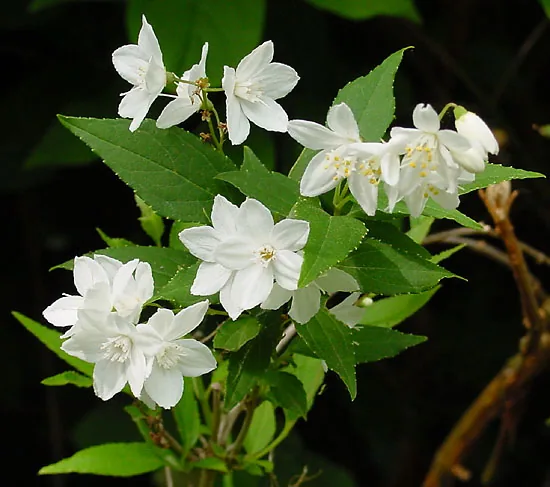
Slender deutzia is one of those shrubs that just makes life easy. It's a low, graceful plant from Japan, and every spring it covers its arching stems with a haze of little white flowers. It's part of the hydrangea family, and it stays nicely compact at only 2 to 5 feet (61 to 152 cm) tall and roughly that wide. That tidy size makes it a natural at the front of a border or beside a path.
So what's the catch? Honestly, there isn't much of one. It laughs off cold down to -20°F (-29°C), doesn't mind clay, loam, or sand, and rolls with soil that's anywhere from acidic to alkaline. Hand it some sun and decent drainage and it pretty much grows itself, which is how it picked up such an easy reputation with newer gardeners.
The flowers don't hang around long, but they sure put on a show, lasting about 10 to 14 days in mid to late spring before the shrub mellows into a quiet green mound for the rest of the year. A few cultivars even throw in burgundy fall color or bright lime leaves for good measure. It's the kind of plant that works hard for a few weeks and then leaves you alone.
Care
The short version: pop it into full sun to part shade in any soil that drains, water it when things get dry, and only prune right after it flowers so you don't accidentally snip off next spring's buds.
Light
Deutzia flowers best in full sun, but it's happy enough in partial sun or partial shade too. If your summers get hot, a bit of afternoon shade keeps the leaves from bleaching out, so it's worth leaning toward some shelter in the warmest spots.
Water
Keep the soil consistently moist but well drained, watering regularly while a young shrub is settling in and through any dry spell. Let the surface dry out a little between drinks instead of leaving it soggy. Once it's established, it gets by on a watering every 5 to 10 days when things are dry.
Soil
Soil really isn't a big deal here, since deutzia takes clay, loam, or sand without fussing. What it does want is moist, well-drained ground, and it'll roll with a wide pH of 6.0 to 8.0, whether your soil's on the acidic or alkaline side.
Temperature
This one's tough. It's hardy through USDA zones 5 to 8 and shrugs off cold down to about -20°F (-29°C). It also takes summer heat near 100°F (38°C), though the leaves stay in better shape with a little afternoon shade where it gets really hot.
Humidity
Regular outdoor air is all it needs, so there's no number to chase here. What matters more is good airflow, since crowded, damp leaves are what bring on the occasional leaf spot.
Feeding
Deutzia doesn't eat much. A balanced slow-release shrub fertilizer or a layer of compost in early spring is honestly all it needs for the whole year. Go light on nitrogen, though, because it pushes the soft growth aphids can't resist.
Pruning
Timing is the whole game here, because deutzia blooms on old wood. Prune right after it flowers, thinning up to one-third of the oldest stems to keep things open and graceful. Just don't cut in late summer or fall, or you'll be trading away next spring's flowers.
Repotting
Deutzia hardly ever needs repotting and would rather be in the ground anyway. If you've got one in a pot, only size it up when roots start circling or poking out the drainage holes, or when water runs straight through without really soaking in.
Size & spacing
Picture a mounding shrub around 2 to 5 feet (61 to 152 cm) tall and about as wide. Give each plant roughly that much space so the arching stems have room to do their thing and air can move through.
When to plant
Plant deutzia in spring or fall, when the weather's mild enough for the roots to settle in before summer heat or a hard frost shows up. It blooms for just a short stretch in mid to late spring, roughly March to May, so why not put it somewhere you'll actually see it? The only timing that really counts is pruning, and that just has to wait until the flowers are done.
Northern hemisphere
Southern hemisphere
Typical months for a temperate climate: start earlier in warm zones, later where spring frosts linger.
- Plant: Spring or fall
- Harvest: Mid-to-late spring (March to May), blooming for about 10 to 14 days
Hardiness
USDA hardiness zones: 5–8
Temperature: down to -29°C
Troubleshooting
There's not much that goes wrong with deutzia, and what does is almost always cosmetic rather than serious. A few pests drop by the new growth in spring, and a hot spell can pale the leaves. Find your symptom below and you'll know in a second whether to step in or just let it ride.
Gummy new growth swarming with little soft bugs
Those little soft bugs clustered on the freshest tips? They're aphids, and they pile onto the new spring growth because that's where the sap's sweetest. They leave a sticky film and can curl the young leaves, but they're easy to handle. Hose them off with a hard jet of water, then let lady beetles and lacewings take care of the stragglers.
Fix:
- Spray colonies off with a strong jet of water
- Apply insecticidal soap or horticultural oil to affected growth if populations are heavy
- Encourage natural predators such as lady beetles and lacewings
Wavy whitish lines snaking through the foliage
See those squiggly trails? That's leaf miner grubs feeding between the top and bottom layers of the leaf, where no spray's going to reach them. Just pick off the worst leaves and toss them to bring the numbers down. On a healthy deutzia it's basically skin-deep, so there's rarely any reason to do more.
Fix:
- Remove and destroy mined leaves to reduce the population
- Tolerate light damage, which is mostly cosmetic on an otherwise vigorous shrub
Washed-out, whitened leaves after a hot bright spell
When the most exposed leaves wash out to pale or almost white in a hot, bright stretch, that's foliage bleaching, just the heat breaking down the chlorophyll. It looks rougher than it really is, and the shrub bounces back. Where summers run hot, give it a spot with some afternoon shade and keep the soil evenly moist to ease the stress.
Fix:
- Provide afternoon shade in hot-summer climates
- Keep soil evenly moist to reduce heat stress
Blotchy dark marks popping up on the leaves
Little dark spots that turn up in damp weather usually mean leaf spot disease, a fungal annoyance that rarely adds up to much here. Pull off the marked leaves and thin out any crowded stems so air can get through. Water down at the base instead of over the top, and it'll usually clear up on its own.
Fix:
- Remove and dispose of affected leaves
- Improve air circulation by thinning crowded stems
- Avoid overhead watering
Toxicity
Got pets or little kids around? Here's the good news: slender deutzia is non-toxic, full stop. The ASPCA gives it the all-clear for dogs, cats, and horses, and NC State Extension doesn't find any toxicity either. So you can plant it anywhere a curious nose or hand might end up.
Safe for
People · Cats · Dogs · Horses · Rabbits · Livestock · Birds
Cats None
The ASPCA lists slender deutzia as non-toxic, so if a curious cat nibbles a leaf, there's nothing to worry about.
Dogs None
It's safe for dogs too. A mouthful of leaves won't poison them, though gulping down a lot of any plant can still leave a dog with a mild, passing tummy ache.
Horses None
There's no toxicity reported for horses, so a deutzia growing near a paddock isn't anything to fret over.
Rabbits Safe
Rabbits can browse the shrub without any harm, since none of its parts carry a toxin.
Livestock Safe
Grazing cattle, goats, and sheep are in no danger from this plant at all.
Birds Safe
The shrub's no poisoning risk to birds that perch in it or peck at its leaves and spent flowers.
People Safe
Slender deutzia isn't toxic to people, so it's a solid pick for gardens where kids play. It's grown for the flowers, not for eating, so there's no reason to put any part of it on a plate.
No special handling precautions are needed; the plant is non-toxic.
Varieties
A handful of named cultivars swap the plain species for brighter leaves or a more compact shape. These are the ones you'll bump into most.
Nikko
It's a dwarf, dense mound only 1 to 2 feet tall that doubles as a groundcover, with green leaves that turn burgundy in fall.
Chardonnay Pearls
It's a compact pick that's all about its lime-yellow foliage and those pearl-like buds that open up to white flowers.
Pink Minor
It's a compact form whose pink buds unfurl into white flowers with a soft blush of pink.
How to propagate
Want more deutzia? It's pretty simple, whether you root a summer cutting or just let a low stem root itself right in the ground.
Stem cuttingsEasy
Summer · Several weeks to root; transplantable the following season
The easiest way to get more deutzia is from softwood cuttings taken in summer, and they root without much fuss at all. Give them several weeks to put out roots, then just leave them be until the next season, when they're ready to move to a permanent spot.
LayeringEasy
Spring to summer · One growing season or more
Layering plays right into the shrub's low, arching stems. Anytime from spring through summer, peg a stem down where it touches the soil and it'll root right at that spot. Just plan on a full growing season or more before the new plant's rooted enough to cut free and lift.
Myths
Got dogs or cats? Then deutzia's off the table, since it's said to be poisonous to pets.
Not true at all. The ASPCA lists slender deutzia as non-toxic to dogs, cats, and horses, and NC State Extension says the same thing. You can plant it freely around pets and kids and never give a poisonous nibble a second thought.
Deutzia doesn't care when it gets trimmed, so grab the shears whenever it needs tidying.
Here's the thing: deutzia sets its flowers on old wood, so a cut in late summer, fall, or right before bloom takes next spring's buds with it. Prune only right after the flowers fade, and you'll keep that show coming back every year.