Shrub · Hydrangeaceae
Hydrangea
Hydrangea macrophylla
Give it rich, moist soil and afternoon shade, and this shrub hands you armfuls of bloom all summer.
Partial shade
Every 3–7 days
USDA 3–9
3–10 ft · 0.9–3 m
Overview
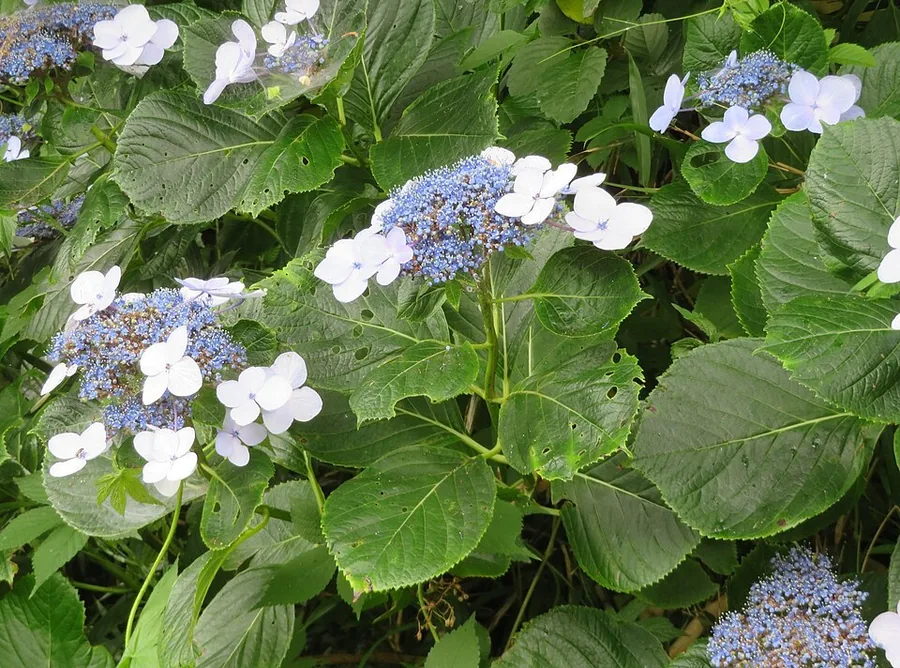
Hydrangeas are those big, romantic shrubs that make a summer garden feel full, loaded with rounded mopheads, flat lacecaps, or tall cones depending on which type you've got. The star of the show, the bigleaf hydrangea, is the one that turns blue in acidic soil and pink in alkaline, which is the sort of trick that's kept gardeners hooked for generations. They grow fast and flower hard, and across the different species they'll reach anywhere from 3 to 10 feet (90 cm to 3 m).
Here's the thing, though: not every hydrangea plays by the same rules. Some bloom on old wood, setting their buds the summer before, and others bloom on new wood they grew that same year. Why does that matter? Because it decides when you prune, whether a brutal winter costs you flowers, and which types can handle a place where late frosts show up. Pick a species that suits your zone and you've done half the work already.
Once you're past the color and the pruning stuff, hydrangeas really don't ask for much. They just want steady moisture, a break from the fiercest afternoon sun, and soil that's rich in organic matter. Give them that and they'll pay you back for years, since this is a long-lived perennial shrub that only gets fuller and better with age.
Care
The short version: pop it into rich, moist, well-drained soil with morning sun and afternoon shade, water deeply about once a week, and prune to match whether your type blooms on old or new wood.
Light
Hydrangeas are happiest in partial shade, so morning sun with shade through the hot afternoon is the sweet spot. Bigleaf types especially will scorch and wilt in full afternoon sun, though panicle types can take a whole lot more of it. What you don't want is deep shade, because that really thins out the flowers.
Water
The main thing they ask for is evenly moist soil, so water deeply about once a week, and more often when it's hot or the plant's in a pot. The name kind of gives away how thirsty they are, and bigleaf types are always the first to flop when they dry out. A layer of mulch is a nice help here, holding onto that moisture and keeping the roots cool.
Soil
Give them rich, moist, well-drained soil packed with organic matter and they're happy. They like a pH of 5.0 to 6.5, so a touch on the acidic side, and for bigleaf and mountain types that same acidity is what tips the flowers toward blue.
Temperature
These are tough customers, comfortable from about -20°F to 95°F (-29°C to 35°C) in the hardier species. The one thing to watch is a late spring frost, since it can kill the buds that old-wood types have already formed and cost you a whole season of flowers.
Humidity
Regular outdoor humidity is plenty for a hydrangea, so there's no number you need to chase. Air movement matters way more than the humidity itself, because crowded, still, damp air is exactly what brings on leaf spot and powdery mildew.
Feeding
A balanced 10-10-10 fertilizer a few times from spring through mid summer is all they need. Go easy with it, though, because too much nitrogen just gives you loads of leaves and holds back the flowers you were after.
Pruning
Match your cuts to the bloom wood and you're golden. Trim old-wood bloomers like bigleaf, oakleaf, and mountain right after they flower and no later than August 1, and trim new-wood bloomers like panicle and smooth in late winter or early spring before growth kicks off.
Repotting
Hydrangeas hardly ever need repotting, since most of them live out in the ground for good. If you're growing one in a container, just bump it up a size when the roots start circling the pot, poking out the drainage holes, or when water runs straight through without soaking in.
Size & spacing
Depending on the species, hydrangeas hit 3 to 10 feet (90 cm to 3 m) tall and spread 3 to 6 feet (90 to 180 cm) wide. Give each one a bit of elbow room to fill out, so air can move through the branches and disease has a harder time settling in.
When to plant
Hydrangeas are hardy across zones 3 to 9, so really there are just two timing questions to sort out: when to plant, and when to prune. Get new shrubs in the ground during the mild weather of spring or fall, look for bloom from late spring through summer, and let the bloom-wood type tell you when it's time to grab the pruners.
Northern hemisphere
Southern hemisphere
Typical months for a temperate climate: start earlier in warm zones, later where spring frosts linger.
- Plant: Spring or fall
- Harvest: Late spring through summer; some reblooming types again in late summer
Hardiness
USDA hardiness zones: 3–9
Temperature: down to -40°C
Troubleshooting
Most of what goes wrong with hydrangeas boils down to a handful of things: a plant that wilts in the heat, one that's all leaves and no flowers, or foliage that's spotted or turning yellow. Find what you're seeing below, check the likely cause, and jump on it before the plant loses ground.
Whole plant going limp on hot afternoons
Seeing a hydrangea slump on a hot afternoon? That's almost always thirst and sun stress teaming up. Bigleaf types are the drama queens here, wilting fast in strong sun and then perking right back up in the cool of evening once they've had a drink. Give it morning sun with afternoon shade, water it deeply, and lay down some mulch to keep the roots cool and the moisture steady.
Fix:
- Water deeply to keep soil evenly moist
- Mulch to conserve moisture and cool the roots
- Site bigleaf hydrangeas where they get morning sun and afternoon shade
A healthy plant that refuses to bloom
Lots of leaves but no flowers? Nine times out of ten it's pruning at the wrong moment. Old-wood bloomers make next year's buds soon after they finish flowering, so a trim in fall or spring snips those buds right off. A rough winter or a late frost can zap the buds too, and too much shade or nitrogen just gives you more leaves. Figure out whether yours blooms on old or new wood, and you'll know exactly when to cut.
Fix:
- Prune old-wood bloomers only right after flowering
- Protect old-wood types from late frosts
- Reduce shade and avoid heavy nitrogen feeding
Leaves picking up spots or a milky white dusting
Two fungi like to crash the party here. Cercospora and other leaf spots leave purple-edged marks with tan middles, and powdery mildew dusts everything white when plants are packed in and the air isn't moving. Good news: neither one is going to kill a healthy shrub. Just rake up the spotted and fallen leaves, water down at the base so the leaves stay dry, and thin things out a bit so a breeze can get through.
Fix:
- Remove and dispose of affected and fallen leaves
- Use drip or soaker irrigation to keep foliage dry
- Improve air circulation and apply a labeled fungicide if needed
Leaves fading to yellow but the veins staying green
Leaves going yellow while the veins stay green? That's iron chlorosis, and it usually means the soil's gotten too alkaline for the plant to pull up iron. You'll spot it on the newest leaves first. Test the soil, nudge the pH toward the slightly acidic side that hydrangeas like, mix in some organic matter to help it drain, and only reach for iron once a test says it's actually short.
Fix:
- Test and adjust soil pH toward slightly acidic
- Improve drainage and add organic matter
- Apply iron if a deficiency is confirmed
Toxicity
Hydrangeas are toxic, and that includes the very parts you're most tempted to handle. The leaves, buds, and flowers all contain cyanogenic glycosides, which can poison cats, dogs, horses, and grazing animals, and nothing on the plant is safe to eat. So keep clippings and fallen blooms away from pets and out of the paddock, and wash up once you're done pruning.
Toxic to
Cats · Dogs · Horses · Rabbits · Livestock · Birds · People
Cats Mild
If a cat nibbles a leaf or a bloom, you're usually looking at vomiting and diarrhea, then a stretch where it seems flat and sluggish. Here's the silver lining: the taste is so bitter that most cats quit long before they've eaten enough to really hurt themselves.
Dogs Mild
Dogs are the ones most likely to gnaw on a shrub, and that tends to mean an upset stomach, loose stools, and a mopey, low mood. Keep an eye on a dog that won't quit chewing, because a big mouthful bumps up the small chance of cyanide trouble.
Horses Mild
A horse that grazes on hydrangea can wind up with colic-like belly upset, diarrhea, and a dull, sluggish look. It's smart to keep clippings and prunings well away from the paddock.
Rabbits Toxic
Those same cyanogenic glycosides put the whole plant off-limits for rabbits, and since they're so small, there's barely any margin. Expect tummy trouble and weakness, so keep the plant and every trimming right out of their space.
Livestock Toxic
Cattle, goats, and sheep can graze on enough hydrangea leaves to take in a genuinely harmful amount of the cyanogenic compound. If you see drooling, diarrhea, or labored breathing, that's your cue to call the vet.
Birds Caution
The leaves and buds hold the same toxin that bothers mammals, so pet and backyard birds really shouldn't be picking at them. Catch a bird pecking at the plant? Step in and move it along.
People Caution
No part of a hydrangea belongs on your plate, and the leaves, buds, and flowers can upset your stomach if you swallow them. Keep curious kids away from the blooms, and give your hands a good wash after you've been pruning.
Keep clippings and fallen flowers away from pets and grazing animals; cyanide poisoning is uncommon but possible with very large ingestions.
Helpline numbers

United States
ASPCA Animal Poison Control: (888) 426-4435 (fee applies)
Poison Control: (800) 222-1222



Canada
Poison Centres: 1-844-764-7669
Varieties
A few different hydrangea species share the name but honestly couldn't be more different in flower shape, hardiness, and when they bloom. Here are the main ones worth telling apart.
Bigleaf (Hydrangea macrophylla)
This is the one everybody pictures, the mophead and lacecap shrub that turns blue in acidic soil and pink in alkaline, and it blooms mostly on old wood unless it's a reblooming Endless Summer type that flowers on both old and new growth.
Oakleaf (Hydrangea quercifolia)
This native's got bold oak-shaped leaves and white cone-shaped panicles that fade to pink, then it signs off the year with rich bronze fall color, and it blooms on old wood.
Panicle 'Limelight' (Hydrangea paniculata)
If you want the toughest of the bunch, this is it, shrugging off full sun and hard cold while it carries white-to-pink cone-shaped panicles on new wood, so you prune it in late winter.
Smooth 'Annabelle' (Hydrangea arborescens)
This native puts up huge white globe-shaped flower heads on new wood, which is exactly why it's so easy to prune and so reliable about reblooming.
Mountain (Hydrangea serrata)
Think of this as the bigleaf's daintier cousin, with finer lacecap flowers and leaves, and it's prized because its buds and stems hold up better through really tough winters.
How to propagate
Hydrangeas are super easy to multiply at home, and you've got two simple, beginner-friendly ways to grow a brand-new plant.
Stem cuttingsEasy
Late spring to summer · Several weeks to root
Want more hydrangeas? The easiest way is a softwood stem cutting snipped in late spring or summer. Keep it warm and humid, and over a few weeks it'll root into a new plant that's a dead ringer for the parent.
LayeringEasy
Spring to summer · One season to root
Layering is even easier if there's a low, bendy branch you can reach. Just pin it down to the soil in spring or summer, leave it alone for a whole season while it roots, then cut it loose as its own plant.
Myths
It doesn't matter which hydrangea you've got; just prune it in autumn or once winter is nearly done.
There's no one-size-fits-all cut here, and it all comes down to the bloom wood. Old-wood bloomers like bigleaf, oakleaf, and mountain set their buds right after flowering, so cutting them anytime from fall through early spring takes next year's flowers with it. New-wood bloomers like panicle and smooth are the ones you trim in late winter or early spring. Just work out which kind you've got before you grab the shears.
Want blue flowers instead of pink? Just tweak the soil pH and any hydrangea will follow.
Nice idea, but the color switch only works on a couple of species. Only bigleaf and mountain hydrangeas react to soil pH and aluminum, going blue in acidic soil and pink in alkaline. White-flowered, panicle, and oakleaf types? They'll keep their color no matter what you throw at the soil.