Houseplant · Acanthaceae
Nerve Plant
Fittonia albivenis
Keep it warm, humid, and evenly moist, and the nerve plant pays you back with leaves stitched in living color.
Bright indirect
Every 3–4 days
61–75°F · 16–24°C
USDA 11–12
Overview
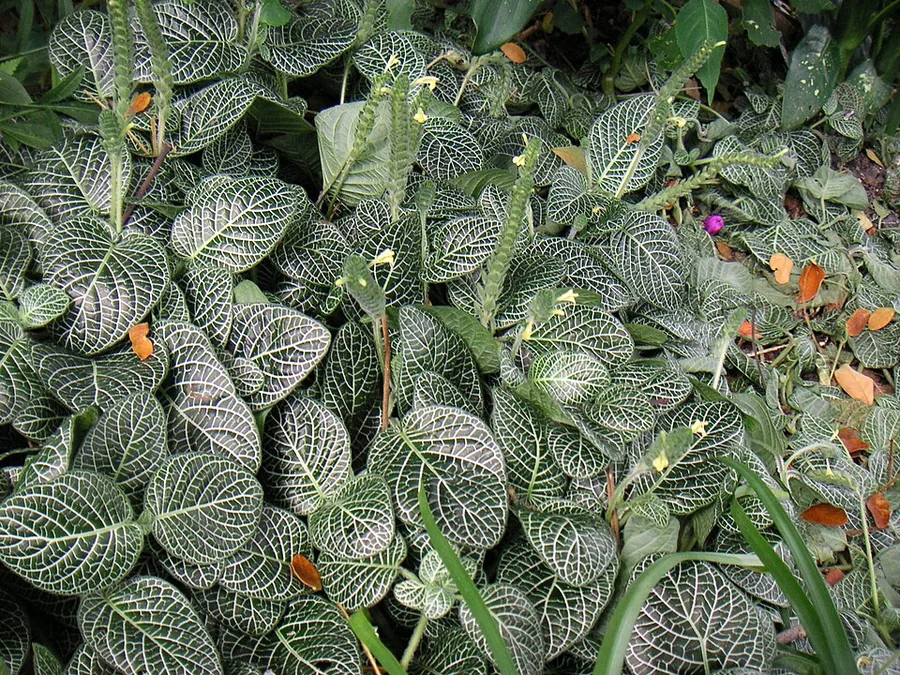
So where does the name come from? Take a look at any leaf and you'll see it: a fine web of veins tracing white, pink, or red over deep green. It's part of the acanthus family, and out in the wild it grows on the rainforest floor of Colombia and Peru, which honestly tells you most of what you need to keep it happy indoors. It stays little, creeping along instead of climbing, and it tops out at just 3 to 8 inches (8 to 20 cm) tall.
The thing that really sets it apart is its taste for drama. Let the soil get too dry and the whole plant wilts and faints, leaves flopping like it's thrown in the towel. But give it a drink and it usually bounces right back within hours, no worse for the scare. That little fainting act makes it fun to grow, and it's also a handy reminder that steady moisture and humid air are what this plant is really after.
It gives you a lot back without needing much space, which is nice. That slow, low growth is right at home in a terrarium, on a bathroom shelf, or grouped with other plants that like the same damp air. Get the light and water sorted and it'll spread into a lush, patterned carpet of leaves.
Care
The short version: bright indirect light, soil that stays evenly moist but never soggy, and humid air somewhere around 16°C to 24°C (61°F to 75°F). Feed it monthly during the growing season, and keep it well clear of direct sun and cold drafts.
Light
Give the nerve plant bright but indirect light, like the kind near a north- or east-facing window. It'll handle medium light and a bit of shade just fine, but keep direct sun off it, because those thin leaves scorch easily.
Water
Keep the compost evenly moist but never waterlogged, which comes out to watering it about twice a week. If it faints because things dried out, don't stress, a drink brings it right back. And ease way off in winter, since soggy soil leads to yellowing and root rot.
Soil
Pot it up in a moisture-retentive yet well-drained mix, either a peaty blend or a soil-based compost. You want soil that holds onto water but never stays sodden, so good drainage matters just as much as the moisture does.
Temperature
Regular room warmth is perfect, ideally 61°F to 75°F (16°C to 24°C). Just keep it above that low mark and away from cold drafts, which it really won't put up with.
Humidity
This is a rainforest plant, so it wants high humidity, and dry air is what usually trips it up. Group it with other plants, set it on a pebble tray, or grow it in a terrarium, and the moist air keeps the leaves from crisping.
Feeding
Feed it monthly through spring and summer with a balanced liquid houseplant fertilizer, usually at half strength. Then ease off or just stop over winter while it's not really growing.
Pruning
Pinch the stem tips back every so often to keep it bushy and compact instead of leggy. And while you're at it, pull off any faded or damaged leaves.
Repotting
Since it's a slow grower, the nerve plant is happy to sit in the same pot for several years before it needs a move. Repot only every few years, or sooner if you notice roots circling the pot, growth stalling out, or soil drying up unusually fast.
Size & spacing
Expect a low, spreading plant that's just 3 to 8 inches (8 to 20 cm) tall but 6 to 18 inches (15 to 46 cm) wide. That creeping habit makes it a great groundcover under taller houseplants, or a carpet in a terrarium.
Troubleshooting
Just about every nerve plant hiccup comes down to water, humidity, or light. Read the leaves and you can usually figure out what's up pretty fast. Find the match below, then tweak things before a small slip turns into a real setback.
Stems and roots have gone mushy and black
Dark, soft roots and a pot that smells kind of sour? That's root rot, and it comes from too much water or drainage that just isn't cutting it. Ease up on the watering and sort out the drainage right away. If it's spread a fair bit, go ahead and repot into fresh well-drained mix and snip off every mushy root you find.
Fix:
- Reduce watering and improve drainage
- Repot into fresh well-drained mix, trimming rotted roots
Leaves are going crispy or dropping
Crispy, browning leaves? That's usually a sign the air's turned too dry, and a rainforest plant like this really doesn't like that. Cold drafts and direct sun only make things worse. So bump up the humidity with a pebble tray, a terrarium, or a little huddle of plants, and park it somewhere steady and out of the sun.
Fix:
- Raise humidity (terrarium, pebble tray, or grouping plants)
- Move away from drafts and direct sun
Leaves are going yellow
Yellow leaves? Most of the time that's too much water, since soggy soil leaves the roots gasping for air. Not enough light can do it too. So let the mix drain, back off the watering, and if the spot's gotten dim, scoot it somewhere with brighter indirect light.
Fix:
- Allow soil to drain and reduce watering frequency
- Move to a brighter spot with bright indirect light
The whole plant just flopped over
Don't panic, because that big flop is the nerve plant's famous thirst act, and it kicks in when the soil's gone dry. Give it a good drink and you'll usually see the leaves stand back up within hours. Just tuck it away from drafts and direct sun while it's coming round.
Fix:
- Water thoroughly until evenly moist
- Move out of drafts and away from direct sun
Bleached or scorched spots on the leaves
See pale, scorched patches? That's direct sun burning those thin leaves, and you'll notice it worst on the side facing the window. Just move the plant back into bright but indirect light, somewhere near a north- or east-facing window where the rays can't land on it.
Fix:
- Move to bright indirect light near a north- or east-facing window
Toxicity
Here's some good news if you've got pets or kids. The nerve plant has no known toxins, so it's totally fine in a home with cats, dogs, and small children. The worst a determined chewer risks is a quick, mild tummy ache from munching on any plant.
Safe for
People · Cats · Dogs · Horses · Rabbits · Livestock · Birds
Cats None
Got a curious cat? No worries here, because the ASPCA lists the nerve plant as non-toxic to cats, so a nibble's really no big deal. About the worst that'd happen is a quick tummy ache if one goes overboard on any houseplant.
Dogs None
Dogs are fine too, since the ASPCA doesn't flag any toxins in this one. A determined chewer might end up with a little passing tummy trouble, but that's about it.
Horses None
Horses make the ASPCA's safe list for Fittonia as well, so no cause for concern there.
Rabbits None
Rabbits are totally fine around it, because nothing in the leaves or stems can hurt them. A few stray bites won't do a thing.
Livestock None
Grazing animals hardly ever cross paths with a small indoor plant like this, and even if they did, there's no toxin in it to bother them.
Birds None
A pet bird can hang out in the room or perch nearby, no problem, because there's nothing toxic in the leaves.
People None
NC State tags the nerve plant as non-toxic to people, so it's an easy pick if you've got small kids at home.
Varieties
Nerve plants sort into two main groups based on their vein color. Which one you go for really just comes down to the look you're after.
Argyroneura Group
You'll spot these by the bright white veins running over deep green leaves, and that's exactly the look that got the plant its silver nerve name.
Verschaffeltii Group
This bunch does its veins in red or pink instead, which gives the leaves a warmer, cozier look.
How to propagate
Making more nerve plants is easy, and honestly the creeping stems do a good chunk of the work for you. You can take cuttings or split up a crowded clump, and neither one's much hassle.
Stem cuttingsEasy
Spring and summer · A few weeks to root in a humid environment
Stem cuttings are the easy way to go, and spring or summer is when you'll want to take them. Snip a piece about 2 inches (5 cm) long just under a pair of leaves, then pop it into moist compost inside a humid propagator or a sealed bag, and it'll root over a few weeks. And here's a bonus: those creeping stems will root themselves anywhere they touch the soil.
DivisionEasy
Spring · Establishes quickly once potted
Got a big, crowded clump? Split it in spring. Just tease the rootball into sections, leave three or more stems on each one, and pot them up separately. The divided plants tend to settle in and get growing again pretty quick.
Myths
A nerve plant that has collapsed and fainted from dryness is dead and should be thrown out.
Don't toss it just yet, because that big flop is really just the plant saying it's thirsty, not that it's a goner. Give it a proper drink and the leaves usually firm right back up within hours. Honestly, it's one of the most forgiving comebacks you'll ever see from a houseplant.
Fittonia is toxic to cats and dogs like so many tropical houseplants.
Good news, the nerve plant doesn't fit that mold. The ASPCA lists it as non-toxic to dogs, cats, and horses, so it's a safe bet if you've got pets around.