Houseplant · Acanthaceae
Polka Dot Plant
Hypoestes phyllostachya
Keep it in bright filtered light with a steady drink, and those freckly leaves stay colorful.
Bright indirect
61–81°F · 16–27°C
USDA 10–11
12–30 in · 30–76 cm
Overview
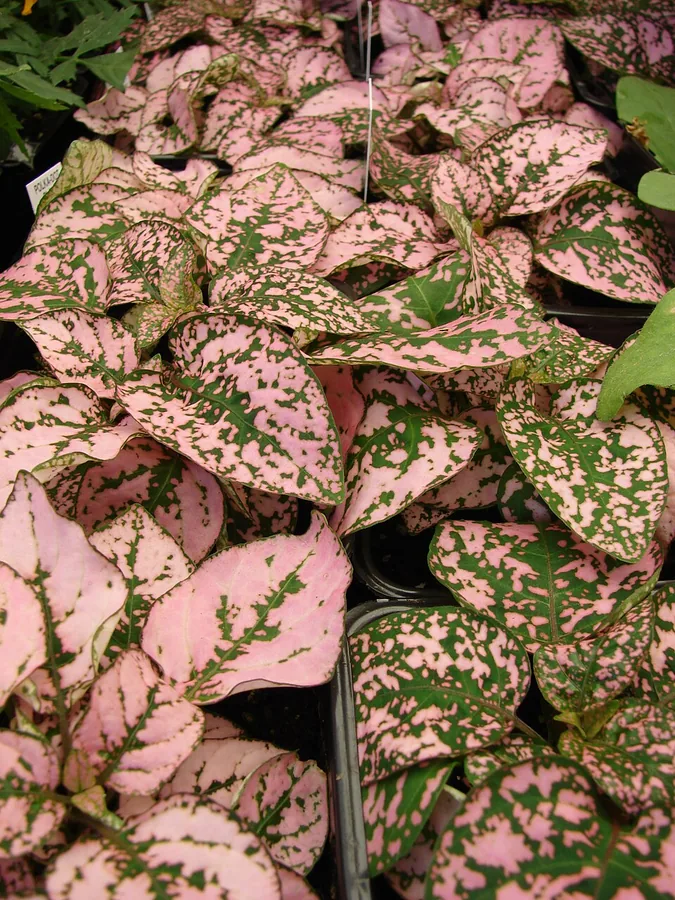
So what is the deal with the polka dot plant? It is all about the leaves, which come speckled in pink, rose, or white on a green background. The plant is originally from Madagascar and belongs to the Acanthaceae family, and pretty much everyone grows it as an indoor plant. It does flower, but the little lilac blooms aren't much to look at, so most people just pinch them off and let the foliage do the talking.
It is a small, bushy thing, topping out around 12 to 30 inches (30 to 76 cm), and it grows fast. Is that a good thing? Mostly, yeah. A happy plant fills its pot in a season, and if one gets tired and stretchy, you can just cut it back or start over from a cutting. No big loss either way.
Here is the gist: it is an easy plant that doesn't ask for much. Keep it in bright filtered light, keep the soil evenly moist, and pinch the tips once in a while. Do that and the color stays bright. Let the light get too dim, though, and the spots fade right along with it.
Care
The short version: bright filtered light for the best color, soil that stays evenly moist but never soggy, warmth above 60°F (16°C), and a pinch here and there to keep it bushy.
Light
Bright, filtered light is what brings out the boldest spots, so aim for that. Too much direct sun? It will bleach and scorch the leaves. Too little? The color just washes out. A bright window with a sheer curtain in front hits the sweet spot.
Water
Keep the soil evenly moist while it is growing, giving it a good drink and letting the top dry out just a little before you go again. It will handle a short dry spell just fine, but it is happier with steady moisture, so don't let it go completely dry.
Soil
Go with a porous, organic-rich mix that drains well, something with peat moss or leaf mold mixed in. It is not picky about pH either, and it is happy anywhere from 5.5 to 7.5, as long as water doesn't hang around the roots.
Temperature
Normal room temps are fine, ideally 61°F to 81°F (16°C to 27°C). It starts to sulk once things drop below about 60°F (16°C), so keep it clear of cold drafts and cold windowpanes.
Humidity
This one likes it humid, honestly more than most homes are. Easy fixes though: cluster it with other plants, pop it on a pebble tray, or give it a misting when winter air gets dry, and the leaf edges won't crisp up.
Feeding
Feed it through spring and summer while it is growing. A dilute balanced liquid fertilizer about once a month does the trick, and you can quit feeding once growth slows down for the year.
Pruning
Pinch those stem tips often and the plant branches out and stays nice and full instead of getting lanky. See a little flower spike? Nip it off, and the plant puts that energy back into the leaves.
Repotting
Bump it up a pot size about once a year, or whenever roots start poking out the drainage holes. Plenty of people skip that and just root new cuttings instead, since the plant grows fast and gets tired after a couple of years anyway.
Size & spacing
You are looking at a tidy little mound, 12 to 30 inches (30 to 76 cm) tall and around 9 to 30 inches (23 to 76 cm) across. Give a group of them some elbow room, because crowded, stuffy air is an open door for powdery mildew.
Troubleshooting
Most of the time, when this plant acts up, it is down to light, water, or a pest that snuck in. The good news? The faded color and leggy stretch are pretty easy to spot. Find what matches your plant below and sort it out before things go downhill.
Wilting with mushy stems or a white dusty film
Soggy soil and stems going mushy at the base? That is root rot from overwatering. A white powdery film on the leaves is powdery mildew, which loves still, humid air. Switch to a porous, well-drained mix and let the surface dry out before watering again. And a little more airflow keeps the mildew in check.
Fix:
- Use a porous, well-drained mix and let the surface dry between waterings
- Improve air circulation to limit mildew
Sticky leaves, twisted growth, or little bugs
Sticky leaves and weird, puckered new growth? That points to whiteflies, aphids, or mealybugs, the usual suspects on this plant indoors. Flip a few leaves over and look for clustered bugs or white cottony bits, and keep an eye out for whiteflies that flutter up when you brush past. Hit it with insecticidal soap or neem oil, repeat as directed, and keep it away from your other plants till it is clear.
Fix:
- Treat with insecticidal soap or neem oil
- Repeat applications as directed and isolate affected plants
Long, leggy stems with thin, washed-out leaves
Notice the plant leaning toward the window and dropping its lower leaves? That is usually not enough light, or just an old plant that never got pinched. Move it somewhere with bright, filtered light and pinch the tips often to get fresh growth going. If it is really stretched out, honestly the easiest fix is to start fresh from a few tip cuttings.
Fix:
- Move to bright, filtered light
- Pinch back stem tips regularly to force branching
- Take and re-root tip cuttings to renew an old, leggy plant
The pink and white spots fade or look scorched
Faded freckles are a light problem, and it cuts both ways. Harsh direct sun bleaches and burns the leaves, and deep shade drains the color just as fast. The spots look best in bright filtered light or a bit of partial shade, so move it there and the color perks back up.
Fix:
- Relocate to bright, filtered light rather than full sun or deep shade
Toxicity
Got pets or little kids? You are in luck, because the polka dot plant is non-toxic. The ASPCA gives it a pass for cats, dogs, and horses, and extension folks back that up. Worst case, a curious nibble leads to a bit of mild stomach upset from the plant fiber, and that is it.
Safe for
People · Cats · Dogs · Horses · Rabbits · Livestock · Birds
Cats None
The ASPCA says it is non-toxic to cats, so no worries there. A nosy nibble might bring on a little vomiting from the plant fiber, but that sorts itself out.
Dogs None
Dogs are fine with it too, since the ASPCA has it on the non-toxic list. A chewed leaf might cause some brief, mild tummy upset at most.
Horses None
Horses get the okay from the ASPCA as well, so a grazing mouthful is really nothing to stress about.
Rabbits Safe
No toxins here for rabbits either. That said, ease it in slowly like you would any new green, so a sudden diet switch doesn't upset their stomach.
Livestock Safe
Goats, sheep, and the rest can munch on it without any harm, since there is nothing poisonous in it.
Birds Safe
Pet birds are safe around it, no problem. The leaves don't hold any toxic compounds, so a taste won't hurt them.
People Safe
It is harmless for people too, kids included. Nobody is growing it for dinner, but a leaf in a little one's mouth isn't anything to freak out over.
As with any non-food plant, ingestion may cause mild, self-limiting vomiting or diarrhea simply from the plant material.
Varieties
Here is the thing: most polka dot plants are sold by color, not by a strict name. Still, a handful of named ones are worth knowing.
'Splash Select Pink'
A compact one with pink-spotted leaves sitting above small purple flowers.
'Confetti Compact White'
A tidy, compact pick whose leaves are freckled in white instead of pink, with small purple blooms alongside.
Pink Splash / Freckle Face types
Green leaves splattered with rose, pink, or white, and since they are seed-grown, how heavily they are spotted varies from one to the next.
How to propagate
Want more of these? Easy. You can root a cutting in a glass of water, or you can start a fresh batch from seed, whichever sounds like more fun.
Stem cuttingsEasy
Any time during active growth · Roots in a few weeks
Cuttings are the quick and easy route. While the plant is growing, snip off a tip about 4 inches (10 cm) long, pull the lower leaves, and pop it in water or moist mix. It will root in a few weeks and grow up as a carbon copy of the parent.
SeedEasy
Sow indoors 8-10 weeks before the last frost · Germinates in as little as 4 days at about 68°F (20°C)
Seed works great too, and it is how a lot of these are sold. Sow indoors 8 to 10 weeks before your last frost, keep the tray warm at around 68°F (20°C), and you might see sprouts in as little as 4 days. Since they are seed-grown, expect the spotting to vary a bit, which is half the fun.
Myths
The polka dot plant is basically the same as the polka dot begonia.
Nope, they are two totally different plants from two different families. The polka dot plant is Hypoestes phyllostachya in the Acanthaceae, while the polka dot begonia is Begonia maculata in the Begoniaceae. Only Hypoestes is the real polka dot plant.
The polka dot plant will poison your cat or dog.
Not the case, thankfully. The ASPCA lists Hypoestes phyllostachya as non-toxic to dogs, cats, and horses. The worst a curious pet gets is a mild, passing tummy ache from chewing on the leaves.