Houseplant · Acanthaceae
Zebra Plant
Aphelandra squarrosa
Striped leaves and a bright yellow bloom, all it asks in return is the warm, humid air it never stops wanting.
Bright indirect
64–81°F · 18–27°C
USDA 11–12
4–6 ft · 1.2–1.8 m
Overview
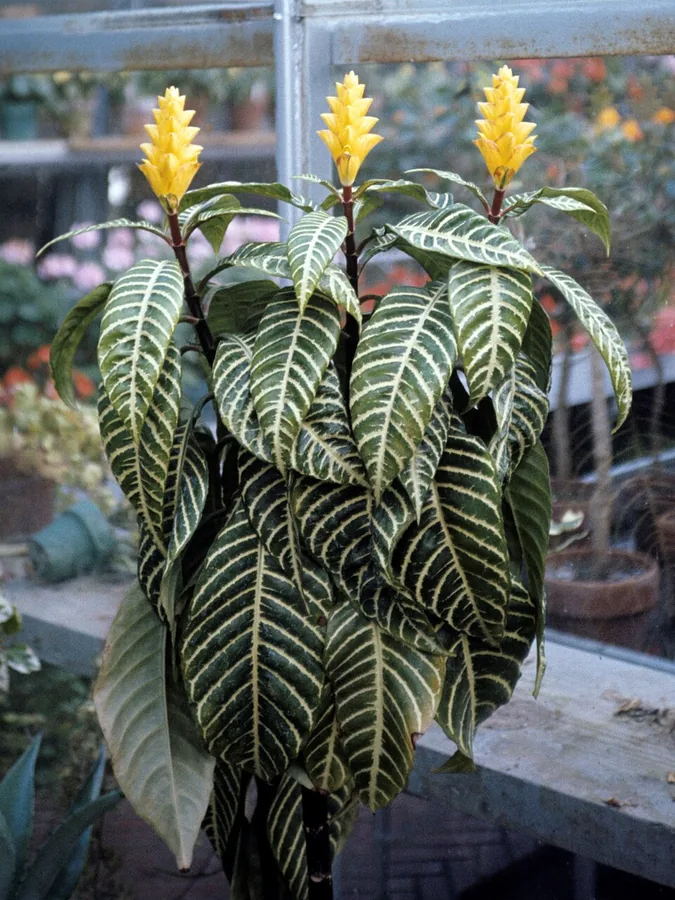
It's pretty obvious where the name comes from once you see it. The leaves are deep green with bold white veins running across them like zebra stripes, and honestly that foliage is reason enough to grow it. Then it flowers, and a tall yellow spike shoots up from the middle and sticks around for weeks.
Here's the thing though, it's got some real needs. It's from the warm, damp forest floor of Brazil, so it wants that same humid air indoors, and that's what trips up most folks. Let the air go dry, or bounce the soil between soaked and bone dry, and the lower leaves start browning and dropping.
Treat it right and it pays you back, but it's not exactly a beginner's plant. It grows slowly, doesn't live all that long, and it earns that demanding tag fair and square. That's why a lot of growers keep a few cuttings going, so there's always a fresh one waiting once the original starts to fade.
Care
The short version: bright indirect light, warmth above 65°F (18°C), and humidity kept nice and high. Keep the soil evenly moist all year without soaking or drying it out, and give it a light feed through the growing season.
Light
Pop it near a window with bright indirect light, just not where the sun hits it head-on. Sure, it'll cope in partial or even full shade, but the stripes really pop when it gets plenty of soft, steady light.
Water
Keep that soil evenly moist all year and you're golden, so don't let it dry to a crisp or leave it swimming. After the flowers are done and it's resting, water a bit less, but don't quit. Push it too far either way and the bottom leaves brown and drop, which nobody wants.
Soil
Go with a peaty, well-drained mix that's got plenty of organic matter in it. It likes things a touch acidic, around a pH at or below 6.0, so grab a mix meant for acid-loving plants and you're set.
Temperature
Keep it cozy, somewhere from 64°F and 81°F (18°C to 27°C), and never below 65°F (18°C). Cold snaps and drafts? Those are the quickest way to watch leaves drop, so steer clear.
Humidity
Here's the big one, and honestly it's why people struggle with it. It wants high humidity, way more than a heated room gives, so sit the pot on a tray of wet pebbles or tuck it somewhere naturally damp like a bathroom.
Feeding
Feed it through the growing season, starting in late winter, with a weak liquid fertilizer every couple of weeks. A little and often works way better than one big strong dose, which the roots really don't like.
Pruning
When the yellow spike fades, cut it back to about 12 to 18 inches (30 to 46 cm) and leave roughly two rows of leaves. Feels drastic, right? But that's exactly what stops it going leggy and gets bushy new growth pushing up from the base.
Repotting
Give it a new pot once a year. If the roots are circling, the soil's drying out quicker than it used to, or growth just stalls, that's your cue it wants more space.
Size & spacing
Given the chance it'll hit 4 to 6 feet (122 to 183 cm) tall and spread 4 to 5 feet (122 to 152 cm) wide, though with slow growth and regular trims it usually stays smaller. Just leave a bit of room so air can move around it.
Troubleshooting
Just about every zebra plant hiccup comes down to air that's too dry or too cold, and the leaves are the first to let you know, usually at the tips and along the bottom. Find your issue below and sort out the cause before more leaves call it quits.
Bottom leaves going brown and dropping off
If the lower leaves are browning and falling, dry air is usually why, since this rainforest plant really can't handle the parched air of a heated room. Cold drafts and soil that's gone bone dry will knock those bottom leaves off too. So bump up the humidity, keep it warm above 65°F (18°C), and water before the mix dries out.
Fix:
- Raise humidity by setting the pot on a tray of wet pebbles or moving it to a bathroom
- Keep temperatures above 65°F (18°C) and away from cold drafts
- Maintain consistent soil moisture without letting it fully dry or waterlog
Crispy brown tips on leaves that otherwise look fine
When just the tips and edges go brown but the rest of the plant's healthy, the air's simply too dry. Sit the pot on a tray of wet pebbles or move it somewhere humid like a bathroom, and the new leaves should come in nice and clean.
Fix:
- Increase humidity around the plant with a pebble tray or humid room
Leaves getting scorched next to a vent or door
Blasts of hot or cold air dry the leaves out faster than the plant can keep up, so they end up looking scorched. Just move it away from vents, doorways, and any drafty corner, and give it a calm, humid spot instead.
Fix:
- Relocate away from heating/cooling drafts to a humid, stable spot
Toxicity
Good news if you've got animals around. The ASPCA says the zebra plant is non-toxic to cats, dogs, and horses, and there aren't any known toxins to worry about for the other animals or people either. A stray nibble won't hurt, but it's really more of a looker than a snack.
Safe for
People · Cats · Dogs · Horses · Rabbits · Livestock · Birds
Cats None
Cats are totally fine here. The ASPCA lists the zebra plant as non-toxic to them, so a nibbled leaf is nothing to stress about.
Dogs None
If a dog grabs a leaf, no big deal, since the ASPCA rates this one non-toxic for dogs.
Horses None
Horses are safe too, and the ASPCA puts the zebra plant right on its non-toxic list for them.
Rabbits None
There's no toxin in the leaves, so a rabbit that sneaks a bite should be just fine, though it's not really something to feed them.
Livestock None
Grazing animals won't get poisoned by this houseplant, and let's be honest, they're hardly ever going to run into it.
Birds None
A pet bird can perch on it or peck at the leaves without any toxic trouble at all.
People None
There aren't any known toxins in it, so if a curious kid tastes a leaf they'll be fine, though it's grown to look at, not to eat.
Varieties
The zebra plant you'll find indoors is pretty much always the plain species, and that's the one you'll spot on the shelf.
Aphelandra squarrosa
Its dark green leaves are streaked with bold white veins that look just like zebra stripes, and when it blooms a long-lasting spike of yellow bracts rises up above them.
How to propagate
Since it doesn't stick around forever, it's worth knowing how to take a cutting. And the good part? It roots from the same stems you're already cutting off when you prune.
Stem cuttingsModerate
Use cuttings taken from stems pruned after flowering · Several weeks to root in warm, humid conditions
The stems you snip off after flowering are exactly what you root, and they take pretty well if you give them warmth and steady humidity, even if it takes a few weeks. It's handy to know, because the plant grows slowly and doesn't live long, so a couple of cuttings keep a fresh zebra plant coming while the old one fades.
Myths
The zebra plant has to go dormant in winter or it'll die.
Nope, there's no forced dormancy it has to go through. After it flowers it likes a quiet rest, and really that just means easing off the watering for a while. Cut back, but keep it watered, or the roots dry out and those lower leaves start dropping.