Houseplant · Polypodiaceae
Staghorn Fern
Platycerium bifurcatum
Stick it on a board, hand it bright indirect light and a good soak, and the staghorn will fan out antlers that look like the real thing.
Bright indirect
Every 7–14 days
55–75°F · 13–24°C
USDA 9–12
Overview
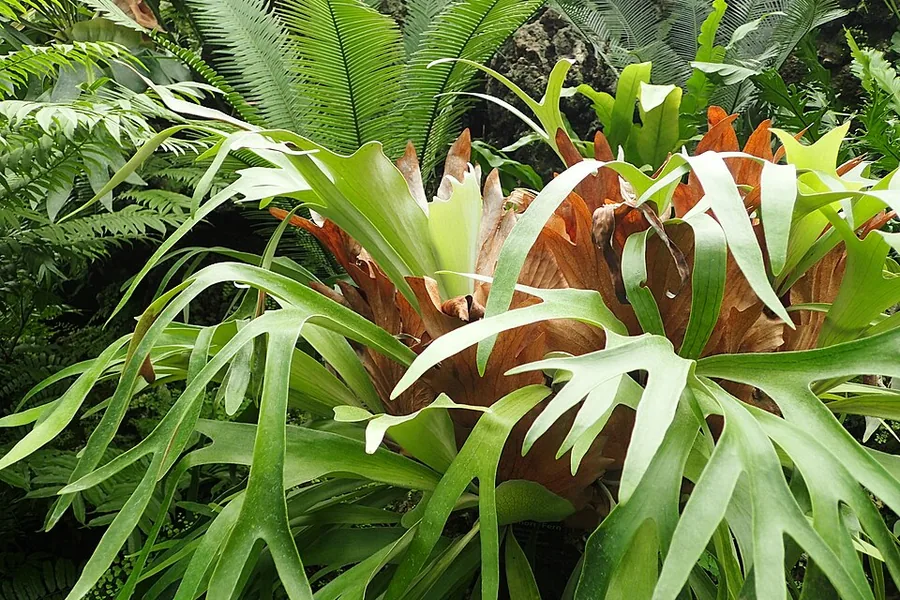
Ever notice how those forked fronds look just like a stag's antlers? That is exactly where the name comes from. It is an epiphyte, which means in the wild it grows straight onto tree bark and branches instead of down in soil, so it is happiest mounted on a board rather than sitting in a pot. It comes from the tropics, and it brings a bold, sculptural look that not many houseplants can pull off.
Here is a handy thing to know: this fern makes two kinds of frond, and they do totally different jobs. The green antler fronds are the flashy forks everyone notices, while the flat, papery shield fronds hug the base and go brown as they get older. And that browning? It is not the plant giving up. It is actually building a little protective collar around its own roots.
This one takes it slow and would rather have the right setup than lots of fussing. Get the light, the mount, and the watering rhythm dialed in, and a staghorn will stick around for years, happily pushing out new antlers the whole time. Pretty low-maintenance once it is settled, right?
Care
The short version: bright indirect light, a good soak of the mounted root ball with a dry spell in between, a warm room, and plenty of humidity with some air moving around it.
Light
Give it bright indirect light, the kind that brightens the room without the sun ever hitting the fronds directly. It will happily cope with partial shade or a bit of soft sun, so you have got some wiggle room. Just keep it away from harsh direct rays, which scorch the leaves, and gloomy corners, where it will turn limp.
Water
Water it every 7 to 14 days, letting the root ball dry out a little but never bone dry. The easiest way? Soak or dunk the mounted root ball, not the fertile fronds, for a few minutes, then let it drain. Water a bit more when it is growing in the warm months, and ease right off in winter.
Soil
Skip the regular potting soil, because this fern is not a fan. Go with an epiphytic mix of sphagnum moss and orchid bark, or just mount it on a board with moss packed around the roots. It likes things slightly acidic, around 5.0 to 6.0 pH, plus quick drainage and air moving freely through the roots.
Temperature
Keep it somewhere between 55°F to 75°F (13°C to 24°C), which is basically most cozy rooms. It really cannot handle frost, though, so keep it clear of cold drafts and chilly window glass once winter rolls in.
Humidity
This fern loves damp air, ideally around 50% to 80% humidity. A bathroom or kitchen often does the trick, and huddling plants together or running a humidifier helps out in drier rooms. Just pair that moisture with a bit of airflow, because still, muggy air is what brings on black spot.
Feeding
Feed it once a month through spring and summer while it is growing, using a balanced diluted liquid fertilizer. No need to bother in the dark winter months, since growth pretty much grinds to a halt.
Pruning
Pruning is barely even a job here. Only snip off antler fronds that have gone completely dead, brown, and shriveled. Whatever you do, leave those brown shield fronds at the base alone, because they are a living, protective part of the plant, not junk to clean up.
Repotting
You will hardly ever need to remount a staghorn, maybe once every few years when it genuinely outgrows its board. Look out for shield fronds spilling over the edges, a root ball that is pushing the plant off its mount, or a top-heavy shape that just will not stay put. Otherwise? Leave it be.
Size & spacing
Indoors it gets to about 2 to 3 feet (61 to 91 cm) tall and roughly the same across. Hang it or set it somewhere the antlers have room to stretch out without bumping a wall or crowding another plant.
Troubleshooting
Almost every staghorn problem comes down to watering or the air around it, honestly. The fronds are pretty good at flagging trouble early, so if you keep an eye on them you can fix things before they get worse. Just find the symptom that matches below and sort it out while it still counts.
Those dark spots taking over the fronds
What you are looking at is black spot, a fungus that shows up when muggy air goes still and water hangs around on the leaves. Open up the space so air can actually move, water the root ball instead of the fronds, and trim off any frond that is really marked up. Get the air flowing again and it clears up.
Fix:
- Improve air circulation around the plant
- Reduce misting and avoid wetting the fronds when watering
- Remove badly affected fronds
Antler fronds going limp with brown tips
When the fronds go all soft and droopy, it is almost always because the root ball has dried out completely. That is underwatering, and you will usually notice the mount feels super light. Dunk the root ball in water for a few minutes, let it drain properly, and get back on a steadier schedule before it dries out on you again.
Fix:
- Immerse the root ball (not the fertile fronds) in water for several minutes
- Drain thoroughly and resume regular watering before it fully dries
Webbing, cottony fluff, or brown bumps on the fronds
Spot any of these and you are probably dealing with spider mites, mealybugs, aphids, and scale, which tend to show up when dry air has the plant stressed. Wipe the bugs off with a damp cloth, then follow up with insecticidal soap, going easy on the felt-covered fronds. Keep it away from your other plants until it is totally clean.
Fix:
- Wipe pests off with a damp cloth
- Treat with insecticidal soap, avoiding heavy coating of the felt-covered fronds
- Isolate the plant until controlled
Toxicity
Got pets or curious kids? Good news, because the staghorn fern is totally non-toxic. The ASPCA gives it the thumbs up for cats, dogs, and horses, and there is nothing in the fronds that will hurt people or other animals either. Sure, eating a big pile of any plant can upset a stomach, but that is really as bad as it gets here.
Safe for
People · Cats · Dogs · Horses · Rabbits · Livestock · Birds
Cats None
Cats are totally fine around this one, since there is nothing in the fronds that could hurt a nosy nibbler. If a cat scarfs down a lot, the worst you will see is a quick, mild bit of tummy upset, same as any houseplant.
Dogs None
A dog can chew on a frond and be perfectly okay, because there are not any toxins in it. Wolf down too much greenery and it might throw up a little, but that is about it.
Horses Safe
Horses have got nothing to worry about here, since the fronds do not carry anything that would bother them. A curious taste is no big deal at all.
Rabbits Safe
Rabbits can nibble away at the fronds no problem. A big helping of any new green might loosen things up for a day, though, so it is smart to keep their tastes small.
Livestock Safe
Grazing animals are safe around this fern too, since it does not have any of the toxins that make some ornamentals risky out in a pasture or barn.
Birds Safe
Pet birds are fine near it, because the fronds do not contain anything poisonous. A curious peck will not do a thing.
People Safe
It is safe for grown-ups and kids to handle and grow. Nobody is growing it to eat, but a stray taste is not going to cause any trouble.
No special handling needed; non-toxic if nibbled, though eating large amounts of any plant may cause mild, temporary stomach upset.
Varieties
Most of the staghorns out there are just the regular species, though there is one named pick that keeps popping up in shops.
Platycerium bifurcatum 'Netherlands'
That would be 'Netherlands', a compact and sturdy pick with broader, more upright forked fronds, and it is the staghorn most folks end up growing indoors.
How to propagate
It will not fill your shelf overnight, but once a staghorn grows up a bit, it does give you one easy, reliable way to make another.
Offsets & pupsModerate
Spring · Several months to about a year
The easy route to more plants is through offsets, those little pups that pop up from the rhizome. In spring, separate a pup that has got a few roots of its own and mount it on its own board, then just be patient, because a new one takes anywhere from several months to about a year to really settle in. You can grow it from spores too, but honestly that is slow and a bit fiddly.
Myths
The papery brown shields at the bottom are dead, so just pull them off.
Nope, those browning shields are very much alive and busy. They wrap around the root crown, catch water and bits of fallen leaf litter, and stop the root ball from drying out. Leave them right where they are, because tearing them off rips at the roots hiding underneath.