Shrub · Iteaceae
Virginia Sweetspire
Itea virginica
An easygoing native that hands you fragrant spring flowers and knockout fall color without much fuss.
Full sun
Every 3–7 days
USDA 5–9
3–8 ft · 0.9–2.4 m
Overview
Want a shrub that basically takes care of itself? Virginia sweetspire is about as easy as they come. It grew up in the wet woods and along the stream banks of the eastern United States, and that background shows in how little it needs from you. Hand it some room and a bit of moisture, and it pretty much does the rest.
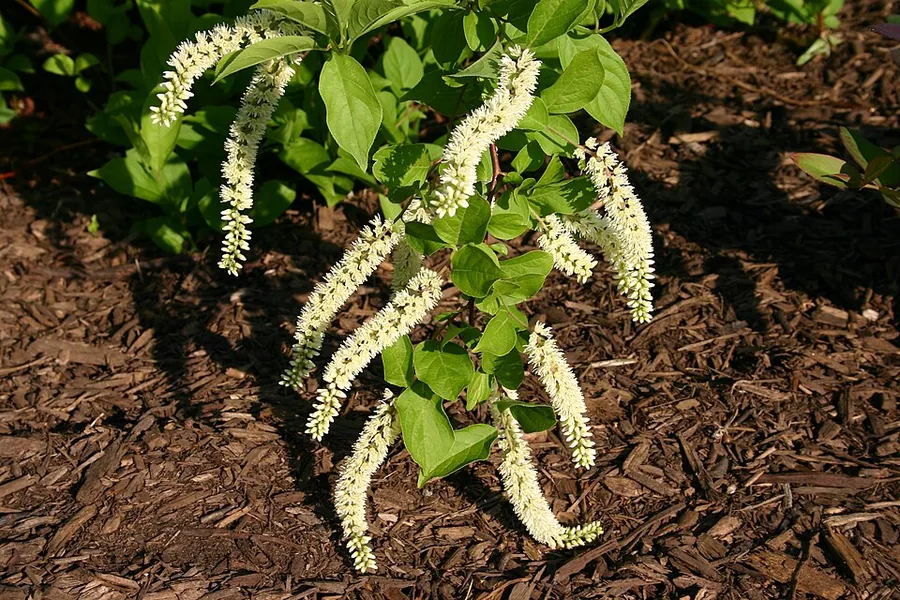
Here's the fun part: you get color twice a year. Late spring brings fragrant white flower spires on those arching stems, and then fall rolls in and the leaves go deep red and burgundy, holding on long after the neighbors have dropped theirs. It's nice enough in a mixed border, but honestly it looks best planted in a big group along a wet edge or in a rain garden.
One heads-up before you plant it: sweetspire spreads by suckers. In a soggy trouble spot that's a bonus, since it'll happily fill the whole area with good-looking growth. In a tidy bed, though, it just means trimming back the stray shoots once a year. So think about where those roaming roots are headed and pick your spot accordingly.
Care
The short version: pop it into moist to wet, slightly acidic soil somewhere between full sun and part shade, keep it watered while it gets going, and save the pruning for right after it flowers.
Light
This one's pretty relaxed about light and grows from full sun all the way to full shade. Try to give it at least a little direct sun though, because too much shade and you'll get fewer flowers and washed-out fall color.
Water
Sweetspire likes things on the wet side. It's totally at home in soil that stays moist or even soggy, and it doesn't mind flooding, clay, or spots that drain badly, which is exactly why it works so well in rain gardens and along streams. Once it's settled it can handle a dry stretch, but it looks its best with steady moisture.
Soil
Give it moist, fertile soil with lots of organic matter, ideally a touch acidic at a pH of 5.0 to 7.0. It's fine with clay and wet ground, but watch out for alkaline soil, because that's what turns the leaves yellow with chlorosis.
Temperature
Cold really isn't a problem here. It handles winter lows near -20°F (-29°C) and summer heat up to 100°F (38°C), which is why it grows happily all across zones 5 to 9.
Humidity
Outdoors, humidity is just a non-issue for this shrub, so there's nothing to keep an eye on. It came from damp woods, so it rolls with whatever the weather's doing.
Feeding
It's not a big eater at all. A little balanced fertilizer in spring, or honestly just some compost spread on top, is all it really wants.
Pruning
Timing matters here, since sweetspire blooms on old wood. Prune it right after it flowers, before the new buds form in late summer, and while you're there, pull out any stray suckers and old stems to keep it looking neat.
Repotting
Since this is a garden shrub, you'll hardly ever need to repot it. If you've got one in a container, only size up when the roots start circling, water runs right through, or growth stalls even though you're watering like usual.
Size & spacing
Figure on 3 to 8 feet (91 to 244 cm) tall and 3 to 6 feet (91 to 183 cm) wide, plus a little extra as the suckers creep outward. Give each plant some elbow room to spread, or set compact ones closer together for a low, even patch.
When to plant
Good news if you deal with cold winters: sweetspire is happy in zones 5 to 9 and takes lows down around -20°F (-29°C). Plant it in spring or fall, look for the flower spires from late spring into early summer, and wait for that fall color to show up once the nights start cooling off.
Northern hemisphere
Southern hemisphere
Typical months for a temperate climate: start earlier in warm zones, later where spring frosts linger.
- Plant: Spring or fall
- Harvest: Late spring to early summer (May to June)
Hardiness
USDA hardiness zones: 5–9
Temperature: down to -29°C
Troubleshooting
Honestly, sweetspire doesn't cause much drama, and there are no serious pests or diseases to worry about. When something does look off, it usually comes back to where it's planted or when it got pruned. Find what matches below, and the fix is probably an easy one.
New shoots turning up all around the plant
No surprise here, this is just what sweetspire does: it sends up suckers and, left alone, turns into a dense little colony. When you spot the stray shoots, just dig or cut them off at the ground, or put in a root barrier and keep the edge trimmed so it stays contained. Easiest of all? Plant it somewhere a thicket is actually welcome, or go with a compact cultivar right from the start.
Fix:
- Dig out or cut unwanted suckers at ground level as they appear
- Install a root barrier or site the plant where colony spread is acceptable
- Mow or edge the perimeter regularly to limit lateral expansion
Leaves going yellow but the veins staying green
That's chlorosis, and it happens when the soil is too alkaline for the roots to grab enough iron. A soil test will tell you for sure, and the real fix is lowering the pH with elemental sulfur or some acidic organic matter. In the meantime, chelated iron and a layer of pine bark mulch help green things up while the pH slowly drops.
Fix:
- Test soil pH and amend with elemental sulfur or acidifying organic matter to lower pH
- Apply chelated iron as a temporary corrective measure
- Mulch with acidic organic matter such as pine bark
Not many flowers and dull fall color
If you're not getting many blooms and the fall color's kind of blah, it usually comes down to two things: too much shade and pruning at the wrong time. A plant sitting in deep shade won't flower well or color up, so move it somewhere it gets some direct sun each day. And since the buds sit on old wood, only prune right after the flowers finish, never in late winter or spring.
Fix:
- Site or transplant to a location receiving at least some direct sun each day
- Prune only immediately after flowering, not in late winter or early spring
Toxicity
Got pets or curious kids? You can relax, because sweetspire is totally safe all around. It's not on the ASPCA toxic-plant list, and it won't hurt cats, dogs, horses, livestock, birds, or people. The worst that'd happen from a big mouthful of leaves is a bit of a stomachache, same as eating too much of any plant.
Safe for
People · Cats · Dogs · Horses · Rabbits · Livestock · Birds
Cats None
Since sweetspire isn't on the ASPCA toxic list, a nosy cat that chews a leaf is totally fine. The most you'd see from a big mouthful is a little mild stomach upset.
Dogs None
Dogs are good here too. A bored pup can gnaw on the leaves without any real problem, though scarfing down a lot might mean a quick bout of loose stool, like with any plant.
Horses Safe
No known toxicity for horses either, so a grazing horse can munch on the shrub with no harm done.
Rabbits Safe
Rabbits can nibble away at the leaves all they want, since there's nothing in the plant that bothers them.
Livestock Safe
Cattle, goats, and sheep are all fine around this native shrub, because it doesn't have anything in it that troubles grazing animals.
Birds Safe
Birds are totally in the clear. Songbirds actually come visit, and between the seeds and the bugs it draws in, it's a favorite in wildlife gardens.
People Safe
It's not poisonous to people, either. Nobody's growing it to eat, but if a kid tastes a leaf, they'll be just fine.
No special handling precautions are required for toxicity; as with any plant, ingestion of large amounts of foliage could cause mild, transient gastrointestinal upset.
Varieties
Most folks skip the plain wild version and go for a named type instead, since they stay neater and color up better. These three are the ones you'll see around most.
Henry's Garnet
This one's a Missouri Botanical Garden Plant of Merit, growing 3 to 5 feet tall and 4 to 6 feet wide with longer flower spires and deeper red-burgundy fall color than the plain wild kind.
Little Henry (Sprich)
A little dwarf that stays around 2 to 3 feet in every direction, with creamy-white spires and leaves that turn yellow, orange, and red come fall.
Scentlandia (SMNIVDFC)
A compact one that's all about the extra flower fragrance, plus tougher buds that handle the cold better than most.
Companions
Sweetspire pairs naturally with other natives that share its taste for moist, acidic ground, which makes it a mainstay of rain gardens and wet borders.
Plant near
Inkberry holly (Ilex glabra): Another native shrub tolerant of moist, acidic soils, pairing well in rain gardens and naturalized wet borders.
Summersweet (Clethra alnifolia): Shares preference for moist to wet acidic soils and part shade, complementing sweetspire in pollinator and rain-garden plantings.
How to propagate
Want more sweetspire? That's easy, because between its suckers and those low branches, it basically hands you a few simple ways to make new plants.
Stem cuttingsEasy
Spring to early summer using softwood cuttings · Several weeks to root; transplantable the following season
Take some softwood cuttings anywhere from spring to early summer and they'll root without much trouble at all. Give them several weeks to grow roots, then move the little plants to their permanent spot the next season.
DivisionEasy
Dormant season or early spring · One season
Since sweetspire throws off so many suckers anyway, you can just dig up a clump in the dormant season or early spring and split the rooted shoots away from the parent. Each piece you separate settles in over a single season.
LayeringEasy
Spring to summer · One growing season to root
Those low, arching branches will actually root on their own wherever they touch damp soil. Pin one down in spring or summer, give it a single growing season to root, and then you can cut it loose from the parent.
SeedModerate
Sow collected seed; slower than vegetative methods · Multiple seasons to reach landscape size
You can grow it from collected seed, but be ready to wait. The seedlings come up less even than cuttings or divisions, and they'll need several seasons before they're any real size out in the garden.
Myths
Virginia sweetspire is poisonous to pets.
Nope, not true. Itea virginica isn't on the ASPCA toxic-plant list, and it's considered safe around cats and dogs. If your pet chews on a leaf, there's really nothing to worry about beyond the mild stomachache any plant can cause if they overdo it.
You can prune sweetspire whenever you feel like it.
Prune it in late winter or spring and you'll accidentally cut off the buds before they ever open. See, sweetspire makes its flowers on the previous season's wood, so the only safe time to trim is right after the blooms fade. Do it then, and you keep it tidy without losing next year's flowers.