
Introduction
A single parsley plant can flavor your meals for months and cost less than one bunch from the store. You snip what you need, the plant grows more, and you skip the wilted clamshells that rot in the fridge. That alone makes it worth a pot on the windowsill.
But this guide goes past the basics. You get the full picture here. You learn growing parsley from seed, the three main types of parsley, and when to pick each one. You also get smart harvesting tips. And you get the real parsley nutrition story, backed by USDA data and solid studies.
That nutrition part deserves real attention. Sowing and harvest are easy to find anywhere, so the science is where this guide digs in. Raw parsley carries about 1,640 micrograms of vitamin K per 100 grams, which is 3.5 ounces. It also packs roughly 133 milligrams of vitamin C in that same amount. We treat the health claims with cited studies and honest hedging, not hype.
Here is the good news for beginners. Parsley is one of the easier herbs to grow, and parsley care stays simple once it sprouts. The one catch is patience. I planted my first pot and saw nothing for almost a month, so I figured the seed was dead. Then the green showed up right on schedule. Seeds can take two to five weeks to germinate, and that slow start scares too many people off before the plant even shows up.
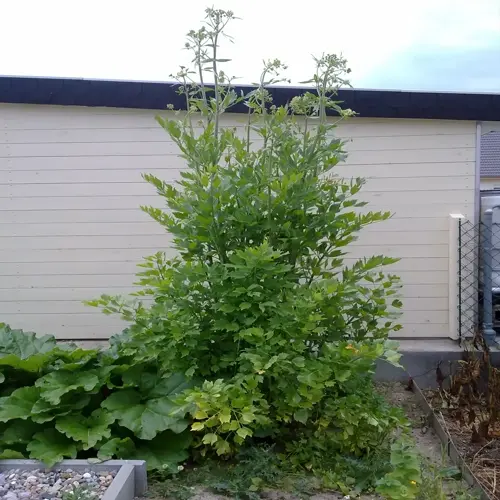
The parsley plant is a cold-hardy biennial in the carrot family. Its Latin name is Petroselinum crispum. Most gardeners just grow it as an annual. It also feeds black swallowtail butterfly caterpillars, which can look like a pest problem at first. Stick around, because a later section turns those hungry visitors into a reason to plant more.
How to Grow a Parsley Plant
Growing parsley from seed rewards patience more than skill. The plant asks for rich, well-drained soil and steady moisture, then takes its own slow time to show up. Get the timing right and one packet of seed can feed your kitchen for a whole season.
The single best move you can make is to soak parsley seeds in warm water for up to 24 hours before you plant them. Parsley seed coats hold furanocoumarin compounds that block water from soaking in. The soak, plus pouring off that water, washes some of those compounds away and shortens the wait.
When you learn how to plant parsley, the depth matters as much as the soak. Sow the seeds no more than 1/4 inch (0.6 cm) deep, then keep the surface evenly damp until the first green shows. Plant too deep and weak sprouts run out of energy before they ever reach the light.
One morning a tidy row of green sat in the raised bed by my kitchen window. I had planted Giant of Italy in that strip of soil weeks before. For most of those weeks the bed stayed bare. I watched an empty rectangle of dirt and wondered if I had buried the seed too deep. I checked the surface, found nothing, and almost dumped a fresh packet on top. My parsley germination ran two to five weeks, right on schedule. The slow sprout was not a dead row. It was just parsley being parsley.
Soak parsley seeds in warm water for up to 24 hours, then pour off the water. This washes away seed-coat compounds and speeds the slow start.
Sow seeds no more than 1/4 inch (0.6 cm) deep in rich, well-drained soil, then keep the surface evenly moist while you wait.
Expect germination to take two to five weeks. Cool soil and old seed slow it further, so use fresh seed and stay patient.
When seedlings reach 2 to 3 inches (5 to 8 cm) tall, thin or move them with care to protect the fragile taproot.
Plan on 70 to 90 days from seed to a full plant, watering deeply and feeding lightly through the season.
Do not give up on parsley after a week of bare soil. Sprouts often take two to five weeks, so gardeners reseed for nothing and waste the slow start they already had going.
Whether you sow in the ground or start in pots, treat the taproot as the fragile part of the plant. Once parsley seedlings reach 2 to 3 inches (5 to 8 cm) tall, thin the crowded ones or lift transplants with a good clump of soil. Many growers skip the move and direct sow so the root stays put. From that first sprout, you are roughly 70 to 90 days from a full plant you can cut and cook.
Parsley Types and Varieties
Not all parsley is the same plant on your plate. The main parsley varieties split into three true types, plus one carrot-family cousin that shares the name. Each one earns its spot in your garden for a different reason.
Botanists sort the three real types by their Latin tags. Curly carries the variety name crispum. Flat-leaf parsley is the neapolitanum type. Root parsley is the tuberosum type. You grow the first two for their leaves. You grow the last one for a fat, edible taproot.
Let flavor drive your pick, not the way the leaves look. Flat-leaf tastes bolder and cleaner, so it carries through sauces, soups, and chimichurri. Curly parsley is milder and a bit grassier, which is why cooks long used it as a plate garnish. It still cooks well and brings fresh color to your salads and tabbouleh.
Then there is the type you rarely hear about. Hamburg parsley, the root kind, gives you a pale taproot that tastes like a mix of parsley and parsnip. You roast it or drop it into winter soups, and you can still snip the leaves on the side. Here are the four types to know before you sow.
Flat-Leaf (Italian) Parsley
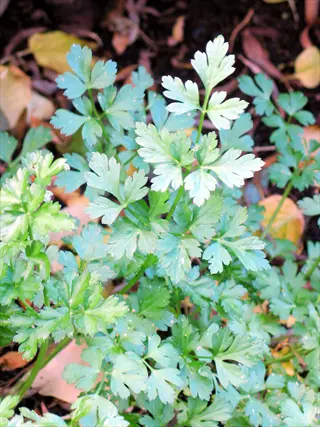
- Botanical type: This is Petroselinum crispum var. neapolitanum, the flat broad-leaved parsley most cooks reach for first.
- Flavor: It has a bolder, cleaner, more peppery taste that holds up well in sauces, soups, and chimichurri.
- Best use: Choose flat-leaf when the parsley is a real ingredient rather than decoration, since its flavor carries through cooking.
- Cultivars: Reliable extension-recommended picks include Giant of Italy and Dark Green Italian for vigorous, tall, productive plants.
- Growth: Plants reach about 12 to 18 inches (30 to 45 cm) high and wide with sturdy upright stems that are easy to harvest.
- Why grow it: Many gardeners find flat-leaf the most useful all-round parsley for everyday kitchen cooking and fresh finishing.
Curly Parsley
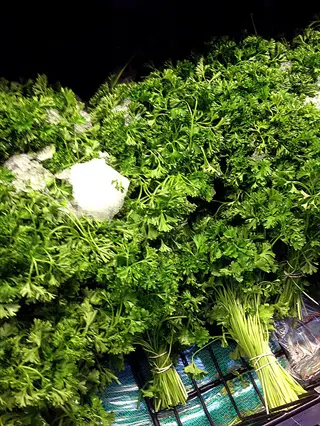
- Botanical type: This is Petroselinum crispum var. crispum, prized for its tightly ruffled, decorative dark green leaves.
- Flavor: Curly parsley is milder and a little grassier than flat-leaf, which is why it long served as a plate garnish.
- Best use: It still cooks well and adds fresh color and texture, so treat it as real food rather than mere decoration.
- Cultivars: Extension favorites include Forest Green, Extra Curled Dwarf, and Green River for dense, deeply ruffled, even growth.
- Growth: Curly types form compact mounds that look ornamental in borders and containers as well as in vegetable beds.
- Why grow it: Pick curly parsley for its looks, its cold tolerance, and a softer flavor that suits salads and tabbouleh.
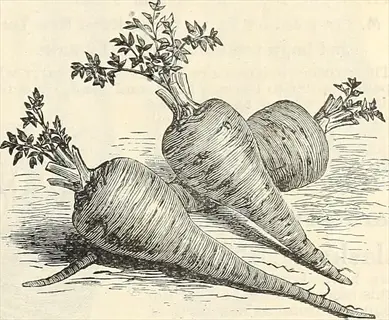
Root (Hamburg) Parsley
- Botanical type: This is Petroselinum crispum var. tuberosum, grown for a thick edible taproot rather than its leaves.
- Flavor: The pale root tastes like a cross between parsley and parsnip and is excellent roasted or in winter soups.
- Best use: Treat it almost like a carrot crop, harvesting the root in fall while still snipping some leaves for flavor.
- Cultivars: Look simply for Hamburg parsley, the standard root type recommended by extension sources for home gardens.
- Spacing: Thin root parsley to about 3 to 5 inches (8 to 13 cm) apart so each plant can size up a usable root.
- Why grow it: Root parsley is the underused type that gives you two harvests, a flavorful root plus useful leaves.
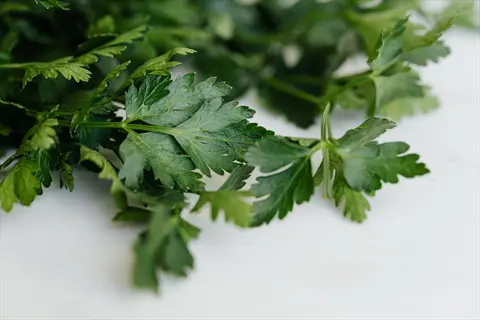
Japanese Parsley (Mitsuba)
- Botanical type: Listed by extension sources as Cryptotaenia japonica, a related carrot-family herb sold as Japanese parsley.
- Flavor: Its taste is milder and more celery-like, common in Japanese soups, salads, and garnishes rather than Western dishes.
- Best use: Grow it if you cook Japanese food and want a fresh leafy herb that suits broths and delicate dishes.
- Difference: Although called parsley, it is a different genus from true parsley, so treat it as a related cousin.
- Growth: It prefers part shade and moist soil, tolerating cooler, shadier spots better than the three true parsley types.
- Why grow it: Choose Japanese parsley for variety and authentic flavor in East Asian cooking beyond the usual curly and flat-leaf choices.
For most kitchens, flat-leaf is your best all-round pick since its flavor does real work in cooking. Grow curly too if you like its ruffled looks and cold tolerance. Try Hamburg if you want two harvests from one plant, a tasty root plus useful leaves.
Soil, Sun, Water and Spacing
Get four things right and your parsley almost grows itself. The plant wants rich, well-drained soil, steady sun, a deep drink each week, and enough elbow room to fill out. Miss one and you end up with thin, pale stems instead of a thick, leafy bunch.
Start with the parsley soil, because everything else builds on it. Parsley likes ground that holds plenty of organic matter but still drains fast, so the roots never sit in water. Work in compost before you sow, and you give the seedlings a head start that no fertilizer can match later.
The right soil pH for parsley sits between 6.0 and 7.0, which is barely on the acidic side. A cheap test kit tells you where you stand in a minute. If your bed reads too high or too low, the roots can't pull nutrients well, and the leaves show it with a washed-out look.
If parsley is forced to grow for long periods at temperatures above 90°F, growth is greatly reduced, and death may occur.
Parsley grows best in full sun, which means six to eight hours of direct light each day. More sun gives you denser, more flavorful leaves. But heat is a different story. Once temperatures hold above 90°F (32°C) for long stretches, growth stalls and the plant can die. In hot regions, a spot with light afternoon shade keeps it happy through summer.
Now for watering parsley, where most people go wrong. One deep soak once a week beats a daily sprinkle every time. A long, slow drink pulls the roots down deep, so the plant rides out dry spells on its own. Frequent shallow watering keeps the roots near the surface, where they dry out fast. Small pots in summer heat are the one exception, and they may need water more often.
Parsley spacing comes in two stages, and that trips up a lot of new gardeners. While the seedlings are young, thin leaf parsley rows to 4 to 6 inches (10 to 15 cm) apart so each plant has room to grow. Then give the keepers their final home at 10 to 12 inches (25 to 30 cm) apart. Crowded plants fight for light and stay small, so this last step pays off in a bigger harvest.
Feed the bed once or twice a season and stop there. Over-feeding pushes out leaves at the cost of flavor, and that trade is never worth it. Rich soil, real sun, a weekly soak, and the right spacing already do most of the work for you.
Harvesting and Storing Parsley
Most people learn how to harvest parsley the slow way, pinching off a few leaf tips at a time. That barely feeds the plant any reason to grow back. A parsley plant is ready to start harvesting around 70 to 90 days from seed, once it has several full stems. Cut whole outer stems at the base instead of nibbling the tips.
New growth pushes up from the pale center of the plant. So when you take the outer stems first and leave that center alone, the plant keeps making fresh leaves for weeks. This is the cut-and-come-again method, and it turns one plant into a steady supply. Snip the oldest stems on the outside, work your way in over time, and the crown never stops sending up new growth.
I was kneeling at the raised bed by the kitchen window. My fingers snapped the outer stems of my Giant of Italy plant down at the base, one after another. My thumb kept clear of the pale knot of new shoots in the middle. Each stem came off clean with a small green snap. Over the next two weeks, fresh leaves filled back in from that center. They came up taller than before, so I went out and did the same thing again.
Begin harvesting around 70 to 90 days from seed once the plant has several full stems, so cutting will not stunt it.
Snip whole outer stems at the base rather than leaf tips, because new growth pushes up from the center of the plant.
Repeat this cut-and-come-again harvest every week or two, and the same plant keeps producing fresh leaves for many weeks.
To preserve, chop leaves into ice-cube trays with water or oil and freeze; this holds more flavor than drying does.
Store dried or frozen parsley airtight and use it within one year, while fresh leaves always taste noticeably better.
Always harvest from the outside of the parsley plant inward and never strip the central growing point, so the plant keeps pushing new stems all season.
Fresh parsley tastes best, full stop. But you will grow more than you can use in a week, so preserving parsley lets you stretch the harvest into the cold months. Freezing parsley beats drying parsley for flavor by a wide margin. Chop the leaves, pack them into ice-cube trays with a little water or oil, and freeze the cubes. Dried leaves work in a pinch, yet they lose much of the bright taste.
Store your dried or frozen parsley airtight and use it within one year for the best results. One more thing worth knowing: parsley is a biennial, so its second-year leaves turn more bitter as the plant gets ready to flower. Harvest hard during that first year, freeze what you cannot eat, and you will have good parsley on hand long after the bed goes quiet.
Parsley Nutrition and Health
Most parsley guides treat it as a garnish you push to the side of the plate. The real story sits in the numbers, and parsley nutrition holds up better than almost any herb you can grow at home.
USDA FoodData Central lists about 36 calories in 100 grams of raw parsley. You get a lot of nutrients for that. The same amount holds near 3 grams of protein and 6 grams of carbs. That is tiny for a leaf this packed with vitamins.
The big number is parsley vitamin K, near 1,640 micrograms per 100 grams. By weight, parsley is one of the richest foods for it. If you take blood thinners, ask your doctor before you eat a lot. A 2025 food science review also puts parsley vitamin C at 125 to 133 milligrams. That is about 156% of the daily need. You also get near 6 milligrams of iron and 152 micrograms of folate.
Parsley also packs many plant compounds. The main one is a flavonoid called apigenin. Lab tests show strong parsley antioxidants that mop up free radicals. That is real chemistry. But it does not yet prove a health gain in your body.
Parsley is a nutrient-rich herb with a distinct nutritional composition, characterized by moderate amounts of dietary fiber and rich amounts of vitamins and minerals, along with a diverse array of bioactive phytonutrients, such as phenolic acids and flavonoids.
Now the honest take on parsley health benefits. Animal and lab studies point to three effects. Parsley may fight free radicals, boost urine flow, and shield the kidneys. A 2024 Frontiers in Medicine review ties the urine effect to a blocked salt pump in the kidney. Human proof stays thin and mixed. So treat these as promising, not proven.
Caution counts just as much. In studies, very high doses raised liver enzymes. Those doses were near 1,000 milligrams per kilogram of body weight. They also raised creatinine. One case report found a drug clash that spiked levels of the immune drug sirolimus. Normal cooking amounts are small and safe for most people. Mega-doses and strong extracts are a whole other thing.
Pests, Swallowtails, Companions
My neighbor leaned over the fence one July and warned me the bugs were ruining my parsley. Fat striped caterpillars had chewed my Giant of Italy down to bare stems. I grew it in the raised bed by my kitchen window. A few weeks on, the same caterpillars hung from the fennel. Then out came black swallowtail butterflies that drifted across my whole garden.
That fence chat sums up the odd truth about parsley pests. The bug you fear most is one you should feed on purpose. Parsley is a host plant for the swallowtail caterpillar. So a stripped plant is not a loss for you. You get a butterfly nursery, and the adults help pollinate your beds.
Good parsley companion plants turn one herb into a small pest defense for you. Let your parsley flower and you pull in beneficial insects. Think hoverflies and tiny wasps that hunt your aphids. Your list of plants to avoid is short and easy. The guide below sorts your friends from foes and shows you what to do.
Black Swallowtail Caterpillars
- What they are: Green caterpillars banded with black and yellow that feed on parsley because it is a swallowtail host plant.
- Why welcome them: Many gardeners grow a few extra plants on purpose and let the caterpillars feed, treating it as a pollinator benefit.
- What they become: Left alone, they mature into black swallowtail butterflies that help pollinate the wider garden later in the season.
- If you must act: Simply move caterpillars to a sacrificial plant rather than spraying, since they are beneficial rather than true pests.
Good Companion Plants
- Vegetables: Parsley grows happily near tomatoes, asparagus, peppers, and corn, sharing space without heavy competition for nutrients.
- Flowers: Planting parsley near roses is a traditional pairing some gardeners use to support healthier, more vigorous rose bushes.
- Beneficial insects: Its flowers attract hoverflies and parasitic wasps, natural predators that help keep aphids and other pests in check.
- Why it helps: Mixing parsley through beds adds diversity that supports pollinators and beneficial insects across the whole garden.
Neighbors To Avoid
- Carrot family: Keep parsley away from close planting beside carrots and celery, since these relatives share the same pests and diseases.
- Why it matters: Grouping carrot-family crops together can concentrate problems like carrot fly rather than spreading the risk out.
- Better placement: Space parsley among unrelated companions instead so pests have a harder time moving plant to plant.
- Bottom line: It is less about a forbidden list and more about not clustering all the related plants in one spot.
Common Pests And Fixes
- Aphids: These sap-sucking insects are the most common true pest and usually wash off or respond to insecticidal soap.
- Neem oil: For heavier insect pressure, a light neem oil spray is a mild control many home gardeners rely on.
- Diseases: Good airflow, proper spacing, and well-drained soil prevent most leaf spot and root rot problems before they start.
- Prevention first: Healthy, unstressed plants in the right conditions shrug off most pest and disease trouble on their own.
5 Common Myths
Parsley is just a plate garnish with no real flavor or value, so there is no point in growing your own at home.
Parsley is a flavorful, nutrient-dense herb rich in vitamins K and C, and fresh homegrown leaves taste far better than the store sprig.
Parsley is a true annual, so the plant dies completely at the end of its very first growing season every single time.
Parsley is a biennial; it usually lives through winter and returns for a second spring before it flowers, sets seed, and finally dies.
Your parsley seeds failed to sprout because they were bad, since nothing came up after a week or two in the soil.
Parsley germinates slowly and naturally takes two to five weeks; a 24-hour warm-water soak and patience usually bring the seedlings up.
Caterpillars eating your parsley are pests that must be sprayed and removed from the plant as fast as you possibly can.
Those are black swallowtail caterpillars; many gardeners grow extra parsley on purpose and treat feeding them as a pollinator benefit.
Parsley reliably cleans your kidneys and lowers creatinine, so eating large amounts works like a proven natural medical treatment.
Diuretic and kidney effects appear mainly in animal studies; human evidence is limited and mixed, and very high doses can harm the body.
Conclusion
The parsley plant earns its spot twice over. It fills a sunny corner of your garden with little fuss, and it drops a genuinely nutritious herb straight into your cooking. Few plants pay you back on both counts so well.
Growing parsley rewards patience more than skill. I planted my first row years ago and nearly gave up during the slow start. It's a biennial that most gardeners treat as an annual, and it wants 6 to 8 hours of sun with a deep soak once a week. The seeds test you first, since germination takes 2 to 5 weeks, but soaking them overnight speeds things along. After that you wait 70 to 90 days from seed to harvest. Good parsley care comes down to steady water and cool weather. Heat above 90°F (32°C) can stall or even kill the plant, so that's the one threat to watch.
Harvesting parsley keeps the supply coming all season. Snip the outer stems first and the center keeps pushing new growth, so one plant feeds your kitchen for months. That's where the second payoff shows up. Parsley nutrition is the real surprise. Just 100 grams packs about 1,640 micrograms of vitamin K. It also holds roughly 133 milligrams of vitamin C, more than an orange by weight.
Treat the louder health claims with a cool head. Lab and animal studies hint that parsley may act as a diuretic. They point to antioxidant perks too. But solid human proof is still thin. Lean on what's certain: it's a true source of vitamins K and C, and it tastes far better fresh than dried. So pick a type that fits your plate, sow a few seeds, and let one small herb feed both your garden and your table.
Glossary
- Apigenin
- The main antioxidant flavonoid found in parsley, studied for its potential health effects.
- Biennial
- A plant that completes its life cycle over two growing seasons, producing leaves the first year and flowers and seeds the second before dying.
- Bolting
- When a plant sends up a flower stalk and shifts energy to seeds, often making the leaves turn bitter.
- Cut-and-come-again
- A harvesting method where you cut outer stems and the plant keeps producing new growth for repeated harvests.
- Furanocoumarins
- Natural compounds in parsley seed coats that slow water uptake and delay germination, which is why soaking helps.
- Germination
- The process by which a seed sprouts and begins to grow into a seedling.
- Petroselinum crispum
- The botanical name for parsley, a herb in the carrot family.
- Taproot
- A single thick main root that grows straight down, which parsley forms and which can be damaged during transplanting.
External Sources
Frequently Asked Questions
Does a parsley plant need sun or shade?
Parsley grows best with six to eight hours of direct sun, though light afternoon shade helps in very hot summers.
Does parsley grow back every year?
Parsley is a biennial, so it usually returns for a second spring before it flowers, sets seed, and dies.
Is parsley easy to grow at home?
Yes, parsley is beginner friendly once seeds sprout; the main hurdle is its slow two to five week germination.
Should I water parsley every day?
Usually no; parsley prefers one deep weekly soak rather than daily light watering, unless it is in small pots during heat.
Should parsley be grown in pots or in the ground?
Both work well; pots suit small spaces and windowsills, while the ground gives the long taproot more room to grow.
What are the health benefits of parsley?
Parsley is rich in vitamins K, C, and A, plus antioxidants; most therapeutic claims rest mainly on animal studies.
What happens if you eat parsley every day?
Daily culinary amounts add vitamins and antioxidants for most people, but the high vitamin K matters if you take blood thinners.
What happens to a parsley plant in winter?
Parsley is cold hardy and often survives winter under straw or row cover, giving leaves you can pick on mild days.
What should you not plant near parsley?
Avoid planting parsley right beside other carrot-family crops like carrots and celery that share its pests.
Why is parsley hard to grow?
Parsley only seems hard because germination is slow and uneven; soaking seeds and patience solve most problems.